Bathroom Sealing Strip
CN → US| HS Code | Tariff Rate | Origin | Destination | Doc |
|---|---|---|---|---|
| 4016931010 | 37.5% | CN | US | Official Doc |
| 4016935010 | 37.5% | CN | US | Official Doc |
| 3926904590 | 38.5% | CN | US | Official Doc |
| 3926904510 | 38.5% | CN | US | Official Doc |
| 4016935050 | 37.5% | CN | US | Official Doc |
Product Images
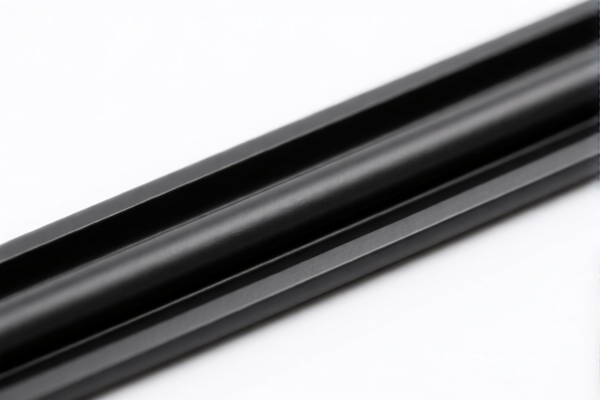
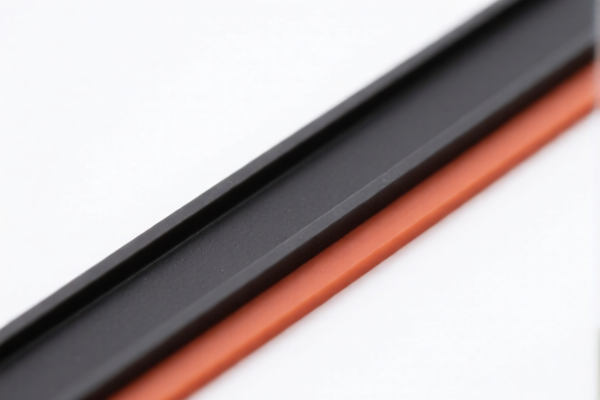
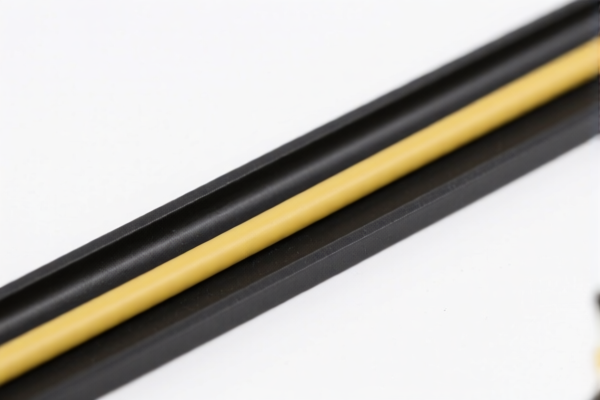
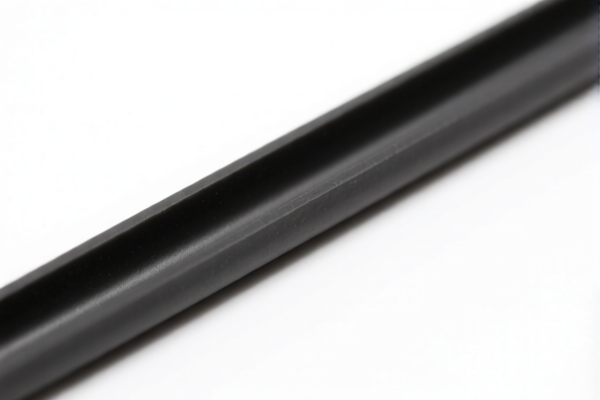
AI Analysis
🛁 Bathroom Sealing Strip (门窗/卫浴密封条)
🌐 HS Code Reference & Customs Clearance Guide | 2026 Latest Tariff Analysis | Professional Clearance Strategy
📌 I. Product Definition & Classification: What exactly is a "Sealing Strip"?
Bathroom Sealing Strips are essential components for waterproofing, soundproofing, and dust-proofing in bathrooms, windows, and doors. In international trade, their classification depends primarily on Material Composition and Physical Form.
Based on the provided data, there are three main classification paths: 1. Rubber-based Seals: Classified under Chapter 40 (Rubber and articles thereof). 2. Plastic-based Seals: Classified under Chapter 39 (Plastics and articles thereof).
⚠️ Key Distinction Point: - If the material is Sulfur-Vulcanized Rubber (common for weatherstrips), it falls under 4016. - If the material is Plastic (PVC, EPDM compounds often classified as plastic in some contexts, or strictly plastic profiles), it falls under 3926.
📦 II. HS Code Classification Details (2026 Latest Tariff Mapping)
| HS Code | Product Description | Material Inference | Applicability Logic |
|---|---|---|---|
4016.93.10.10 |
Sealing strips classified as "Seals", unspecified material tends towards this seal category. | Rubber/Unspecified | Tends to fit the category of "Seals" without specifying material. |
4016.93.50.10 |
Sealing strip usage belongs to seals; inferring rubber material due to lack of clear material description. | Rubber | Matches the logic of seals; infers rubber material when no clear material is stated. |
4016.93.50.50 |
Window/Door sealing strips inferred as rubber; shape matches seals; matches gaskets/seals of vulcanized rubber. | Rubber | Specifically targets window/door applications; matches vulcanized rubber gaskets. |
3926.90.45.90 |
Sealing strips belong to gaskets/washers/Seals; inferred as plastic material, matching "Other seals not O-rings". | Plastic | Infers plastic material; matches the "Other" category for non-O-ring seals. |
3926.90.45.10 |
Sealing strip morphology belongs to seals; material inferred as plastic or rubber; no conflict with plastic articles chapter. | Plastic/Rubber | Broad category for seals; allows for plastic or rubber inference without chapter conflict. |
🔍 Key Reminder: - Rubber Strips: If the strip is flexible, elastic, and made of vulcanized rubber (typical for bathroom/weatherproofing), prioritize 4016.93.xxxx. - Plastic/PVC Strips: If the strip is rigid, PVC-based, or clearly identified as plastic molding, prioritize 3926.90.45.xxxx. - Ambiguity: If the material is unknown, customs may infer rubber (4016) or plastic (3926) based on common usage, leading to different tax rates.
💰 III. 2026 Latest Tariff Rate Details (Including Surtaxes & Policy Add-ons)
✅ Applicable Country: United States (US)
✅ Country of Origin: China (CN)
✅ Effective Time: Current rates including Section 301 & Section 122 tariffs.
🎯 1. 4016.93.10.10 & 4016.93.50.10 —— Rubber Sealing Strips
| Item | Detail |
|---|---|
| Base Duty Rate | 2.5% (Ad Valorem) |
| Section 301 Surcharge | +25.0% (China-origin goods) |
| Section 122 Duty | +10.0% (Additional duty on China imports) |
| Total Effective Rate | 37.5% |
| Tax Calculation | CIF Value × 37.5% |
| De Minimis Eligibility | ❌ No (High tariff rates usually exclude small parcel exemptions) |
| Legal Basis Path | USITC:4016.93 → Section 301: +25% → Section 122: +10% |
📌 Explanation: - Base 2.5%: Standard MFN rate for rubber seals. - 25% Section 301: Retaliatory tariff on Chinese rubber products. - 10% Section 122: Additional tariff imposed on specific Chinese imports. - Total 37.5%: This is a high-cost item for importers. Budget accordingly.
🎯 2. 4016.93.50.50 —— Window/Door Rubber Seals
| Item | Detail |
|---|---|
| Base Duty Rate | 2.5% |
| Section 301 Surcharge | +25.0% |
| Section 122 Duty | +10.0% |
| Total Effective Rate | 37.5% |
| Tax Calculation | CIF Value × 37.5% |
| De Minimis Eligibility | ❌ No |
| Legal Basis Path | Same as above, specific subheading for window/door applications. |
📌 Note: - Even if specified for "Windows/Doors," if made of rubber, it retains the 37.5% total rate. - Ensure the product description clearly states "Vulcanized Rubber" to support this classification.
🎯 3. 3926.90.45.90 & 3926.90.45.10 —— Plastic Sealing Strips
| Item | Detail |
|---|---|
| Base Duty Rate | 3.5% |
| Section 301 Surcharge | +25.0% |
| Section 122 Duty | +10.0% |
| Total Effective Rate | 38.5% |
| Tax Calculation | CIF Value × 38.5% |
| De Minimis Eligibility | ❌ No |
| Legal Basis Path | USITC:3926.90 → Section 301: +25% → Section 122: +10% |
📌 Note: - Plastic seals are slightly more expensive (38.5% vs 37.5%) due to a higher base rate (3.5%). - If your product is PVC-based, this is the correct code, but expect a slightly higher tax burden than rubber.
🛠️ IV. Customs Clearance Practical Advice (Battle-Tested Pitfall Avoidance)
✅ 1. Required Documentation Checklist (Missing items = Delays)
| Document | Mandatory? | Purpose |
|---|---|---|
| ✅ Product Specification Sheet | ✔️ | Must specify Material (Rubber vs. Plastic), hardness (Shore A), and dimensions. |
| ✅ Material Safety Data Sheet (MSDS) | ✔️ | Crucial for rubber/plastic products to confirm chemical composition. |
| ✅ Product Photos (Clear Labeling) | ✔️ | Show cross-section to distinguish between solid rubber and plastic/PVC profiles. |
| ✅ Commercial Invoice | ✔️ | Must explicitly state "Bathroom Sealing Strip" and Material Composition. |
| ✅ Packing List | ✔️ | Detail weight and quantity to prevent volume disputes. |
| ✅ Country of Origin Certificate | ✔️ | Required to apply (or not apply) Section 301/122 tariffs correctly. |
✅ 2. Declaration Tips (Key Mantra)
🔥 "Material First, Shape Second! 'Rubber' means 37.5%, 'Plastic' means 38.5%!"
| Scenario | Correct Declaration | Common Mistake |
|---|---|---|
| Vulcanized Rubber Strip | 4016.93.10.10 or 4016.93.50.50 |
Declaring as "Plastic Part" → Risk of reclassification & penalty. |
| PVC Plastic Strip | 3926.90.45.90 |
Declaring as "Rubber Seal" → Incorrect base rate application. |
| Unknown Material | Clarify with Manufacturer! | Guessing → Customs may assign the highest duty or delay clearance. |
| Mixed Bundle (Rubber + Plastic) | Split Declaration | Lump sum declaration → Risk of duty evasion investigation. |
✅ 3. Special Cases Handling
| Scenario | Recommendation |
|---|---|
| OEM Custom Strips | Provide customer design drawings proving the specific material (e.g., EPDM vs. PVC). |
| Foam Rubber Strips | Ensure HS Code reflects "Vulcanized Rubber" (4016) not just "Foam" (3921/4008). |
| Adhesive-Backed Strips | Declare main value as the strip; adhesive tape if significant, otherwise included in strip value. |
| Set Kits (Strips + Glue) | If glue is minor, declare as "Sealing Strip Set"; if significant, consider separate codes. |
🌍 V. Global Market Comparison (2026 Latest)
| Country/Region | Recommended HS Code | Total Tariff (China Origin) | Certification Requirements | Remarks |
|---|---|---|---|---|
| 🇺🇸 USA | 4016.93.10.10 / 3926.90.45.90 |
37.5% - 38.5% | None specific, but FTC labeling required | Highest burden due to 301+122 tariffs. |
| 🇨🇳 China | 4016.93.10 / 3926.90.45 |
~2.5% - 3.5% (Import) | CCC (if applicable to building materials) | Low entry barrier. |
| 🇪🇺 EU | 4016.93 / 3926.90 |
0% - 4.5% (Standard MFN) | CE (Construction Products Regulation) | No Section 301/122 equivalent. |
| 🇬🇧 UK | 4016.93 / 3926.90 |
0% - 4.5% | UKCA Mark | Post-Brexit alignment with EU standards. |
| 🇦🇺 Australia | 4016.93 / 3926.90 |
5% - 10% | NCC Compliance | Check local building codes. |
📌 Conclusion: - USA is the most challenging market due to the cumulative 35-37.5% tariff rate. - EU and other markets offer significantly lower duty rates (often 0-5%), making them more competitive for price-sensitive buyers. - Strategy: For US market, consider supply chain diversification (e.g., sourcing from Vietnam/Malaysia if rubber allows, or using plastic alternatives if tariffs differ by chapter, though plastic also faces 301 tariffs).
📌 VI. Common Errors & Pitfalls (Blood-Teaching Lessons)
❌ Mistake 1: Declaring Rubber Seals as "Plastic Parts" to avoid 301 tariffs. 👉 Consequence: Customs audit reveals material is rubber → Back taxes + Penalties + Rejection.
❌ Mistake 2: Ignoring "Section 122" tariffs. 👉 Consequence: Only accounting for 301 (25%) + Base (2.5%) = 27.5%. Actual is 37.5%. → Unexpected profit loss.
❌ Mistake 3: Ambiguous Material Description ("Sealing Strip" only). 👉 Consequence: Customs officer guesses → May assign 3926 (Plastic) or 4016 (Rubber) arbitrarily. If they pick the wrong one, it causes declaration mismatches.
❌ Mistake 4: Treating "Adhesive Tape" and "Sealing Strip" as one item. 👉 Consequence: If the adhesive tape is the primary value, it may be classified under Chapter 39 (Adhesives) or 4009, leading to different duty rates.
✅ Correct Practice:
"Bathroom Sealing Strip, Vulcanized EPDM Rubber, Self-Adhesive Backing, White, 20mm Width, HS 4016.93.10.10, Made in China."
🎯 VII. Conclusion: Professional Declaration, Save Money, Smooth Clearance!
🎯 Remember the Mantra:
🔹 "Material Defines Code, Tariff Defines Cost!"
🔹 "Rubber 37.5%, Plastic 38.5% — Both are High!"
🔹 "Declare Material Clearly, Avoid Audit Traps!"
📌 Pro Tip:
If your sealing strips are made of Silicone, verify if they fall under
4016.93or3926.90based on specific vulcanization standards. Some silicones may have different treatment.Recommendation: For US imports, pre-ruling (Advance Ruling) is highly advised to lock in the HS Code and avoid surprise audits.
📣 Immediate Action:
📞 Contact your customs broker with material samples and spec sheets.
🚀 Optimize your supply chain to manage the high 37.5%+ tariff burden in the US market.
✨ Professional Customs Clearance Starts with Precise Classification!
💼 Every cent of duty is a cost; save it by getting the HS Code right!
Customer Reviews
About HS Code Classification
The Harmonized System (HS) is an internationally standardized nomenclature developed by the World Customs Organization (WCO) to classify traded products. Over 200 countries use the HS system as the basis for customs tariffs, trade statistics, and import/export regulations.
Each HS code follows a hierarchical structure:
- Chapter (2 digits) — Broad category of goods (e.g., Chapter 84: Machinery and Mechanical Appliances)
- Heading (4 digits) — More specific grouping within the chapter
- Subheading (6 digits) — Internationally standardized breakdown, used by all WCO member countries
- National subdivisions (8-10 digits) — Country-specific extensions for further classification, such as US HTSUS 10-digit codes
Correct HS code classification is essential for smooth customs clearance, accurate duty payment, and compliance with trade regulations. Misclassification can lead to customs delays, overpayment of duties, or penalties.
When importing from CN to US, the applicable tariff rates may include:
- Most-Favored-Nation (MFN) rate — The standard duty rate applied to WTO members
- General rate — Applied to countries without trade agreements
- Trade remedy duties — Additional tariffs such as Section 301 (anti-dumping), Section 232 (national security), or countervailing duties
The information provided on this page is for reference purposes only. For official classification, please consult with your local customs authority or a licensed customs broker.