Bleached Fabric (Square Meter)
CN → US| HS Code | Tariff Rate | Origin | Destination | Doc |
|---|---|---|---|---|
| 5211202135 | 43.4% | CN | US | Official Doc |
| 5208212040 | 43.4% | CN | US | Official Doc |
| 5208212090 | 43.4% | CN | US | Official Doc |
| 5211202120 | 43.4% | CN | US | Official Doc |
| 5407410030 | 48.6% | CN | US | Official Doc |
Product Images
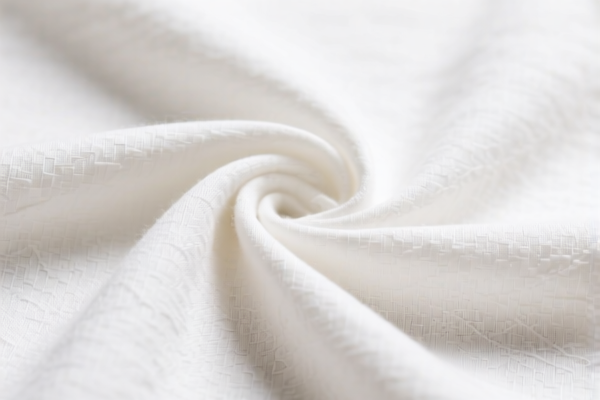
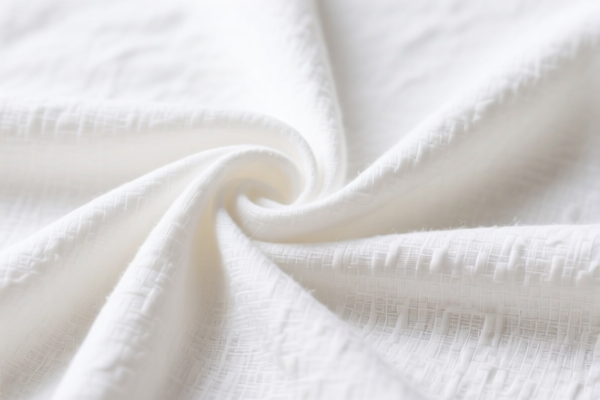


AI Analysis
🌿 Bleached Fabric (by Square Meter)
🌐 HS Code Reference & Customs Clearance Guide | 2026 Latest Tariff Breakdown | Pro-Level Import Strategy
📌 One Product, Multiple Codes — Know Exactly Where It Fits!
You're shipping bleached fabric by square meter — a common textile import — but not all bleached fabrics are taxed the same. The key lies in precise classification under the correct HS Code. Misclassify, and you could face 43.4%–48.6% total tariffs — or even penalties.
This guide breaks down every possible HS Code for your bleached fabric, explains why it’s classified that way, and gives you real-world customs advice to avoid delays, overpayment, and audits.
📦 1. HS Code Classification Breakdown (2026 Official Tariff Table)
| HS Code | Product Description | Why This Code? | Tax Rate | Key Features |
|---|---|---|---|---|
5211.20.21.35 |
Bleached fabric, by square meter, meets characteristics of cotton or cotton-blend plain weave fabric | Contains cotton or cotton blend, plain weave structure, and bleached finish | 43.4% | Must be cotton ≥ 85% and plain weave |
5208.21.20.40 |
Bleached fabric, by square meter, conforms to plain weave fabric specifications | Purely based on weave structure (plain weave), regardless of fiber content | 43.4% | Applies to any fiber (cotton, rayon, polyester) if plain weave |
5208.21.20.90 |
Bleached fabric, by square meter, matches plain weave fabric appearance | Matches visual/structural traits of plain weave (even if not fully compliant) | 43.4% | Subject to customs interpretation — higher audit risk |
5211.20.21.20 |
Bleached fabric, by square meter, fits trade characteristics of bleached fabric | Based on commercial use and trade patterns, not just fiber or weave | 43.4% | Used when technical specs are unclear — last resort code |
5407.41.00.30 |
Bleached fabric, by square meter, fits lightweight bleached fabric category | Thin, lightweight, often used in linen, curtains, apparel | 48.6% | Higher base tariff due to category classification |
🔍 Critical Insight:
- Fiber content (cotton vs. synthetic) determines the first-tier code (e.g., 5211 vs. 5407).
- Weave structure (plain, twill, satin) determines sub-classification.
- Weight, thickness, and end-use (e.g., clothing, curtains) affect final tariff rate.
💰 2. Tariff Breakdown: The Full 43.4% & 48.6% Explained
✅ Applicable Country: United States (US)
✅ Origin: China (CN)
✅ Effective Date: November 10, 2025 (and ongoing)
🎯 1. 5211.20.21.35 – Cotton/Cotton-Blend Bleached Plain Weave Fabric
| Tax Component | Rate | Legal Basis | Explanation |
|---|---|---|---|
| Base Tariff | 8.4% | US Harmonized Tariff Schedule (HTS) | Standard rate for cotton fabrics |
| Section 301 (USITC) Additional Duty | +25.0% | USITC Footnote 9903.88.01 | Applies to China-origin goods under Section 301 |
| Section 122 (IEEPA) Additional Duty | +10% | IEEPA: 9903.01.24 | Imposed under the International Emergency Economic Powers Act for China/HK products |
| Total Effective Rate | 43.4% | — | CIF × 43.4% |
📌 Why This Code?
- Must be cotton ≥ 85% and plain weave (one thread over, one under).
- If your fabric is 55% cotton / 45% polyester, this code does NOT apply — use5208.21.20.40or5208.21.20.90instead.
🎯 2. 5208.21.20.40 & 5208.21.20.90 – Plain Weave Bleached Fabric (Any Fiber)
| Tax Component | Rate | Legal Basis | Explanation |
|---|---|---|---|
| Base Tariff | 8.4% | HTS 5208.21.20 | Applies to all plain weave bleached fabrics, regardless of fiber |
| Section 301 (USITC) Additional Duty | +25.0% | USITC Footnote 9903.88.01 | Same as above — China-origin |
| Section 122 (IEEPA) Additional Duty | +10% | IEEPA: 9903.01.24 | Applies to all China-origin textiles |
| Total Effective Rate | 43.4% | — | CIF × 43.4% |
📌 Why the Difference Between 40 & 90?
-5208.21.20.40: Meets technical specs (e.g., weave density, fiber content, GSM).
-5208.21.20.90: Looks like plain weave but may not fully comply — higher audit risk.
- Use 40 if you can prove compliance; avoid 90 unless no better option.
🎯 3. 5407.41.00.30 – Lightweight Bleached Fabric (e.g., Sheer, Linen, Curtains)
| Tax Component | Rate | Legal Basis | Explanation |
|---|---|---|---|
| Base Tariff | 13.6% | HTS 5407.41.00 | Higher base rate for lightweight, fine, or specialty fabrics |
| Section 301 (USITC) Additional Duty | +25.0% | USITC Footnote 9903.88.01 | Applies to China-origin goods |
| Section 122 (IEEPA) Additional Duty | +10% | IEEPA: 9903.01.24 | Applies to all China-origin textiles |
| Total Effective Rate | 48.6% | — | CIF × 48.6% |
📌 When This Applies:
- Fabric weight < 120 g/m² (grams per square meter)
- Used in sheer curtains, lightweight apparel, linens
- Not suitable for heavy-duty use (e.g., upholstery, bags)⚠️ Warning:
- If your fabric is lightweight but labeled as "cotton", you must not use5211.20.21.35— it may be misclassified and trigger a duty reassessment.
🛠️ 3. Customs Clearance Best Practices (Pro Tips to Avoid Penalties)
✅ 1. Required Documentation (Non-Negotiable)
| Document | Must Provide? | Why It Matters |
|---|---|---|
| ✅ Product Specification Sheet | ✔️ | Includes fiber content, weave type, weight (g/m²), width, finish |
| ✅ Technical Drawings / Weave Diagram | ✔️ | Proves plain weave structure (critical for 5208.21.20.40/90) |
| ✅ Product Photos (Clear, with Label) | ✔️ | Shows texture, finish, weave pattern |
| ✅ Third-Party Lab Test Report | ✔️ | Confirms fiber composition, weight, bleaching process |
| ✅ Commercial Invoice | ✔️ | Must state: "Bleached Plain Weave Fabric, by Square Meter" |
| ✅ Certificate of Origin (CO) | ✔️ | If from Vietnam, Mexico, India, can reduce or eliminate 301/122 duties |
| ✅ Packing List | ✔️ | Shows total m², roll count, net weight |
✅ 2.申报技巧(Key Rules of Thumb)
🔥 “Fiber First, Weave Second, Weight Last — Tax Depends on the Order!”
| Scenario | Correct HS Code | Wrong Code | Risk |
|---|---|---|---|
| Cotton ≥ 85%, plain weave, 150 g/m² | 5211.20.21.35 |
5208.21.20.40 |
Overpay (same rate, but wrong code) |
| 100% polyester, plain weave, 110 g/m² | 5208.21.20.40 |
5407.41.00.30 |
Overpay 5.2% |
| 55% cotton / 45% polyester, plain weave, 130 g/m² | 5208.21.20.40 |
5211.20.21.35 |
Misclassification → penalties |
| Lightweight (80 g/m²), sheer, bleached | 5407.41.00.30 |
5208.21.20.40 |
Overpay 5.2% |
✅ 3. Special Cases & Solutions
| Situation | Recommended Action |
|---|---|
| Fabric from Vietnam/Mexico/India | Apply for Certificate of Origin → exclude 301/122 duties → tax drops to 8.4% or 13.6% |
| Customs Audit Risk (e.g., 5208.21.20.90) | Provide weave diagram + lab report to prove plain weave compliance |
| Mixed Fiber Fabric (e.g., 60% cotton, 40% rayon) | Use 5208.21.20.40 — not eligible for cotton-specific code |
| Curtain Fabric (lightweight, sheer) | Use 5407.41.00.30 — higher base tariff, but correct |
🌍 4. Global Market Comparison (2026 Tariff Snapshot)
| Country | Recommended HS Code | Tariff | Certification | Notes |
|---|---|---|---|---|
| 🇺🇸 USA | 5211.20.21.35 / 5407.41.00.30 |
43.4%–48.6% | FCC, RoHS, ISO | High-risk for China-origin |
| 🇨🇳 China | 5211.20.21.35 |
5% | CCC | No 301/122 duties |
| 🇪🇺 EU | 5208.21.20.40 |
0% (if CE) | CE, REACH | No additional tariffs |
| 🇦🇺 Australia | 5208.21.20.40 |
5% | RCM | No 301/122 |
| 🇯🇵 Japan | 5208.21.20.40 |
0% | PSE | No extra duties |
📌 Takeaway:
- USA is the only market with 301 + IEEPA tariffs on textiles.
- Shift sourcing to Vietnam/Mexico/India to avoid 43.4%+ rates.
📌 5. Common Mistakes & How to Avoid Them
❌ Mistake 1: Using 5211.20.21.35 for non-cotton fabric
👉 Result: Incorrect classification → duty reassessment + penalties
❌ Mistake 2: Using 5208.21.20.90 without proof of plain weave
👉 Result: Customs audit → delayed clearance
❌ Mistake 3: Not declaring fabric weight
👉 Result: Misclassification → overpayment or seizure
❌ Mistake 4: Using “bleached fabric” as generic name
👉 Result: No technical basis → customs may reclassify
✅ Correct申报 Phrase:
“Bleached Plain Weave Fabric, 100% Cotton, 150 g/m², 150 cm Width, by Square Meter, Certificate of Origin: CN”
🎯 6. Final Verdict: How to Win the Tariff Game
🔹 Cotton ≥ 85% + Plain Weave? →
5211.20.21.35(43.4%)
🔹 Any fiber, plain weave? →5208.21.20.40(43.4%)
🔹 Lightweight (<120 g/m²)? →5407.41.00.30(48.6%)
🔹 From Vietnam/Mexico/India? → No 301/122 → Tax drops to 8.4%–13.6%
📣 Action Plan: Get Your Fabric Through Customs Smoothly
📞 Contact a licensed customs broker + provide:
- Fabric specs
- Photos
- Lab report
- CO🚀 Apply for HS Code Pre-Ruling (Advance Ruling) — avoid surprises!
✨ Pro Tip:
If your fabric is lightweight and used in apparel, consider sourcing from Vietnam — you can avoid 301/122 tariffs entirely.
📌 Remember:
“One wrong code = 48.6% tax instead of 43.4%”
“One missing lab report = 30-day delay”
“One wrong origin = $10,000+ in penalties”
📣 Your fabric is ready — but is your HS Code?
📦 Get it right from Day 1 — or pay the price later.
💼 Precision Classification = Lower Tariffs = Faster Clearance = More Profit!
🚀 Your next shipment deserves nothing less.
Customer Reviews
About HS Code Classification
The Harmonized System (HS) is an internationally standardized nomenclature developed by the World Customs Organization (WCO) to classify traded products. Over 200 countries use the HS system as the basis for customs tariffs, trade statistics, and import/export regulations.
Each HS code follows a hierarchical structure:
- Chapter (2 digits) — Broad category of goods (e.g., Chapter 84: Machinery and Mechanical Appliances)
- Heading (4 digits) — More specific grouping within the chapter
- Subheading (6 digits) — Internationally standardized breakdown, used by all WCO member countries
- National subdivisions (8-10 digits) — Country-specific extensions for further classification, such as US HTSUS 10-digit codes
Correct HS code classification is essential for smooth customs clearance, accurate duty payment, and compliance with trade regulations. Misclassification can lead to customs delays, overpayment of duties, or penalties.
When importing from CN to US, the applicable tariff rates may include:
- Most-Favored-Nation (MFN) rate — The standard duty rate applied to WTO members
- General rate — Applied to countries without trade agreements
- Trade remedy duties — Additional tariffs such as Section 301 (anti-dumping), Section 232 (national security), or countervailing duties
The information provided on this page is for reference purposes only. For official classification, please consult with your local customs authority or a licensed customs broker.