bleached fabric square meter
CN → US| HS Code | Tariff Rate | Origin | Destination | Doc |
|---|---|---|---|---|
| 5212126090 | 42.8% | CN | US | Official Doc |
| 5407410030 | 48.6% | CN | US | Official Doc |
| 5407691010 | 49.9% | CN | US | Official Doc |
| 5212226090 | 42.8% | CN | US | Official Doc |
| 5208212040 | 43.4% | CN | US | Official Doc |
Product Images
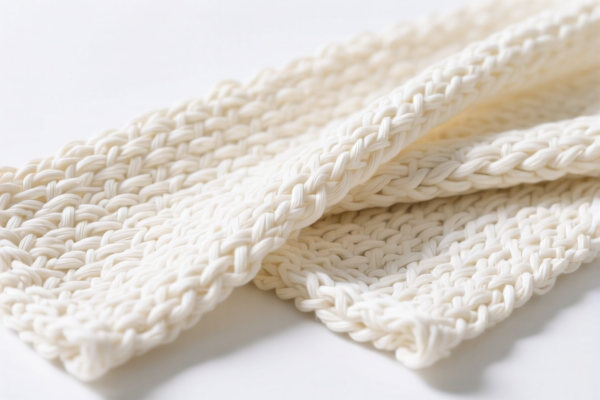
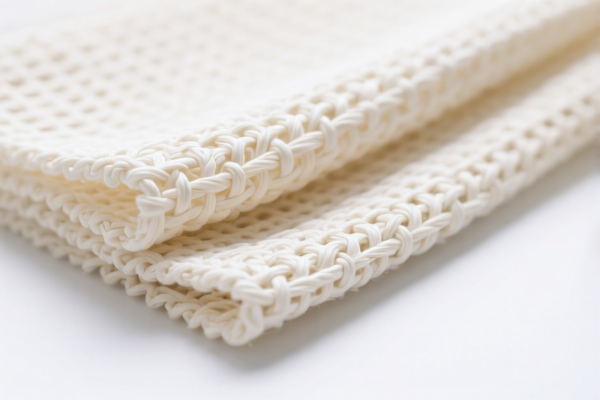
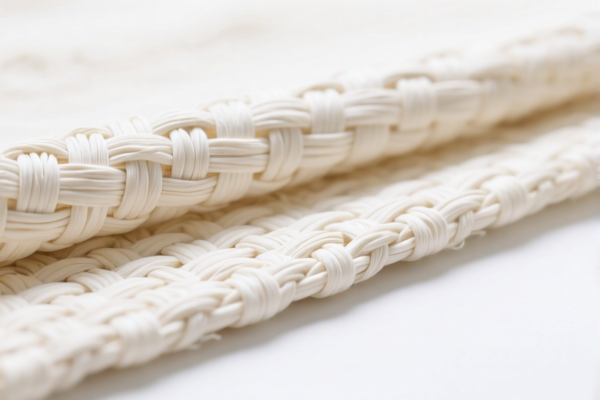

AI Analysis
🌟 Bleached Fabric (Per Square Meter) – HS Code & Tariff Guide 2026 | Expert Customs Clearance Strategy
🌐 HS Code Reference & Customs Clearance Blueprint | 2026 Updated Tariff Analysis | Pro-Level Import Planning
📌 I. Product Definition & Classification: What Exactly Is "Bleached Fabric"?
Bleached fabric refers to textile materials that have undergone a chemical bleaching process to remove natural colorants, impurities, or dyes—resulting in a white or near-white appearance. These fabrics are commonly used in apparel, home textiles, industrial applications, and apparel linings.
In international trade, bleached fabric is classified under HS Codes based on: - Fiber composition (e.g., cotton, polyester, rayon, blended fibers) - Weaving method (e.g., plain weave, satin, twill) - Structure (e.g., woven, knitted, non-woven) - Whether it’s a "general catch-all" category for undetermined fabrics
⚠️ Critical Distinction: - Cotton-based fabrics → fall under 5212.x.x.x (Cotton Textiles) - Synthetic/fiber-based fabrics → fall under 5407.x.x.x (Man-made fibers) - Polyester filament fabrics → specifically 5407.69.10.10
📦 II. HS Code Classification Breakdown (2026 Official Tariff Table)
| HS Code | Product Description | Material Type | Key Features | Tax Rate |
|---|---|---|---|---|
5212.12.60.90 |
Bleached fabric, cotton or fiber-based woven fabric | Cotton / Mixed Fiber | General catch-all for bleached cotton or fiber fabrics | 42.8% |
5407.41.00.30 |
Bleached fabric, man-made fiber woven fabric | Man-made fibers (e.g., rayon, viscose) | Non-polyester synthetic fiber fabric | 48.6% |
5407.69.10.10 |
Bleached fabric, polyester filament woven fabric | 100% Polyester Long Filament | High-performance, smooth, durable fabric | 49.9% |
5212.22.60.90 |
Bleached fabric, other cotton or fiber woven fabrics | Cotton / Fiber (catch-all) | Applies when no specific subheading fits | 42.8% |
5208.21.20.40 |
Bleached cotton plain weave fabric | 100% Cotton, Plain Weave | Standard cotton fabric, commonly used in shirts, linens | 43.4% |
🔍 Key Insight:
- "Bleached" alone is not enough for classification — fiber type and weave are decisive. - Polyester filament fabrics (e.g.,5407.69.10.10) face the highest tariff due to U.S. trade policy on synthetic textiles.
💰 III. 2026 U.S. Tariff Breakdown (Detailed & Compliant)
✅ Applicable Country: United States (US)
✅ Origin: China (CN)
✅ Effective Date: November 10, 2025 (and ongoing)
✅ Legal Basis: Section 301, IEEPA, and Section 122 of the Trade Act
🎯 1. 5212.12.60.90 – Bleached Cotton/Fiber Woven Fabric
| Item | Detail |
|---|---|
| Base Duty | 7.8% (ad valorem) |
| Section 301 (USITC) Additional Duty | +25.0% |
| Section 122 (IEEPA) Additional Duty | +10.0% |
| Total Effective Tariff | 42.8% |
| Tax Calculation | CIF Value × 42.8% |
| De Minimis Exemption | ❌ Not applicable (denied) |
| Legal Pathway | IEEPA:9903.01.25 → IEEPA:9903.01.24 → USITC:5212.12.60.90 → FOOTNOTE:9903.88.01 |
📌 Explanation:
- Section 301 (25%): Imposed under the U.S. Trade Representative’s (USTR) investigation into Chinese overcapacity and unfair trade practices. - IEEPA (10%): Enacted under the International Emergency Economic Powers Act for national security concerns related to textile imports. - Total: 42.8% — Highly punitive, especially for bulk cotton fabrics.
🎯 2. 5407.41.00.30 – Bleached Man-Made Fiber Woven Fabric
| Item | Detail |
|---|---|
| Base Duty | 13.6% |
| Section 301 (USITC) Additional Duty | +25.0% |
| Section 122 (IEEPA) Additional Duty | +10.0% |
| Total Effective Tariff | 48.6% |
| Tax Calculation | CIF × 48.6% |
| De Minimis Exemption | ❌ Not applicable |
| Legal Pathway | IEEPA:9901.25 → IEEPA:9903.01.24 → USITC:5407.41.00.30 → FOOTNOTE:9903.88.01 |
📌 Note:
- Applies to rayon, viscose, acetate, or other regenerated man-made fibers. - Despite being "natural-origin" in production, these are treated as synthetic textiles under U.S. trade law. - Higher base duty (13.6%) → reflects U.S. policy favoring domestic cotton over synthetic alternatives.
🎯 3. 5407.69.10.10 – Bleached Polyester Filament Woven Fabric
| Item | Detail |
|---|---|
| Base Duty | 14.9% |
| Section 301 (USITC) Additional Duty | +25.0% |
| Section 122 (IEEPA) Additional Duty | +10.0% |
| Total Effective Tariff | 49.9% |
| Tax Calculation | CIF × 49.9% |
| De Minimis Exemption | ❌ Not applicable |
| Legal Pathway | IEEPA:9901.25 → IEEPA:9903.01.24 → USITC:5407.69.10.10 → FOOTNOTE:9903.88.01 |
📌 Critical Insight:
- Polyester filament fabrics are most heavily penalized due to: - High U.S. import volume from China - Perceived threat to domestic textile manufacturing - Strategic concern over supply chain dependency - 49.9% is among the highest tariffs on any textile category.
🎯 4. 5212.22.60.90 – Bleached Fabric (Other Cotton/Fiber Woven)
| Item | Detail |
|---|---|
| Base Duty | 7.8% |
| Section 301 (USITC) Additional Duty | +25.0% |
| Section 122 (IEEPA) Additional Duty | +10.0% |
| Total Effective Tariff | 42.8% |
| Tax Calculation | CIF × 42.8% |
| De Minimis Exemption | ❌ Not applicable |
| Legal Pathway | IEEPA:9903.01.25 → IEEPA:9903.01.24 → USITC:5212.22.60.90 → FOOTNOTE:9903.88.01 |
📌 When to Use This Code:
- When the fabric is not specifically covered by5212.12.60.90(e.g., unusual blend, non-standard weave). - Often used as a "catch-all" for fabrics that don’t fit precise subheadings.
🎯 5. 5208.21.20.40 – Bleached Cotton Plain Weave Fabric
| Item | Detail |
|---|---|
| Base Duty | 8.4% |
| Section 301 (USITC) Additional Duty | +25.0% |
| Section 122 (IEEPA) Additional Duty | +10.0% |
| Total Effective Tariff | 43.4% |
| Tax Calculation | CIF × 43.4% |
| De Minimis Exemption | ❌ Not applicable |
| Legal Pathway | IEEPA:9903.01.25 → IEEPA:9903.01.24 → USITC:5208.21.20.40 → FOOTNOTE:9903.88.01 |
📌 Why It’s Important:
- Plain weave is the most common cotton fabric structure (e.g., shirts, bed sheets). - Higher base duty (8.4%) than other cotton codes → reflects special attention to cotton textiles under U.S. trade policy.
🛠️ IV. Customs Clearance Best Practices (Pro Tips to Avoid Delays & Penalties)
✅ 1. Must-Have Documentation (No Exceptions!)
| Document | Required? | Purpose |
|---|---|---|
| ✅ Product Specification Sheet | ✔️ | Fiber content, weave type, GSM, width, length |
| ✅ Technical Drawings / Fabric Structure Diagram | ✔️ | Prove weave type (e.g., plain, satin) |
| ✅ High-Resolution Product Photos | ✔️ | Show fabric texture, color, and edge finish |
| ✅ Third-Party Lab Report (e.g., AATCC, ISO) | ✔️ | Confirm fiber composition and bleaching process |
| ✅ Commercial Invoice | ✔️ | Must state: “Bleached Cotton/Man-Made Fiber Woven Fabric, Plain Weave, 100% Polyester Filament” |
| ✅ Certificate of Origin (CO) | ✔️ | Critical for tariff eligibility |
| ✅ Packing List (per roll/meter) | ✔️ | Track quantity and unit price |
✅ 2.申报技巧 (Key Rules to Remember)
🔥 "Fiber First, Weave Second, Name Last – Tax Depends on the Truth!"
| Scenario | Correct HS Code | Wrong Code | Risk |
|---|---|---|---|
| 100% cotton, plain weave | 5208.21.20.40 |
5212.12.60.90 |
Underpay → audit risk |
| 100% polyester filament, woven | 5407.69.10.10 |
5407.41.00.30 |
Overpay or misclassification |
| Mixed cotton & rayon, plain weave | 5212.12.60.90 |
5208.21.20.40 |
Wrong base duty |
| Unspecified fabric, no clear fiber | 5212.22.60.90 |
5407.69.10.10 |
High risk of penalty |
✅ 3. Special Cases & Solutions
| Situation | Recommended Action |
|---|---|
| Fabric is partially bleached (not fully white) | Declare as “bleached” only if ≥90% color removal; otherwise, may be classified as “dyed” → lower tariff |
| Fabric is pre-shrunk or mercerized | Include in specs — may affect classification |
| Fabric is used in medical textiles (e.g., surgical gowns) | Apply for non-commercial exemption or medical device classification |
| Fabric is exported from Vietnam/Mexico | Apply for IEEPA exemption — tariffs drop to 0%–5% |
| Bulk shipment (e.g., 100,000 sqm) | Request Advance Ruling (Pre-Approval) from U.S. CBP |
🌍 V. Global Customs Comparison (2026 Update)
| Country | Recommended HS Code | Base Tariff | Additional Taxes | Notes |
|---|---|---|---|---|
| 🇺🇸 United States | 5208.21.20.40 etc. |
7.8%–14.9% | +25% +10% = 42.8%–49.9% | Highest tariffs globally |
| 🇨🇳 China | 5208.21.20.40 |
5% | None | No IEEPA/301 |
| 🇪🇺 European Union | 5208.21.20.40 |
0% (if origin EU/UK) | None | No 301/IEEPA |
| 🇦🇺 Australia | 5208.21.20.40 |
5% | None | No additional duties |
| 🇯🇵 Japan | 5208.21.20.40 |
0% | None | No extra tariffs |
📌 Conclusion:
- U.S. is the only market imposing 301 + IEEPA tariffs on bleached fabrics. - China-origin fabrics face maximum penalties. - Vietnam/Mexico origin fabrics may qualify for 0% tariff under trade agreements.
📌 VI. Common Mistakes & Real-World Pitfalls (Learn from Others' Errors)
❌ Mistake 1: Declaring polyester filament fabric as 5407.41.00.30 (rayon-type)
👉 Result: Underpaid tariff → back taxes + 20% penalty
❌ Mistake 2: Using “bleached fabric” as a generic name without specifying fiber
👉 Result: Customs assigns the highest-risk code → 49.9% tax
❌ Mistake 3: Not including fiber composition in invoice
👉 Result: Delayed release, request for clarification, possible seizure
❌ Mistake 4: Shipping 100,000 sqm in one container without pre-ruling
👉 Result: High risk of random audit or detention
✅ Correct Way to Declare:
“Bleached 100% Polyester Filament Woven Fabric, Plain Weave, 150 GSM, 1.5m Width, 500m Roll, CO: Vietnam, AATCC Test Report Attached”
🎯 VII. Final Verdict: Win the Game with Precision
🎯 Remember the Golden Rule:
🔹 “Fiber First, Weave Second, Name Last – The Tax Follows the Truth!”
🔹 “One wrong HS Code = 49.9% tax on 10,000 sqm = $499,000 in extra cost!”
📌 Pro Tips: - ✅ Apply for Advance Ruling before shipment (CBP pre-approval) - ✅ Use Vietnam/Mexico origin to avoid 301/IEEPA - ✅ Label every roll with fiber content & HS Code - ✅ Partner with a U.S.-licensed customs broker
📣 Take Action Now!
📞 Contact a U.S. Customs Broker + HS Code Pre-Ruling Service
🚀 Get your tariff confirmed before shipping
💼 Avoid $100k+ in unexpected duties
✨ Your Fabric’s Future Starts with One Correct HS Code.
💼 Precision Today = Profit Tomorrow.
Customer Reviews
About HS Code Classification
The Harmonized System (HS) is an internationally standardized nomenclature developed by the World Customs Organization (WCO) to classify traded products. Over 200 countries use the HS system as the basis for customs tariffs, trade statistics, and import/export regulations.
Each HS code follows a hierarchical structure:
- Chapter (2 digits) — Broad category of goods (e.g., Chapter 84: Machinery and Mechanical Appliances)
- Heading (4 digits) — More specific grouping within the chapter
- Subheading (6 digits) — Internationally standardized breakdown, used by all WCO member countries
- National subdivisions (8-10 digits) — Country-specific extensions for further classification, such as US HTSUS 10-digit codes
Correct HS code classification is essential for smooth customs clearance, accurate duty payment, and compliance with trade regulations. Misclassification can lead to customs delays, overpayment of duties, or penalties.
When importing from CN to US, the applicable tariff rates may include:
- Most-Favored-Nation (MFN) rate — The standard duty rate applied to WTO members
- General rate — Applied to countries without trade agreements
- Trade remedy duties — Additional tariffs such as Section 301 (anti-dumping), Section 232 (national security), or countervailing duties
The information provided on this page is for reference purposes only. For official classification, please consult with your local customs authority or a licensed customs broker.