Bleached Woven Artificial Short Fiber Linen Fabric
CN → US| HS Code | Tariff Rate | Origin | Destination | Doc |
|---|---|---|---|---|
| 5311003090 | 35.0% | CN | US | Official Doc |
| 5309213070 | 41.9% | CN | US | Official Doc |
| 5311003070 | 35.0% | CN | US | Official Doc |
| 5309214090 | 35.0% | CN | US | Official Doc |
Product Images
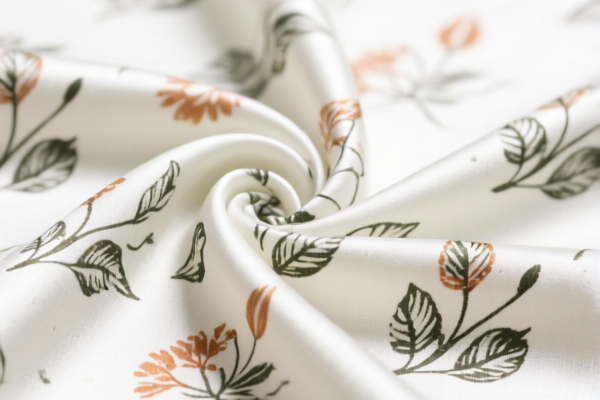
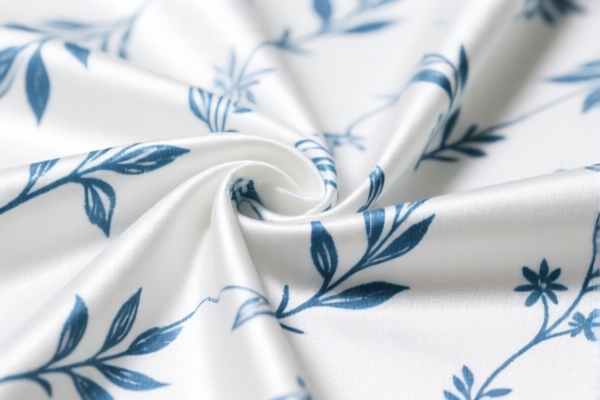
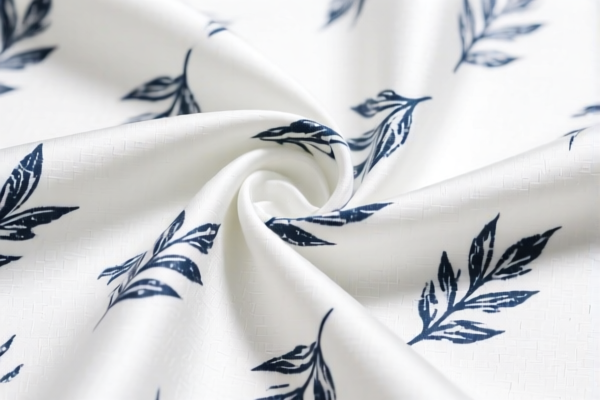
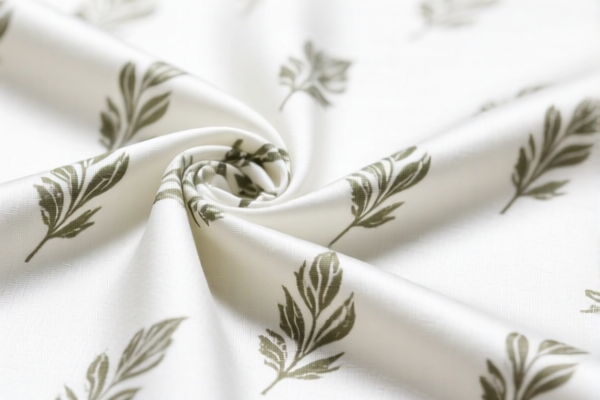
AI Analysis
🧵 Bleached Woven Artificial Short Fiber Linen Fabric (Textile Classification Guide)
🌐 HS Code Reference & Customs Clearance Guide | 2026 Latest Tariff Analysis | Professional Compliance Strategy
📌 I. Product Definition & Classification: What Exactly is "Bleached Woven Artificial Short Fiber Linen Fabric"?
In international textile trade, Bleached Woven Artificial Short Fiber Linen Fabric is not a single, monolithic category. It is a complex composite material defined by three critical attributes: 1. Material Composition: A blend of Artificial Short Staple Fibers (man-made) and Linen (flax/natural). 2. Construction Method: Woven (interlaced yarns), not non-woven or knitted. 3. Processing State: Bleached (chemically treated to remove natural coloration, resulting in a white/off-white appearance).
⚠️ Key Classification Logic:
- If the fabric is primarily artificial short fiber (>50% or chief weight), it may fall under Chapter 53 heading 5311. - If the fabric is primarily linen (flax) with artificial short fiber as an additive, it may fall under Chapter 53 heading 5309. - Crucial Distinction: The exact HS Code depends on whether the "Linen" component defines the fabric's character (Heading 5309) or if the "Artificial Short Fiber" defines it (Heading 5311).
📦 II. HS Code Classification Details (2026 Latest Tariff Mapping)
Based on the provided data, here are the specific HS Codes and their corresponding definitions for this product:
| HS Code | Product Description (Summary) | Composition & Processing |
|---|---|---|
| 5311.00.30.90 | Bleached woven fabric of artificial short fibers, containing linen; meets textile classification standards. | Chief Weight: Artificial Short Fiber + Linen. State: Woven, Bleached. Note: Classified under artificial short fibers. |
| 5309.21.30.70 | Bleached woven fabric of linen, containing artificial short fibers; woven and bleached. | Chief Weight: Linen (Flax) + Artificial Short Fiber. State: Woven, Bleached. Note: Classified under Linen. |
| 5311.00.30.70 | Bleached woven fabric of artificial short fibers and linen; woven fabric. | Chief Weight: Artificial Short Fiber. State: Woven, Bleached. Note: Specific sub-category for artificial short fiber blends. |
| 5309.21.40.90 | Bleached woven fabric of linen, containing artificial short fibers; woven, bleached, non-specific width. | Chief Weight: Linen. State: Woven, Bleached. Note: Classified under Linen, specific width parameters not primary differentiator. |
🔍 Critical Insight:
- HS 5311... implies the Artificial Short Fiber is the dominant material or the defining characteristic. - HS 5309... implies the Linen (Flax) is the dominant material or the defining characteristic. - Do not mix these up! Misclassification can lead to significant tariff differences due to USITC Section 301 tariffs.
💰 III. 2026 Latest Tariff Rate Breakdown (Including Additional Taxes & Policy Surcharges)
✅ Applicable Country: United States (US)
✅ Country of Origin: China (CN)
✅ Effective Date: From November 10, 2025 (and subsequent imports)
🎯 1. HS Codes 5311.00.30.90 & 5311.00.30.70 – Artificial Short Fiber Based Fabrics
| Item | Content |
|---|---|
| Base Tariff Rate | 0.0% (ad valorem) |
| USITC Section 301 Surcharge | +25.0% (Applicable to Chinese-origin goods under Section 301) |
| IEEPA Surcharge (Section 122) | +10.0% (Applicable to Chinese-origin goods under IEEPA) |
| Total Tax Rate | 35.0% |
| Tax Calculation | CIF Value × 35% |
| De Minimis Eligibility | ❌ No (Not eligible for de minimis exemption; denial_de_minimis applies) |
| Legal Basis Path | IEEPA:9903.01.25 → USITC:5311.00.30.90 → FOOTNOTE:301 |
📌 Explanation:
- Base 0%: These textile categories often have low base MFN rates. - +25% (Section 301): The major penalty for Chinese textiles. - +10% (IEEPA/122): Additional geopolitical surcharge. - Total 35%: This is a high-cost category. Proper declaration of "Artificial Short Fiber" dominance is critical to avoid being misclassified under higher-base-rate linen codes if not intended, but note that both groups above face similar surcharges.
🎯 2. HS Codes 5309.21.30.70 & 5309.21.40.90 – Linen Based Fabrics
| Item | Content |
|---|---|
| Base Tariff Rate | 6.9% (ad valorem) |
| USITC Section 301 Surcharge | +25.0% (Applicable to Chinese-origin goods under Section 301) |
| IEEPA Surcharge (Section 122) | +10.0% (Applicable to Chinese-origin goods under IEEPA) |
| Total Tax Rate | 41.9% |
| Tax Calculation | CIF Value × 41.9% |
| De Minimis Eligibility | ❌ No (Not eligible for de minimis exemption; denial_de_minimis applies) |
| Legal Basis Path | IEEPA:9903.01.24 → USITC:5309.21.30.70 → FOOTNOTE:301 |
📌 Note:
- Base 6.9%: Linen fabrics generally have a higher base duty than artificial short fiber blends. - +25% + +10%: Same surcharges apply. - Total 41.9%: This is the highest tax bracket among the provided options. - Risk: If your fabric is actually dominated by artificial fibers but declared as Linen (HS 5309), you pay more duty. Conversely, if it's Linen-dominated but declared as Artificial (HS 5311), you risk misdeclaration penalties despite a lower tariff rate. Accuracy is paramount.
🛠️ IV. Customs Clearance Practical Advice (Battle-Tested Pitfall Avoidance)
✅ 1. Required Documentation Checklist (All Mandatory)
| Document | Required? | Description |
|---|---|---|
| ✅ Technical Specification Sheet | ✔️ | Must detail % composition of Linen vs. Artificial Short Fiber. Critical for Chapter 53 heading determination. |
| ✅ Weave Structure Diagram | ✔️ | Proof of "Woven" construction (not knitted/non-woven). |
| ✅ Bleaching Process Certificate | ✔️ | Confirms the "Bleached" state, distinguishing it from "Grey" or "Dyed" fabrics. |
| ✅ Commercial Invoice | ✔️ | Must clearly state: "Bleached Woven Fabric," Composition, and HS Code. |
| ✅ Packing List | ✔️ | Detail weight, dimensions, and bundle count. |
| ✅ Certificate of Origin (CO) | ✔️ | Required to verify Chinese origin and apply surcharges. |
✅ 2. Declaration Strategy (Key Mantra)
🔥 "Check Fiber Dominance! 5311 vs. 5309 decides the fate. Don't guess, specify the %!"
| Scenario | Correct Declaration | Wrong Practice |
|---|---|---|
| Fabric is >50% Artificial Short Fiber | HS 5311.00.30.70/90 | Declare as Linen → 41.9% Duty (Overpayment) + Risk of Rejection if % is wrong. |
| Fabric is >50% Linen | HS 5309.21.30.70/40.90 | Declare as Artificial → 35.0% Duty (Underpayment) → Penalties for Undervaluation. |
| Fabric is a Blend | Must Declare Exact % | Vague terms like "Linen Blend" → Customs holds shipment for clarification. |
| "Non-Specific Width" | HS 5309.21.40.90 | Specific width declared when none → Misclassification. |
✅ 3. Special Cases & Handling
| Situation | Handling Advice |
|---|---|
| Mixed Bundles | If a single shipment contains both 5309 and 5311 goods, separate line items must be used. Do not average the duty rate. |
| OEM/Custom Blends | Provide the mill's composition test report. If the ratio is close (e.g., 49% Linen / 51% Artificial), the classification shifts to 5311. |
| Post-Processing | If the fabric is later dyed or printed, the HS Code remains 5309/5311 but the description changes to "Dyed" or "Printed." Ensure the current invoice matches the "Bleached" status. |
| De Minimis ($800) | ❌ Not Applicable. Both 35% and 41.9% rates apply, and Section 321 de minimis rules explicitly exclude textiles from China with high surcharges in many contexts, or the value exceeds the threshold. |
🌍 V. Global Market Comparison (2026 Outlook)
| Country/Region | Recommended HS Code | Est. Duty (China Origin) | Certification Req. | Notes |
|---|---|---|---|---|
| 🇺🇸 USA | 5311.00.30.70/90 or 5309.21.30.70 |
35.0% or 41.9% | None for textiles, but Section 301/IEEPA apply | Highest cost market due to tariffs. |
| 🇨🇳 China | 5311.00.30.90 or 5309.21.30.70 |
Varies (0-10%) | CCC (if applicable), RoHS | No Section 301 tariffs. |
| 🇪🇺 EU | 5311.00.30 or 5309.21 |
0-8% | REACH Compliance | No geopolitical surcharges. |
| 🇬🇧 UK | 5311.00.30 or 5309.21 |
0-8% | UKCA Marking (if finished goods) | Post-Brexit rules apply. |
| 🇦🇺 Australia | 5311.00.30 or 5309.21 |
5% | None specific for raw fabric | AUSFTA may offer benefits if origin is different. |
📌 Conclusion:
- The US market is punitive due to the叠加 (stacked) tariffs of 25% (Section 301) + 10% (IEEPA). - Linen-based (5309) fabrics are more expensive to import into the US than Artificial-based (5311) fabrics due to the 6.9% base rate. - Supply Chain Advice: If possible, consider sourcing linen from non-China origins (e.g., EU, Vietnam) to avoid the 25% + 10% surcharges, reducing the total cost significantly.
📌 VI. Common Errors & Pitfall Guide (Lessons Learned)
❌ Error 1: Declaring "Linen Fabric" when the fabric is actually dominated by artificial fibers.
👉 Consequence: Customs may reclassify to 5311, but if the importer underpaid, they face fraud penalties. If they overpaid, getting a refund is difficult.
❌ Error 2: Using vague descriptions like "Textile Fabric" on the invoice.
👉 Consequence: Customs will assign a residual duty rate (often the highest available) or hold the shipment for 10+ days for clarification.
❌ Error 3: Ignoring the "Bleached" status.
👉 Consequence: If the fabric is actually "Grey" (unbleached), the HS Code might differ, affecting duty. Misdescription leads to valuation audits.
❌ Error 4: Assuming "De Minimis" applies for small shipments.
👉 Consequence: Shipment seized or returned. Textiles from China are strictly scrutinized for tariff evasion.
✅ Correct Practice:
"Bleached Woven Fabric, 55% Linen, 45% Artificial Short Fiber, 100cm Width, Made in China, HS Code 5309.21.30.70"
🎯 VII. Conclusion: Precision is Profit!
🎯 Remember the Mantra:
🔹 "Linen Dominance? Pay 41.9%. Artificial Dominance? Pay 35.0%. Don't Guess, Check the %!"
🔹 "Section 301 + IEEPA = 35% Minimum. Avoid China Origin to Save 35%!"
📌 Pro Tip:
If your fabric contains <50% Linen, you MUST classify under 5311. If it contains >50% Linen, you MUST classify under 5309.
✅ Recommendation: Apply for a Pre-Ruling (ISD) from US Customs (CBP) if the composition is borderline (e.g., 49/51) to avoid post-import audits.
📣 Immediate Action:
📞 Contact a licensed customs broker.
📄 Provide your mill's composition test report.
🚀 Optimize your supply chain by considering non-China origins for linen components.
✨ Professional Clearance Starts with Accurate Classification!
💼 Every 6.9% Base Rate Difference Counts!
Customer Reviews
About HS Code Classification
The Harmonized System (HS) is an internationally standardized nomenclature developed by the World Customs Organization (WCO) to classify traded products. Over 200 countries use the HS system as the basis for customs tariffs, trade statistics, and import/export regulations.
Each HS code follows a hierarchical structure:
- Chapter (2 digits) — Broad category of goods (e.g., Chapter 84: Machinery and Mechanical Appliances)
- Heading (4 digits) — More specific grouping within the chapter
- Subheading (6 digits) — Internationally standardized breakdown, used by all WCO member countries
- National subdivisions (8-10 digits) — Country-specific extensions for further classification, such as US HTSUS 10-digit codes
Correct HS code classification is essential for smooth customs clearance, accurate duty payment, and compliance with trade regulations. Misclassification can lead to customs delays, overpayment of duties, or penalties.
When importing from CN to US, the applicable tariff rates may include:
- Most-Favored-Nation (MFN) rate — The standard duty rate applied to WTO members
- General rate — Applied to countries without trade agreements
- Trade remedy duties — Additional tariffs such as Section 301 (anti-dumping), Section 232 (national security), or countervailing duties
The information provided on this page is for reference purposes only. For official classification, please consult with your local customs authority or a licensed customs broker.