Braided Ethnic Style Handbag
CN → US| HS Code | Tariff Rate | Origin | Destination | Doc |
|---|---|---|---|---|
| 4602112100 | 41.2% | CN | US | Official Doc |
| 4202224020 | 42.4% | CN | US | Official Doc |
| 4202228980 | 52.6% | CN | US | Official Doc |
| 4602192920 | 40.3% | CN | US | Official Doc |
Product Images
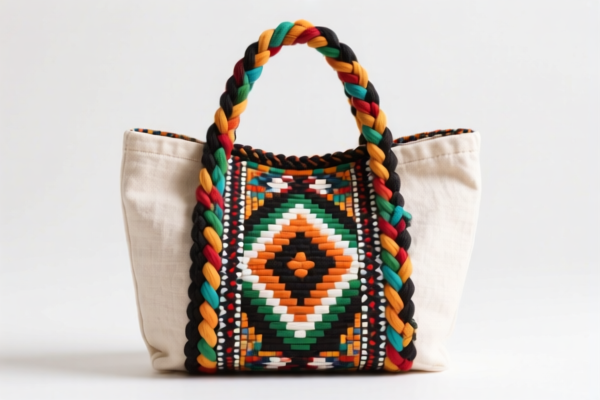
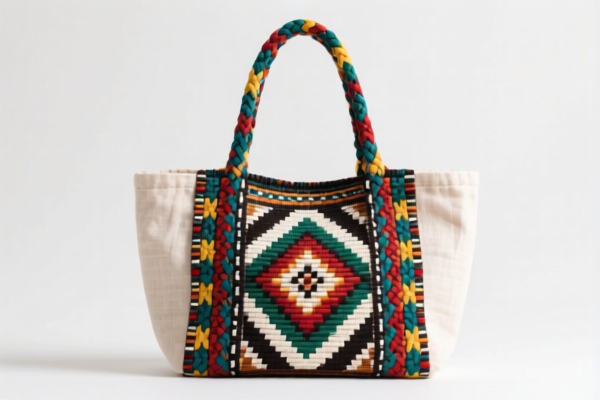
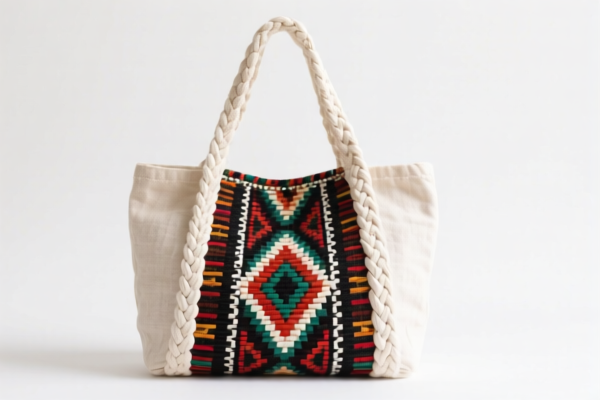
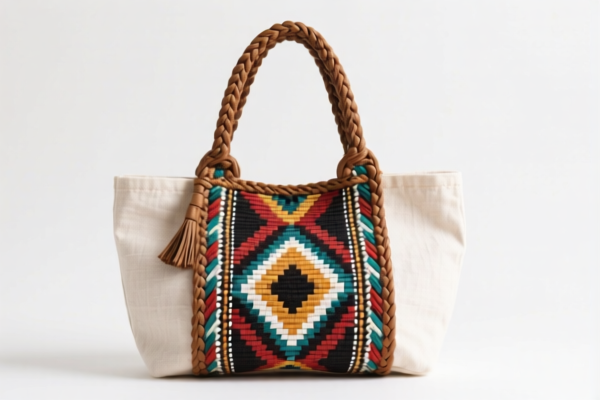
AI Analysis
👜 Braided Ethnic Style Handbag (Handbags of woven materials)
🌐 HS Code Reference & Customs Clearance Guide | 2026 Latest Tariff Analysis | Professional Clearance Strategy
📌 I. Product Definition and Classification: Do You Really Understand "Braided Bags"?
The Braided Ethnic Style Handbag is a popular accessory characterized by its natural, rustic aesthetic and intricate weaving techniques. In international trade, "handbag" is not a single harmonized code but a broad category that splits sharply based on material composition. The key to accurate classification lies in distinguishing between plant materials (bamboo, rattan, straw) and textile/synthetic weaving materials.
1. Plant-Based Weaving (Bamboo, Rattan, etc.):
Governed by Chapter 46 (Articles of bamboo, cork, or of materials made from plaiting materials). These are classified under heading 4602.
2. Textile or Other Woven Materials:
Governed by Chapter 42 (Articles of leather; saddlery and harness). These are classified under heading 4202, specifically subheading 4202.22 (Handbags with outer surface of textile materials) or 4202.21 (if leather/fur).
⚠️ Key Distinction Point:
- If the bag is made primarily of bamboo, rattan, straw, or other plaiting materials → Go to Chapter 46 (HS 4602.xxxx).
- If the bag is made of woven fabric, straw hat material, or other textile strips that do not qualify as "plaiting materials" in the Chapter 46 sense → Go to Chapter 42 (HS 4202.xxxx).
- Note: Many "ethnic style" bags use synthetic fibers woven to look like natural materials. If they are classified as textile articles, they fall under 4202.
📦 II. HS Code Classification Details (2026 Latest Tariff Authority Comparison)
Based on the provided data, here are the specific HS Codes and their tax implications for US imports from China:
| HS Code | Product Description | Material Specification | Classification Chapter |
|---|---|---|---|
4602.11.21.00 |
Woven handbag | Bamboo, rattan, or similar plant materials | Chapter 46 (Articles of Plaiting Materials) |
4602.19.29.20 |
Woven handbag | Other plant materials (e.g., reed, seagrass not specifically listed in 4602.11) | Chapter 46 (Articles of Plaiting Materials) |
4202.22.40.20 |
Woven handbag | Woven materials (Generic textile weaving, not specific plant plaiting) | Chapter 42 (Articles of Leather; Handbags) |
4202.22.89.80 |
Woven handbag | Textile materials (Other textile handbags) | Chapter 42 (Articles of Leather; Handbags) |
🔍 Important Reminder:
- Chapter 46 vs. Chapter 42: This is the most common classification error.
-4602items are "articles of plaiting materials" (e.g., sturdy bamboo baskets converted into bags).
-4202items are "handbags of textile materials" (e.g., fabric straps, woven polyester, straw hats used as bags).
- Customs Risk: Misclassifying a bamboo bag as a textile bag (4202) or vice versa can lead to severe penalties, as the base tariffs differ significantly (e.g., 6.2% vs. 7.4% or 17.6%).
💰 III. 2026 Latest Tariff Rate Breakdown (Including Surtaxes and Policy Add-ons)
✅ Applicable Country: United States (US)
✅ Origin: China (CN)
✅ Effective Date: Current tariff structure including Section 301 and Section 122 surcharges.
🎯 1. 4602.11.21.00 —— Woven Handbag (Bamboo/Rattan)
| Item | Content |
|---|---|
| Base Duty Rate | 6.2% |
| Section 301 Surcharge | +25.0% |
| Section 122 Surcharge | +10.0% |
| Total Effective Rate | 41.2% |
| Tax Calculation | CIF Value × 41.2% |
| De Minimis Exemption | ❌ Not Eligible (High duty rates disqualify from 80/90/1000 provisions depending on current policy) |
| Legal Basis Path | HTSUS:4602.11.21.00 → Section 301: Footnote 9903.88.03 → Section 122: 19 U.S.C. 1628 |
📌 Explanation:
- Base 6.2%: Standard Most Favored Nation (MFN) rate for plant-based plaiting articles.
- +25% Section 301: Retaliatory tariffs on Chinese goods under Trade Act Section 301.
- +10% Section 122: Emergency tariffs on certain textiles/apparel/plaiting goods (if applicable under current enforcement).
- Total 41.2%: This is a high-cost entry. Proper classification is critical to ensure you aren’t paying the higher textile rates by mistake.
🎯 2. 4202.22.40.20 —— Woven Handbag (Woven Materials)
| Item | Content |
|---|---|
| Base Duty Rate | 7.4% |
| Section 301 Surcharge | +25.0% |
| Section 122 Surcharge | +10.0% |
| Total Effective Rate | 42.4% |
| Tax Calculation | CIF Value × 42.4% |
| De Minimis Exemption | ❌ Not Eligible |
| Legal Basis Path | HTSUS:4202.22.40.20 → Section 301: Footnote 9903.88.03 → Section 122: 19 U.S.C. 1628 |
📌 Note:
- Slightly higher base rate (7.4% vs. 6.2%) compared to bamboo goods.
- Applies to bags made from woven fabrics or non-specific plaiting materials.
🎯 3. 4202.22.89.80 —— Woven Handbag (Textile Materials)
| Item | Content |
|---|---|
| Base Duty Rate | 17.6% |
| Section 301 Surcharge | +25.0% |
| Section 122 Surcharge | +10.0% |
| Total Effective Rate | 52.6% |
| Tax Calculation | CIF Value × 52.6% |
| De Minimis Exemption | ❌ Not Eligible |
| Legal Basis Path | HTSUS:4202.22.89.80 → Section 301: Footnote 9903.88.03 → Section 122: 19 U.S.C. 1628 |
📌 Critical Warning:
- This is the MOST expensive classification in the dataset.
- If your "braided ethnic bag" is actually made of textile strips or synthetic woven fabric rather than rigid plant materials, you will hit this 52.6% rate.
- Risk: Many importers assume all "straw" or "woven" bags are cheap Chapter 46 items, but if they are classified as textile articles, the base duty jumps from ~6% to 17.6%, adding an extra 11.2% to the total burden.
🎯 4. 4602.19.29.20 —— Woven Handbag (Other Plant Materials)
| Item | Content |
|---|---|
| Base Duty Rate | 5.3% |
| Section 301 Surcharge | +25.0% |
| Section 122 Surcharge | +10.0% |
| Total Effective Rate | 40.3% |
| Tax Calculation | CIF Value × 40.3% |
| De Minimis Exemption | ❌ Not Eligible |
| Legal Basis Path | HTSUS:4602.19.29.20 → Section 301: Footnote 9903.88.03 → Section 122: 19 U.S.C. 1628 |
📌 Explanation:
- This code is for other plant materials not specifically listed under 4602.11 (like bamboo/rattan).
- It offers the lowest total duty rate (40.3%) among all options.
- Strategy: If your bag is made of reed, seagrass, or other natural plant fibers, ensure it is classified here rather than under Chapter 42 to save 2.3% - 12.3% in duties.
🛠️ IV. Customs Clearance Practical Advice (Real-World Pitfall Guide)
✅ 1. Required Documentation Checklist (Non-negotiable)
| Document | Must Provide | Description |
|---|---|---|
| ✅ Product Specification Sheet | ✔️ | Detailed list of materials (e.g., "100% Natural Bamboo," "Polyester Woven Strap"). |
| ✅ Material Composition Certificate | ✔️ | Third-party lab report confirming % of plant vs. synthetic materials. |
| ✅ Product Photos (Clear) | ✔️ | Show texture, weave pattern, lining, and hardware. Distinguish between rigid plant stems and soft fabric strips. |
| ✅ Commercial Invoice | ✔️ | Must specify "Handbag" and material type clearly (e.g., "Bamboo Woven Handbag," not just "Bag"). |
| ✅ Packing List | ✔️ | Ensure quantities match invoice. |
| ✅ Supply Chain Proof | ✔️ | Bills of Lading, Purchase Orders to prove origin is China (triggering Section 301/122). |
✅ 2. Declaration Tips (Key Mantra)
🔥 "Material Defines Code, Code Defines Duty, Misclassification is Costly!"
| Situation | Correct Declaration | Wrong Approach |
|---|---|---|
| Bag made of Bamboo/Rattan | 4602.11.21.00 (6.2% base) |
Misdeclare as 4202.22.89.80 → 17.6% base (+11.4% extra tax!) |
| Bag made of Reeds/Straw (Non-Bamboo) | 4602.19.29.20 (5.3% base) |
Misdeclare as 4202.22.40.20 → 7.4% base (+2.1% extra tax) |
| Bag made of Fabric/Woven Textile | 4202.22.40.20 or 4202.22.89.80 |
Misdeclare as 4602... → Customs will reject/penalize for false classification |
| Mixed Materials (e.g., Leather Handle + Bamboo Body) | Classify by Essential Character (Usually Bamboo → 4602) |
Split declaration → Complex valuation, high risk of audit |
✅ 3. Special Scenarios Handling
| Scenario | Handling Advice |
|---|---|
| "Ethnic Style" with Synthetic Fibers | If the "straw" is actually polyester/nylon, it MUST be 4202. Do not attempt to classify as plant material (4602). |
| Bamboo Bag with Fabric Lining | The lining is incidental. The bag is still classified under 4602 based on the bamboo exterior. |
| Bamboo Bag with Leather Straps | If the leather straps are merely for handling and the body is plant-based, it remains 4602. If the body is leather, it moves to 4202.21. |
| Customs Audit Trigger | If the HS Code changes, ensure the commercial invoice reflects the change in material description to match the HTSUS. |
🌍 V. Global Market Clearance Comparison (2026 Latest)
| Country/Region | Recommended HS Code | Base Tariff | Additional Surcharges | Total Est. Rate | Notes |
|---|---|---|---|---|---|
| 🇺🇸 USA | 4602.11.21.00 / 4202.22.89.80 |
6.2% - 17.6% | +35% (301 + 122) | 41.2% - 52.6% | Highest burden in the list. |
| 🇨🇳 China (Import) | 4602.11.00 / 4202.22 |
5% - 10% | None | 5% - 10% | Preferential if from ASEAN/RCEP. |
| 🇪🇺 EU | 4602.11 / 4202.22 |
0% - 6% | None | 0% - 6% | No Section 301/122 equivalents. |
| 🇦🇺 Australia | 4602.11 / 4202.22 |
5% | None | 5% | Generally low duties. |
| 🇯🇵 Japan | 4602.11 / 4202.22 |
0% - 8% | None | 0% - 8% | CPTPP benefits may apply. |
📌 Conclusion:
- The USA market is uniquely punitive for Chinese-made braided bags due to the 35% combined surcharge (25% 301 + 10% 122).
- Chapter 46 (Plant Materials) is slightly more favorable than Chapter 42 (Textiles) due to lower base rates.
- European, Australian, and Japanese markets offer significantly better margin protection for these goods.
📌 VI. Common Errors & Pitfall Guide (Lessons Learned)
❌ Error 1: Calling all woven bags "Straw Bags" and classifying them all under 4602.
👉 Consequence: If the bag is synthetic textile, customs will reclassify to 4202.22.89.80, charging 52.6% instead of 41.2%. Result: Sudden 11.4% cost hike.
❌ Error 2: Ignoring the Section 122 tariff.
👉 Consequence: Some braided/plaiting goods are subject to Section 122 (emergency tariffs). Failing to include the +10% leads to underpayment, penalties, and delayed release.
❌ Error 3: Vague Description ("Ethnic Bag").
👉 Consequence: Customs cannot determine if it is plant or textile. They may apply the highest default duty or hold the shipment for inspection.
✅ Correct Description: "Women's Handbag, Woven Bamboo Exterior, Fabric Lining, Cotton Handle, Ethnic Style."
❌ Error 4: Assuming "De Minimis" applies.
👉 Consequence: Due to high duties (>10% base + surcharges), these goods are excluded from low-value exemptions (Section 321). No de minimis for these!
🎯 VII. Conclusion: Professional Declaration Saves Money!
🎯 Remember the Mantra:
🔹 "Plant vs. Textile: Know your material!
🔹 Chapter 46 (Bamboo/Straw): ~41% Total Duty.
🔹 Chapter 42 (Textile): ~52.6% Total Duty.
🔹 Section 301 + 122 = 35% Surcharge on ALL.
🔹 Misclassification = Costly Mistake!"
📌 Pro Tip:
- For USA imports, if you can prove the material is 100% natural plant (Bamboo/Rattan/Reed), prioritize 4602.19.29.20 (40.3% total) or 4602.11.21.00 (41.2% total).
- Avoid 4202.22.89.80 (52.6%) by ensuring your "woven" bags are genuinely textile and not just mislabeled plant products.
- Request Pre-Consultation with CBP if your material composition is mixed (e.g., bamboo + leather handles) to secure the lower Chapter 46 classification.
📣 Immediate Action:
📞 Contact your Customs Broker with high-res photos and material specs.
📄 Apply for a Binding Ruling if this is a high-volume SKU.
🚀 Optimize your supply chain to absorb the 35% surcharge by choosing the correct, lower-duty HS Code.
✨ Professional Clearance Starts with Accurate Classification!
💼 Every Percentage Point Matters in High-Tariff Markets!
Customer Reviews
About HS Code Classification
The Harmonized System (HS) is an internationally standardized nomenclature developed by the World Customs Organization (WCO) to classify traded products. Over 200 countries use the HS system as the basis for customs tariffs, trade statistics, and import/export regulations.
Each HS code follows a hierarchical structure:
- Chapter (2 digits) — Broad category of goods (e.g., Chapter 84: Machinery and Mechanical Appliances)
- Heading (4 digits) — More specific grouping within the chapter
- Subheading (6 digits) — Internationally standardized breakdown, used by all WCO member countries
- National subdivisions (8-10 digits) — Country-specific extensions for further classification, such as US HTSUS 10-digit codes
Correct HS code classification is essential for smooth customs clearance, accurate duty payment, and compliance with trade regulations. Misclassification can lead to customs delays, overpayment of duties, or penalties.
When importing from CN to US, the applicable tariff rates may include:
- Most-Favored-Nation (MFN) rate — The standard duty rate applied to WTO members
- General rate — Applied to countries without trade agreements
- Trade remedy duties — Additional tariffs such as Section 301 (anti-dumping), Section 232 (national security), or countervailing duties
The information provided on this page is for reference purposes only. For official classification, please consult with your local customs authority or a licensed customs broker.