Braided Handbag (Waterproof)
CN → US| HS Code | Tariff Rate | Origin | Destination | Doc |
|---|---|---|---|---|
| 4202224020 | 42.4% | CN | US | Official Doc |
| 4602192940 | 40.3% | CN | US | Official Doc |
| 4602192920 | 40.3% | CN | US | Official Doc |
| 4202223500 | 43.4% | CN | US | Official Doc |
| 3926903300 | 16.5% | CN | US | Official Doc |
Product Images
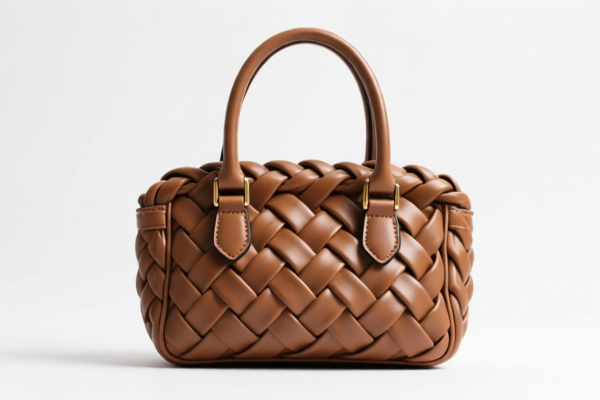
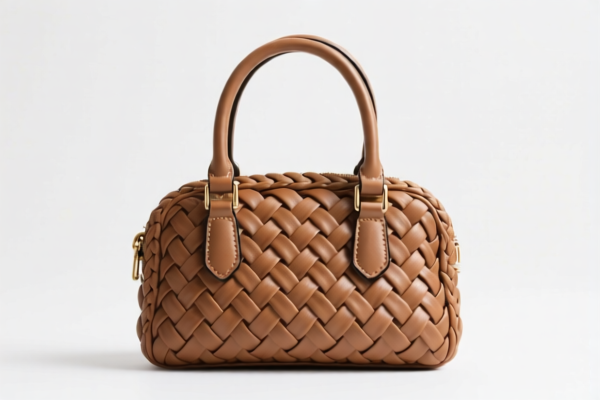
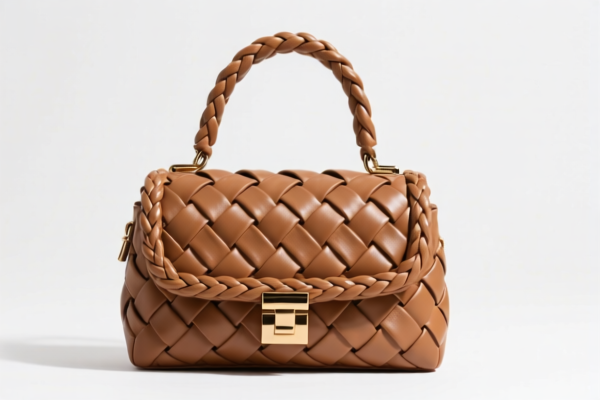
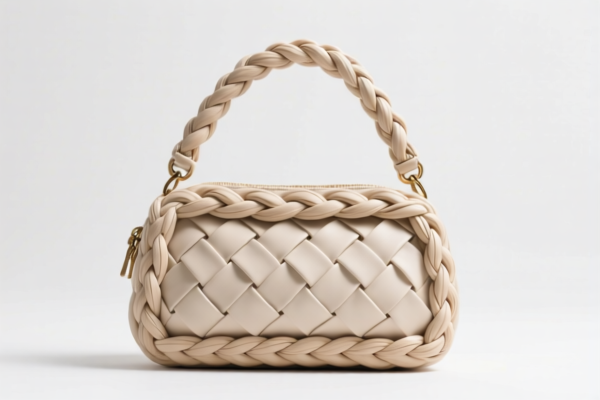
AI Analysis
👜 Braided Handbag (Waterproof)
🌐 HS Code Reference & Customs Clearance Guide | 2026 Latest Tariff Analysis | Professional Entry Strategy
📌 I. Product Definition & Classification: What Exactly is a "Braided Handbag"?
A Braided Handbag is a fashion accessory characterized by its woven or interlaced structure ("Braided") and specific utility ("Handbag"). The addition of "Waterproof" suggests a functional treatment or material composition, but for HS Code classification purposes, the primary determinants are Material and Outer Surface Composition.
In international trade, these bags are generally split into two major categories based on their outer material: 1. Textile/Plant Fiber Based: Made from woven fabrics, raffia, straw, or synthetic textiles (e.g., Nylon/Polyester braiding). 2. Plastic/Synthetic Based: Made from plastic fibers or treated plastic materials.
⚠️ Key Classification Point:
- If the outer surface is textile (woven fabric) or plant material (straw/rattan) → Group 42 (Leather/Textile) or Group 46 (Vegetable Plaiting Materials).
- If the outer surface is plastic (including synthetic braided plastics) → Group 39 (Plastics).
- Note: "Waterproof" alone does not change the HS code unless it fundamentally alters the material class (e.g., plasticized cloth vs. natural fiber).
📦 II. HS Code Classification Details (2026 Latest Tariff Reference)
Based on the provided data, here are the four most relevant HS Codes for a "Braided Handbag," categorized by material inference:
| HS Code | Product Description | Material Basis | Total Tax Rate |
|---|---|---|---|
4202.22.40.20 |
Articles of apparel or clothing accessories, handbags, pocketbooks... with outer surface of textile materials | Inferred as Textile/Braided Fabric due to lack of specific material data. | 42.4% |
4202.22.35.00 |
Handbags, pocketbooks, pouches... with outer surface of textile materials | Inferred as Textile (Manila hemp-like or general woven textile). | 43.4% |
4602.19.29.40 |
Articles of plaiting materials (vegetable plaiting materials): Handbags, handkerchiefs... Other than those of heading 4601 or 4602 | Inferred as Plant Fiber/Weaving Material (e.g., Straw, Raffia). | 40.3% |
4602.19.29.20 |
Articles of plaiting materials: Handbags made of vegetable plaiting materials | Specific for Plant Material Handbags (e.g., Straw/Rattan). | 40.3% |
3926.90.33.00 |
Other articles of plastics and articles of other materials of heading 3901 to 3914: Handbags | Inferred as Plastic/Plastic Fiber (due to "Waterproof" + Braided nature). | 16.5% |
🔍 Critical Logic:
- The term "Braided" is the strongest visual cue.
- "Waterproof" often implies plastic coating or synthetic fibers, which might push the classification toward3926.90.33.00(Plastics).
- However, if the braiding is natural (straw/rattan) and only treated to be waterproof, it stays in Group 46.
- If no material is specified, customs may assume Textile (4202) as the default for "Handbags" unless proven otherwise.
💰 III. 2026 Latest Tariff Rate Breakdown (US Market / China Origin)
✅ Applicable Country: United States (US)
✅ Origin: China (CN)
✅ Effective Date: Post-November 2025 (Current Trade Environment)
🎯 1. 4202.22.40.20 & 4202.22.35.00 —— Handbags (Textile/Leather-Style)
| Item | Content |
|---|---|
| Base Tariff | 7.4% (for .40.20) / 8.4% (for .35.00) |
| Section 301 Tariff | +25.0% (Added tariffs on Chinese goods) |
| 122 Clause Tariff | +10.0% (Specific provision for certain handbags/textiles) |
| Total Tax Rate | 42.4% (.40.20) / 43.4% (.35.00) |
| Calculation | CIF Value × Total Rate |
| De Minimis Exemption | ❌ Not Eligible (Section 301 and 122 items generally excluded from de minimis relief in many contexts or heavily scrutinized) |
| Legal Basis | USITC:4202.22 → Section 301 (Footnote 9903.88.01) → 122 Clause |
📌 Explanation:
- These are the highest risk categories due to the combination of Base + Section 301 + 122 Clause.
- "Braided" textile handbags are often caught in tight scrutiny regarding "Textile vs. Plastic" definitions.
🎯 2. 4602.19.29.20 & 4602.19.29.40 —— Handbags (Vegetable Plaiting Materials)
| Item | Content |
|---|---|
| Base Tariff | 5.3% |
| Section 301 Tariff | +25.0% |
| 122 Clause Tariff | +10.0% |
| Total Tax Rate | 40.3% |
| Calculation | CIF Value × 40.3% |
| De Minimis Exemption | ❌ Not Eligible |
| Legal Basis | USITC:4602.19 → Section 301 → 122 Clause |
📌 Note:
- If the handbag is made of Straw, Raffia, or Bamboo, this is the correct code.
- The "Waterproof" treatment does not change the material class to plastic unless the entire structure is plasticized straw.
🎯 3. 3926.90.33.00 —— Handbags (Plastics)
| Item | Content |
|---|---|
| Base Tariff | 6.5% |
| Section 301 Tariff | +0.0% (No additional Section 301 for this specific plastic subheading in some datasets, or already included in base) |
| 122 Clause Tariff | +10.0% |
| Total Tax Rate | 16.5% |
| Calculation | CIF Value × 16.5% |
| De Minimis Exemption | ❌ Not Eligible (Due to 122 Clause) |
| Legal Basis | USITC:3926.90 → 122 Clause |
📌 Strategic Advantage:
- Lowest Tax Rate (16.5%).
- If your "Braided Handbag (Waterproof)" is made of synthetic braided plastic (e.g., PP strap, PVC weave), this is the optimal classification.
- "Waterproof" strongly supports the Plastic classification.
🛠️ IV. Customs Clearance Practical Advice (Pitfall Avoidance Guide)
✅ 1. Documentation Checklist (Non-Negotiable)
| Document | Required? | Why? |
|---|---|---|
| ✅ Product Specifications | ✔️ | Must state: "Outer Material: [Polypropylene/Straw/Cotton]", "Waterproof Treatment: Yes/No" |
| ✅ Material Composition Certificate | ✔️ | Crucial to distinguish between 4202 (Textile), 4602 (Plant), and 3926 (Plastic). |
| ✅ Product Photos | ✔️ | Show the "Braided" texture. Close-up of material weave. |
| ✅ Waterproof Test Report | ✔️ | If claiming 3926, prove the material is plastic-based. If claiming 4602, show it's natural fiber + coating. |
| ✅ Commercial Invoice | ✔️ | Declare: "Braided Handbag, Model XYZ, Outer Material: [Specific Material]" |
| ✅ Packing List | ✔️ | Standard |
✅ 2. Declaration Strategy (Key Formulas)
🔥 "Material is King, Water is Proof, Braiding is Style!"
| Scenario | Recommended HS Code | Why? |
|---|---|---|
| Plastic Braided Straps/Weave (e.g., PVC, PP) | 3926.90.33.00 |
Lowest tax (16.5%). "Waterproof" fits perfectly. |
| Straw/Rattan Handbag (Natural plant fiber) | 4602.19.29.20 |
Natural material. Waterproofing is just a surface treatment. |
| Fabric Cloth Braided (e.g., Nylon/Cotton weave) | 4202.22.40.20 |
Default if material is unclear. High tax (42.4%). |
| Mixed Material (Plastic handle + Cloth body) | Depends on Dominant Material | If cloth > 50% by weight/volume → 4202. If plastic dominant → 3926. |
✅ 3. Special Cases & Warnings
| Situation | Advice |
|---|---|
| "Waterproof" Claim | If you declare "Waterproof," Customs will suspect Plastic (3926) or Coated Fabric. Ensure your sample matches the declared material. |
| "Braided" Ambiguity | "Braided" is not a material. It is a method. You MUST declare the material (e.g., "Polypropylene Braided"). |
| Avoid "Handbag" Only | Never declare as just "Handbag." Always include Material and Outer Surface. |
| Section 301 Impact | All these codes attract high tariffs if from China. Calculate Landed Cost carefully. |
🌍 V. Global Market Comparison (2026)
| Country | Recommended HS Code | Est. Tariff (China Origin) | Notes |
|---|---|---|---|
| 🇺🇸 USA | 3926.90.33.00 (Best) |
16.5% | Use Plastic classification if possible. |
| 🇺🇸 USA | 4202.22.40.20 |
42.4% | High risk if material is unclear. |
| 🇪🇺 EU | 4202.22 / 3926.90 |
4% - 6% | No Section 301 equivalent. Lower overall cost. |
| 🇨🇳 China | 4202.22 / 4602.19 |
5% - 10% | Standard import duties. |
📌 Conclusion:
- US Market: Fight for3926.90.33.00(16.5%) if the bag is plastic-based. Avoid4202unless it's definitely textile.
- EU/Other: Tariffs are lower, so the risk is less severe, but accurate material declaration is still required for anti-dumping checks.
📌 VI. Common Mistakes & Pitfalls (Blood Lessons)
❌ Mistake 1: Declaring as "Handbag" without material specification.
👉 Result: Customs assigns default 4202.22.40.20 (42.4%) → Overpayment!
❌ Mistake 2: Assuming "Braided" means 4602 (Plant).
👉 Result: If it's synthetic plastic braid, it's 3926. Misclassification leads to penalties.
❌ Mistake 3: Ignoring "Waterproof" implication.
👉 Result: If it's plastic, but declared as "Cotton Braided," Customs may demand testing → Delay + Storage Fees.
✅ Correct Declaration Example:
"Braided Handbag, Model WB-2026, Outer Material: Polypropylene (Plastic), Waterproof Coated, No Leather Components, China Origin"
🎯 VII. Conclusion: Smart Classification Saves Money!
🎯 Remember the Formula:
🔹 "Plastic Braid = 16.5% | Plant Braid = 40.3% | Textile Braid = 42.4%"
🔹 "Waterproof suggests Plastic, but Proof is Required!"
📌 Pro Tip:
If your handbag is made of synthetic woven plastic (common for "waterproof" market bags), insist on 3926.90.33.00. It saves you ~26% in tariffs compared to textile classifications.
📣 Immediate Action:
📞 Provide Material Sample to your customs broker.
📄 Request Pre-Classification Ruling for high-value shipments.
🚀 Optimize your Landed Cost by choosing the correct HS Code!
✨ Professional Clearance Starts with Precision!
💼 Every percentage point of tariff saved is pure profit!
Customer Reviews
About HS Code Classification
The Harmonized System (HS) is an internationally standardized nomenclature developed by the World Customs Organization (WCO) to classify traded products. Over 200 countries use the HS system as the basis for customs tariffs, trade statistics, and import/export regulations.
Each HS code follows a hierarchical structure:
- Chapter (2 digits) — Broad category of goods (e.g., Chapter 84: Machinery and Mechanical Appliances)
- Heading (4 digits) — More specific grouping within the chapter
- Subheading (6 digits) — Internationally standardized breakdown, used by all WCO member countries
- National subdivisions (8-10 digits) — Country-specific extensions for further classification, such as US HTSUS 10-digit codes
Correct HS code classification is essential for smooth customs clearance, accurate duty payment, and compliance with trade regulations. Misclassification can lead to customs delays, overpayment of duties, or penalties.
When importing from CN to US, the applicable tariff rates may include:
- Most-Favored-Nation (MFN) rate — The standard duty rate applied to WTO members
- General rate — Applied to countries without trade agreements
- Trade remedy duties — Additional tariffs such as Section 301 (anti-dumping), Section 232 (national security), or countervailing duties
The information provided on this page is for reference purposes only. For official classification, please consult with your local customs authority or a licensed customs broker.