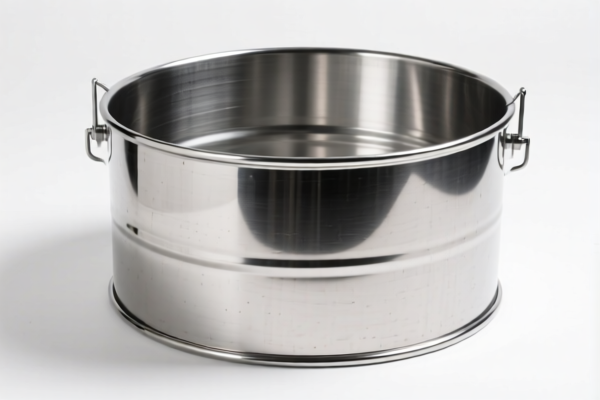
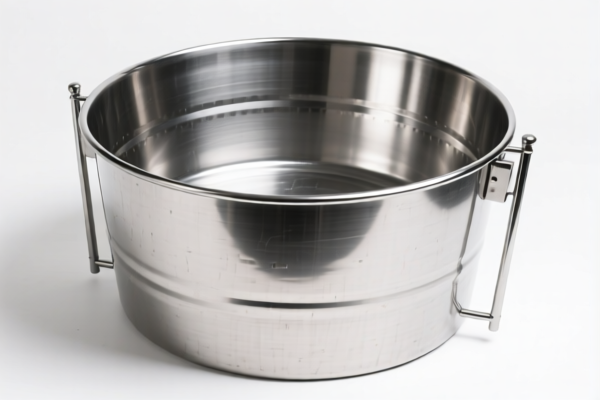
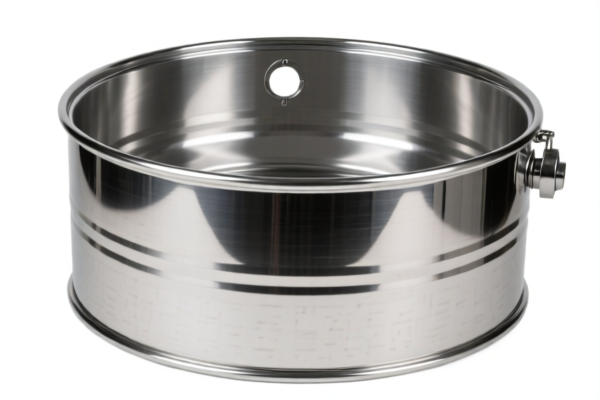
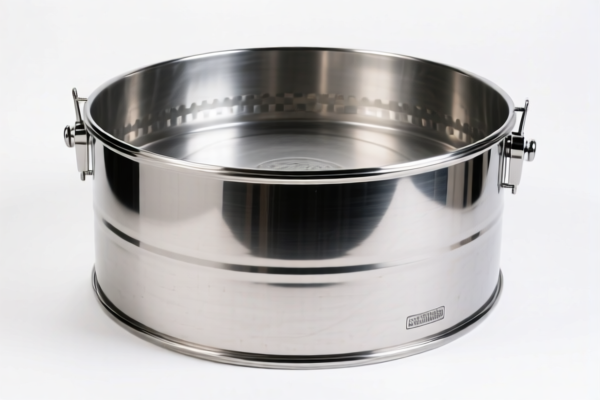
Brake Fluid Steel Drum (200L)
CN → US| HS Code | Tariff Rate | Origin | Destination | Doc |
|---|---|---|---|---|
| 3819000010 | 41.5% | CN | US | Official Doc |
| 3819000090 | 41.5% | CN | US | Official Doc |
Product Images
AI Analysis
🛢️ Hydraulic Brake Fluid in Steel Drums (200L)
🌐 HS Code Reference & Customs Clearance Guide | 2026 Latest Tariff Analysis | Professional Clearance Strategy
📌 I. Product Definition & Classification: Do You Really Understand "Hydraulic Brake Fluid"?
Hydraulic brake fluid is a specialized liquid used in hydraulic braking systems to transmit force and pressure. In international trade, it is strictly categorized under Chapter 38 (Miscellaneous Chemical Products), specifically heading 3819.
The classification depends entirely on the base oil content: * Sub-category 1: Fluids containing 70% or more by weight of petroleum oils or oils obtained from bituminous minerals. * Sub-category 2: Fluids containing less than 70% by weight of petroleum oils (or none at all). Most commercial brake fluids (DOT 3, DOT 4, DOT 5.1 based on glycol-ether or silicone) fall here.
⚠️ Critical Distinction Point:
- If the fluid is petroleum-based (mineral oil type, often used in some clutches or specific old systems) → Goes to 3819.00.00.90 ("Other").
- If the fluid is non-petroleum based (glycol, silicone, etc., typical for automotive brakes) → Goes to 3819.00.00.10 ("Hydraulic brake fluids").
- Note: The prompt data explicitly lists "Hydraulic brake fluids" under .10 and "Other prepared liquids..." under .90. We will map the most common automotive brake fluid to .10 and generic/prepared hydraulic liquids to .90.
📦 II. HS Code Classification Details (2026 Latest Tariff Authority Comparison)
Based on the provided <DATA>, the classification for Hydraulic Brake Fluids is split as follows:
| HS Code | Product Description | Application Scenario | Petroleum Oil Content | Tax Rate (China Origin to US) |
|---|---|---|---|---|
3819.00.00.10 |
Hydraulic brake fluids | Standard automotive brake fluids (DOT 3/4/5.1), typical glycol-based fluids | Not containing or < 70% by weight | 6.5% |
3819.00.00.90 |
Other prepared liquids for hydraulic transmission | Mineral oil-based hydraulic fluids, clutches, or other non-brake hydraulic liquids | Not containing or < 70% (but classified as "Other") | 31.5% |
🔍 Key Insight:
- 3819.00.00.10 is specifically for "Hydraulic brake fluids". This is the standard code for most automotive brake fluids found in 200L steel drums.
- 3819.00.00.90 is for "Other" prepared liquids for hydraulic transmission. If your product is a generic hydraulic fluid (not strictly for brakes), or if customs interprets it differently, it may fall here.
- Do NOT confuse with pure petroleum oils (Chapter 27). Once it is a "prepared liquid" for hydraulic transmission, it goes to Chapter 38.
💰 III. 2026 Latest Tariff Rate Details (Including Surtaxes & Policy Add-ons)
✅ Applicable Country: United States (US)
✅ Origin: China (CN)
✅ Effective Time: 2025 onwards
🎯 1. 3819.00.00.10 – Hydraulic Brake Fluids
| Item | Content |
|---|---|
| Base Tariff | 6.5% (ad valorem) |
| Section 301 Surcharge | 0.0% |
| Total Tax Rate | 6.5% |
| Tax Calculation | CIF Value × 6.5% |
| De Minimis Eligibility | ❌ No (Deny de minimis for chemicals/liquids in bulk) |
| Legal Basis Path | HTSUS:3819.00.00.10 → Base Rate 6.5% |
📌 Explanation:
- No Section 301 Surtax: Unlike many industrial goods, "Hydraulic brake fluids" under .10 currently enjoy a 0% surcharge under the 301 list.
- Low Risk: This is a relatively low-tariff category for Chinese-origin brake fluids.
- Why 6.5%? It is the standard MFN (Most Favored Nation) duty rate for this specific subheading.
🎯 2. 3819.00.00.90 – Other Prepared Liquids for Hydraulic Transmission
| Item | Content |
|---|---|
| Base Tariff | 6.5% (ad valorem) |
| Section 301 Surcharge | +25.0% |
| Total Tax Rate | 31.5% |
| Tax Calculation | CIF Value × 31.5% |
| De Minimis Eligibility | ❌ No |
| Legal Basis Path | HTSUS:3819.00.00.90 → Base Rate 6.5% → Section 301 Footnote +25% |
📌 Note:
- If your brake fluid is mistakenly classified as "Other" (perhaps if it's a multi-purpose hydraulic fluid not strictly for brakes), the tariff jumps to 31.5%.
- Crucial: Ensure your product description clearly states "Hydraulic Brake Fluid" to qualify for .10 and avoid the 25% surcharge.
🛠️ IV. Customs Clearance Practical Advice (Pitfall Avoidance Guide)
✅ 1. Required Documentation Checklist (No Exceptions)
| Document | Mandatory? | Description |
|---|---|---|
| ✅ Commercial Invoice | ✔️ | Must clearly state "Hydraulic Brake Fluid", not just "Hydraulic Fluid" |
| ✅ Certificate of Analysis (COA) | ✔️ | Proves chemical composition, viscosity, and that it is for brake systems |
| ✅ SDS (Safety Data Sheet) | ✔️ | Critical for liquids. Must show UN Number, Hazard Class (usually Class 3 or 8) |
| ✅ Bill of Lading (B/L) | ✔️ | Must match invoice and COA exactly |
| ✅ Steel Drum Specifications | ✔️ | UN-certified drum number (e.g., UN 1A1) |
| ✅ Packaging List | ✔️ | Net weight, gross weight, number of drums |
✅ 2. Declaration Tips (Key Mantra)
🔥 "Brake Fluid, Not General Fluid; DOT Standard, Clear Label; SDS First, Drum UN-Certified"
| Scenario | Correct Declaration | Wrong Practice |
|---|---|---|
| Standard Automotive Brake Fluid | HS: 3819.00.00.10 Description: "DOT 4 Hydraulic Brake Fluid" |
Mislabel as "Industrial Hydraulic Oil" → Risk of 31.5% |
| Mineral Oil-based Brake Fluid | HS: 3819.00.00.90 Description: "Mineral Oil Based Hydraulic Fluid" |
Claiming "Brake Fluid" to get 6.5% → Audit Risk |
| Bulk Liquid in Tank | HS: 3819.00.00.10 | Same code, different packaging |
| Partially Used Drums | HS: 3819.00.00.10 | Must be new, unopened, UN-certified drums |
✅ 3. Special Handling for Steel Drums (200L)
| Condition | Handling Advice |
|---|---|
| UN Certification | Steel drums must bear UN Packaging Mark (e.g., UN 1A1/Y2.0/250). Without it, customs may reject or impose fines. |
| Hazardous Materials | Brake fluids can be Flammable (Class 3) or Corrosive (Class 8). Ensure SDS matches the UN class declared. |
| Spill Risk | Declare "Liquids" and "Fragile" on B/L. Provide spill containment plans if required by carrier. |
| Labeling | Each drum must have GHS-compliant labels (Hazard pictograms, signal words). |
🌍 V. Global Market Clearance Comparison (2026 Latest)
| Country/Region | Recommended HS Code | Tariff | Certification | Notes |
|---|---|---|---|---|
| 🇺🇸 USA | 3819.00.00.10 |
6.5% | No special | Avoid .90 to save 25% |
| 🇺🇸 USA | 3819.00.00.90 |
31.5% | No special | Higher tax for "Other" |
| 🇨🇳 China | 3819.00.00.10 |
6.5% | No special | Symmetric rates |
| 🇪🇺 EU | 3819.00.00 |
6.5% | REACH + GHS | Strict chemical registration |
| 🇬🇧 UK | 3819.00.00 |
6.5% | REACH UK | Post-Brexit rules apply |
📌 Conclusion:
- USA is the most sensitive market due to the Section 301 surcharge on subheading .90.
- Correctly identifying "Brake Fluid" vs. "Other Hydraulic Fluid" is the single most important factor in minimizing tariffs.
- EU/UK have standard rates but stricter chemical safety laws (REACH).
📌 VI. Common Mistakes & Pitfalls (Blood-Teach Lessons)
❌ Mistake 1: Calling it "Hydraulic Oil" instead of "Brake Fluid"
👉 Consequence: Customs may classify under .90 → 31.5% tax instead of 6.5%.
❌ Mistake 2: Missing UN Mark on Steel Drums
👉 Consequence: Cargo held at port, demurrage fees, or return to sender.
❌ Mistake 3: Inconsistent SDS and Invoice
👉 Consequence: Customs query, delay in release, potential fines for hazardous material misdeclaration.
❌ Mistake 4: Assuming All Brake Fluids are .10
👉 Consequence: If the fluid is mineral-oil-based (DOT 5), it might be classified as "Other" → .90 → 31.5%.
Check Chemical Composition: Glycol/Ester-based → .10. Mineral Oil-based → .90.
✅ Correct Practice:
"Hydraulic Brake Fluid, DOT 4, Glycol-Based, in UN 1A1 Steel Drum, 200L Net Weight, SDS Attached, HS Code 3819.00.00.10"
🎯 VII. Conclusion: Professional Declaration, Save Time and Money!
🎯 Remember the Mantra:
🔹 "Brake Fluid = .10 (6.5%) | Other Hydraulic = .90 (31.5%)"
🔹 "UN Drum, SDS, and Clear Description Save You 25%!"
📌 Pro Tip:
- If you are exporting Mineral Oil-Based Brake Fluid (DOT 5), expect 31.5%. Consider reformulating to Glycol-Based (DOT 3/4/5.1) if possible to qualify for 6.5%.
- Always request a Advance Ruling from US Customs if you are unsure about the product composition.
📣 Immediate Action:
📞 Contact your freight forwarder + Provide SDS & COA + Declare HS 3819.00.00.10 clearly
🚀 Ensure smooth clearance, lower costs, and faster delivery!
✨ Professional Clearance Starts with Accurate Classification!
💼 Every Percent of Tariff Matters!
Customer Reviews
About HS Code Classification
The Harmonized System (HS) is an internationally standardized nomenclature developed by the World Customs Organization (WCO) to classify traded products. Over 200 countries use the HS system as the basis for customs tariffs, trade statistics, and import/export regulations.
Each HS code follows a hierarchical structure:
- Chapter (2 digits) — Broad category of goods (e.g., Chapter 84: Machinery and Mechanical Appliances)
- Heading (4 digits) — More specific grouping within the chapter
- Subheading (6 digits) — Internationally standardized breakdown, used by all WCO member countries
- National subdivisions (8-10 digits) — Country-specific extensions for further classification, such as US HTSUS 10-digit codes
Correct HS code classification is essential for smooth customs clearance, accurate duty payment, and compliance with trade regulations. Misclassification can lead to customs delays, overpayment of duties, or penalties.
When importing from CN to US, the applicable tariff rates may include:
- Most-Favored-Nation (MFN) rate — The standard duty rate applied to WTO members
- General rate — Applied to countries without trade agreements
- Trade remedy duties — Additional tariffs such as Section 301 (anti-dumping), Section 232 (national security), or countervailing duties
The information provided on this page is for reference purposes only. For official classification, please consult with your local customs authority or a licensed customs broker.