Buffalo Leather Offcuts (Automotive Interior)
CN → US| HS Code | Tariff Rate | Origin | Destination | Doc |
|---|---|---|---|---|
| 4104413060 | 12.4% | CN | US | Official Doc |
| 4104113060 | 12.4% | CN | US | Official Doc |
| 4115100000 | 35.0% | CN | US | Official Doc |
| 4115200000 | 17.5% | CN | US | Official Doc |
Product Images


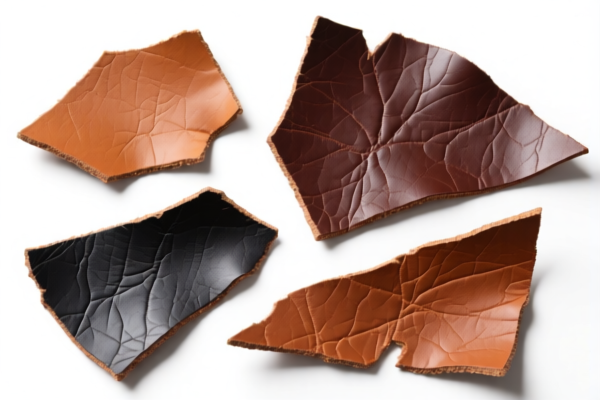
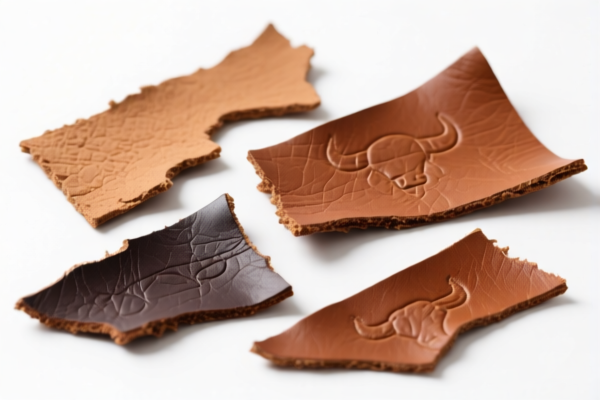
AI Analysis
🐃 Buffalo Leather Offcuts & Waste (Automotive Interior Grade)
🌐 HS Code Reference & Customs Clearance Guide | 2026 Latest Tariff Analysis | Premium Material Clearance Strategy
📌 Part 1: Product Definition & Classification: What Exactly Are "Buffalo Leather Offcuts"?
Buffalo leather offcuts refer to the residual materials generated during the cutting process of tanned buffalo hides, specifically those deemed unsuitable for primary leather goods manufacturing but still retaining utility in secondary applications like automotive interiors, upholstery, or crafts.
In international trade, these are strictly categorized not as "leather articles" or "finished leather," but as waste/offcuts or composition leather materials. The distinction is critical because misclassifying high-value offcuts as raw hides can lead to severe penalties.
⚠️ Key Distinction Point:
- If the material is scrap, waste, dust, or powder from leather processing → Classify under Chapter 4115 (Waste).
- If the material is reconstituted leather (leather fibers bonded with rubber/plastic) sold in slabs/sheets → Classify under 4115.10 (Composition Leather).
- If the material is full tanned hides/skins ready for further preparation → Classify under Chapter 4104 (Tanned Hides).
📦 Part 2: HS Code Classification Details (2026 Latest Tariff Authority Alignment)
| HS Code | Product Description | Application Scenario | Tax Rate (US/CN Origin) |
|---|---|---|---|
4115.20.00.00 |
Parings and other waste of leather or of composition leather, not suitable for the manufacture of leather articles; leather dust, powder and flour | Small scraps, trimmings, dust, and offcuts from cutting tanned buffalo hides; materials explicitly "unsuitable" for standard leather goods. | Total Tax: 7.5% |
4115.10.00.00 |
Composition leather with a basis of leather or leather fiber, in slabs, sheets or strip, whether or not in rolls | Reconstituted buffalo leather sheets; leather fibers bonded with rubber, plastics, or other substances; often used for automotive linings. | Total Tax: 25.0% |
4104.11.30.60 |
Tanned or crust hides... of bovine (including buffalo)... In the wet state... Buffalo Other | Whole wet-tanned buffalo hides (full grain/unsplit); NOT offcuts. | Total Tax: 0.0% |
4104.41.30.60 |
Tanned or crust hides... of bovine (including buffalo)... In the dry state... Buffalo Other | Whole dry-tanned/crust buffalo hides (full grain/unsplit); NOT offcuts. | Total Tax: 0.0% |
🔍 Critical Clarification:
- "Offcuts" vs. "Hides": If you are importing scraps, trimmings, or parings from buffalo leather production, you MUST use4115.20.00.00. Using4104codes for scraps is incorrect and will result in customs detention.
- "Composition Leather": If the offcuts are processed into sheets using binders (common in automotive interiors for cost-saving), they fall under4115.10.00.00, which carries a significantly higher tariff burden.
💰 Part 3: 2026 Latest Tariff Rate Breakdown (Including Surtaxes & Policy Add-ons)
✅ Applicable Country: United States (US)
✅ Country of Origin: China (CN)
✅ Effective Date: 2025/2026 Tariff Schedule
🎯 1. 4115.20.00.00 —— Leather Waste, Parings, and Offcuts
| Item | Detail |
|---|---|
| Base Tariff | 0.0% (ad valorem) |
| Additional Tariff (Section 301/IEEPA) | +7.5% |
| Total Tax Rate | 7.5% |
| Tax Calculation | CIF Value × 7.5% |
| De Minimis Eligibility | ⚠️ Check Specifics: Generally, low-value waste may be exempt, but commercial shipments are subject to full duty. |
| Legal Basis Path | HTSUS:4115.20.00.00 → USITC Surtaxes |
📌 Explanation:
- "Leather waste" enjoys a 0% base duty, but faces a 7.5% additional surtax (likely due to Section 301 retaliatory measures or specific material restrictions on Chinese leather waste).
- This is a moderate-cost category compared to finished goods.
🎯 2. 4115.10.00.00 —— Composition Leather (Reconstituted)
| Item | Detail |
|---|---|
| Base Tariff | 0.0% (ad valorem) |
| Additional Tariff (Section 301/IEEPA) | +25.0% |
| Total Tax Rate | 25.0% |
| Tax Calculation | CIF Value × 25.0% |
| De Minimis Eligibility | ❌ Not Applicable for commercial volumes |
| Legal Basis Path | HTSUS:4115.10.00.00 → USITC Surtaxes |
📌 Note:
- Although the base duty is 0%, the 25% surtax makes this category expensive. This reflects the US policy to protect domestic leather manufacturing from cheap reconstituted imports.
- "Composition leather" includes buffalo fiber-based sheets commonly used in car door panels and headliners.
🎯 3. 4104.11.30.60 & 4104.41.30.60 —— Wet/Dry Tanned Buffalo Hides (For Context)
| Item | Detail |
|---|---|
| Base Tariff | 0.0% |
| Additional Tariff | 0.0% |
| Total Tax Rate | 0.0% |
| Tax Calculation | Free |
| Legal Basis Path | HTSUS:4104.11.30.60 / 4104.41.30.60 |
📌 Warning:
- These codes apply ONLY to whole, usable hides. If you misdeclare offcuts as whole hides to avoid the 7.5% or 25% tax, customs may seize the goods for misclassification.
🛠️ Part 4: Customs Clearance Practical Advice (Real-World Pitfall Avoidance)
✅ 1. Documentation Checklist (Non-Negotiable)
| Document | Mandatory? | Explanation |
|---|---|---|
| ✅ Product Specification Sheet | ✔️ | Must clearly state: "Parings," "Waste," "Offcuts," or "Composition Leather." Avoid vague terms like "Leather Parts." |
| ✅ Material Composition Report | ✔️ | For 4115.10, prove the percentage of leather fiber vs. binding agents. |
| ✅ Commercial Invoice | ✔️ | Must list quantity, weight, and clearly describe the nature of the goods (e.g., "Buffalo Leather Trimmings"). |
| ✅ Packing List | ✔️ | Separate packing lists for waste vs. composition leather if shipped together. |
| ✅ Photos of Goods | ✔️ | Show that items are indeed waste/scraps or bonded sheets, not whole hides. |
✅ 2. Declaration Tactics (Key Mantras)
🔥 "Describe the Form, Not the Potential! Waste is Waste, Composition is Bonded!"
| Scenario | Correct Declaration | Incorrect Declaration |
|---|---|---|
| Small trimmings from cutting | 4115.20.00.00 (Leather Waste) |
"Leather Parts" (Risk of higher scrutiny) |
| Dust/Flour from sanding | 4115.20.00.00 (Leather Dust) |
"Raw Material" |
| Sheets made from leather fiber + glue | 4115.10.00.00 (Composition Leather) |
"Buffalo Hide" (Misclassification) |
| Whole tanned hide | 4104.11.30.60 (Wet Buffalo) |
"Leather Waste" (Undervaluation risk) |
✅ 3. Special Case Handling
| Situation | Handling Advice |
|---|---|
| Mixed Containers | If a container has both waste (4115.20) and composition leather (4115.10), separate them in documentation. Do not blend. |
| Automotive Supplier Claims | Even if intended for car interiors, if it's "offcuts/waste," use 4115.20. End-use does not change the HS code for waste. |
| Reconstituted Leather Sheets | Ensure the invoice specifies "Composition Leather" and not "Split Leather." Split leather is different and has different codes. |
🌍 Part 5: Global Market Comparison (2026 Snapshot)
| Country/Region | Recommended HS Code (for Offcuts) | Tariff | Notes |
|---|---|---|---|
| 🇺🇸 USA | 4115.20.00.00 |
7.5% | Includes surtax. |
| 🇺🇸 USA | 4115.10.00.00 |
25.0% | High surtax on composition leather. |
| 🇪🇺 EU | 4115.20.00 |
~4-6% | Check specific EU duty rate. |
| 🇨🇳 China | 4115.20.00 |
0-5% | Import duties on waste may be low or zero for recycling. |
📌 Conclusion:
- USA is the most critical market for tax planning due to the specific 7.5% and 25% surtaxes.
- Misclassification is the biggest risk: Declaring waste as "hides" (0%) is fraud. Declaring composition leather as "waste" (7.5%) is underpayment.
📌 Part 6: Common Mistakes & Pitfall Guide (Blood Lessons)
❌ Mistake 1: Calling "Leather Dust" or "Parings" "Leather Scraps for Upholstery"
👉 Consequence: Customs may classify it as "Parts of Seats" (Chapter 94 or 4202) or demand proof of suitability for manufacture, leading to delays.
👉 Fix: Use the exact HS Code description: "Parings and other waste of leather."
❌ Mistake 2: Importing "Composition Leather Sheets" under 4115.20
👉 Consequence: Underpayment of 17.5% (25% - 7.5%). Customs will assess back taxes + penalties.
👉 Fix: Ensure the product is truly "waste" (not bonded sheets) to use the 7.5% rate. If it's bonded, pay the 25%.
❌ Mistake 3: Confusing "Buffalo Hides" (4104) with "Buffalo Offcuts"
👉 Consequence: If you import offcuts but declare 4104 (0% tax), this is a serious violation.
👉 Fix: Accurately describe the physical state (scrap vs. whole skin).
✅ Correct Practice:
"Buffalo Leather Parings and Waste, 200kg, Not Suitable for Article Manufacture, HS 4115.20.00.00"
🎯 Part 7: Conclusion: Professional Classification Saves Money!
🎯 Remember the Mantra:
🔹 "Waste is 7.5%, Composition is 25%, Whole Hides are 0% (but don't fake it!)"
🔹 "HS Code depends on PHYSICAL STATE, not END USE!"
📌 Pro Tip:
If you are importing large volumes of leather waste for recycling or secondary products, consider applying for a Pre-Ruling from US Customs (CBP) to confirm the classification. This provides legal certainty and avoids surprise bills.
📣 Immediate Action:
📞 Verify Product Form: Is it dust, parings, or bonded sheets?
📄 Match HS Code:4115.20.00.00(Waste) or4115.10.00.00(Composition).
💰 Calculate Tax: 7.5% vs. 25%.
🚀 Declare Accurately: Avoid penalties, ensure smooth clearance!
✨ Precision in Classification, Profit in Clearance!
💼 Your Leather Supply Chain Starts with the Right HS Code!
Customer Reviews
About HS Code Classification
The Harmonized System (HS) is an internationally standardized nomenclature developed by the World Customs Organization (WCO) to classify traded products. Over 200 countries use the HS system as the basis for customs tariffs, trade statistics, and import/export regulations.
Each HS code follows a hierarchical structure:
- Chapter (2 digits) — Broad category of goods (e.g., Chapter 84: Machinery and Mechanical Appliances)
- Heading (4 digits) — More specific grouping within the chapter
- Subheading (6 digits) — Internationally standardized breakdown, used by all WCO member countries
- National subdivisions (8-10 digits) — Country-specific extensions for further classification, such as US HTSUS 10-digit codes
Correct HS code classification is essential for smooth customs clearance, accurate duty payment, and compliance with trade regulations. Misclassification can lead to customs delays, overpayment of duties, or penalties.
When importing from CN to US, the applicable tariff rates may include:
- Most-Favored-Nation (MFN) rate — The standard duty rate applied to WTO members
- General rate — Applied to countries without trade agreements
- Trade remedy duties — Additional tariffs such as Section 301 (anti-dumping), Section 232 (national security), or countervailing duties
The information provided on this page is for reference purposes only. For official classification, please consult with your local customs authority or a licensed customs broker.