Bushing Housing
CN → US| HS Code | Tariff Rate | Origin | Destination | Doc |
|---|---|---|---|---|
| 4016996010 | 37.5% | CN | US | Official Doc |
| 4016996050 | 37.5% | CN | US | Official Doc |
| 7412200045 | 88.0% | CN | US | Official Doc |
| 7412200090 | 88.0% | CN | US | Official Doc |
| 7326908688 | 87.9% | CN | US | Official Doc |
Product Images
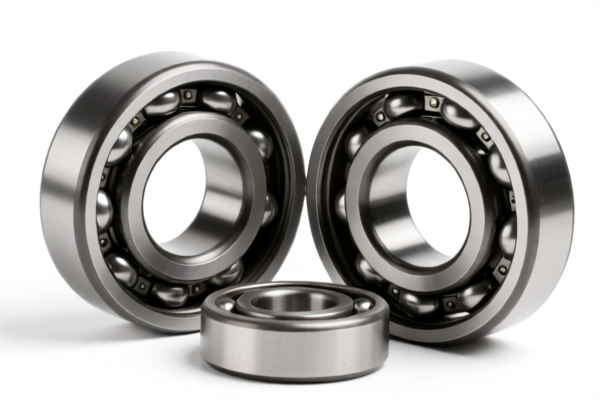
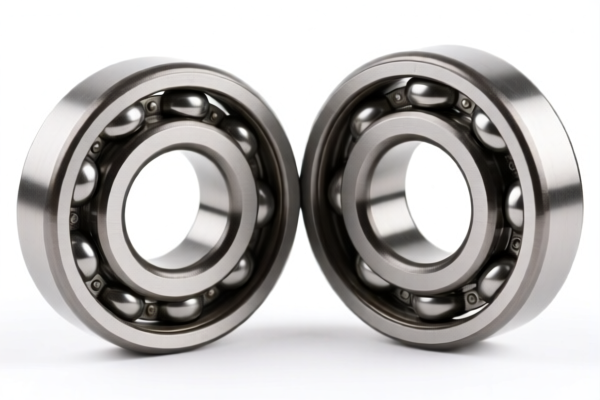
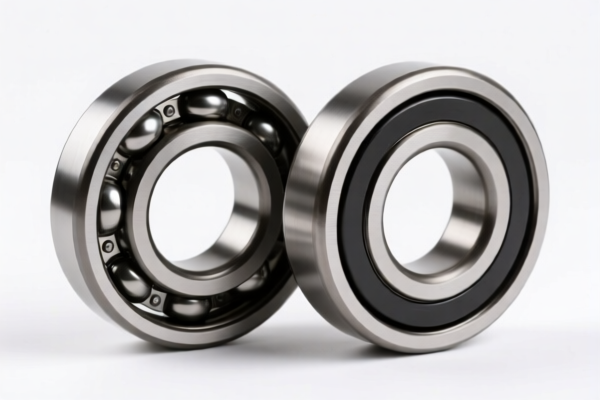
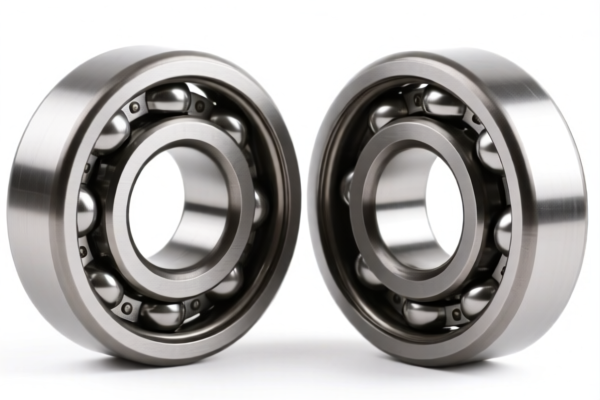
AI Analysis
🏭 Bushing Housing (Mechanical Components/Parts)
🌐 HS Code Reference & Customs Clearance Guide | 2026 Latest Tariff Analysis | Professional Customs Strategy
📌 I. Product Definition & Classification: What Exactly is a "Bushing Housing"?
A Bushing Housing is a critical mechanical component used in machinery, automotive systems, and industrial equipment. It serves as a sleeve or liner that supports rotating or oscillating shafts, reducing friction and wear.
In international trade, its classification hinges primarily on Material Composition and Function:
1. Rubber/Polymetric Bushings (Rubber/Plastic)
Used for vibration damping, noise reduction, or as insulating liners. Often made of vulcanized rubber, thermoplastic, or composite materials.
2. Metallic Bushings (Steel/Copper/Aluminum)
Used for high-load, high-temperature, or precision applications. Typically made of steel, bronze, brass, or aluminum alloys.
⚠️ Key Distinction Point:
- If the material is Rubber/Polymetric → It falls under Chapter 40 (Rubber Articles).
- If the material is Metal → It falls under Chapter 73 (Steel/Iron), Chapter 74 (Copper), or Chapter 76 (Aluminum) depending on the base metal.
- Customs Risk: Misdeclaring material (e.g., calling a steel bushing "rubber") leads to severe penalties, as tariff rates differ drastically (e.g., 37.5% vs. 88%).
📦 II. HS Code Classification Details (2026 Latest Tariff Authority Comparison)
| HS Code | Product Description | Applicable Scenario | Material Logic | Total Tax Rate |
|---|---|---|---|---|
4016.99.60.10 |
Bushings/Vulcanized Rubber Articles | Rubber bushings, vibration isolators, flexible couplings | Vulcanized Rubber | 37.5% |
4016.99.60.50 |
Other Rubber Articles (Bushing Parts) | Mechanical rubber parts, unspecified rubber bushings | Vulcanized Rubber | 37.5% |
7412.20.00.45 |
Copper/Alloy Tube Fittings & Parts | Copper/Brass bushings, plumbing/mechanical fittings | Copper/Aluminum | 88.0% |
7412.20.00.90 |
Other Copper/Alloy Parts | Unspecified copper/aluminum mechanical parts | Copper/Aluminum | 88.0% |
7326.90.86.88 |
Other Steel/Iron Articles | Steel/Iron spherical bushings, mechanical steel parts | Steel/Iron | 87.9% |
🔍 Critical Note:
- Rubber Bushings are significantly cheaper to import (37.5%) compared to Metal Bushings (87-88%).
- Metal Bushings are subject to the 50% Section 301 tariff for steel/copper/aluminum, pushing the total tax to ~88%.
- Always verify the Bill of Materials (BOM) or Technical Specification Sheet to confirm the exact material.
💰 III. 2026 Latest Tariff Rate Breakdown (Including Surcharges & Policies)
✅ Applicable Country: United States (US)
✅ Origin: China (CN)
✅ Effective Date: From November 10, 2025 (for subsequent imports)
🎯 1. 4016.99.60.10 & 4016.99.60.50 —— Vulcanized Rubber Bushings
| Item | Content |
|---|---|
| Base Duty | 2.5% |
| USITC Surcharge (Section 301) | +25% |
| IEEPA Surcharge | +10% (Targeting China/HK products) |
| Total Effective Rate | 37.5% |
| Calculation Basis | CIF Value × 37.5% |
| De Minimis Exemption | ❌ Not Eligible (deny_de_minimis) |
| Legal Pathway | IEEPA:9903.01.25 → USITC:4016.99.60.10 → FOOTNOTE:9903.88.01 |
📌 Explanation:
- 2.5% is the standard Most Favored Nation (MFN) rate for rubber articles.
- 25% is the Section 301 tariff on Chinese goods.
- 10% is the additional IEEPA surcharge applied to specific Chinese imports.
- Result: A 37.5% total tax burden. This is moderately high but significantly lower than metal counterparts.
🎯 2. 7326.90.86.88 —— Steel/Iron Bushings
| Item | Content |
|---|---|
| Base Duty | 2.9% |
| USITC Surcharge (Section 301) | +25% |
| IEEPA Surcharge | +10% |
| Steel/Aluminum/Copper Surcharge | +50% (Specific to Section 232/301 for metals) |
| Total Effective Rate | 87.9% |
| Calculation Basis | CIF Value × 87.9% |
| De Minimis Exemption | ❌ Not Eligible (deny_de_minimis) |
| Legal Pathway | IEEPA:9903.01.25 → USITC:7326.90.86.88 → FOOTNOTE:Steel/Copper/Metal Surcharge |
📌 Explanation:
- Metal products from China face the highest tariff barriers.
- The 50% metal surcharge is added on top of the base, Section 301, and IEEPA taxes.
- Result: Nearly 88% tax. This makes steel bushings extremely costly to import into the US.
🎯 3. 7412.20.00.45 & 7412.20.00.90 —— Copper/Aluminum Bushings
| Item | Content |
|---|---|
| Base Duty | 3.0% |
| USITC Surcharge (Section 301) | +25% |
| IEEPA Surcharge | +10% |
| Steel/Aluminum/Copper Surcharge | +50% |
| Total Effective Rate | 88.0% |
| Calculation Basis | CIF Value × 88.0% |
| De Minimis Exemption | ❌ Not Eligible (deny_de_minimis) |
| Legal Pathway | IEEPA:9903.01.25 → USITC:7412.20.00.45 → FOOTNOTE:Copper Surcharge |
📌 Explanation:
- Copper and Aluminum products are also subject to the 50% surcharge.
- Result: 88.0% total tax. Identical to steel bushings in terms of tax burden.
🛠️ IV. Customs Clearance Operational Advice (Practical Pitfall Avoidance)
✅ 1. Documentation Checklist (Non-Negotiable)
| Document | Required | Description |
|---|---|---|
| ✅ Product Specification Sheet | ✔️ | Must explicitly state Material (e.g., "Nitrile Rubber," "C110 Copper," "Stainless Steel 304"). |
| ✅ Technical Drawing | ✔️ | Shows dimensions, tolerance, and application. |
| ✅ Product Photos | ✔️ | Clear shots of the bushing, including any markings or part numbers. |
| ✅ Bill of Materials (BOM) | ✔️ | Crucial for proving material composition if challenged. |
| ✅ Commercial Invoice | ✔️ | Must describe the item as "Mechanical Bushing, [Material]," not just "Bushing." |
| ✅ Packing List | ✔️ | Detail weight and quantity. |
| ✅ Certificate of Origin (CO) | ✔️ | Required to determine eligibility for any potential exemptions (though rare for China origin). |
✅ 2. Declaration Strategies (Key Mantra)
🔥 "Material First, Tax Second! 'Rubber' is Cheap, 'Steel' is Expensive!"
| Scenario | Correct Declaration | Incorrect Action |
|---|---|---|
| Rubber Bushing | HS: 4016.99.60.10Desc: "Rubber Bushing, Vulcanized" |
Declaring as "Steel Part" → 88% Tax |
| Steel Bushing | HS: 7326.90.86.88Desc: "Steel Bushing, Machined" |
Declaring as "Rubber Part" → 37.5% Tax (Fraud Risk) |
| Mixed Material | Break down by material | Mixed declaration → Customs Audit Delay |
| Generic "Bushing" | Avoid! Specify Material | Vague description → Seizure or Penalties |
✅ 3. Special Situation Handling
| Situation | Handling Advice |
|---|---|
| OEM Custom Bushings | Provide design drawings and client approval to prove material spec. |
| Bushings with Rubber Inserts | Declare based on Essential Character. If rubber is primary, use 4016. If steel is primary, use 7326. |
| Pre-Assembly Kits | If bushings are part of a larger machine, they may be classified under the machine's HS code. Consult a customs broker. |
| Exemption Requests | While rare for China-origin metal goods, ensure no other trade remedy actions apply. |
🌍 V. Global Market Clearance Comparison (2026 Latest)
| Country/Region | Recommended HS Code | Tariff (China Origin) | Certification | Notes |
|---|---|---|---|---|
| 🇺🇸 USA | 4016.99.60.10 (Rubber)7326.90.86.88 (Steel) |
37.5% (Rubber) 87.9% (Steel) |
None Specific | High Tariff Risk. Section 301 applies. |
| 🇨🇳 China | 4016.99.60.107326.90.90.00 |
~2.5% - 8% | CCC (if applicable) | Lower tariffs for domestic trade. |
| 🇪🇺 EU | 4016.93 (Rubber)7326.90 (Steel) |
0% - 6% | CE (if machinery) | No Section 301 equivalent. Much cheaper. |
| 🇦🇺 Australia | 4016.937326.90 |
5% | RCM | Moderate tariffs, no surcharges. |
| 🇯🇵 Japan | 4016.937326.90 |
0% - 3% | PSE (if electrical) | Low tariffs, high quality standards. |
📌 Conclusion:
- USA is the most expensive market for bushings due to Section 301 and IEEPA surcharges.
- Rubber bushings are more cost-effective than metal ones in the US.
- EU and Asia offer significantly lower tariff burdens, making them attractive for alternative supply chains.
📌 VI. Common Errors & Pitfall Guide (Lessons Learned)
❌ Mistake 1: Declaring a Steel Bushing as "Rubber Part" to save tax
👉 Consequence: Customs audit, seizure, fines, and potential criminal charges for fraud.
❌ Mistake 2: Using generic terms like "Mechanical Part" on the invoice
👉 Consequence: Customs will assign the highest possible duty rate (often 88%) due to lack of information.
❌ Mistake 3: Ignoring the 50% Metal Surcharge for Steel/Copper/Aluminum
👉 Consequence: Budget miscalculation. Profit margins wiped out by unexpected 88% tax.
❌ Mistake 4: Failing to distinguish between Vulcanized Rubber and Plastic
👉 Consequence: Plastic bushings may fall under Chapter 39 (different rates). Misclassification leads to delays.
✅ Correct Practice:
"Bushing, Mechanical, 10mm ID, Vulcanized Nitrile Rubber, Model XYZ, For Automotive Suspension"
🎯 VII. Conclusion: Precision Classification, Cost Efficiency!
🎯 Remember the Mantra:
🔹 "Rubber is 37.5%, Steel is 88% — Know Your Material!"
🔹 "HS Code Decides Your Fate, Tax Difference is 50 Points, One Mistake Costs You Everything!"
📌 Pro Tip:
If your bushings are originally from Vietnam, Mexico, Thailand, or Malaysia, you may qualify for IEEPA Exemptions or lower Section 301 rates.
Consider Advance Ruling applications with US Customs (CBP) to confirm classification before shipment.
📣 Immediate Action:
📞 Contact a Professional Customs Broker + Provide Product Specs + Apply for Advance Ruling
🚀 Ensure Smooth Clearance, Efficient Global Trade, and Maximized Profits!
✨ Professional Customs Clearance Starts with Accurate Classification!
💼 Every Dollar of Cost Deserves Precise Calculation!
Customer Reviews
About HS Code Classification
The Harmonized System (HS) is an internationally standardized nomenclature developed by the World Customs Organization (WCO) to classify traded products. Over 200 countries use the HS system as the basis for customs tariffs, trade statistics, and import/export regulations.
Each HS code follows a hierarchical structure:
- Chapter (2 digits) — Broad category of goods (e.g., Chapter 84: Machinery and Mechanical Appliances)
- Heading (4 digits) — More specific grouping within the chapter
- Subheading (6 digits) — Internationally standardized breakdown, used by all WCO member countries
- National subdivisions (8-10 digits) — Country-specific extensions for further classification, such as US HTSUS 10-digit codes
Correct HS code classification is essential for smooth customs clearance, accurate duty payment, and compliance with trade regulations. Misclassification can lead to customs delays, overpayment of duties, or penalties.
When importing from CN to US, the applicable tariff rates may include:
- Most-Favored-Nation (MFN) rate — The standard duty rate applied to WTO members
- General rate — Applied to countries without trade agreements
- Trade remedy duties — Additional tariffs such as Section 301 (anti-dumping), Section 232 (national security), or countervailing duties
The information provided on this page is for reference purposes only. For official classification, please consult with your local customs authority or a licensed customs broker.