Business Card Album
CN → US| HS Code | Tariff Rate | Origin | Destination | Doc |
|---|---|---|---|---|
| 4901990091 | 17.5% | CN | US | Official Doc |
| 4911914040 | 17.5% | CN | US | Official Doc |
| 4911998000 | 17.5% | CN | US | Official Doc |
| 4823908680 | 35.0% | CN | US | Official Doc |
| 4901100040 | 17.5% | CN | US | Official Doc |
Product Images
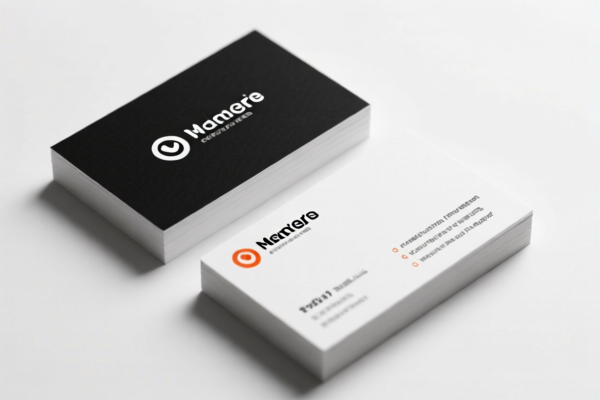
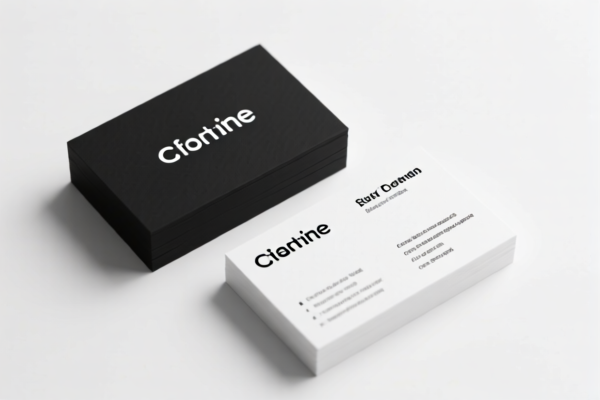
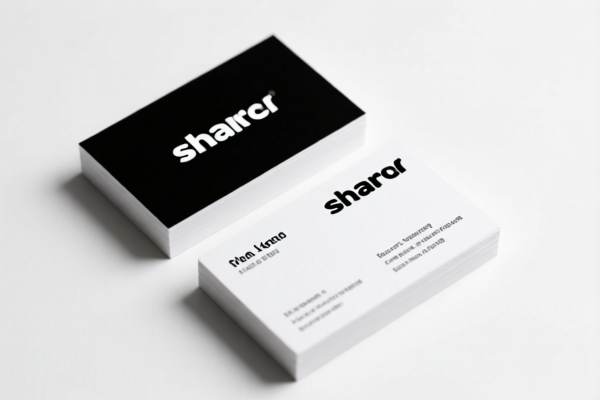
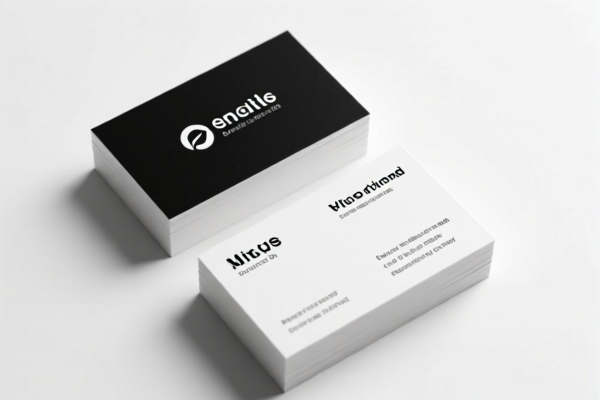
AI Analysis
📇 Business Card Album (Business Card Holder / Name Card Case)
🌐 HS Code Reference & Customs Clearance Guide | 2026 Latest Tariff Analysis | Professional Clearance Strategy
📌 I. Product Definition and Classification: Do You Really Understand the "Business Card Album"?
A Business Card Album (often referred to as a Business Card Holder or Case) is a stationary item used for organizing and storing business cards. In international trade, it is primarily classified as a printed product (if the content/structure is fixed) or a paper制品/packaging item.
The core classification depends on whether the album is considered a "printed publication" (like a booklet) or simply a "paper product/package." Based on the provided data, there are two main paths: 1. Printed Publication Path: If treated as a specific type of printed matter, it falls under Chapter 49 (Printed Books, Newspapers, Pictures, etc.). 2. Paper Product Path: If treated merely as a paper container or non-printed article, it falls under Chapter 48 (Paper and Paperboard).
⚠️ Key Distinction Point:
- If the album has a fixed layout, printed text, or is sold as a "leaflet/booklet" style holder → Chapter 49 (Printed).
- If it is a blank paper folder or generic paper container → Chapter 48 (Paper).
- Note: The provided data strongly suggests classification under Chapter 49 for most commercial cases, citing "printed products" as the primary attribute.
📦 II. HS Code Classification Details (2026 Latest Tariff Authoritative Comparison)
Based on the provided <DATA>, here are the potential HS Codes and their reasoning:
| HS Code | Product Description | Reason for Classification | Tax Rate |
|---|---|---|---|
4901.99.00.91 |
Printed Books, Pamphlets, Leaflets | Business cards are printed items. This code covers "printed books, pamphlets, leaflets and similar printed matter." Fits the attribute of a printed booklet-style card holder. | 17.5% |
4911.91.40.40 |
Other Printed Matter | Business cards are printed items made of paper. This is a "catch-all" category for "other printed matter" when no more specific code applies. | 17.5% |
4911.99.80.00 |
Other Printed Matter | Similar to above, based on common sense that the material is paper and there is no conflict in material or form. | 17.5% |
4823.90.86.80 |
Other Paper Products | Assumes the item is primarily a "paper product" rather than a publication. Fits the "paper/cardboard" material requirement. | 35.0% |
4901.10.00.40 |
Single-Page Printed Matter | Fits the morphological characteristic of "single-page printed matter" if the album is essentially a folded sheet. | 17.5% |
🔍 Key Reminder:
- Chapter 49 Codes (4901/4911) are the most likely correct classifications for printed business card albums, carrying a 17.5% total tariff.
- Chapter 48 Code (4823) carries a 35.0% total tariff and is generally riskier/higher cost unless specifically justified as a non-printed paper good.
- Do not classify under plastic or leather chapters if the primary material is paper, as per the provided data.
💰 III. 2026 Latest Tariff Rate Breakdown (Including Surtaxes & Policy Add-ons)
✅ Applicable Country: United States (US)
✅ Origin: China (CN)
✅ Effective Time: Current rates apply (See details below)
🎯 1. Chapter 49 Codes (4901.99.00.91, 4911.91.40.40, 4911.99.80.00, 4901.10.00.40)
Total Tariff Rate: 17.5%
| Item | Detail |
|---|---|
| Basic Tariff | 0.0% (Ad Valorem) |
| Section 301 Surtax | +7.5% (Additional Tariff) |
| Section 122 Tariff | +10% (Specific 122 Clause Tariff) |
| Total Tariff | 17.5% |
| Tax Calculation | CIF Value × 17.5% |
| De Minimis Eligibility | ❌ Not Eligible (Due to Section 301 and 122 tariffs, de minimis usually does not apply to these surcharges for Chinese origin goods in many contexts, or is strictly limited. Note: Always verify current CBP de minimis rules as they change frequently.) |
| Legal Basis | USITC:4901/4911 → Section 301: 7.5% → Section 122: 10% |
📌 Explanation:
- The 0% base rate is typical for many paper/printed goods.
- The 7.5% is from the Section 301 trade war tariffs.
- The 10% is from Section 122 (often related to specific trade remedies or recent executive orders).
- Total: 17.5%. This is a moderate tariff, significantly lower than the paper product classification.
🎯 2. Chapter 48 Code (4823.90.86.80)
Total Tariff Rate: 35.0%
| Item | Detail |
|---|---|
| Basic Tariff | 0.0% |
| Section 301 Surtax | +25.0% (Higher Section 301 bracket) |
| Section 122 Tariff | +10% |
| Total Tariff | 35.0% |
| Tax Calculation | CIF Value × 35.0% |
| De Minimis Eligibility | ❌ Not Eligible |
| Legal Basis | USITC:4823 → Section 301: 25.0% → Section 122: 10% |
📌 Warning:
- This classification is double the cost of Chapter 49 codes.
- Avoid this unless your product is explicitly not printed (e.g., blank paper folders) AND you can prove it does not fall under "printed matter."
- Do not use this for standard printed business card albums.
🛠️ IV. Customs Clearance Practical Advice (Real-World Pitfall Guide)
✅ 1. Preparation Checklist (Required Documents)
| Document | Required | Description |
|---|---|---|
| ✅ Product Photos | ✔️ | Clear images showing the product is made of paper and contains printed content. |
| ✅ Composition/Material List | ✔️ | Confirm >50% paper content. If plastic/metal dominant, classification changes. |
| ✅ Commercial Invoice | ✔️ | Clearly state "Paper Business Card Album" or "Printed Business Card Holder." Avoid vague terms like "Stationery." |
| ✅ Packing List | ✔️ | Include quantity, weight, and dimensions. |
| ✅ HS Code Pre-Ruling | ✔️ | Highly Recommended. Apply for a CBP Binding Ruling to lock in the 17.5% rate. |
✅ 2. Declaration Tips (Key Mnemonics)
🔥 “Paper Printed, Chapter 49; Paper Empty, Chapter 48. Don’t Mix, Save Money!”
| Scenario | Correct Declaration | Incorrect Practice |
|---|---|---|
| Printed Album with Logo/Text | 4901.99.00.91 or 4911.91.40.40 (17.5%) |
Misdeclare as 4823 → 35% (Overpay) |
| Blank Paper Folder | 4823.90.86.80 (35%) |
Misdeclare as 4901 → Risk of Customs Penalty |
| Plastic/Metal Case | Not in Data | Forcing Chapter 49/48 → Rejection |
| Mixed Material (Paper + Plastic) | Check if Paper is Essential Character | Split declaration → Higher complexity |
✅ 3. Special Situations
| Situation | Handling Advice |
|---|---|
| OEM Custom Print | Provide design files to prove it is a "printed publication." |
| Blanks Only | Must declare as 4823 (35%) unless it qualifies for a specific exemption. |
| Luxury Leather Cover | If the main character is leather, it may fall under Chapter 42 (Not in data). Check if paper is just a liner. |
| Digital/Virtual | Not applicable for physical import. |
🌍 V. Global Market Clearance Comparison (2026 Latest)
| Country/Region | Recommended HS Code | Tariff (China Origin) | Certification | Notes |
|---|---|---|---|---|
| 🇺🇸 USA | 4901.99.00.91 / 4911.91.40.40 |
17.5% | None | Avoid 4823 (35%) |
| 🇨🇳 China | 4901.99.00 |
~5-9% | CCC (if applicable) | Lower base rate |
| 🇪🇺 EU | 4901.99.00 |
0-6.5% | CE (if ink is chemical) | No Section 301 |
| 🇬🇧 UK | 4901.99.00 |
0-5% | None | Post-Brexit rules apply |
📌 Conclusion:
- USA has significant surcharges (17.5% total) but is much lower than the 35% alternative.
- EU/UK are generally more favorable with no Section 301 tariffs.
📌 VI. Common Errors & Pitfalls (Lessons Learned)
❌ Error 1: Declaring a printed album as "Paper Packaging" (4823)
👉 Result: 35% Tax! → Overpay 17.5% unnecessarily.
👉 Fix: Prove it is "printed matter" (Chapter 49).
❌ Error 2: Declaring a blank folder as "Printed Matter" (4901)
👉 Result: Customs Audit/Retrospective Tax! → Risk of penalty for false declaration.
👉 Fix: If truly blank, use 4823 (35%) or find a more specific 0% code if available.
❌ Error 3: Ignoring Section 122 Tariff
👉 Result: Underestimating cost by 10%.
👉 Fix: Always add 10% for Section 122 in US imports from China.
✅ Correct Declaration Example:
"Business Card Album, Paper, Printed, 100mm x 70mm, Contains Printed Logos and Text, HS 4901.99.00.91"
🎯 VII. Conclusion: Professional Declaration, Save Costs!
🎯 Remember:
🔹 "Printed Paper = Chapter 49 (17.5%)"; "Blank Paper = Chapter 48 (35%)."
🔹 "Don’t let a 17.5% tax become a 35% mistake."
📌 Tips:
- If your business card album is not from China (e.g., Vietnam, USA), Section 301 and 122 tariffs may not apply.
- Apply for a Pre-Ruling with CBP to confirm the 17.5% rate. This saves time and money at customs.
📣 Immediate Action:
📞 Contact a licensed customs broker.
📄 Provide high-res photos and material breakdown.
🚀 Clear customs smoothly, maximize profit!
✨ Professional Clearance Starts with Accurate Classification!
💼 Every cent counts in international trade.
Customer Reviews
About HS Code Classification
The Harmonized System (HS) is an internationally standardized nomenclature developed by the World Customs Organization (WCO) to classify traded products. Over 200 countries use the HS system as the basis for customs tariffs, trade statistics, and import/export regulations.
Each HS code follows a hierarchical structure:
- Chapter (2 digits) — Broad category of goods (e.g., Chapter 84: Machinery and Mechanical Appliances)
- Heading (4 digits) — More specific grouping within the chapter
- Subheading (6 digits) — Internationally standardized breakdown, used by all WCO member countries
- National subdivisions (8-10 digits) — Country-specific extensions for further classification, such as US HTSUS 10-digit codes
Correct HS code classification is essential for smooth customs clearance, accurate duty payment, and compliance with trade regulations. Misclassification can lead to customs delays, overpayment of duties, or penalties.
When importing from CN to US, the applicable tariff rates may include:
- Most-Favored-Nation (MFN) rate — The standard duty rate applied to WTO members
- General rate — Applied to countries without trade agreements
- Trade remedy duties — Additional tariffs such as Section 301 (anti-dumping), Section 232 (national security), or countervailing duties
The information provided on this page is for reference purposes only. For official classification, please consult with your local customs authority or a licensed customs broker.