Cable
CN → US| HS Code | Tariff Rate | Origin | Destination | Doc |
|---|---|---|---|---|
| 8517790000 | 67.5% | CN | US | Official Doc |
| 8471801000 | 35.0% | CN | US | Official Doc |
| 8517620090 | 35.0% | CN | US | Official Doc |
| 8471809000 | 35.0% | CN | US | Official Doc |
| 8544429090 | 87.6% | CN | US | Official Doc |
| 8544422000 | 85.0% | CN | US | Official Doc |
Product Images
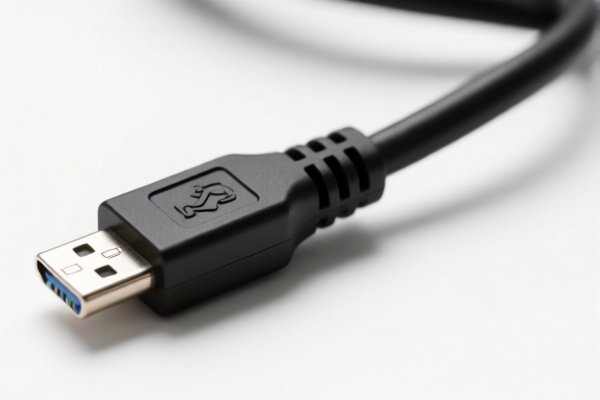
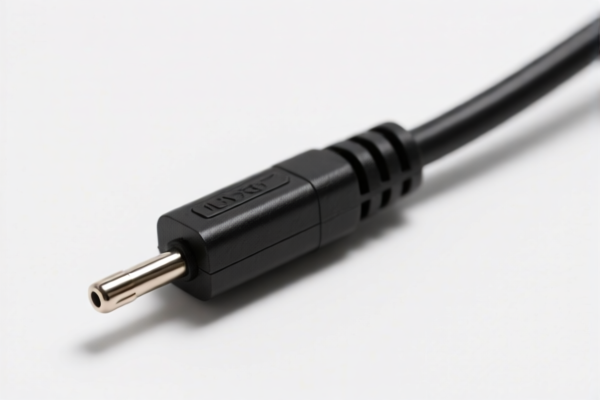


AI Analysis
🔌 USB Data Cables: The Ultimate HS Code & Duty Guide (2026 Edition)
🌐 Global Customs Clearance & Duty Strategy | Decoding the "Cable" Classification
📌 Section 1: The "Cable" Identity Crisis – Are You a Wire or a Machine Part?
In international trade, a "USB Cable" is a chameleon. Its classification depends entirely on its function and end-use: 1. As a Communication Device Accessory: If it's a dedicated data transmission tool for IT equipment, it falls under 8517 (Communication Equipment). 2. As a Data Processing Unit: If it's an integral part of the "control or adaptation" of a computer, it may fall under 8471 (Automatic Data Processing). 3. As a Raw Electrical Conductor: If it's simply a wire with a connector (no data logic), it falls under 8544 (Electrical Conductors).
⚠️ Critical Distinction:
- Data Logic/Protocol: If the cable handles complex data transmission protocols for specific IT gear → 8517 or 8471.
- Simple Conduction: If it's just a physical link (voltage < 1000V) without complex data handling features → 8544.
- Classification Risk: Misclassifying a "Data Cable" as a "Wire" often triggers higher duties or anti-dumping investigations.
📦 Section 2: HS Code Breakdown & Duty Analysis (Data-Driven)
Based on current 2026 tariff data for US Imports from China.
| HS Code | Product Description & Rationale | Tax Burden | Duty Composition Breakdown |
|---|---|---|---|
| 8517.79.00.00 | The "High-Risk" Data Accessory • Summary: USB data cable classified as a communication device accessory. • Rationale: Fits "Other devices for transmitting/receiving data" perfectly. |
67.5% | • Base: 0.0% • Section 301: +7.5% • Section 122: +50% (Steel/Aluminum/Copper products) |
| 8471.80.10.00 | The "Computer Peripheral" Link • Summary: Cable as a transmission medium for Automatic Data Processing (ADP) machines. • Rationale: Fits "Control or adaptation units" description for functional connectivity. |
35.0% | • Base: 0.0% • Section 301: +25.0% • Section 122: +10% (Standard 122 surcharge) |
| 8517.62.00.90 | The "Voice/Data/Media" Channel • Summary: USB cable for transmitting voice, image, or data. • Rationale: Belongs to "Machinery for transmission" category. |
35.0% | • Base: 0.0% • Section 301: +25.0% • Section 122: +10% (Standard 122 surcharge) |
| 8471.80.90.00 | The "ADP Accessory" (Catch-all) • Summary: Peripheral connecting unit for ADP machines. • Rationale: "Other units of automatic data processing equipment" not listed elsewhere. |
35.0% | • Base: 0.0% • Section 301: +25.0% • Section 122: +10% (Standard 122 surcharge) |
| 8544.42.90.90 | The "Electrical Wire" (Low Base) • Summary: Insulated wire with connector, voltage ≤ 1000V. • Rationale: Classified strictly as an "Electrical Conductor" rather than a data device. |
87.6% | • Base: 2.6% • Section 301: +25.0% • Section 122: +50% (Steel/Aluminum/Copper surcharge) |
🔍 Deep Dive into Duty Traps: - Section 122 (50% Surge): HS Codes 8517.79.00.00 and 8544.42.90.90 attract the dreaded 50% surcharge because they are deemed to contain Steel, Aluminum, or Copper components that fall under specific trade restrictions. - Section 301 (25% vs 7.5%): Codes under 8471 and 8517.62 generally face a flat 25% 301 duty. Code 8517.79 faces a lower 7.5% 301 duty but is punished heavily by the Section 122 steel/copper rules. - Total Tax Shock: Expect 67.5% to 87.6% total duty costs. The "Wire" classification (8544) is ironically the most expensive due to the combination of a 2.6% base and the massive 50% surcharge.
🛠️ Section 3: Customs Clearance Strategy & Expert Advice
✅ 1. Material Declaration & BOM (Bill of Materials)
- The Copper/Steel Trap: The 50% Section 122 surcharge is applied because the cable contains copper conductors or steel/aluminum shielding.
- Action: Do not try to hide the material. Clearly declare the composition. If the cable is purely plastic/fiber (no metal), you might argue against Section 122, but standard USB cables almost always contain copper.
- Documentation: Provide a Material Safety Data Sheet (MSDS) or Component Breakdown proving the exact metal content to avoid arbitrary classification by customs officers.
✅ 2. HS Code Selection Strategy
- Best Case Scenario (Lowest Risk): 8471.80.10.00 or 8471.80.90.00.
- Why? Total duty is 35.0%. While high, it avoids the 50% Section 122 surcharge (assuming the "ADP unit" argument doesn't trigger the metal surcharge) and avoids the 2.6% base.
- Caveat: You must prove the cable is specifically designed as a control/adaptation unit for the computer, not just a generic wire.
- Avoid (If Possible): 8544.42.90.90.
- Why? The total 87.6% is catastrophic. The combination of Base (2.6%) + 301 (25%) + Section 122 (50%) makes it the most expensive route. This classification treats the USB cable as a generic "Wire" subject to heavy steel/copper tariffs.
✅ 3. Naming & Description on Invoice
- Don't Just Write "Cable":
- ❌ Bad: "USB Cable, 1M, Black"
- ✅ Good (for 8471): "USB Data Transmission Adapter,专为自动数据处理机器设计 (For ADP Machines), Control Unit Connector"
- ✅ Good (for 8517): "Communication Equipment Accessory, Data Transmission Cable for IT Infrastructure"
- Function over Form: Emphasize the data transmission function (8471/8517) rather than the electrical conduction (8544) to potentially steer away from the heaviest metal surcharges, if legally defensible.
✅ 4. Pre-Arrival Ruling (PAR)
- Crucial Step: Before shipping, file a Binding Ruling with US Customs and Border Protection (CBP).
- Question to Ask: "Does my specific USB cable model qualify for HS Code 8471.80.x0 (as a computer peripheral) to avoid the 50% Section 122 surcharge?"
- Why: Customs officers often default to the "Wire" classification (8544) which triggers the 50% surcharge automatically. A ruling forces them to accept the "Data Device" classification.
🌍 Section 4: Quick Reference: The "Tax" Reality
| Strategy | HS Code | Total Duty | Verdict |
|---|---|---|---|
| High Risk (Raw Wire) | 8544.42.90.90 |
87.6% | ❌ Avoid. The 50% metal surcharge kills margins. |
| High Risk (Comm. Accessory) | 8517.79.00.00 |
67.5% | ⚠️ Caution. 50% metal surcharge applies. Low 301 duty (7.5%) doesn't save it. |
| Best Case (ADP Peripheral) | 8471.80.10.00 |
35.0% | ✅ Preferred. No 50% metal surcharge (if argued as ADP part). |
| Best Case (ADP Accessory) | 8471.80.90.00 |
35.0% | ✅ Preferred. Same logic as above. |
📌 Section 5: Common Pitfalls & "Blood & Tears" Lessons
❌ Pitfall 1: Calling it a "Wire"
* Consequence: Customs classifies it as 8544.42.90.90.
* Result: 87.6% Duty. Your product becomes unprofitable overnight.
❌ Pitfall 2: Ignoring the "Metal" Content
* Consequence: Even if you declare it as 8517, if it contains copper/steel, the 50% surcharge hits 8517.79.00.00.
* Result: You must accept the 67.5% duty unless you can shift to the 8471 category where the surcharge is only 10% (or 0% if not applicable, though data says 10%).
❌ Pitfall 3: Generic Descriptions * Consequence: "USB Cable" is too vague. * Result: Customs officer picks the worst possible code (likely the one with the highest base + surcharge).
✅ The Pro Tip:
"Classify as an 'ADP Peripheral' (8471), not a 'Wire' (8544). Prove it connects a computer, not just two power points."
🎯 Conclusion: The Bottom Line
For USB Data Cables entering the US from China in 2026: 1. Target HS Code: 8471.80.10.00 or 8471.80.90.00 (Total Duty: 35.0%). 2. Avoid: 8544.42.90.90 (Total Duty: 87.6%) and 8517.79.00.00 (Total Duty: 67.5%) unless you are absolutely certain the duty profile of 8471 is rejected. 3. Action: File a Binding Ruling immediately. The difference between 35% and 87% is the difference between profit and loss.
🚀 Final Call to Action:
Don't guess the HS Code. The 50% Section 122 surcharge is a silent killer.
Get your classification right today, or pay the price tomorrow!
✨ Expert Customs Clearance | Precision Over Guesswork
💼 Your Margin depends on your HS Code.
Customer Reviews
About HS Code Classification
The Harmonized System (HS) is an internationally standardized nomenclature developed by the World Customs Organization (WCO) to classify traded products. Over 200 countries use the HS system as the basis for customs tariffs, trade statistics, and import/export regulations.
Each HS code follows a hierarchical structure:
- Chapter (2 digits) — Broad category of goods (e.g., Chapter 84: Machinery and Mechanical Appliances)
- Heading (4 digits) — More specific grouping within the chapter
- Subheading (6 digits) — Internationally standardized breakdown, used by all WCO member countries
- National subdivisions (8-10 digits) — Country-specific extensions for further classification, such as US HTSUS 10-digit codes
Correct HS code classification is essential for smooth customs clearance, accurate duty payment, and compliance with trade regulations. Misclassification can lead to customs delays, overpayment of duties, or penalties.
When importing from CN to US, the applicable tariff rates may include:
- Most-Favored-Nation (MFN) rate — The standard duty rate applied to WTO members
- General rate — Applied to countries without trade agreements
- Trade remedy duties — Additional tariffs such as Section 301 (anti-dumping), Section 232 (national security), or countervailing duties
The information provided on this page is for reference purposes only. For official classification, please consult with your local customs authority or a licensed customs broker.