Cardboard Filter Screen
CN → US| HS Code | Tariff Rate | Origin | Destination | Doc |
|---|---|---|---|---|
| 4823201000 | 35.0% | CN | US | Official Doc |
| 4823209000 | 35.0% | CN | US | Official Doc |
| 4812000000 | 35.0% | CN | US | Official Doc |
| 6815994170 | 35.0% | CN | US | Official Doc |
| 5911400100 | 43.0% | CN | US | Official Doc |
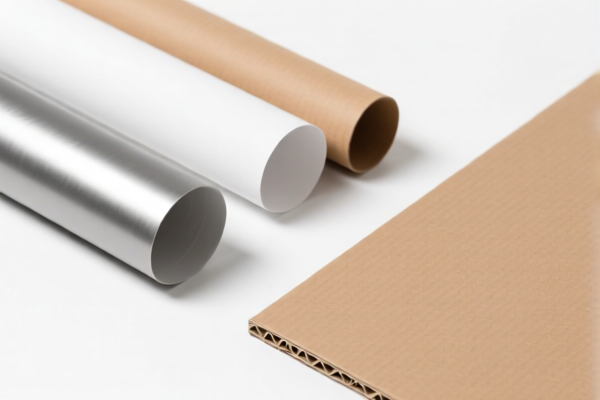
Product Images



AI Analysis
🧱 Cardboard Filter Screen (Paper & Paperboard Filtration Media)
🌐 HS Code Reference & Customs Clearance Guide | 2026 Latest Tariff Analysis | Professional通关 Strategy for US Imports
📌 I. Product Definition & Classification: Is it Paper or Mineral?
"Cardboard Filter Screen" is a generic term that covers various filtration media used in industrial, chemical, and food processing applications. The critical distinction for customs classification lies in the raw material composition and physical state:
- Paper-Based (Cellulose/Fiber): Made from paper pulp, cardboard, or fibrous materials. These fall under Chapter 48 (Paper) or Chapter 59 (Textile-like paper products).
- Mineral-Based (Non-Metallic): Made from mineral fibers or inorganic materials shaped like plates. These fall under Chapter 68 (Mineral Products).
⚠️ Key Classification Point:
- If the material is purely fibrous/paper/cardboard → Look at Chapter 48 or 59.
- If the material contains mineral/non-metallic inorganic components → Look at Chapter 68.
- Note: In the provided dataset, specific HS codes differentiate based on these precise material definitions.
📦 II. HS Code Classification Details (Based on Provided Data)
The following HS codes are derived strictly from the provided <DATA> set. All items listed are subject to significant US tariffs.
| HS Code | Product Description & Material | Key Characteristics | Application/Usage |
|---|---|---|---|
4823.20.90.00 |
Cardboard Filter Screen | Material: Cardboard (纸板) Use: Filtration paper & board |
General cardboard-based filtration media |
4812.00.00.00 |
Cardboard Filter Screen | Form: Filter mesh/Sheet Material: Pulp/Paper-based (纸浆/纸质) |
Sheet-like filter media made from paper pulp |
4823.20.10.00 |
Cardboard Filter Screen | Material: Cardboard Form/Use: Filter screen/mesh |
Cardboard specifically formed into filter screens |
6815.99.41.70 |
Pulp Filter Plate | Material: Mineral/Non-metallic (矿物质/非金属类) Form: Plate (板状) |
Mineral-based filter plates (distinct from paper) |
5911.40.01.00 |
Pulp Filter Plate | Material: Fiber/Paper-based (纤维/纸质类) Use: Filtration |
Fabric-like paper products used for filtration |
🔍 Critical Observation:
- Codes4823.20.90.00,4812.00.00.00, and4823.20.10.00all refer to Cardboard/Paper variants but differ in specific sub-classification (sheet vs. mesh vs. general board).
- Code6815.99.41.70is the only mineral-based option in the list.
- Code5911.40.01.00is a fiber/paper product but classified under Chapter 59 (Textile-like paper), likely due to its specific fabric-like structure or use.
💰 III. 2026 Latest Tariff Rate Breakdown (Detailed Analysis)
✅ Applicable Country: United States (US)
✅ Origin: China (CN) [Implied by the high tariff structure typical of Section 301 & IEEPA]
✅ Effective Date: Current trade restrictions apply
🎯 1. Paper & Cardboard Variants (4823.20.90.00, 4812.00.00.00, 4823.20.10.00)
| Item | Content |
|---|---|
| Base Tariff Rate | 0.0% (Standard MFN rate for these specific paper products) |
| Section 301 Additional Tariff | +25.0% (Trade Remedy Duties) |
| Section 122 Tariff (IEEPA) | +10.0% (Additional duties under International Emergency Economic Powers Act) |
| Total Effective Tax Rate | 35.0% |
| Tax Calculation | CIF Value × 35% |
| De Minimis Exemption? | ❌ No (Section 301 and IEEPA duties generally apply regardless of value for Chinese origin) |
| Legal Basis Path | USITC: 4823.20 → FOOTNOTE: 9903.88.01 (25%) + IEEPA: 9903.01.25 (10%) |
📌 Explanation:
- Although the base duty is 0%, the combination of 25% (Section 301) and 10% (122/IEEPA) results in a steep 35% total duty.
- This applies to all cardboard/paper filter screens in the48xxand4812ranges.
🎯 2. Mineral-Based Variant (6815.99.41.70)
| Item | Content |
|---|---|
| Base Tariff Rate | 0.0% |
| Section 301 Additional Tariff | +25.0% |
| Section 122 Tariff (IEEPA) | +10.0% |
| Total Effective Tax Rate | 35.0% |
| Tax Calculation | CIF Value × 35% |
| De Minimis Exemption? | ❌ No |
📌 Note:
- Even though the material is mineral (Chapter 68), it is still subject to the same 35% total tariff structure as the paper variants in this dataset.
- Do not assume Chapter 68 products are exempt from China-specific tariffs; the data confirms they are not.
🎯 3. Fiber/Paper Plate Variant (5911.40.01.00)
| Item | Content |
|---|---|
| Base Tariff Rate | 8.0% |
| Section 301 Additional Tariff | +25.0% |
| Section 122 Tariff (IEEPA) | +10.0% |
| Total Effective Tax Rate | 43.0% |
| Tax Calculation | CIF Value × 43% |
| De Minimis Exemption? | ❌ No |
| Legal Basis Path | USITC: 5911.40 → FOOTNOTE: 9903.88.01 (25%) + IEEPA (10%) |
📌 Critical Difference:
- This is the only item with a non-zero base tariff (8.0%).
- The total rate is 43.0%, which is 8 percentage points higher than the other variants.
- Classification as5911.40.01.00(Textile-like paper) incurs a higher base duty than4823(Paperboards) or4812(Filter paper).
🛠️ IV. Customs Clearance Practical Advice (Pitfall Avoidance)
✅ 1. Preparation Checklist (Non-Negotiable)
| Document | Required? | Purpose |
|---|---|---|
| ✅ Material Specification Sheet | ✔️ | Must explicitly state: "Cardboard", "Paper Pulp", or "Mineral Fiber". Ambiguity leads to misclassification. |
| ✅ Product Photos | ✔️ | Show texture, thickness, and shape (screen vs. plate vs. sheet). |
| ✅ Commercial Invoice | ✔️ | Must match HS Code description exactly. Use terms like "Cardboard Filter Screen" or "Mineral Filter Plate". |
| ✅ Packing List | ✔️ | Detail weight and dimensions for duty calculation. |
| ✅ Certificate of Origin | ✔️ | Crucial for proving Chinese origin (triggers 301/122 tariffs). |
✅ 2. Classification Strategy (Key Mnemonic)
🔥 "Material Determines Code, Not Just Name!"
| Product Type | Correct HS Code Range | Base Tariff | Total Tariff | Risk of Misclassification |
|---|---|---|---|---|
| Cardboard/Paper Screen | 4823.20 / 4812.00 |
0% | 35% | Low (if material is clearly paper) |
| Mineral Plate | 6815.99 |
0% | 35% | Medium (if confused with paper) |
| Fiber/Paper Plate | 5911.40 |
8% | 43% | High (Highest cost, easy to mis-classify as 48xx) |
⚠️ Warning:
- Declaring a5911product as4823to save 8% base duty is high-risk. Customs can audit material composition. If proven to be textile-like paper, you will owe the difference + penalties.
- Ensure the 8% base duty for5911.40.01.00is factored into your pricing model.
✅ 3. Special Handling Tips
| Scenario | Recommendation |
|---|---|
| Hybrid Materials | If the filter contains both paper and mineral components, declare the principal material. If unclear, consult a customs broker for a binding ruling. |
| Small Shipments (De Minimis) | ❌ Do not rely on Section 321 (De Minimis) for Section 301/122 duties. Even under $800, Chinese origin goods may be subject to duties if flagged. |
| Product Naming | Avoid generic names like "Filter". Use "Cardboard Filter Screen" or "Mineral Filter Plate" to align with HS descriptions. |
🌍 V. Global Market Comparison (2026)
| Market | Recommended HS Code (Example) | Approx. Total Duty (China Origin) | Notes |
|---|---|---|---|
| 🇺🇸 USA | 4823.20.90.00 / 5911.40.01.00 |
35% - 43% | High tariffs due to 301 + 122 clauses. |
| 🇨🇳 China | 4823.20 |
~5-10% | Lower base duties, no Section 301. |
| 🇪🇺 EU | 4823.20 |
~0-6% | Varies by specific paper type. No US-style add-ons. |
| 🇻🇳 Vietnam | (Re-exported) | 0% (if rules of origin met) | Consider supply chain diversification to avoid US tariffs. |
📌 Conclusion:
- USA is the most expensive market for these products due to the 35-43% total tariff burden.
- Mineral (6815) and Paper (4823) have the same total rate (35%), but Fiber Plates (5911) are more expensive (43%).
📌 VI. Common Errors & Pitfalls (Lessons Learned)
❌ Error 1: Calling all filters "Paper" and using 4823.20.90.00
👉 Consequence: If the product is actually mineral-based (6815) or fiber-plate (5911), customs may reclassify it. For 5911, you face 8% base duty + penalties.
❌ Error 2: Assuming 0% base duty means 0% total duty
👉 Consequence: Ignoring the 35% total tariff leads to massive cost underestimation. The 0% base is misleading.
❌ Error 3: Splitting a mixed shipment (Cardboard + Mineral)
👉 Consequence: Complex classification increases clearance time and risk of audit. Declare separately with clear material specs.
✅ Correct Approach:
"Cardboard Filter Screen, 100% Cellulose Pulp, Flat Sheet, Model XYZ" →
4812.00.00.00
"Mineral Filter Plate, Non-Metallic, Plate Shape" →6815.99.41.70
🎯 VII. Conclusion: Professional Declaration, Cost Control
🎯 Remember the Key Takeaway:
🔹 "35% is the floor, 43% is the peak for Paper/Cardboard/Mineral filters."
🔹 "Check the material: 8% base duty for5911makes it the most expensive variant."
📌 Pro Tip:
If your supplier uses mineral-based filters (
6815) instead of fiber-plate filters (5911), you save 8% on base duty (Total 35% vs 43%). Evaluate material alternatives to optimize costs.
📣 Immediate Action:
📞 Contact Customs Broker: Provide material specs to confirm
4823vs5911vs6815.
💰 Budget for 35-43% Duty: Do not include in product cost if it's an extra clearance fee.
🚀 Optimize Supply Chain: Consider sourcing from non-China countries to mitigate 301/122 tariffs.
✨ Precise Classification Saves Money!
💼 Every percentage point in tariff is pure profit erosion!
Customer Reviews
About HS Code Classification
The Harmonized System (HS) is an internationally standardized nomenclature developed by the World Customs Organization (WCO) to classify traded products. Over 200 countries use the HS system as the basis for customs tariffs, trade statistics, and import/export regulations.
Each HS code follows a hierarchical structure:
- Chapter (2 digits) — Broad category of goods (e.g., Chapter 84: Machinery and Mechanical Appliances)
- Heading (4 digits) — More specific grouping within the chapter
- Subheading (6 digits) — Internationally standardized breakdown, used by all WCO member countries
- National subdivisions (8-10 digits) — Country-specific extensions for further classification, such as US HTSUS 10-digit codes
Correct HS code classification is essential for smooth customs clearance, accurate duty payment, and compliance with trade regulations. Misclassification can lead to customs delays, overpayment of duties, or penalties.
When importing from CN to US, the applicable tariff rates may include:
- Most-Favored-Nation (MFN) rate — The standard duty rate applied to WTO members
- General rate — Applied to countries without trade agreements
- Trade remedy duties — Additional tariffs such as Section 301 (anti-dumping), Section 232 (national security), or countervailing duties
The information provided on this page is for reference purposes only. For official classification, please consult with your local customs authority or a licensed customs broker.