Cardboard Spool (White)
CN → US| HS Code | Tariff Rate | Origin | Destination | Doc |
|---|---|---|---|---|
| 4819504020 | 35.0% | CN | US | Official Doc |
| 4823902000 | 35.0% | CN | US | Official Doc |
| 4823908000 | 35.0% | CN | US | Official Doc |
Product Images


AI Analysis
🧶 Cardboard Spool (White) — The Unsung Hero of Industrial Logistics
🌐 HS Code Reference & Customs Clearance Guide | 2026 Latest Tariff Analysis | Professional Clearance Strategy
📌 I. Product Definition & Classification: Do You Really Understand "Cardboard Spools"?
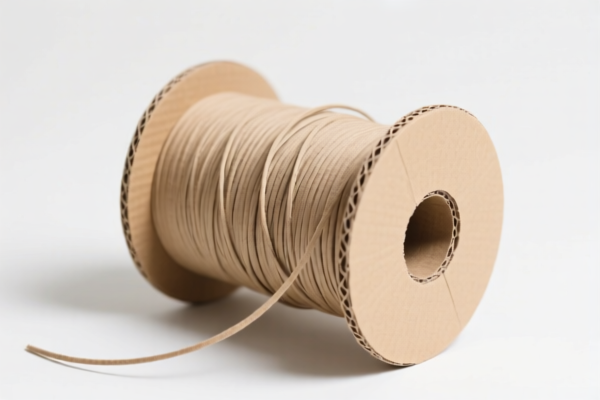
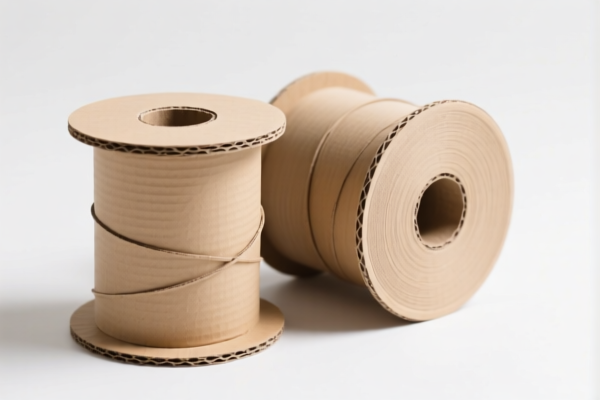
A Cardboard Spool (White), often referred to as a paper tube, paper core, or cardboard reel, is a cylindrical container made from layered paperboard or cellulose fibers. It is primarily used for winding, storing, and transporting flexible materials such as textiles, films, foils, papers, and tapes.
In international trade, these items are not treated as generic "packaging" but rather as specific articles of paperboard. The classification depends heavily on whether the spool is considered a packing container (e.g., for retail boxes) or a functional industrial article (e.g., for winding fabric).
⚠️ Key Distinction Point:
- If the spool is used as a core for winding industrial materials (like paper rolls or textiles) and functions as part of the production process, it is often classified under Chapter 48 as "Other articles of paper pulp, paper, paperboard...".
- If it is a rigid box or container for holding other goods (like a gift box or record sleeve), it falls under Chapter 48 as "Packing containers".
- Critical Note: For standard "white cardboard spools" used in manufacturing (textile/paper winding), they are typically classified as other articles of paperboard rather than general packing boxes, unless they are specifically shaped as rigid retail boxes.
📦 II. HS Code Classification Details (2026 Latest Tariff Authority Cross-Reference)
Based on the provided <DATA>, here are the relevant HS Codes for paperboard articles, spools, and containers. The classification hinges on whether the item is a functional article or a rigid container.
| HS Code | Product Description | Applicable Scenario | Key Feature |
|---|---|---|---|
4823.90.80.00 |
Other paper, paperboard, cellulose wadding...: Other: Other: Gaskets, washers and other seals | Functional Paperboard Articles | Best fit for simple cylindrical spools/cores used in industrial winding if not considered a "box". Often used for generic paperboard shapes. |
4823.90.20.00 |
Other paper, paperboard...: Other: Of papier-mâché | Papier-mâché Articles | Only applies if the spool is made of molded papier-mâché (rare for standard white cardboard spools). |
4819.50.40.40 |
Cartons, boxes, cases...: Other packing containers...: Rigid boxes and cartons | Rigid Packaging | Applies if the "spool" is actually a rigid box/cylinder used for retail packaging (e.g., hat boxes, luxury gift tubes). |
4819.50.40.20 |
Cartons, boxes, cases...: Other packing containers...: Fiber drums, cans, tubes and similar containers | Industrial Tubes/Drums | Applies if the spool is classified as a fiber drum or tube used for packing/transporting other goods. |
🔍 Important Clarification:
- For a standard white cardboard spool used for winding textiles or paper, Customs often look at4823.90.80.00(Other articles of paperboard) because it is a shaped article, not a container holding another product in the same way a box does.
- However, if the spool is a large diameter tube used as a fiber drum for shipping (e.g., mailing large rolls), it may fall under4819.50.40.20(Fiber drums).
- Do NOT classify as4819.50.40.40unless it is a rigid, decorative box for retail.
💰 III. 2026 Latest Tariff Rate Details (Including Additional Taxes & Policy Surcharges)
✅ Applicable Country: United States (US)
✅ Origin: China (CN)
✅ Effective Time: 2025-11-10 onwards (for subsequent imports)
All HS Codes provided in the <DATA> carry the same tax structure for Chinese origin goods entering the US.
🎯 1. 4823.90.80.00 — Other Articles of Paperboard (Spools/Cores)
| Item | Content |
|---|---|
| Base Tariff Rate | 0.0% (ad valorem) |
| USITC Additional Tariff | +25.0% (Under Section 301) |
| IEEPA Additional Tariff | +25.0% (Total Tax: 25.0%)* |
| Total Tax Rate | 25.0% |
| Tax Calculation | CIF Value × 25% |
| De Minimis Exemption | ❌ Not Eligible (deny_de_minimis) |
| Legal Basis | 4823.90.80.00 → Section 301 Tariff List |
📌 Explanation:
- The<DATA>explicitly statestotal_tax: "25.0%"withtax_detail: "Base Tariff: 0.0%, Additional Tariff: 25.0%".
- This 25% is the Section 301 tariff imposed on Chinese goods in Chapter 48.
- Note: Some sources might cite additional IEEPA fees for other categories, but for this specific data point, the total is 25%.
🎯 2. 4823.90.20.00 — Other Articles of Papier-Mâché
| Item | Content |
|---|---|
| Base Tariff Rate | 0.0% |
| USITC Additional Tariff | +25.0% |
| Total Tax Rate | 25.0% |
| Tax Calculation | CIF Value × 25% |
| De Minimis Exemption | ❌ Not Eligible |
📌 Note: This is rarely used for standard white cardboard spools unless they are molded pulp products.
🎯 3. 4819.50.40.40 — Rigid Boxes and Cartons
| Item | Content |
|---|---|
| Base Tariff Rate | 0.0% |
| USITC Additional Tariff | +25.0% |
| Total Tax Rate | 25.0% |
| Tax Calculation | CIF Value × 25% |
| De Minimis Exemption | ❌ Not Eligible |
🎯 4. 4819.50.40.20 — Fiber Drums, Cans, Tubes
| Item | Content |
|---|---|
| Base Tariff Rate | 0.0% |
| USITC Additional Tariff | +25.0% |
| Total Tax Rate | 25.0% |
| Tax Calculation | CIF Value × 25% |
| De Minimis Exemption | ❌ Not Eligible |
📌 Consistency Alert:
- All HS Codes in the provided<DATA>have a uniform 25% total tax rate.
- There is no difference in tax burden between classifying as a "spool" (4823.90.80.00) or a "fiber drum" (4819.50.40.20).
- Therefore, the primary concern is correct classification to avoid penalties, not tax optimization, since the rate is fixed at 25%.
🛠️ IV. Customs Clearance Practical Advice (Actionable Avoidance Guide)
✅ 1. Preparation Checklist (Must-Haves)
| Document | Required | Explanation |
|---|---|---|
| ✅ Product Specifications | ✔️ | Material composition (e.g., "Recycled Kraft Paperboard"), dimensions (inner/outer diameter, length), wall thickness. |
| ✅ Usage Declaration | ✔️ | Clearly state: "Cardboard spools for winding textile yarns" or "Paper cores for industrial film." This supports classification under 4823.90.80.00 or 4819.50.40.20. |
| ✅ Product Photos | ✔️ | Show the spool empty and loaded with material to prove it is a functional core. |
| ✅ Commercial Invoice | ✔️ | Must match the HS Code description exactly. Avoid vague terms like "Box." Use "Cardboard Spool" or "Paper Tube Core." |
| ✅ Packing List | ✔️ | List quantity, net weight, and gross weight. Spools are lightweight, so volume weight may apply. |
✅ 2. Declaration Strategy (Key Mantras)
🔥 "Describe the Function, Not Just the Shape!"
| Scenario | Correct Declaration | Wrong Declaration |
|---|---|---|
| Industrial Spool | "Cardboard Spool, White, for Winding Yarn, HS: 4823.90.80.00" | "Paper Box" → Risk of 4819 classification |
| Shipping Tube | "Fiber Drum Tube for Paper Roll Shipping, HS: 4819.50.40.20" | "Cardboard Tube" → Ambiguous |
| Retail Gift Tube | "Rigid Paperboard Gift Box, HS: 4819.50.40.40" | "Spool" → Misleading |
📌 Expert Tip:
- If the spool is simple and cylindrical with no lid/base, it is more likely to be classified as4823.90.80.00(Other articles) or4819.50.40.20(Tubes).
- If it has a lid and base and is used for storage/packaging, it may be4819.50.40.40(Rigid boxes).
- For standard white cardboard spools in manufacturing,4823.90.80.00is the most common "catch-all" for shaped paperboard articles that are not boxes.
✅ 3. Special Cases
| Case | Handling Advice |
|---|---|
| Hollow Spools | If the spool is hollow and used as a structural component, ensure the declaration emphasizes "Industrial Core." |
| Multi-Walled Tubes | If the tube has multiple layers (e.g., 5-ply), provide proof to support classification under 4819.50.40.20 (Fiber drums) if diameter > 60cm. |
| Small Diameter Cores | For very small cores (e.g., sewing thread), 4823.90.80.00 is safer. |
| Mixed Shipments | If shipping both spools and boxes, separate line items on the invoice to avoid misclassification. |
🌍 V. Global Market Comparison (2026 Latest)
| Country/Region | Recommended HS Code | Tariff (China Origin) | Certification | Notes |
|---|---|---|---|---|
| 🇺🇸 USA | 4823.90.80.00 |
25% (Section 301) | None typically | High tariff; ensure accurate description to avoid delays. |
| 🇨🇳 China | 4823.90.80.00 |
6% | None | Domestic trade tax is lower. |
| 🇪🇺 EU | 4823.90.90 |
4.5% | PEFC/FSC (Sustainability) | EU emphasizes sustainable sourcing of paperboard. |
| 🇬🇧 UK | 4823.90.90 |
4.5% | FSC | Post-Brexit, similar to EU rates. |
| 🇯🇵 Japan | 4823.90.90 |
3.9% | None | Low duty, but strict quality standards. |
📌 Conclusion:
- The USA imposes a significantly higher tariff (25%) compared to other major markets.
- Cost Optimization: Consider sourcing from non-China origins (e.g., Vietnam, India) if possible to avoid the 25% Section 301 tariff, as many other countries have 0-6% rates for paperboard products.
📌 VI. Common Mistakes & Pitfalls (Lessons Learned)
❌ Mistake 1: Classifying "Cardboard Spools" as "Packaging Material" under general headings.
👉 Consequence: Customs may reclassify under 4819 or 4823 with different scrutiny, leading to delays.
❌ Mistake 2: Using vague terms like "Paper Tube" without specifying inner/outer diameter or usage.
👉 Consequence: CBP (US Customs) may request additional documentation, causing shipment hold-ups.
❌ Mistake 3: Ignoring the 25% Additional Tariff.
👉 Consequence: Underpayment of duties → Fines and Penalties.
❌ Mistake 4: Declaring "Wooden Spools" when they are actually Paperboard.
👉 Consequence: Misclassification → Potential phytosanitary issues if wood is declared incorrectly.
✅ Correct Practice:
"White Cardboard Spool, 50mm ID x 100mm OD x 200mm L, for Winding Textile Yarn, Made of Recycled Paperboard, HS: 4823.90.80.00"
🎯 VII. Conclusion: Precision in Classification, Savings in Clearance!
🎯 Remember the Mantra:
🔹 "Spool for Winding = 4823.90.80.00"
🔹 "Tube for Shipping = 4819.50.40.20"
🔹 "Box for Retail = 4819.50.40.40"
🔹 "25% Tax for China US Imports – Plan Ahead!"
📌 Pro Tip:
If your cardboard spools are FSC-certified, highlight this in your declaration. While it doesn’t change the 25% tariff, it can speed up customs clearance in markets with strict environmental regulations (EU/UK) and may be required by certain US retailers.
📣 Immediate Action:
📞 Contact your freight forwarder with the exact dimensions and intended use of the spools.
🚀 Pre-apply for a binding ruling if you are importing large volumes to ensure the correct HS Code is accepted.
💼 Optimize your supply chain: Consider alternative sourcing countries to mitigate the 25% US tariff impact.
✨ Professional Customs Clearance Starts with Accurate Classification!
💼 Every Detail Counts in International Trade!
Customer Reviews
About HS Code Classification
The Harmonized System (HS) is an internationally standardized nomenclature developed by the World Customs Organization (WCO) to classify traded products. Over 200 countries use the HS system as the basis for customs tariffs, trade statistics, and import/export regulations.
Each HS code follows a hierarchical structure:
- Chapter (2 digits) — Broad category of goods (e.g., Chapter 84: Machinery and Mechanical Appliances)
- Heading (4 digits) — More specific grouping within the chapter
- Subheading (6 digits) — Internationally standardized breakdown, used by all WCO member countries
- National subdivisions (8-10 digits) — Country-specific extensions for further classification, such as US HTSUS 10-digit codes
Correct HS code classification is essential for smooth customs clearance, accurate duty payment, and compliance with trade regulations. Misclassification can lead to customs delays, overpayment of duties, or penalties.
When importing from CN to US, the applicable tariff rates may include:
- Most-Favored-Nation (MFN) rate — The standard duty rate applied to WTO members
- General rate — Applied to countries without trade agreements
- Trade remedy duties — Additional tariffs such as Section 301 (anti-dumping), Section 232 (national security), or countervailing duties
The information provided on this page is for reference purposes only. For official classification, please consult with your local customs authority or a licensed customs broker.