Cardboard Support (Uncoated)
CN → US| HS Code | Tariff Rate | Origin | Destination | Doc |
|---|---|---|---|---|
| 4823908000 | 35.0% | CN | US | Official Doc |
| 4823901000 | 35.0% | CN | US | Official Doc |
| 4823903100 | 35.0% | CN | US | Official Doc |
| 4823904000 | 35.0% | CN | US | Official Doc |
| 4823908000 | 35.0% | CN | US | Official Doc |
Product Images
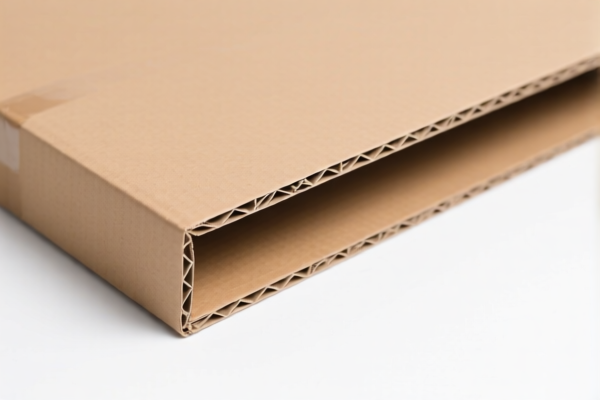
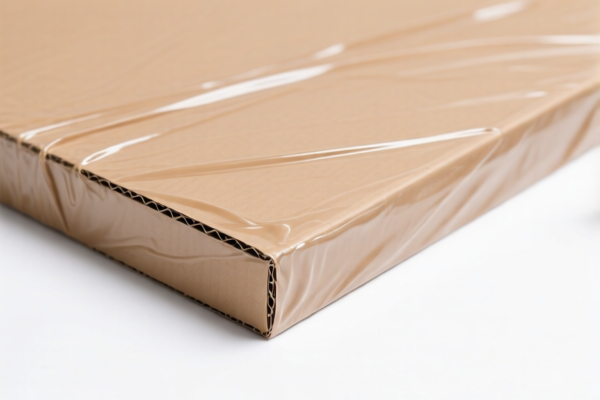
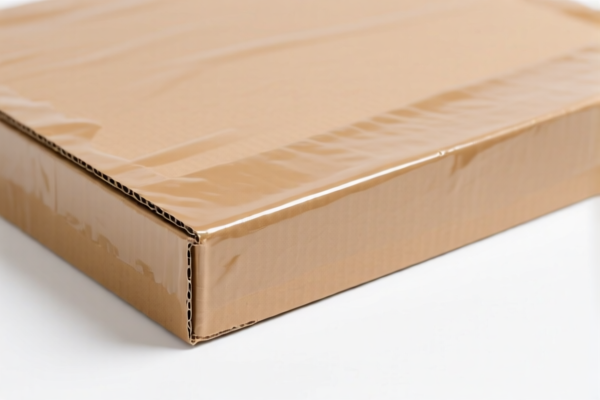
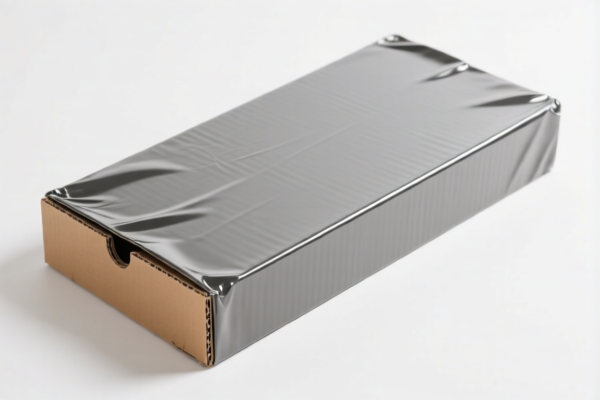
AI Analysis
📦 Cardboard Support (Uncoated)
🌐 HS Code Reference & Customs Clearance Guide | 2026 Latest Tariff Analysis | Professional Clearance Strategy
📌 Part I: Product Definition & Classification: Are You Sure It’s Just “Cardboard Support”?
Cardboard Support (Uncoated) is a generic term that can cause significant classification errors in international trade. In the Harmonized System (HS), "paper pulp, paper, paperboard, cellulose wadding or webs of cellulose fibers" is strictly divided by form (cut to size/shape) and use (functional articles).
For "Uncoated Cardboard," the key to classification lies in the final application and physical form:
- Packaging/Structural Articles: If the cardboard is cut into shapes to serve as a support, spacer, or packaging component (e.g., corner guards, inner separators, custom inserts), it generally falls under Heading 4823.
- Specific Functional Seals: If the "support" is essentially a flat or shaped piece used for sealing, gasketing, or isolation (e.g., fiber gaskets), it may fall under a more specific sub-category of 4823.90.
⚠️ Critical Distinction:
- If it is a simple cut shape used for packaging or general support (no specific mechanical function like sealing) → Likely 4823.90.10.00.
- If it is specifically manufactured as a gasket, washer, or seal (even if made of paperboard/cardboard) → Likely 4823.90.80.00.
- ❌ Do NOT classify as "Paper Rolls" (4804/4810) if it is cut to shape.
- ❌ Do NOT classify as "Cartons" (4819) if it is not a box or container.
📦 Part II: HS Code Classification Details (2026 Latest Tariff Authority Comparison)
Based on the provided data, here are the two possible HS codes for "Cardboard Support (Uncoated)" depending on its precise usage.
| HS Code | Product Description | Applicable Scenario | Key Classification Criterion |
|---|---|---|---|
4823.90.10.00 |
Other paper, paperboard, cellulose wadding and webs of cellulose fibers, cut to size or shape; other articles of paper pulp, paper, paperboard, cellulose wadding or webs of cellulose fibers: Other: Of paper pulp | General packaging supports, spacers, structural inserts, uncoated cardboard cutouts not specified elsewhere | ✅ General Use: If it’s a general-purpose cardboard piece without a specific sealing function. |
4823.90.80.00 |
Other paper, paperboard, cellulose wadding and webs of cellulose fibers, cut to size or shape; other articles of paper pulp, paper, paperboard, cellulose wadding or webs of cellulose fibers: Other: Other: Other: Other: Gaskets, washers and other seals | Gaskets, washers, seals, or supports specifically designed to prevent leakage, vibration, or wear | ✅ Specific Function: If the "support" acts as a seal, gasket, or washer (e.g., in machinery or pipe joints). |
🔍 Key Reminder:
- The description "Uncoated" confirms it falls under 4823 (Articles of paper pulp, paper, paperboard, etc.), not coated products.
- The phrase "Cardboard Support" is ambiguous. If it is a gasket/washer, use 80.00. If it is a general structural piece, use 10.00.
- Customs Risk: Misclassifying a gasket as a general support (or vice versa) can lead to audits, though the tariff rate is identical in this specific dataset.
💰 Part III: 2026 Latest Tariff Rate Breakdown (Including Additional Duties)
✅ Applicable Country: United States (US)
✅ Country of Origin: China (CN)
✅ Effective Date: As per current trade policies (2026 context)
🎯 1. 4823.90.10.00 —— General Cardboard Supports / Articles of Paper Pulp
| Item | Content |
|---|---|
| Base Tariff Rate | 0.0% (ad valorem) |
| Section 301 Additional Tariff | +25.0% |
| Total Tariff Rate | 25.0% |
| Tax Calculation | CIF Value × 25% |
| De Minimis Eligibility | ❌ Not Applicable (Section 301 duties apply regardless of value for most categories) |
| Legal Basis Path | HTSUS:4823.90.10.00 → USITC Footnote 301 → 25% Surcharge |
📌 Explanation:
- Although the base tariff for many paper articles is 0%, Section 301 imposes an additional 25% on goods from China in this category.
- No IEEPA 10% additional tax is listed in the provided data for this specific code, so the total remains 25%.
- Total Effective Rate: 25%.
🎯 2. 4823.90.80.00 —— Gaskets, Washers, and Seals (Cardboard/Paperboard)
| Item | Content |
|---|---|
| Base Tariff Rate | 0.0% (ad valorem) |
| Section 301 Additional Tariff | +25.0% |
| Total Tariff Rate | 25.0% |
| Tax Calculation | CIF Value × 25% |
| De Minimis Eligibility | ❌ Not Applicable |
| Legal Basis Path | HTSUS:4823.90.80.00 → USITC Footnote 301 → 25% Surcharge |
📌 Explanation:
- Same base rate (0%) and same Section 301 surcharge (25%).
- Total Effective Rate: 25%.
🛠️ Part IV: Customs Clearance Practical Advice (Real-World Pitfall Avoidance)
✅ 1. Required Documentation Checklist
| Document | Mandatory? | Description |
|---|---|---|
| ✅ Commercial Invoice | ✔️ | Must clearly describe the item as "Uncoated Cardboard Support" or "Paperboard Gasket" and specify function. |
| ✅ Packing List | ✔️ | Item weight, dimensions, and quantity. |
| ✅ Product Specifications | ✔️ | Detail material composition (e.g., "Recycled Paperboard, Uncoated"), thickness, and dimensions. |
| ✅ Usage Declaration | ✔️ | State clearly: "Used as [Packaging Support / Gasket / Structural Spacer]". This determines the HS Code. |
| ✅ Certificate of Origin | ✔️ | Proves origin is China (CN) to apply the correct 301 tariffs. |
✅ 2. Declaration Tips (Key Mantra)
🔥 “Function Determines Code, Not Just Name.”
| Situation | Correct Declaration | Incorrect Declaration |
|---|---|---|
| Cardboard piece used to separate items in a box | 4823.90.10.00 – "Paperboard Spacer, Uncoated" |
"Cardboard Box" → May trigger higher inspection or wrong duty. |
| Cardboard piece used as a gasket/seal in machinery | 4823.90.80.00 – "Paperboard Gasket, Uncoated" |
"Other Paper Product" → Ambiguous, may cause delay. |
| Cardboard roll (not cut to shape) | NOT COVERED in this dataset (Likely 4804/4810) | 4823.90... → ERROR: 4823 is for cut-to-size items. |
📌 Warning:
- If the product is not cut to size (e.g., a roll), it does not fall under 4823. It would fall under Chapter 4804 (Paperboard in rolls) or 4810.
- The provided data only applies to cut-to-size or shaped articles.
- Ensure your product is explicitly cut or molded to a specific shape to qualify for these HS codes.
✅ 3. Special Cases
| Scenario | Handling Advice |
|---|---|
| Custom-Shaped Supports | Provide a technical drawing showing the cut shape. This proves it is "cut to size/shape" under 4823. |
| Mixed Packaging | If cardboard supports are shipped inside a box, declare them separately if they have a distinct HS code. Do not lump them into the box’s code if it causes misclassification. |
| Coated vs. Uncoated | Ensure the invoice states "Uncoated". If coated, it might still fall under 4823, but verification is needed. |
🌍 Part V: Global Market Comparison (2026 Latest)
| Country/Region | Recommended HS Code | Tariff Rate (China Origin) | Notes |
|---|---|---|---|
| 🇺🇸 United States | 4823.90.10.00 / 4823.90.80.00 |
25.0% (Base 0% + 301 25%) | High Duty. No de minimis exemption for most cases. |
| 🇨🇳 China | 4823.90.10.00 / 4823.90.80.00 |
5% - 8% (Import Duty) | Check local HS for import rates. |
| 🇪🇺 European Union | 4823.90 (Various) |
0% - 6.5% | No Section 301 equivalent. Depends on exact sub-category. |
| 🇯🇵 Japan | 4823.90 |
6% - 10% | No additional punitive tariffs. |
📌 Conclusion:
- The US market has a significant 25% additional tariff on these products from China.
- Cost Impact: For a $10,000 shipment, expect $2,500 in additional duties.
- Strategy: Consider supply chain diversification if tariffs impact profit margins significantly.
📌 Part VI: Common Errors & Pitfall Guide
❌ Error 1: Classifying Rolls of cardboard under 4823.90.10.00
👉 Consequence: Customs will reject the declaration. Rolls belong in 4804 or 4810.
✅ Fix: Ensure product is cut to shape or cut to size.
❌ Error 2: Using vague description "Cardboard Support"
👉 Consequence: Customs may apply the highest applicable duty or delay clearance for inspection.
✅ Fix: Use precise description: "Uncoated Paperboard Spacer, Cut to Shape, for Packaging."
❌ Error 3: Ignoring the "Uncoated" Specification
👉 Consequence: If coated, it may still be 4823, but mislabeling can lead to questions about chemical treatment (e.g., fire retardants).
✅ Fix: Clearly state "Uncoated" and specify material composition.
🎯 Part VII: Conclusion: Professional Declaration, Cost Optimization
🎯 Key Takeaways:
🔹 "Cut to Shape = 4823.90.10.00 (General)"
🔹 "Gasket/Seal Function = 4823.90.80.00"
🔹 Total US Tariff: 25% (Base 0% + Section 301 25%)
🔹 No De Minimis Exemption for these codes in the US context.
📌 Pro Tip:
If your "Cardboard Support" is simple and uncoated, ensure it is not a gasket. If it is a gasket, use the 80.00 code. If it is a general spacer, use 10.00. The tariff is the same, but accuracy prevents customs holds.
📣 Immediate Action:
📞 Consult a licensed customs broker to confirm the exact functional use of your product.
📄 Provide technical drawings if the product is custom-shaped.
🚀 Declare accurately to avoid delays and penalties!
✨ Professional Customs Clearance Starts with Accurate Classification!
💼 Every Percent Counts in Global Trade!
Customer Reviews
About HS Code Classification
The Harmonized System (HS) is an internationally standardized nomenclature developed by the World Customs Organization (WCO) to classify traded products. Over 200 countries use the HS system as the basis for customs tariffs, trade statistics, and import/export regulations.
Each HS code follows a hierarchical structure:
- Chapter (2 digits) — Broad category of goods (e.g., Chapter 84: Machinery and Mechanical Appliances)
- Heading (4 digits) — More specific grouping within the chapter
- Subheading (6 digits) — Internationally standardized breakdown, used by all WCO member countries
- National subdivisions (8-10 digits) — Country-specific extensions for further classification, such as US HTSUS 10-digit codes
Correct HS code classification is essential for smooth customs clearance, accurate duty payment, and compliance with trade regulations. Misclassification can lead to customs delays, overpayment of duties, or penalties.
When importing from CN to US, the applicable tariff rates may include:
- Most-Favored-Nation (MFN) rate — The standard duty rate applied to WTO members
- General rate — Applied to countries without trade agreements
- Trade remedy duties — Additional tariffs such as Section 301 (anti-dumping), Section 232 (national security), or countervailing duties
The information provided on this page is for reference purposes only. For official classification, please consult with your local customs authority or a licensed customs broker.