Cellulose Acetate Fine Board
CN → US| HS Code | Tariff Rate | Origin | Destination | Doc |
|---|---|---|---|---|
| 3921190090 | 41.5% | CN | US | Official Doc |
| 3912110000 | 40.6% | CN | US | Official Doc |
| 3921905050 | 39.8% | CN | US | Official Doc |
| 3912120000 | 40.6% | CN | US | Official Doc |
| 3920730000 | 37.9% | CN | US | Official Doc |
| 3920795000 | 38.7% | CN | US | Official Doc |
Product Images
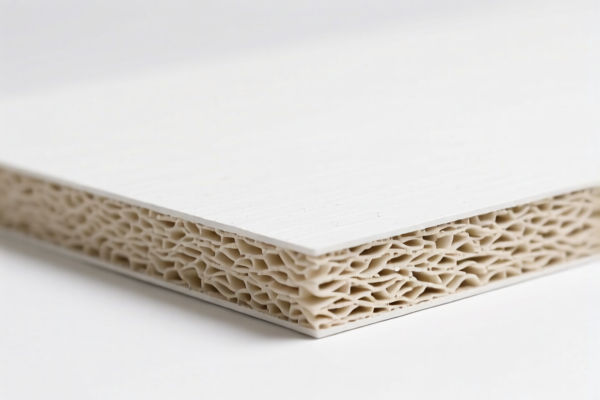
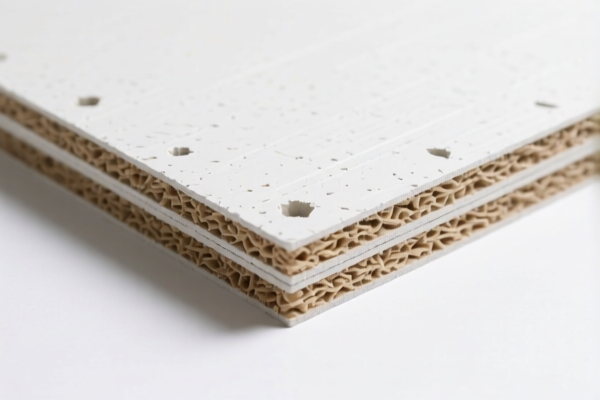
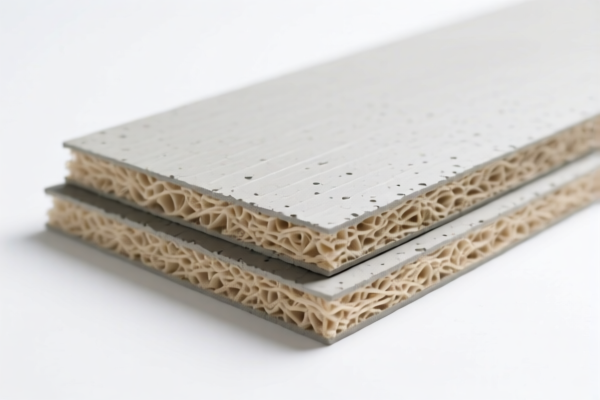
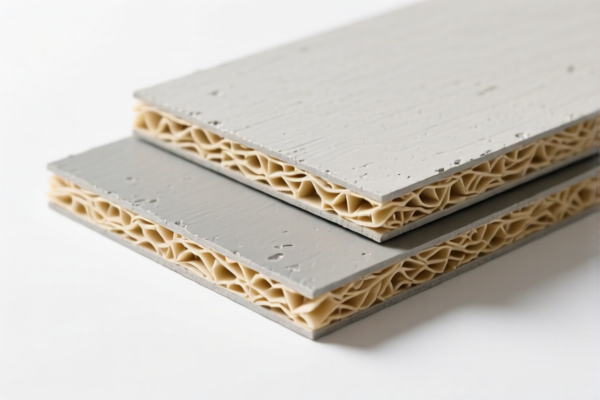
AI Analysis
🧪 Cellulose Acetate Fine Board (醋酸纤维精密板)
🌐 HS Code Classification & Customs Clearance Guide | Precision Analysis for 2026 | Strategic Tariff Breakdown
📌 I. Product Definition & Core Characteristics: What is "Cellulose Acetate Fine Board"?
Cellulose Acetate Fine Board is a high-precision, semi-finished or finished plastic sheet/plate derived from cellulose acetate. It is widely used in optical films, protective coatings, display components, and precision industrial applications.
In international trade, the classification hinges on two critical factors: 1. Form: Is it a raw material/semi-finished product (Chapters 3912/3917) or a finished sheet/plate (Chapter 3920/3921)? 2. Material Composition: Is it pure cellulose derivatives or a mixture/synthetic blend?
⚠️ Critical Distinction Point:
- If the product is in a primary form (powders, flakes, granules) or unworked cellulose acetate → It belongs to Chapter 3912 (Plastics in primary forms).
- If the product is a finished board/plate/sheet (even if thin/precision) → It usually belongs to Chapter 3920 (Other plates, sheets, film, foil, and strip, of plastics) or Chapter 3921 (Other plates, sheets, etc.).
- Note on "Synthetic Fibers": If the board is made from regenerated fibers (acetate fibers) rather than pure cellulose acetate resin, it may fall under 3921.
📦 II. HS Code Classification Matrix (Based on Provided Data)
Below are the 6 most likely HS Codes for "Cellulose Acetate Fine Board" as per the dataset, categorized by their material and form logic.
| HS Code | Product Description | Classification Logic | Key Identifier |
|---|---|---|---|
3912.11.00.00 |
Cellulose Acetate Fine Board (Primary/Semi-finished) | Chapter 3912: Plastics in primary forms. Specifically for Cellulose Esters (Acetate). | Material: Cellulose Acetate Form: Primary/Semi-finished |
3912.12.00.00 |
Cellulose Acetate Fine Board (Primary/Semi-finished) | Chapter 3912: Plastics in primary forms. Specifically for Cellulose Acetate. | Material: Cellulose Acetate Form: Primary/Semi-finished |
3920.73.00.00 |
Cellulose Acetate Fine Board (Sheet/Plate/Film) | Chapter 3920: Other plates/sheets of plastics. Specifically for Cellulose Acetates. | Material: Cellulose Acetate Form: Sheet/Plate/Film |
3920.79.50.00 |
Cellulose Acetate Fine Board (Sheet/Plate/Film) | Chapter 3920: Other plates/sheets of plastics. Specifically for Other Cellulose Derivatives. | Material: Cellulose Derivatives Form: Sheet/Plate/Film |
3921.19.00.90 |
Cellulose Acetate Fine Board (Board/Plate) | Chapter 3921: Other plates/sheets of plastics. Specifically for Other Plastics (Non-cellulose specific subheading). | Material: Cellulose Acetate Form: Board |
3921.90.50.50 |
Cellulose Acetate Fine Board (Board/Plate) | Chapter 3921: Other plates/sheets of plastics. Specifically for Synthetic Fibers/Plastics. | Material: Synthetic Fibers/Plastics Blend Form: Board |
🔍 Why the Split?
- 3912 codes apply if the "board" is actually a raw block or semi-processed material ready for further manufacturing, not yet a final shaped component.
- 3920 codes apply if it is a finished sheet or plate made of cellulose acetate (a cellulose ester).
- 3921 codes apply if the material is considered "other plastics" or contains synthetic fibers (regenerated cellulose fibers) that change the chemical nature from pure ester to fiber-based board.
💰 III. 2026 Tariff Rate Breakdown (USA Origin: China)
✅ Applicable Country: United States (US)
✅ Origin: China (CN)
✅ Effective Date: 2025/2026 (Current Enforcement)
✅ Tax Structure: Base Tariff + Section 301 Tariff + Section 122 Tariff
🎯 1. Primary Form Classification (HS 3912)
Codes: 3912.11.00.00, 3912.12.00.00
| Item | Rate | Details |
|---|---|---|
| Base Tariff | 5.6% | Standard Most Favored Nation (MFN) rate for cellulose esters in primary forms. |
| Section 301 Tariff | +25.0% | Additional tariff for Chinese origin goods under US Trade Act Section 301. |
| Section 122 Tariff | +10.0% | Additional tariff under Section 122 of the Trade Act (National Security/Supply Chain). |
| Total Tax Rate | 40.6% | 5.6% + 25.0% + 10.0% |
| Calculation | CIF Value × 40.6% |
📌 Analysis:
- High base tariff (5.6%) combined with heavy punitive tariffs (35%) results in a 40.6% total cost.
- This is the second-highest rate in the dataset, applicable if the board is considered "primary form" (raw material).
🎯 2. Sheet/Plate Classification (HS 3920)
Codes: 3920.73.00.00, 3920.79.50.00
| Item | Rate | Details |
|---|---|---|
| Base Tariff | 2.9% - 3.7% | Lower base rate for plastic sheets/films of cellulose derivatives. |
| Section 301 Tariff | +25.0% | Same punitive tariff as above. |
| Section 122 Tariff | +10.0% | Same punitive tariff as above. |
| Total Tax Rate | 37.9% - 38.7% | (2.9% or 3.7%) + 25.0% + 10.0% |
| Calculation | CIF Value × Rate |
📌 Analysis:
-3920.73.00.00(37.9%) is the lowest total rate in the dataset.
-3920.79.50.00(38.7%) is slightly higher due to a higher base tariff for "other cellulose derivatives."
- Recommendation: If your product is a finished sheet/plate, aim for Chapter 3920 to save 2-3% compared to Chapter 3912.
🎯 3. Other Board/Plate Classification (HS 3921)
Codes: 3921.19.00.90, 3921.90.50.50
| Item | Rate | Details |
|---|---|---|
| Base Tariff | 4.8% - 6.5% | Higher base rates for "other plastics" or fiber-based boards. |
| Section 301 Tariff | +25.0% | Standard punitive tariff. |
| Section 122 Tariff | +10.0% | Standard punitive tariff. |
| Total Tax Rate | 39.8% - 41.5% | (4.8% or 6.5%) + 25.0% + 10.0% |
| Calculation | CIF Value × Rate |
📌 Analysis:
-3921.19.00.90(41.5%) is the highest total rate. This applies if the board is classified as "other plastic" (non-cellulose specific) or if the material composition is ambiguous.
-3921.90.50.50(39.8%) applies if it is considered a board made of synthetic fibers/plastics.
- Risk: Misclassifying a cellulose acetate board as "other plastic" can lead to the highest tax burden.
🛠️ IV. Customs Clearance Strategy & Pitfalls
✅ 1. Critical Documentation Checklist
| Document | Purpose |
|---|---|
| Product Specification Sheet | Must explicitly state: Chemical Composition (e.g., "99% Cellulose Acetate", "Cellulose Derivative"), Form (Sheet/Plate vs. Raw Block), and Thickness. |
| Material Safety Data Sheet (MSDS) | Confirms chemical nature and helps customs verify it is a plastic/cellulose derivative, not a textile fiber. |
| Formula/Composition Report | Critical for distinguishing between 3912 (Primary), 3920 (Cellulose Ester Sheet), and 3921 (Other/Fiber Board). |
| Commercial Invoice | Must describe the item as "Cellulose Acetate Board/Sheet" and not just "Plastic Board" to avoid ambiguity. |
| Packaging List | Shows dimensions and weight to support the "Board/Sheet" classification. |
✅ 2. Classification Decision Tree (How to Choose the Right HS Code)
-
Is it in Primary Form? (Powder, Flake, Granule, Unworked Block)
→ YES: Check3912.11.00.00or3912.12.00.00(Tax: 40.6%).
→ NO: Go to Step 2. -
Is it a Sheet, Plate, or Film? (Cut to size, finished surface)
→ YES: Check3920Chapter.- Is it pure Cellulose Acetate? →
3920.73.00.00(Tax: 37.9%). - Is it Other Cellulose Derivative? →
3920.79.50.00(Tax: 38.7%).
→ NO: Go to Step 3.
- Is it pure Cellulose Acetate? →
-
Is it a Board/Plate made of Other Plastics or Synthetic Fibers?
→ YES: Check3921Chapter.- Is it Synthetic Fiber/Plastic Blend? →
3921.90.50.50(Tax: 39.8%). - Is it Other Plastic? →
3921.19.00.90(Tax: 41.5%).
- Is it Synthetic Fiber/Plastic Blend? →
📌 Pro Tip:
- Lowest Tax: Aim for3920.73.00.00(37.9%) if your product is a finished sheet/plate of cellulose acetate.
- Highest Tax: Avoid3921.19.00.90(41.5%) unless the material truly is not a cellulose ester.
- Medium Tax:3912codes (40.6%) are risky if the product is actually a finished board, as customs may reclassify it to 3920.
✅ 3. Common Misclassifications & Penalties
| ❌ Mistake | ✅ Correct Approach | Consequence |
|---|---|---|
Classifying a finished sheet as primary form (3912) |
Classify as sheet/plate (3920) |
Overpayment: You pay 40.6% instead of 37.9%. |
Classifying Cellulose Acetate as Other Plastic (3921.19) |
Classify as Cellulose Ester (3920.73) |
Overpayment: You pay 41.5% instead of 37.9%. |
| Using vague terms like "Plastic Board" | Specify "Cellulose Acetate Board" | Customs Review: Delay in clearance, potential reclassification and penalties. |
| Ignoring Section 122 Tariff | Include 10% in cost calculation | Cash Flow Issue: Underestimating total landed cost by 10%. |
🌍 V. Global Market Comparison (Contextual)
| Region | Recommended HS Code | Est. Total Tariff (China Origin) | Notes |
|---|---|---|---|
| 🇺🇸 USA | 3920.73.00.00 |
37.9% | Includes Base + Sec 301 (25%) + Sec 122 (10%). Highest cost. |
| 🇪🇺 EU | 3920.73.00.00 |
~6.5% | No Section 301/122. Standard MFN rate applies. |
| 🇨🇳 China | 3920.73.00.00 |
5-6% | Import tariff for cellulose esters. No punitive tariffs. |
| 🇯🇵 Japan | 3920.73.00.00 |
3-6% | Varies by FTA status. Generally lower than US. |
📌 Key Takeaway:
The US market is significantly more expensive for Cellulose Acetate Fine Board due to the 35% punitive tariffs (25% + 10%).
- If possible, optimize the product description to ensure it qualifies for3920.73.00.00(37.9%) rather than3921(39.8%+) or3912(40.6%).
📌 VI. Final Recommendation for Importers
- Verify Material Composition: Ensure your supplier provides a chemical analysis proving the product is Cellulose Acetate (a cellulose ester). This is key to qualifying for Chapter 3920.
- Define Form Clearly: If the product is a cut sheet/plate, use
3920. If it is a raw block, use3912. Do not mix them. - Calculate Landed Cost: Include the 37.9% - 41.5% total tax in your pricing model. Do not forget the 10% Section 122 tariff.
- Pre-Classification Ruling: Consider applying for an US Customs Advance Ruling to lock in the
3920.73.00.00classification and avoid disputes at the border.
📣 Action Item:
📞 Contact your customs broker immediately with the MSDS and Product Specifications.
📊 Request a cost comparison:
-3920.73.00.00(37.9%) vs.3921.19.00.90(41.5%)
- Potential Savings: Up to 3.6% of CIF value by correctly classifying as Cellulose Ester Sheet.
✨ Precision Classification = Maximum Profit Margin!
💼 Don't let HS Code ambiguity cost you 35% of your margin.
Customer Reviews
About HS Code Classification
The Harmonized System (HS) is an internationally standardized nomenclature developed by the World Customs Organization (WCO) to classify traded products. Over 200 countries use the HS system as the basis for customs tariffs, trade statistics, and import/export regulations.
Each HS code follows a hierarchical structure:
- Chapter (2 digits) — Broad category of goods (e.g., Chapter 84: Machinery and Mechanical Appliances)
- Heading (4 digits) — More specific grouping within the chapter
- Subheading (6 digits) — Internationally standardized breakdown, used by all WCO member countries
- National subdivisions (8-10 digits) — Country-specific extensions for further classification, such as US HTSUS 10-digit codes
Correct HS code classification is essential for smooth customs clearance, accurate duty payment, and compliance with trade regulations. Misclassification can lead to customs delays, overpayment of duties, or penalties.
When importing from CN to US, the applicable tariff rates may include:
- Most-Favored-Nation (MFN) rate — The standard duty rate applied to WTO members
- General rate — Applied to countries without trade agreements
- Trade remedy duties — Additional tariffs such as Section 301 (anti-dumping), Section 232 (national security), or countervailing duties
The information provided on this page is for reference purposes only. For official classification, please consult with your local customs authority or a licensed customs broker.