Ceramic Stove Panel
CN → US| HS Code | Tariff Rate | Origin | Destination | Doc |
|---|---|---|---|---|
| 6907219011 | 43.5% | CN | US | Official Doc |
| 6907409051 | 43.5% | CN | US | Official Doc |
| 8419815080 | 17.5% | CN | US | Official Doc |
Product Images
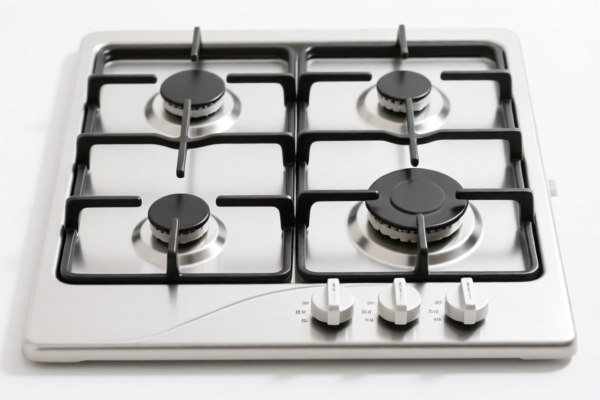
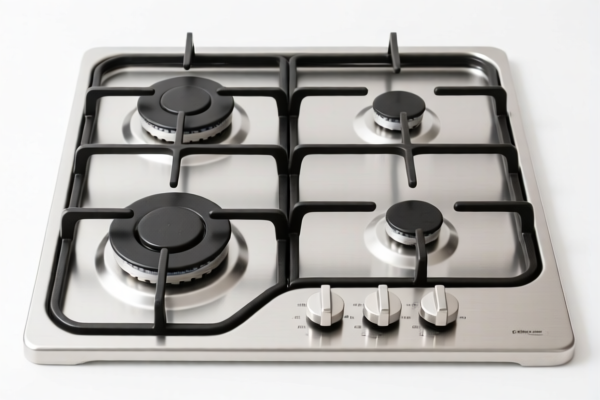
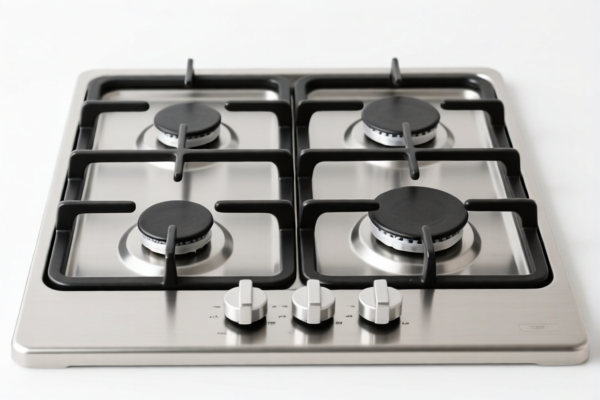
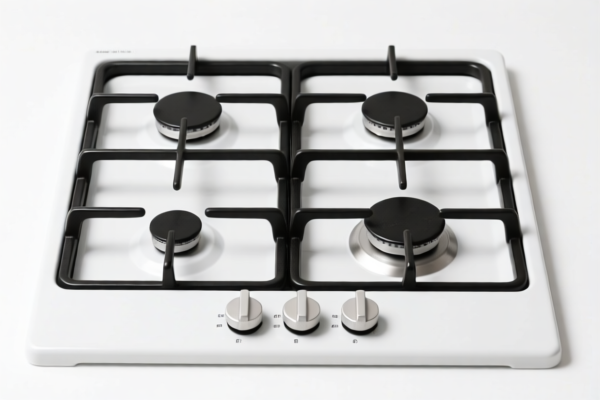
AI Analysis
🔥 Ceramic Stove Panel (Cooktop Surface)
🌐 HS Code Reference & Clearance Guide | 2026 Latest Tariff Analysis | Professional Customs Strategy
📌 I. Product Definition & Classification: What Exactly is a "Ceramic Stove Panel"?
A Ceramic Stove Panel (often referred to as a "Ceramic Glass Cooktop" or "Induction Cooktop Surface") is the top surface of modern electric cooking appliances. In international trade, its classification depends heavily on whether it is sold as a standalone component or as part of a complete appliance.
However, for customs classification purposes, the key distinction lies in its function and physical state:
- Complete Appliance vs. Part: If the panel includes burners, controls, wiring, and casing, it is a "Stove/Cooktop" (Chapter 84). If it is just the glass-ceramic surface, it might be considered a "Part of a Machine" (Chapter 84) or a "Ceramic Product" (Chapter 69).
- Key Differentiator:
- If it is a finished surface ready for installation into a housing, often with pre-drilled holes or integrated sensors, it is classified under Chapter 84 as a part of cooking appliances.
- If it is a raw or semi-finished ceramic piece not specifically designed for stove use, it may fall under Chapter 69 (Ceramics).
- Note: The provided DATA assumes the item is either a specific ceramic product or a part of a stove. The following analysis aligns with the specific HS Codes provided in your data.
⚠️ Critical Distinction:
- If the product is a finished cooktop unit (with gas/electric elements installed) → It is a Cooking Appliance.
- If the product is a ceramic tile/brick intended for lining a stove interior ("firebrick") → It is a Ceramic Product.
- If the product is a ceramic tile/brick intended for wall/floor covering in a kitchen → It is a Ceramic Decoration Product.
📦 II. HS Code Classification Details (Based on Provided Data)
| HS Code | Product Description | Applicable Scenario | Material/Form |
|---|---|---|---|
8419.81.50.80 |
Part of a Cooking Appliance (Inferred Ceramic Material) | Stove Top Panel / Cooktop Surface | Ceramic/Glass-Ceramic, specifically for cooking stoves |
6907.21.90.11 |
Ceramic Heart/Brick (Stove Interior Lining) | Firebricks, Refractory Bricks for Stove Interiors | Ceramic, shaped for stove core/heart |
6907.40.90.51 |
Ceramic Facing/Paving Product | Ceramic Tiles for Kitchen Walls/Floors | Ceramic, for facing/paving |
🔍 Key Insight:
-8419.81.50.80is the most likely code for a "Ceramic Stove Panel" if it is the surface top of a cooktop.
-6907.21.90.11applies if it is a refractory brick inside the stove.
-6907.40.90.51applies if it is a decorative tile used in the kitchen but not the cooking surface itself.
💰 III. 2026 Latest Tariff Rate Breakdown (Including Surcharges & Policy Add-ons)
✅ Applicable Country: United States (US)
✅ Origin: China (CN)
✅ Effective Date: From November 10, 2025 (and subsequent imports)
🎯 1. 8419.81.50.80 – Ceramic Stove Panel (Part of Cooking Appliance)
| Item | Content |
|---|---|
| Base Tariff Rate | 0.0% (Ad Valorem) |
| Section 301 Additional Tariff | +7.5% (USITC Footnote related to cooking appliances/parts) |
| Section 122 Tariff | +10% (Specific surcharge for certain ceramic/glass products or general surcharge as per current policy) |
| Total Tax Rate | 17.5% |
| Tax Calculation | CIF Value × 17.5% |
| De Minimis Eligibility | ❌ No (deny_de_minimis applies) |
| Legal Basis Path | USITC:8419.81.50.80 → Section 301: 7.5% → Section 122: 10% |
📌 Explanation:
- The base rate is 0%, which is favorable.
- However, Section 301 adds 7.5% because it is classified as a part of a cooking appliance (Chapter 84).
- Section 122 adds another 10%, possibly due to specific trade measures on ceramic materials or general surcharges.
- Total: 17.5%. This is significantly lower than the 43.5% rate for general ceramics.
🎯 2. 6907.21.90.11 – Ceramic Heart/Brick (Stove Interior)
| Item | Content |
|---|---|
| Base Tariff Rate | 8.5% (Ad Valorem) |
| Section 301 Additional Tariff | +25.0% (High tariff on Chinese ceramics) |
| Section 122 Tariff | +10.0% |
| Total Tax Rate | 43.5% |
| Tax Calculation | CIF Value × 43.5% |
| De Minimis Eligibility | ❌ No |
| Legal Basis Path | USITC:6907.21.90.11 → Section 301: 25% → Section 122: 10% |
📌 Explanation:
- Base rate is 8.5%.
- Section 301 adds 25% – this is the standard high tariff for many Chinese ceramic products.
- Section 122 adds 10%.
- Total: 43.5%. This is a very high tax burden.
🎯 3. 6907.40.90.51 – Ceramic Facing/Paving Product (Tiles)
| Item | Content |
|---|---|
| Base Tariff Rate | 8.5% (Ad Valorem) |
| Section 301 Additional Tariff | +25.0% |
| Section 122 Tariff | +10.0% |
| Total Tax Rate | 43.5% |
| Tax Calculation | CIF Value × 43.5% |
| De Minimis Eligibility | ❌ No |
| Legal Basis Path | USITC:6907.40.90.51 → Section 301: 25% → Section 122: 10% |
📌 Explanation:
- Identical tax structure to6907.21.90.11.
- Total: 43.5%.
🛠️ IV. Clearance Practical Advice (Real-World Pitfall Guide)
✅ 1. Document Checklist (Non-negotiable)
| Document | Required | Description |
|---|---|---|
| ✅ Product Specification Sheet | ✔️ | Must clearly state if it is a "Cooktop Surface" (Part of Appliance) or "Refractory Brick" (Ceramic Product). Include material composition (e.g., "Glass-Ceramic," "Refractory Clay"). |
| ✅ Technical Drawings | ✔️ | Show dimensions, shape, and any cutouts. For stove panels, show if it includes sensor mounts or burner holes. |
| ✅ Product Photos (Clear) | ✔️ | Show the product, label, and packaging. Include a photo of the product in use (if possible) to prove its function. |
| ✅ Certificate of Origin (CO) | ✔️ | To prove origin (China). May be needed for tariff exemption claims if any exist (though unlikely for these codes). |
| ✅ Commercial Invoice | ✔️ | Must accurately describe the goods as "Ceramic Stove Panel" or "Ceramic Refractory Brick." Avoid vague terms like "Ceramic Plate." |
| ✅ Packing List | ✔️ | Detail quantity, weight, and dimensions. |
| ✅ Third-Party Test Report | ✔️ | If claiming it is a "Part of Appliance," a test report showing it meets appliance safety standards (UL, ETL) can support classification under 8419. |
✅ 2. Declaration Tips (Key Mnemonics)
🔥 “Function Defines Code: Appliance Part = 8419 (17.5%), Ceramic Product = 6907 (43.5%)”
| Scenario | Correct Classification | Incorrect Classification | Consequence |
|---|---|---|---|
| Cooktop Surface (Glass-Ceramic, with cutouts for burners) | 8419.81.50.80 |
6907.21.90.11 or 6907.40.90.51 |
Savings: 26% (17.5% vs 43.5%) |
| Refractory Brick (Inside stove, for heat resistance) | 6907.21.90.11 |
8419.81.50.80 |
Extra Tax: 26% |
| Kitchen Tile (Wall/Floor, decorative) | 6907.40.90.51 |
8419.81.50.80 |
Extra Tax: 26% |
📌 Critical Advice:
- If your product is a Ceramic Stove Panel (the top surface), INSIST on classification under8419.81.50.80.
- Provide technical drawings showing it is designed to be integrated into a cooking appliance.
- If you misclassify it as a ceramic product (6907), you will pay 43.5% instead of 17.5%.
✅ 3. Special Cases
| Case | Handling Advice |
|---|---|
| OEM Custom Stove Panels | Provide customer order and design specs. Prove it is a "part" of a specific appliance model. |
| Hybrid Products (e.g., Tile + Burner) | If sold as a unit, declare as Complete Cooktop (if applicable) or split if allowed. But for panel only, use 8419. |
| Unfinished Ceramic Slabs | If not yet cut to shape for stove, may be classified as "Semi-finished Ceramic." Consult customs broker. |
| Refractory Bricks | Clearly declare as "Firebricks for Stoves" to ensure correct 6907 classification. Do not mislabel as "Stove Panels" to avoid penalties. |
🌍 V. Global Market Clearance Comparison (2026 Latest)
| Country/Region | Recommended HS Code | Tariff Rate | Certification | Notes |
|---|---|---|---|---|
| 🇺🇸 USA | 8419.81.50.80 |
17.5% | UL/ETL | Best Option for Stove Panels |
| 🇨🇳 China | 8419.81.50.80 |
8.5% | CCC | No Section 301/122 |
| 🇪🇺 EU | 8419.81.50.80 |
0-2% | CE | No major surcharges |
| 🇬🇧 UK | 8419.81.50.80 |
0-2% | UKCA | Post-Brexit rules apply |
| 🇦🇺 Australia | 8419.81.50.80 |
5% | RCM | Low tariff |
| 🇯🇵 Japan | 8419.81.50.80 |
0% | PSE | Free trade agreement may apply |
📌 Conclusion:
- USA is the most challenging market due to Section 301 and Section 122 tariffs.
- Correct classification under8419saves 26% in taxes compared to misclassification under6907.
- China, EU, UK, Australia, and Japan have much lower or zero tariffs for this product.
📌 VI. Common Errors & Pitfalls (Lessons Learned)
❌ Error 1: Classifying a Stove Panel as a Ceramic Tile (6907)
👉 Result: Pay 43.5% instead of 17.5%. Overpayment: 26%!
❌ Error 2: Declaring a Refractory Brick as a Stove Panel (8419)
👉 Result: Customs may reject the declaration or audit. If proven it is not a "part of an appliance," retroactive taxes + penalties apply.
❌ Error 3: Vague Description ("Ceramic Plate")
👉 Result: Customs cannot determine classification. Leads to delay, detention, and potential seizure.
❌ Error 4: Missing Technical Drawings
👉 Result: No proof of "appliance part" status. Customs defaults to higher tariff (6907).
✅ Correct Approach:
“Ceramic Cooktop Panel, Glass-Ceramic, for Electric Stove, Model XYZ, Designed for Integration with Burners”
→ HS Code:8419.81.50.80
→ Tax: 17.5%
🎯 VII. Conclusion: Precise Classification = Profit Protection!
🎯 Remember the Mantra:
🔹 “Stove Panel is an Appliance Part (8419) = 17.5%”
🔹 “Ceramic Brick/Tile is a Ceramic Product (6907) = 43.5%”
🔹 “Misclassification Costs 26% More!”
📌 Pro Tip:
- For USA imports, always aim for
8419.81.50.80if the product is a stove panel.- Provide strong technical evidence (drawings, specs) to support this classification.
- Avoid classifying stove panels as ceramic tiles or bricks unless they are truly refractory bricks.
📣 Take Action Now:
📞 Contact a Customs Broker + Provide Product Specs + Request HS Code Advance Ruling
🚀 Save 26% in Taxes, Ensure Smooth Clearance, and Maximize Your Profit!
✨ Professional Clearance Starts with Accurate Classification!
💼 Every Cent Saved is Pure Profit!
Customer Reviews
About HS Code Classification
The Harmonized System (HS) is an internationally standardized nomenclature developed by the World Customs Organization (WCO) to classify traded products. Over 200 countries use the HS system as the basis for customs tariffs, trade statistics, and import/export regulations.
Each HS code follows a hierarchical structure:
- Chapter (2 digits) — Broad category of goods (e.g., Chapter 84: Machinery and Mechanical Appliances)
- Heading (4 digits) — More specific grouping within the chapter
- Subheading (6 digits) — Internationally standardized breakdown, used by all WCO member countries
- National subdivisions (8-10 digits) — Country-specific extensions for further classification, such as US HTSUS 10-digit codes
Correct HS code classification is essential for smooth customs clearance, accurate duty payment, and compliance with trade regulations. Misclassification can lead to customs delays, overpayment of duties, or penalties.
When importing from CN to US, the applicable tariff rates may include:
- Most-Favored-Nation (MFN) rate — The standard duty rate applied to WTO members
- General rate — Applied to countries without trade agreements
- Trade remedy duties — Additional tariffs such as Section 301 (anti-dumping), Section 232 (national security), or countervailing duties
The information provided on this page is for reference purposes only. For official classification, please consult with your local customs authority or a licensed customs broker.