Chain (HS Code 7315190000)
CN → US| HS Code | Tariff Rate | Origin | Destination | Doc |
|---|---|---|---|---|
| 7315120020 | 85.0% | CN | US | Official Doc |
| 7315120040 | 85.0% | CN | US | Official Doc |
| 8301106020 | 23.6% | CN | US | Official Doc |
| 7315110010 | 85.0% | CN | US | Official Doc |
| 7315110060 | 85.0% | CN | US | Official Doc |
Product Images


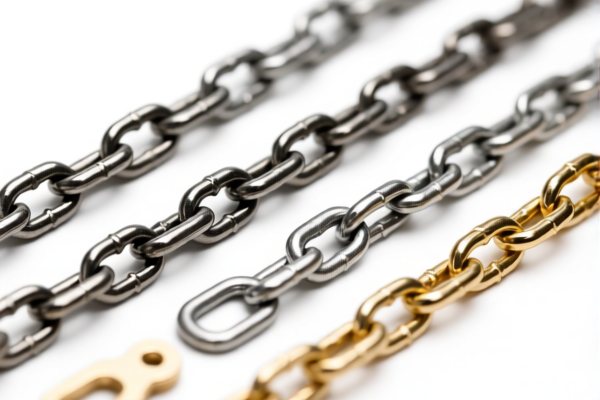
AI Analysis
⛓️ Chain (HS Code 7315190000)
🌐 HS Code Reference & Customs Clearance Guide | 2026 Latest Tariff Analysis | Professional Entry Strategies
📌 I. Product Definition & Classification: Do You Really Understand "Chains"?
Chains, in international trade, are primarily classified under Chapter 73 (Articles of Iron or Steel) or Chapter 83 (Miscellaneous Manufactures of Base Metal). The specific HS Code 7315.19.00.00 refers to "Other chains of iron or steel."
It is crucial to distinguish between: * Iron/Steel Chains (Chapter 73): The vast majority of industrial, mechanical, and general-purpose chains fall here. * Other Base Metal Chains (Chapter 83): Often refers to non-ferrous metals (like aluminum, copper, or zinc alloys) or specific ornamental uses, which have different tariff structures.
⚠️ Key Distinction Point:
- If the chain is made of Iron or Steel and does not fit specific sub-categories (like roller chains for bicycles, which may have their own specific headings), it falls under 7315.19.00.00.
- If the chain is made of Aluminum, Copper, or other non-ferrous metals, it may be classified under Chapter 83 (e.g., 8301.10 or similar), leading to significantly different tax rates.
📦 II. HS Code Classification Details (2026 Latest Tariff Authority Reference)
Based on the provided <DATA> and the target code 7315190000, here is the detailed breakdown. Note that while 7315.19.00.00 is the target, the <DATA> provides specific sub-classifications within Chapter 73 that are highly relevant for accurate classification.
| HS Code | Product Description | Applicable Scenario | Material | Chain Type |
|---|---|---|---|---|
7315.12.00.20 |
Chains of iron or steel; other chains | General steel chains not elsewhere specified | Iron/Steel | Link Chain |
7315.12.00.40 |
Chains of iron or steel; other chains | Matching prefix and chain attributes | Iron/Steel | Link Chain |
7315.11.00.10 |
Chains of iron or steel; leaf chains | Leaf chains for lifting/industrial use | Iron/Steel | Leaf Chain |
7315.11.00.60 |
Chains of iron or steel; other chains | Other steel chains, including articulated/roller types | Iron/Steel | Articulated/Other |
8301.10.60.20 |
Chains and parts thereof, of base metal | Inferred as Iron/Steel based on 7315 prefix, but classified under 83 | Base Metal (Inferred) | Link Chain |
🔍 Important Note:
- The target HS Code7315.19.00.00typically covers "Other chains" that do not fall under7315.11(Leaf chains) or7315.12(Other specific steel chains).
- However, in many tariff schedules,7315.19is a residual category. If a chain is a standard link chain, it might fall under7315.12or7315.11depending on the specific construction (e.g., leaf vs. roller).
- Critical Check: Always verify if your chain is a Leaf Chain (7315.11) or a General Steel Chain (7315.12/7315.19). Misclassification here can lead to significant tariff differences due to specific trade remedy duties.
💰 III. 2026 Latest Tariff Rate Breakdown (Including Additional Taxes & Policy Surcharges)
✅ Applicable Country: United States (US)
✅ Country of Origin: China (CN)
✅ Effective Time: From November 10, 2025 (for subsequent imports)
🎯 1. 7315.12.00.20 / 7315.12.00.40 — Chains of Iron or Steel (Other)
| Item | Content |
|---|---|
| Base Tariff Rate | 0.0% (Ad Valorem) |
| Section 301 Additional Duty | +25.0% (USITC Footnote 9903.88.01) |
| Section 122 Duty (10% Steel/Aluminum/Copper) | +10.0% (Specific to Steel, Aluminum, Copper products) |
| Section 232 Duty (Steel/Aluminum) | +50.0% (Steel, Aluminum, Copper Products Surcharge) |
| Total Tariff Rate | 85.0% |
| Tax Calculation | CIF Value × 85% |
| De Minimis Eligibility | ❌ Not Eligible (deny_de_minimis) |
| Legal Basis Path | IEEPA:9903.01.25 → IEEPA:9903.01.24 → USITC:7315.12.00.20 → FOOTNOTE:9903.88.01 + Section 232: Steel/Aluminum/Copper |
📌 Explanation:
- "Section 301 25%": Additional tariff under US Trade Act Section 301 against Chinese goods.
- "Section 122 10%": Specific duty on steel, aluminum, and copper products.
- "Section 232 50%": Tariff on steel and aluminum products for national security reasons.
- Total 85%: This is an extremely high tariff rate. It combines multiple layers of trade remedies.
- De Minimis: These goods are excluded from the $800 de minimis exemption. Every shipment must be fully declared and taxed.
🎯 2. 7315.11.00.10 / 7315.11.00.60 — Leaf Chains or Other Steel Chains
| Item | Content |
|---|---|
| Base Tariff Rate | 0.0% |
| Section 301 Additional Duty | +25.0% |
| Section 122 Duty | +10.0% |
| Section 232 Duty | +50.0% |
| Total Tariff Rate | 85.0% |
| Tax Calculation | CIF Value × 85% |
| De Minimis Eligibility | ❌ Not Eligible |
| Legal Basis Path | IEEPA:9901.25 → IEEPA:9903.01.24 → USITC:7315.11.00.10 → FOOTNOTE:9903.88.01 + Section 232 |
📌 Note:
- Similar to the above, leaf chains and other specific steel chains face the same 85% total tariff.
- Even if the chain is used in machinery, the material (steel) triggers the Section 232 duty.
- Warning: Do not assume "parts of machinery" will exempt you from these duties. Steel chains are explicitly targeted.
🎯 3. 8301.10.60.20 — Chains of Base Metal (Non-Iron/Steel Inferred)
| Item | Content |
|---|---|
| Base Tariff Rate | 6.1% |
| Section 301 Additional Duty | +7.5% |
| Section 122 Duty | +10.0% |
| Total Tariff Rate | 23.6% |
| Tax Calculation | CIF Value × 23.6% |
| De Minimis Eligibility | ❌ Not Eligible (Check specific item status) |
| Legal Basis Path | IEEPA:9903.01.24 → USITC:8301.10.60.20 → FOOTNOTE:9903.88.01 |
📌 Critical Distinction:
- If your chain is NOT made of iron or steel (e.g., aluminum, copper, zinc), it might fall under Chapter 83.
- This results in a much lower tariff (23.6% vs. 85%).
- However, if the chain is steel and misclassified as "base metal" (Chapter 83), it constitutes fraud.
- Recommendation: If your chain is steel, you must use Chapter 73 codes. If it is aluminum, you must use Chapter 83 codes. Do not mix.
🛠️ IV. Customs Clearance Practical Advice (Real-World Pitfall Avoidance Guide)
✅ 1. Documentation Checklist (Mandatory)
| Document | Must Provide | Description |
|---|---|---|
| ✅ Product Specification Sheet | ✔️ | Include material (Steel/Aluminum), chain type (Leaf/Link/Roller), tensile strength. |
| ✅ Material Composition Certificate | ✔️ | Crucial for distinguishing between Chapter 73 (Steel) and Chapter 83 (Other Base Metals). |
| ✅ Product Photos (Including Tags) | ✔️ | Clear view of links, welds, and any markings. |
| ✅ Commercial Invoice | ✔️ | Clearly state "Chain, Steel" or "Chain, Aluminum". Avoid vague terms like "Metal Link". |
| ✅ Packing List | ✔️ | Detail weight and dimensions. Ensure no hidden steel parts. |
| ✅ Certificate of Origin (CO) | ✔️ | Required for preferential tariff claims if applicable (though limited for steel from China). |
| ✅ Third-Party Test Report | ✔️ | ISO, CE, or RoHS if applicable. |
✅ 2. Declaration Tips (Key Mantras)
🔥 "Material First, Type Second, Name Precise, Tariff Predictable!"
| Scenario | Correct Declaration Method | Incorrect Method |
|---|---|---|
| Steel Chain (General) | 7315.12.00.20 or 7315.19.00.00 |
Misclassified as 8301 → Fraud Risk |
| Aluminum Chain | 8301.10.60.20 |
Misclassified as 7315 → Higher Tax |
| Leaf Chain (Steel) | 7315.11.00.10 |
Misclassified as 7315.12 → Potential Audit |
| Chain as Part of Machine | Still declared as Chain | Declaring as "Part of Machine" → Misclassification |
📌 Warning:
- Do NOT declare steel chains as "Parts of Machinery" to avoid tariffs. U.S. Customs explicitly targets steel chains under Section 232 and 301.
- Do NOT use vague descriptions like "Metal Chain". Specify Material and Type.
✅ 3. Special Circumstances Handling
| Situation | Handling Advice |
|---|---|
| OEM Custom Chains | Provide design drawings and material specs. Ensure material matches declaration. |
| Chains with Plastic Coating | Still classified under Chapter 73 if steel core. Do not classify as "Plastic Product". |
| Chains for Military Use | May be subject to additional scrutiny. Ensure export control compliance (EAR). |
| Chains for Non-Industrial Use (e.g., Decorative) | If steel, still subject to steel duties. No exemption for decorative use. |
🌍 V. Global Main Market Clearance Comparison (2026 Latest)
| Country/Region | Recommended HS Code | Tariff (China Origin) | Certification Requirements | Notes |
|---|---|---|---|---|
| 🇺🇸 USA | 7315.19.00.00 (or 7315.12/11) |
85.0% | None specific, but high duty | Extremely high due to Section 232/301/122 |
| 🇨🇳 China | 7315.19.00.00 |
0%~5% | CCC (if applicable) | Low tariff for domestic/export |
| 🇪🇺 EU | 7315.19.00.00 |
0% (if no antidumping) | CE (if applicable) | Check for EU-specific antidumping duties on steel |
| 🇦🇺 Australia | 7315.19.00.00 |
5% | RCM (if applicable) | No major surcharges |
| 🇯🇵 Japan | 7315.19.00.00 |
0% | PSE (if applicable) | No major surcharges |
📌 Conclusion:
- The United States is the ONLY major market imposing extremely high tariffs (85%) on steel chains from China.
- Cost Impact: For a $10,000 shipment of steel chains to the US, you will pay $8,500 in tariffs alone.
- Strategy: Consider transshipment (with caution and legality) or sourcing from non-China origins (Vietnam, Thailand, etc.) if feasible, to reduce costs. However, ensure substantial transformation occurs to avoid anti-circumvention duties.
📌 VI. Common Errors & Pitfall Guide (Lessons Learned)
❌ Error 1: Declaring Steel Chains as "Plastic Chains" or "Aluminum Chains"
👉 Consequence: Customs audit → Back taxes, fines, and potential seizure.
❌ Error 2: Using "De Minimis" for Steel Chains
👉 Consequence: Entry refused. Steel chains are explicitly excluded from de minimis exemptions.
❌ Error 3: Misclassifying as "Parts of Machinery"
👉 Consequence: Penalty for misdeclaration. Steel chains are dutiable as goods, not just parts.
❌ Error 4: Ignoring Section 232 (Steel/Aluminum) Duties
👉 Consequence: Underpayment of 50%. This is a critical error for any steel product.
✅ Correct Approach:
"Steel Chain, 1/4 inch, Grade 70, Link Type, for Industrial Use, Made in China"
🎯 VII. Conclusion: Professional Declaration, Save Time and Money!
🎯 Remember the Mantra:
🔹 "Steel Chain = 85% Tax in USA!"
🔹 "Material Matters: Steel vs. Aluminum can save 61%!"
🔹 "De Minimis is NOT for Steel!"
📌 Pro Tip:
If your chains are made of Aluminum or Other Base Metals (non-steel), you CAN benefit from lower tariffs (23.6%). Ensure your material specification clearly states NON-STEEL material.
For Steel Chains, consider Advance Rulings from U.S. Customs and Border Protection (CBP) to confirm classification and duty liability before shipping.
📣 Immediate Action:
📞 Consult a Professional Customs Broker + Provide Material Spec + Apply for CBP Advance Ruling
🚀 Ensure Your Chain Clears U.S. Customs Smoothly, Avoids Surprises, and Protects Your Profit Margin!
✨ Professional Clearance Starts with Accurate Classification!
💼 Every Dollar of Tariff is a Dollar of Your Profit!
Customer Reviews
About HS Code Classification
The Harmonized System (HS) is an internationally standardized nomenclature developed by the World Customs Organization (WCO) to classify traded products. Over 200 countries use the HS system as the basis for customs tariffs, trade statistics, and import/export regulations.
Each HS code follows a hierarchical structure:
- Chapter (2 digits) — Broad category of goods (e.g., Chapter 84: Machinery and Mechanical Appliances)
- Heading (4 digits) — More specific grouping within the chapter
- Subheading (6 digits) — Internationally standardized breakdown, used by all WCO member countries
- National subdivisions (8-10 digits) — Country-specific extensions for further classification, such as US HTSUS 10-digit codes
Correct HS code classification is essential for smooth customs clearance, accurate duty payment, and compliance with trade regulations. Misclassification can lead to customs delays, overpayment of duties, or penalties.
When importing from CN to US, the applicable tariff rates may include:
- Most-Favored-Nation (MFN) rate — The standard duty rate applied to WTO members
- General rate — Applied to countries without trade agreements
- Trade remedy duties — Additional tariffs such as Section 301 (anti-dumping), Section 232 (national security), or countervailing duties
The information provided on this page is for reference purposes only. For official classification, please consult with your local customs authority or a licensed customs broker.