Chair Pocket
CN → US| HS Code | Tariff Rate | Origin | Destination | Doc |
|---|---|---|---|---|
| 3926909989 | 22.8% | CN | US | Official Doc |
| 8708295125 | 0.0% | CN | US | Official Doc |
| 8708295160 | 0.0% | CN | US | Official Doc |
| 6307909891 | 24.5% | CN | US | Official Doc |
| 3926305000 | 22.8% | CN | US | Official Doc |
Product Images
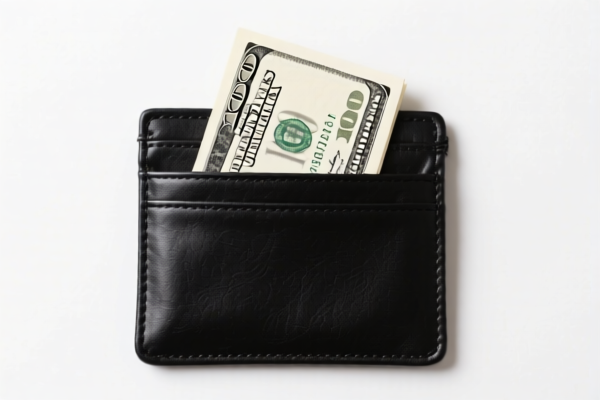
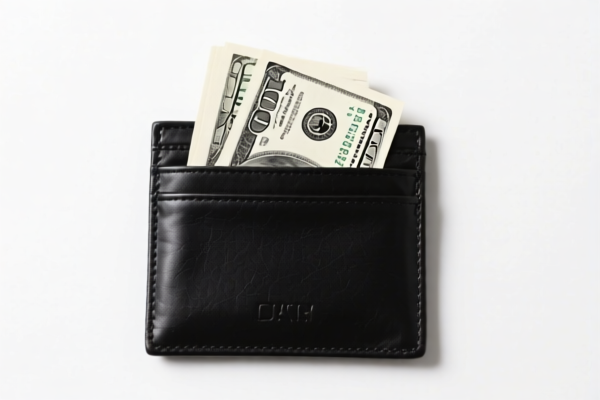
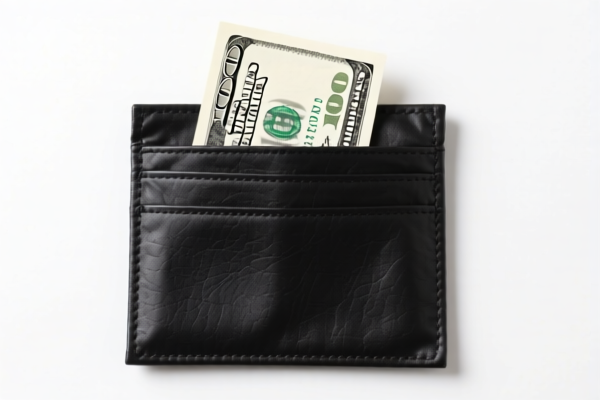
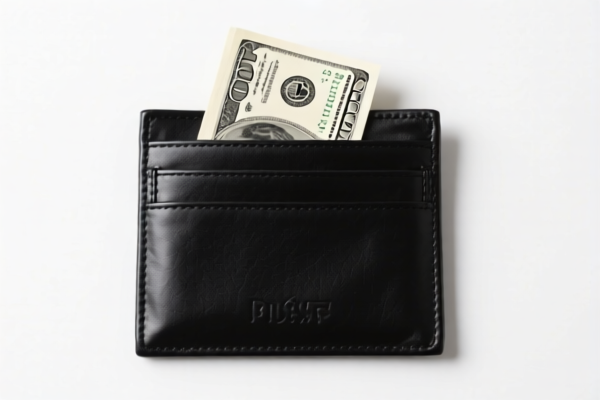
AI Analysis
🪑 Chair Pocket (Rear Seat Back Pocket)
🌐 HS Code Reference & Customs Clearance Guide | 2026 Latest Tariff Analysis | Professional Clearance Strategy
📌 1. Product Definition & Classification: What Exactly is a "Chair Pocket"?
A "Chair Pocket," often referred to in automotive contexts as a Rear Seat Back Pocket, is an accessory designed to attach to the back of a vehicle's front seats. Its primary function is storage for small items like magazines, tablets, maps, or toys.
In international trade, the classification of this item hinges on two critical factors: 1. Material Composition: Is it made of plastic/synthetic fiber or textile/fabric? 2. Function/Nature: Is it treated as a general plastic/textile good, or specifically as an automotive part/accessory?
⚠️ Key Distinction:
- If classified as a general plastic item → Chapter 39 (Lower Base Duty, but high additional tariffs).
- If classified as a textile item → Chapter 63 or 8708 (Variable base duty, high additional tariffs).
- If classified as an Automotive Part (8708) → Lowest Base Duty (2.5%), but subject to the harshest additional tariffs depending on specific material sub-rules.
📦 2. HS Code Classification Details (2026 Latest Tariff Authority Cross-Reference)
The following table maps the provided hscode data to the product "Chair Pocket," explaining the rationale for each classification based on material and functional attributes.
| HS Code | Product Description | Rationale for Classification | Total Tax Rate (Approx.) |
|---|---|---|---|
3926.90.99.89 |
Plastic/Synthetic Bag | Classified as a general plastic article (bag/pouch). Material is plastic or synthetic fiber. Does not claim specific automotive part status. | 22.8% |
8708.29.51.25 |
Automotive Accessory (Other) | Classified under "Parts and Accessories of Motor Vehicles." Inferred material: Textile or Plastic. Specific sub-code for "other" body parts. | 2.5% + 35.0% |
8708.29.51.60 |
Automotive Accessory (Steel/Alu/Cu) | Classified under "Parts and Accessories of Motor Vehicles." Crucial Note: This code triggers an extra 50% tariff if the product contains Steel, Aluminum, or Copper components (e.g., heavy reinforcement). | 2.5% + 85.0% |
6307.90.98.91 |
Textile/Cut Article | Classified as a "Other made-up articles." Inferred material: Textile/Fabric. Form is a bag/pouch. | 24.5% |
3926.30.50.00 |
Plastic Fittings/Bags | Classified as "Other articles of plastics." Material is explicitly Plastic/Synthetic Fiber. Specific sub-code for plastic bags/fittings. | 22.8% |
🔍 Critical Insight:
-8708Codes (Auto Parts) offer the lowest Base Duty (2.5%), making them potentially attractive before additional tariffs are applied.
- However,3926and6307Codes have higher base duties (5.3%-7.0%) but may have simpler tariff structures.
-8708.29.51.60is the most dangerous classification due to the potential 50% additional tariff for metal components.
💰 3. 2026 Latest Tariff Rate Breakdown (Including Surtaxes & Policy Add-ons)
✅ Applicable Country: United States (US)
✅ Origin: China (CN)
✅ Effective Time: 2025-11-10 onwards (and subsequent imports)
🎯 1. 3926.90.99.89 & 3926.30.50.00 — Plastic Articles
(Both codes show identical total tax in the source data)
| Item | Content |
|---|---|
| Base Duty | 5.3% |
| Section 301 Surcharge (7.5%) | +7.5% |
| Section 122 Tariff (10%) | +10.0% |
| Total Tax Rate | 22.8% |
| Tax Calculation | CIF Value × 22.8% |
| De Minimis Exemption | ❌ Not Eligible (High tax rate prevents 80/122 rule benefits) |
| Legal Basis Path | USITC:3926.90.99.89 → Section 301 Footnote → Section 122 |
📌 Explanation:
- These codes are straightforward plastic goods.
- The 10% Section 122 tariff is a significant added layer for Chinese imports.
- Total impact is moderate compared to automotive parts.
🎯 2. 6307.90.98.91 — Textile/Cut Articles
| Item | Content |
|---|---|
| Base Duty | 7.0% |
| Section 301 Surcharge (7.5%) | +7.5% |
| Section 122 Tariff (10%) | +10.0% |
| Total Tax Rate | 24.5% |
| Tax Calculation | CIF Value × 24.5% |
| De Minimis Exemption | ❌ Not Eligible |
| Legal Basis Path | USITC:6307.90.98.91 → Section 301 Footnote → Section 122 |
📌 Explanation:
- Textile items often face higher base duties.
- Highest Base Duty among the options (7.0%), leading to a 24.5% total.
- Suitable if the product is 100% fabric and not claimed as an auto part.
🎯 3. 8708.29.51.25 — Automotive Parts (Non-Metallic/Standard)
| Item | Content |
|---|---|
| Base Duty | 2.5% |
| Section 301 Surcharge (25.0%) | +25.0% |
| Section 122 Tariff (10%) | +10.0% |
| Total Tax Rate | 37.5% (Note: Source says "2.5% + 35.0%", likely combining 301+122) |
| Tax Calculation | CIF Value × 37.5% |
| De Minimis Exemption | ❌ Not Eligible |
| Legal Basis Path | USITC:8708.29.51.25 → Section 301 → Section 122 |
📌 Explanation:
- Lowest Base Duty (2.5%) makes this appealing for high-value items.
- However, the 35% additional tariff (25% Section 301 + 10% Section 122) brings the total to 37.5%.
- Risk: If the product contains any metal brackets, it may shift to8708.29.51.60.
🎯 4. 8708.29.51.60 — Automotive Parts (Metal Components)
| Item | Content |
|---|---|
| Base Duty | 2.5% |
| Section 301 Surcharge (25.0%) | +25.0% |
| Section 122 Tariff (10%) | +10.0% |
| Additional Metal Tariff | +50.0% (Steel/Aluminum/Copper) |
| Total Tax Rate | 87.5% (2.5 + 25 + 10 + 50) |
| Tax Calculation | CIF Value × 87.5% |
| De Minimis Exemption | ❌ Not Eligible |
| Legal Basis Path | USITC:8708.29.51.60 → Metal Component Rule → Section 301 → Section 122 |
📌 WARNING:
- This is the most expensive classification.
- Only use if the product contains significant steel, aluminum, or copper parts (e.g., heavy metal frames, metal hooks).
- If your chair pocket is fabric/plastic only, do NOT use this code.
🛠️ 4. Customs Clearance Practical Advice (Pitfall Avoidance Guide)
✅ 1. Material Declaration is Key
| Material Type | Recommended HS Code | Reason |
|---|---|---|
| 100% Plastic/Synthetic | 3926.90.99.89 or 3926.30.50.00 |
Lower total tax (22.8%) than auto parts. |
| 100% Textile/Fabric | 6307.90.98.91 |
Clear classification as textile article. Total 24.5%. |
| Mixed (Plastic + Fabric) | 8708.29.51.25 |
If used in a car, classify as auto part. Verify no metal content. |
| Contains Metal Hooks/Brackets | ❌ Avoid 8708.29.51.60 |
Unless necessary, the 50% metal surcharge makes it unviable. Consider redesigning to plastic clips. |
✅ 2. Documentation Checklist (Must-Haves)
| Document | Requirement | Note |
|---|---|---|
| Product Specification Sheet | ✔️ | Must clearly state material composition (e.g., "100% Polyester," "PVC Plastic"). |
| Photos | ✔️ | Show the product clearly. If it has metal parts, label them. |
| Bill of Materials (BOM) | ✔️ | For 8708 codes, prove it’s an auto accessory and specify material ratios. |
| Commercial Invoice | ✔️ | Description should match HS Code rationale (e.g., "Plastic Seat Back Pocket"). |
| Origin Certificate | ✔️ | Crucial for Section 122 and 301 calculations. |
✅ 3. Strategic Declaration Tips
🔥 "Know Your Material, Know Your Duty!"
| Scenario | Correct Action | Wrong Action |
|---|---|---|
| Product is Plastic | Declare as 3926.xxxx |
Do not declare as 8708 unless necessary. Save 15%+ in tax. |
| Product is Fabric | Declare as 6307.xxxx |
Do not mix with auto parts unless it’s a standard car accessory. |
| Product has Metal Hooks | Redesign or Accept 8708.29.51.60 |
Declaring as 8708.29.51.25 when metal is present → Fraud/Seizure. |
| Shipment to US | Expect Section 122 (10%) | Forget to account for this → Budget Overrun. |
🌍 5. Global Market Comparison (2026 Latest)
| Country/Region | Recommended HS Code | Estimated Total Duty (China Origin) | Notes |
|---|---|---|---|
| 🇺🇸 USA | 3926.90.99.89 |
22.8% | Best for plastic. Avoid 8708.29.51.60 (87.5%). |
| 🇺🇸 USA | 8708.29.51.25 |
37.5% | Higher total than plastic, but lower base duty. |
| 🇪🇺 EU | 3926.90.99 |
~5-10% | No Section 301/122 equivalent. Much cheaper. |
| 🇨🇳 China (Import) | 3926.90.99 |
~5-10% | Low base duty, no high surcharges. |
📌 Conclusion:
- USA is the highest cost market due to Section 301 and Section 122 tariffs.
- Plastic classifications (3926) are often more cost-effective than Automotive Parts (8708) for chair pockets, unless the product is complex and justifies auto-part status.
- Avoid Metal Components if shipping to the US under8708to prevent the 50% surcharge.
📌 6. Common Errors & Pitfall Guide (Lessons Learned)
❌ Mistake 1: Classifying a plastic bag as an "Automotive Part" (8708) unnecessarily.
👉 Consequence: Higher total tax (37.5% vs 22.8%).
👉 Fix: If it’s just a plastic pocket, use 3926.
❌ Mistake 2: Ignoring the "Metal Component" rule in 8708.29.51.60.
👉 Consequence: 50% additional tariff → Total ~87.5%.
👉 Fix: Remove metal hooks. Use plastic snaps. Reclassify to 8708.29.51.25 (37.5%).
❌ Mistake 3: Misdeclaring Material (e.g., saying "Fabric" when it’s PVC).
👉 Consequence: Customs audit, penalties, and potential seizure.
👉 Fix: Provide accurate BOM and material test reports.
✅ Correct Approach:
"Specify Material, Choose Lowest Total Tax, Avoid Metal if Possible."
🎯 7. Conclusion: Smart Classification for Maximum Profit
🎯 Key Takeaway:
🔹 For Plastic Chair Pockets: Use
3926.90.99.89→ 22.8% Total Tax.
🔹 For Fabric Chair Pockets: Use6307.90.98.91→ 24.5% Total Tax.
🔹 For Auto-Specific Fabric Pockets: Use8708.29.51.25→ 37.5% Total Tax (Only if no metal!).
🔹 AVOID8708.29.51.60unless you have heavy metal content and high margin.
📌 Pro Tip:
If your supply chain allows, design chair pockets without metal hooks. This opens up the cheaper
3926or6307classifications, saving you 15-60% in total duties.
📣 Immediate Action:
📞 Verify Material Composition with your supplier.
📄 Update Commercial Invoice with precise HS Code rationale.
🚀 Optimize Product Design (Remove Metal) to reduce tariffs.
✨ Professional Clearance, Precise Classification, Lower Costs!
💼 Every percentage point saved is pure profit!
Customer Reviews
About HS Code Classification
The Harmonized System (HS) is an internationally standardized nomenclature developed by the World Customs Organization (WCO) to classify traded products. Over 200 countries use the HS system as the basis for customs tariffs, trade statistics, and import/export regulations.
Each HS code follows a hierarchical structure:
- Chapter (2 digits) — Broad category of goods (e.g., Chapter 84: Machinery and Mechanical Appliances)
- Heading (4 digits) — More specific grouping within the chapter
- Subheading (6 digits) — Internationally standardized breakdown, used by all WCO member countries
- National subdivisions (8-10 digits) — Country-specific extensions for further classification, such as US HTSUS 10-digit codes
Correct HS code classification is essential for smooth customs clearance, accurate duty payment, and compliance with trade regulations. Misclassification can lead to customs delays, overpayment of duties, or penalties.
When importing from CN to US, the applicable tariff rates may include:
- Most-Favored-Nation (MFN) rate — The standard duty rate applied to WTO members
- General rate — Applied to countries without trade agreements
- Trade remedy duties — Additional tariffs such as Section 301 (anti-dumping), Section 232 (national security), or countervailing duties
The information provided on this page is for reference purposes only. For official classification, please consult with your local customs authority or a licensed customs broker.