Cheese Slicer
CN → US| HS Code | Tariff Rate | Origin | Destination | Doc |
|---|---|---|---|---|
| 8210000000 | 38.7% | CN | US | Official Doc |
| 8438600000 | 35.0% | CN | US | Official Doc |
| 8438800000 | 35.0% | CN | US | Official Doc |
Product Images
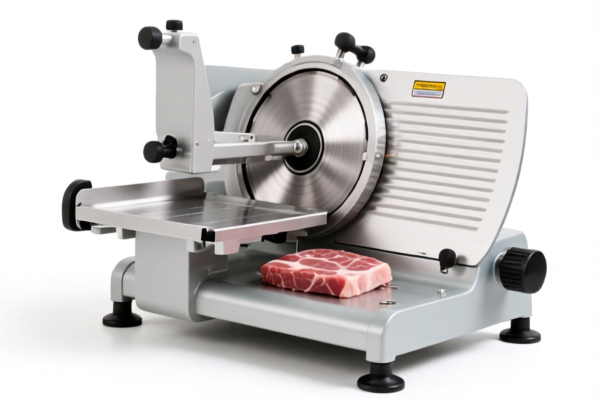
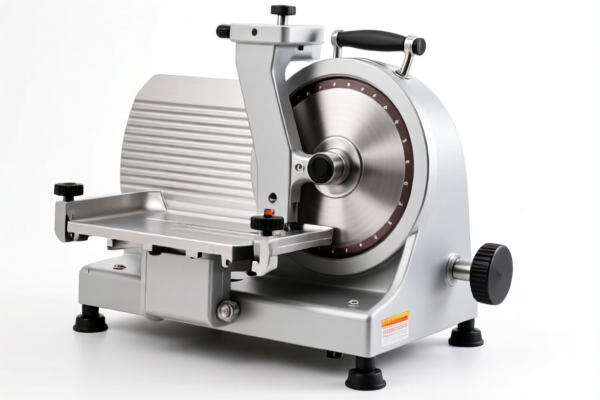


AI Analysis
🧀 Cheese Slicer (Food Preparation Tool)
🌐 HS Code Reference & Customs Clearance Guide | 2026 Latest Tariff Analysis | Professional Entry Strategy
📌 I. Product Definition & Classification: What Exactly is a "Cheese Slicer"?
A cheese slicer is a handheld or mechanical device used for cutting cheese (and often other foods like vegetables or fruits) into uniform slices. In international trade, the classification hinges on function, mechanism, and intended use. It is generally categorized as a manual mechanical utensil or a food preparation machine, depending on its complexity and power source.
⚠️ Key Distinction:
- If it is a simple manual wire or blade slicer without motorized components → It falls under Chapter 82 (Articles of Cutlery, Spoons and Forks, of Base Metal) or specific food prep categories.
- If it is a mechanical/motorized device designed for preparing fruits, nuts, or vegetables → It may fall under Chapter 84 (Machinery) related to food preparation.
📦 II. HS Code Classification Details (2026 Latest Tariff Authority Comparison)
| HS Code | Product Description | Applicable Scenario | Motorized? |
|---|---|---|---|
8210.00.00.00 |
Manual food preparation utensils: Slicers, grators, peelers, etc., of base metal | Simple handheld wire slicers, manual cheese slicers with base metal blades | ❌ No (Manual) |
8438.60.00.00 |
Machinery for preparing fruit, nuts, or vegetables: Including slicers | Mechanical slicers specifically for fruits, nuts, or veggies | ✅ Yes (Mechanical) |
8438.80.00.00 |
Other food preparation machinery: Industrial or semi-industrial food prep tools | General mechanical food prep machines not specified elsewhere | ✅ Yes (Mechanical) |
🔍 Important Note:
- Manual wire slicers (common household items) are typically classified under 8210.00.00.00 as "utensils for food preparation."
- Motorized or heavy-duty mechanical slicers (e.g., deli slicers or automated fruit/veg slicers) fall under 8438.60.00.00 or 8438.80.00.00.
- Misclassification can lead to significant tariff differences and customs delays.
💰 III. 2026 Latest Tariff Rate Breakdown (Including Additional Taxes & Policy Surcharges)
✅ Applicable Country: United States (US)
✅ Origin: China (CN)
✅ Effective Date: Post-2025 tariffs apply
🎯 1. 8210.00.00.00 —— Manual Food Preparation Utensils (Cheese Slicer)
| Item | Content |
|---|---|
| Base Tariff | 3.7% (ad valorem) |
| Section 301 Additional Tariff | +25.0% (from USITC Footnote 9903.88.01) |
| Section 122 Tariff | +10.0% (specific surcharge for certain food prep items) |
| Total Tariff Rate | 38.7% |
| Tax Calculation | CIF Value × 38.7% |
| De Minimis Eligibility | ❌ No (deny_de_minimis) |
| Legal Basis Path | Base: 8210.00.00.00 → 301: 9903.88.01 → 122: Specific Section 122 Provision |
📌 Explanation:
- The 3.7% base tariff applies to manual utensils.
- The 25% Section 301 tariff is a standard surcharge on many Chinese-manufactured goods.
- The 10% Section 122 tariff is a specific additional duty applied to certain food-related mechanical or manual tools.
- Total: 38.7% — This is a high tariff rate, so accurate classification is critical.
🎯 2. 8438.60.00.00 —— Machinery for Preparing Fruit, Nuts, or Vegetables
| Item | Content |
|---|---|
| Base Tariff | 0.0% |
| Section 301 Additional Tariff | +25.0% |
| Section 122 Tariff | +10.0% |
| Total Tariff Rate | 35.0% |
| Tax Calculation | CIF Value × 35.0% |
| De Minimis Eligibility | ❌ No |
| Legal Basis Path | Base: 8438.60.00.00 → 301: 9903.88.01 → 122: Specific Section 122 Provision |
📌 Note:
- If the slicer is classified as a mechanical device for fruit/veg prep, the base tariff is 0%.
- However, the 25% Section 301 and 10% Section 122 tariffs still apply.
- Total: 35.0% — Slightly lower than manual slicers due to the 0% base rate.
🎯 3. 8438.80.00.00 —— Other Food Preparation Machinery
| Item | Content |
|---|---|
| Base Tariff | 0.0% |
| Section 301 Additional Tariff | +25.0% |
| Section 122 Tariff | +10.0% |
| Total Tariff Rate | 35.0% |
| Tax Calculation | CIF Value × 35.0% |
| De Minimis Eligibility | ❌ No |
| Legal Basis Path | Base: 8438.80.00.00 → 301: 9903.88.01 → 122: Specific Section 122 Provision |
📌 Note:
- Similar to8438.60.00.00, this category applies to general mechanical food prep machines.
- Total: 35.0% — Same as above, due to identical surcharge structure.
🛠️ IV. Customs Clearance Practical Advice (Real-World Pitfall Guide)
✅ 1. Required Documentation Checklist (All Items Mandatory)
| Document | Must Provide | Explanation |
|---|---|---|
| ✅ Product Specification Sheet | ✔️ | Includes dimensions, material (stainless steel, wire, plastic), power source (if any) |
| ✅ Product Photos (with Label) | ✔️ | Clear view of model number, brand, and any motor/electrical components |
| ✅ Commercial Invoice | ✔️ | Must clearly state "Cheese Slicer" or "Food Preparation Slicer" |
| ✅ Packing List | ✔️ | Details packaging units, weight, and quantity |
| ✅ Certificate of Origin (CO) | ✔️ | If not China-origin, may qualify for preferential rates |
| ✅ Test Reports (if applicable) | ✔️ | FDA, LFGB, or food-contact material compliance for stainless steel/plastic parts |
✅ 2. Declaration Tips (Key Mnemonics)
🔥 “Manual Base Metal 8210, Mechanical 8438, Check for Motor!”
| Scenario | Correct HS Code | Incorrect Practice |
|---|---|---|
| Simple wire/manual slicer | 8210.00.00.00 (38.7%) |
Misclassifying as mechanical → Potential dispute |
| Motorized deli slicer | 8438.60.00.00 or 8438.80.00.00 (35.0%) |
Misclassifying as manual → Underpayment penalty |
| Electronic cheese slicer | 8438.80.00.00 (35.0%) |
Calling it "utensil" → Customs review delay |
📌 Crucial Point:
- If it has a motor or is powered electrically, it must be classified under Chapter 84.
- If it is purely manual (hand-cranked or wire-pulled), it falls under 8210.00.00.00.
- Section 122 Tariff (10%) applies to both categories, so the difference lies in the base tariff (3.7% vs. 0%).
✅ 3. Special Cases Handling
| Situation | Recommendation |
|---|---|
| Multi-functional slicer (cuts cheese + veggies) | Classify based on primary function. If primarily for cheese, still check if motorized. |
| OEM Custom Slicers | Provide client design specs to justify classification. |
| Food-Contact Materials | Ensure stainless steel/plastic parts comply with FDA/LFGB standards. Provide test reports. |
| Set with Accessories (knife, board) | Declare as a set if marketed together. Single HS code for the primary item. |
🌍 V. Global Market Clearance Comparison (2026 Latest)
| Country/Region | Recommended HS Code | Tariff (China Origin) | Certification Required | Remarks |
|---|---|---|---|---|
| 🇺🇸 USA | 8210.00.00.00 or 8438.xxxxxx |
35.0% - 38.7% | FDA, Section 301 & 122 Compliance | High additional tariffs apply |
| 🇨🇳 China | 8210.00.00.00 or 8438.xxxxxx |
5% - 10% | CCC (if electrical) | Lower base tariffs, no Section 122 |
| 🇪🇺 EU | 8210.00.00.00 or 8438.xxxxxx |
0% - 4.5% | CE, Food-Contact Compliance | No Section 301/122 equivalents |
| 🇬🇧 UK | 8210.00.00.00 or 8438.xxxxxx |
0% - 4.5% | UKCA, Food-Contact | Post-Brexit rules apply |
| 🇦🇺 Australia | 8210.00.00.00 or 8438.xxxxxx |
5% | SAA (if electrical) | No major surcharges |
📌 Conclusion:
- USA has the highest effective tariff due to Section 301 (25%) and Section 122 (10%).
- Manual slicers (8210) pay 3.7% base + 35% surcharges = 38.7%.
- Mechanical slicers (8438) pay 0% base + 35% surcharges = 35.0%.
- Recommendation: If possible, classify as mechanical (8438) to save 3.7% on the base rate, provided it meets the definition of "machinery."
📌 VI. Common Errors & Pitfall Guide (Lessons Learned)
❌ Error 1: Calling a motorized slicer a "manual utensil"
👉 Consequence: Customs reclassifies, applies correct tariff, + penalties.
❌ Error 2: Ignoring Section 122 Tariff
👉 Consequence: Underpayment, shipment hold, back-taxes.
❌ Error 3: Not providing food-contact compliance docs
👉 Consequence: FDA detention, destruction, or return.
❌ Error 4: Using vague terms like "kitchen tool"
👉 Consequence: Customs request for clarification, delay in clearance.
✅ Correct Practice:
"Stainless Steel Cheese Slicer, Manual, Model XYZ, FDA Compliant, Made in China"
OR
"Electric Cheese Slicer Machine, 500W, Model ABC, for Commercial Kitchen Use, Made in China"
🎯 VII. Conclusion: Precise Classification Saves Money!
🎯 Remember the Rule:
🔹 Manual = 8210 (38.7% Total)
🔹 Mechanical = 8438 (35.0% Total)
🔹 Always include Section 301 (25%) + Section 122 (10%)
🔹 Base tariff difference: 3.7% vs. 0%
📌 Pro Tip:
- If your slicer is partially electric or has auto-feeding, classify as 8438.
- If it is purely manual, classify as 8210.
- Always verify with a licensed customs broker for your specific product design.
📣 Act Now:
📞 Contact a licensed customs broker
📄 Provide product specs & photos
🚀 Ensure smooth clearance and avoid surprise tariffs!
✨ Professional Classification, Efficient Clearance!
💼 Your Profit Margin Depends on Accurate Tariff Codes!
Customer Reviews
About HS Code Classification
The Harmonized System (HS) is an internationally standardized nomenclature developed by the World Customs Organization (WCO) to classify traded products. Over 200 countries use the HS system as the basis for customs tariffs, trade statistics, and import/export regulations.
Each HS code follows a hierarchical structure:
- Chapter (2 digits) — Broad category of goods (e.g., Chapter 84: Machinery and Mechanical Appliances)
- Heading (4 digits) — More specific grouping within the chapter
- Subheading (6 digits) — Internationally standardized breakdown, used by all WCO member countries
- National subdivisions (8-10 digits) — Country-specific extensions for further classification, such as US HTSUS 10-digit codes
Correct HS code classification is essential for smooth customs clearance, accurate duty payment, and compliance with trade regulations. Misclassification can lead to customs delays, overpayment of duties, or penalties.
When importing from CN to US, the applicable tariff rates may include:
- Most-Favored-Nation (MFN) rate — The standard duty rate applied to WTO members
- General rate — Applied to countries without trade agreements
- Trade remedy duties — Additional tariffs such as Section 301 (anti-dumping), Section 232 (national security), or countervailing duties
The information provided on this page is for reference purposes only. For official classification, please consult with your local customs authority or a licensed customs broker.