Chopping Block
CN → US| HS Code | Tariff Rate | Origin | Destination | Doc |
|---|---|---|---|---|
| 6912005000 | 16.0% | CN | US | Official Doc |
| 4419909100 | 20.7% | CN | US | Official Doc |
| 4419110000 | 13.2% | CN | US | Official Doc |
| 3924104000 | 13.4% | CN | US | Official Doc |
| 6912004810 | 19.8% | CN | US | Official Doc |
| 3924102000 | 24.0% | CN | US | Official Doc |
Product Images
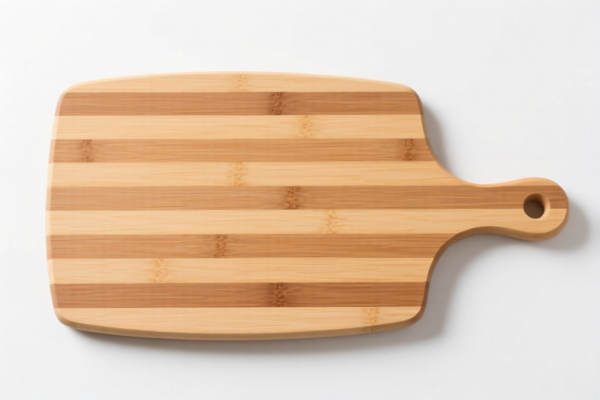
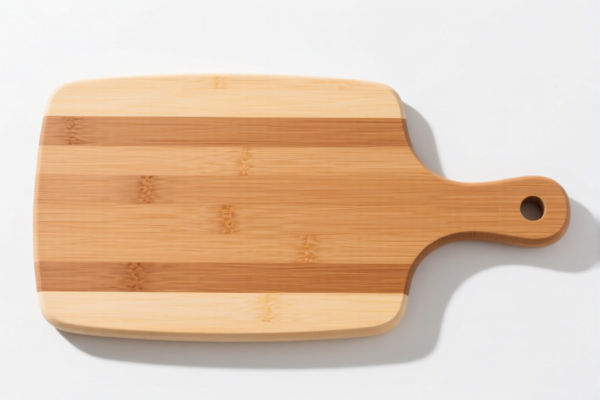
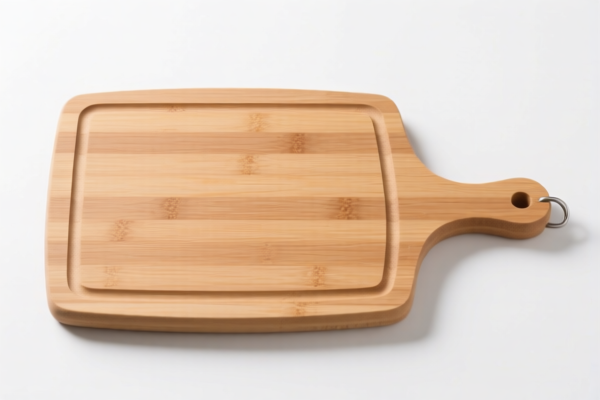
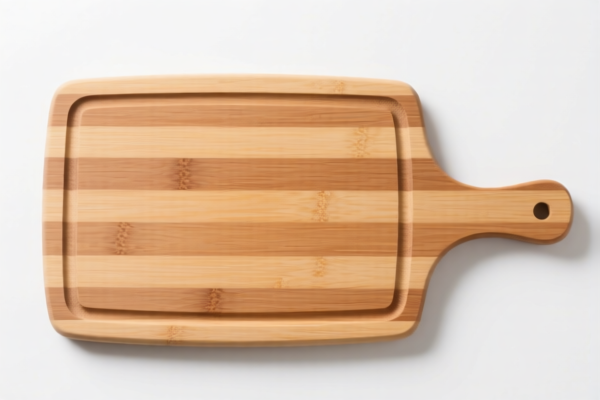
AI Analysis
🪵 Chopping Block (Cutting Board): The Ultimate HS Code & Tariff Guide | 2026 Clearance Strategy
🌐 HS Code Reference & Customs Clearance Guide | 2026 Latest Tariff Analysis | Professional Compliance Strategy
📌 Part I: Product Definition & Classification: Do You Really Understand "Chopping Blocks"?
A Chopping Block (often referred to as a Cutting Board in modern trade) is an essential kitchen utensil used for food preparation. In international trade, it is not a single commodity but is strictly classified based on its material composition.
The core classification logic follows the "Material Determines Heading" principle: * Wooden: Classified under Chapter 44. * Bamboo: Classified under Chapter 44 (as bamboo is treated similarly to wood in tariff schedules). * Plastic: Classified under Chapter 39. * Ceramic: Classified under Chapter 69.
⚠️ Critical Distinction Point: * If the board is made of Wood → Look at 4419.90 or 4419.11. * If the board is made of Bamboo → Look at 4419.11. * If the board is made of Plastic → Look at 3924.10. * If the board is made of Ceramic → Look at 6912.00.
Misclassification based on material can lead to significant tariff discrepancies and customs delays.
📦 Part II: HS Code Classification Details (2026 Latest Tariff Authority Comparison)
Below is the detailed breakdown for Chopping Blocks, strictly derived from the provided data, covering Wood, Bamboo, Plastic, and Ceramic variants.
| HS Code | Material Inference | Summary / Logic | Total Tax Rate |
|---|---|---|---|
4419.90.91.00 |
Wood | Chopping block belongs to kitchenware; material is wooden or related. Fits the category of wooden tableware and kitchen utensils. | 20.7% |
4419.11.00.00 |
Bamboo | Matches form and use as kitchenware; infers material is Bamboo. No conflict with classification requirements. | 13.2% |
3924.10.40.00 |
Plastic | Chopping block belongs to kitchenware; infers material is Plastic. No material conflict. | 13.4% |
6912.00.48.10 |
Ceramic | Chopping block belongs to kitchenware; infers material is Ceramic, Wood, or Plastic (non-metal). Fits description with no material conflict. | 19.8% |
3924.10.20.00 |
Plastic/Wood | Use matches kitchenware; infers material is Plastic or Wood. No obvious material conflict, fits category definition. | 24.0% |
6912.00.50.00 |
Ceramic | Chopping block belongs to kitchenware; fits ceramic tableware use match; infers compliance with other category fallback logic. | 16.0% |
🔍 Key Reminder: * Wooden boards carry the highest base risk due to additional tariffs. * Bamboo offers the lowest total tax rate (13.2%) among the major materials. * Plastic rates vary significantly (13.4% vs. 24.0%) depending on the specific sub-heading, requiring precise material declaration.
💰 Part III: 2026 Latest Tariff Rate Breakdown (Including Additional Taxes & Policy Add-ons)
✅ Applicable Country: United States (US)
✅ Origin: China (CN)
✅ Note: The tax details reflect Base Tariff, Section 301 (Additional) Tariff, and Section 122 Tariff.
🎯 1. 4419.90.91.00 — Wooden Chopping Block (Kitchenware)
| Item | Details |
|---|---|
| Product Description | Wooden or related material kitchen chopping block |
| Base Tariff | 3.2% |
| Section 301 Additional Tariff | 7.5% |
| Section 122 Tariff | 10.0% |
| Total Tax Rate | 20.7% |
| Tax Calculation | CIF Value × 20.7% |
| Legal Basis | Derived from 4419.90.91.00 tariff schedule with applicable additional duties for Chinese origin goods. |
📌 Explanation: * Wooden kitchenware is subject to multiple layers of tariffs. The 7.5% represents specific Section 301 add-ons, while the 10% is a distinct Section 122 levy. * Total burden is high at 20.7%. Cost optimization requires careful material verification (e.g., is it truly wood vs. bamboo?).
🎯 2. 4419.11.00.00 — Bamboo Chopping Block (Kitchenware)
| Item | Details |
|---|---|
| Product Description | Bamboo kitchen chopping block |
| Base Tariff | 3.2% |
| Section 301 Additional Tariff | 0.0% |
| Section 122 Tariff | 10.0% |
| Total Tax Rate | 13.2% |
| Tax Calculation | CIF Value × 13.2% |
| Legal Basis | Derived from 4419.11.00.00 tariff schedule. |
📌 Explanation: * Best Value Option: Bamboo benefits from a 0% Section 301 Additional Tariff. * While it still bears the 10% Section 122 tariff, the total rate (13.2%) is significantly lower than wooden (20.7%) and high-tier plastic (24.0%) options. * Strategy: If your product is bamboo, ensure the declaration explicitly states "Bamboo" to secure this favorable rate.
🎯 3. 3924.10.40.00 — Plastic Chopping Block (Standard)
| Item | Details |
|---|---|
| Product Description | Plastic kitchen chopping block |
| Base Tariff | 3.4% |
| Section 301 Additional Tariff | 0.0% |
| Section 122 Tariff | 10.0% |
| Total Tax Rate | 13.4% |
| Tax Calculation | CIF Value × 13.4% |
| Legal Basis | Derived from 3924.10.40.00 tariff schedule. |
📌 Explanation: * Standard plastic chopping blocks enjoy 0% Section 301 Additional Tariff. * The total rate (13.4%) is very competitive, only slightly higher than bamboo. * Key: Ensure the plastic type is correctly identified to fit this specific sub-heading.
🎯 4. 6912.00.48.10 — Ceramic Chopping Block
| Item | Details |
|---|---|
| Product Description | Ceramic kitchen chopping block |
| Base Tariff | 9.8% |
| Section 301 Additional Tariff | 0.0% |
| Section 122 Tariff | 10.0% |
| Total Tax Rate | 19.8% |
| Tax Calculation | CIF Value × 19.8% |
| Legal Basis | Derived from 6912.00.48.10 tariff schedule. |
📌 Explanation: * Ceramic items have a higher base tariff (9.8%) compared to wood/bamboo/plastic (3.2-3.4%). * However, it avoids the 7.5% Section 301 add-on seen on some wooden products. * Total rate (19.8%) is comparable to the wooden variant.
🎯 5. 3924.10.20.00 — Plastic/Wooden Chopping Block (High-Tariff Plastic)
| Item | Details |
|---|---|
| Product Description | Kitchenware, plastic or wood material |
| Base Tariff | 6.5% |
| Section 301 Additional Tariff | 7.5% |
| Section 122 Tariff | 10.0% |
| Total Tax Rate | 24.0% |
| Tax Calculation | CIF Value × 24.0% |
| Legal Basis | Derived from 3924.10.20.00 tariff schedule. |
📌 Explanation: * Highest Risk Code: This code incurs both the 7.5% Section 301 additional tariff AND the 10% Section 122 tariff, on top of a higher base rate (6.5%). * Avoidance Strategy: Ensure you are not miscategorizing a standard plastic board into this "catch-all" or specific high-tax sub-heading. Check if
3924.10.40.00(13.4%) is more appropriate for your specific plastic composition.
🎯 6. 6912.00.50.00 — Ceramic Chopping Block (General/Fallback)
| Item | Details |
|---|---|
| Product Description | Ceramic kitchenware (Other) |
| Base Tariff | 6.0% |
| Section 301 Additional Tariff | 0.0% |
| Section 122 Tariff | 10.0% |
| Total Tax Rate | 16.0% |
| Tax Calculation | CIF Value × 16.0% |
| Legal Basis | Derived from 6912.00.50.00 tariff schedule. |
📌 Explanation: * A middle-ground option for ceramic products that do not fit the specific
6912.00.48.10criteria. * Lower total rate (16.0%) than the specific ceramic code, thanks to the 0% Section 301 rate.
🛠️ Part IV: Customs Clearance Practical Advice (Avoiding Pitfalls)
✅ 1. Preparation Checklist (Missing Items Cannot Pass)
| Material | Required Declaration Details | Why? |
|---|---|---|
| Wood | "Wooden Chopping Block, Solid Wood / Sliced Wood" | To determine if it's 4419.90.91.00 or another wood code. Avoids misclassification as plastic. |
| Bamboo | "Bamboo Chopping Block, 100% Bamboo" | Crucial: Must explicitly state "Bamboo" to qualify for 4419.11.00.00 and the 0% Section 301 rate. |
| Plastic | "Plastic Chopping Block, Material: PP/PE/ABS" | Determines if it falls into 3924.10.40.00 (13.4%) or 3924.10.20.00 (24.0%). Specific polymer type helps. |
| Ceramic | "Ceramic Chopping Block, Glazed/Un-glazed" | Helps customs distinguish between 6912.00.48.10 and 6912.00.50.00. |
✅ 2. Declaration Tips (The "Golden Rules")
🔥 "Material First, Code Precision, Tax Savings!"
| Scenario | Correct Declaration | Incorrect Declaration | Consequence |
|---|---|---|---|
| Bamboo Board | 4419.11.00.00 (Bamboo) |
"Wooden Cutting Board" | May be misclassified as Wood (4419.90.91.00), paying 20.7% instead of 13.2%. |
| Plastic Board | 3924.10.40.00 (Plastic) |
"Kitchenware" (Vague) | Risk of being classified under high-tax 3924.10.20.00 (24.0%) or generic high-tariff codes. |
| Mixed Materials | Specify dominant material | "Composite" | Customs may choose the highest duty code or request additional info, causing delays. |
✅ 3. Special Situation Handling
| Situation | Handling Advice |
|---|---|
| OEM/Private Label | Provide supplier declaration confirming material origin. Custom branding does not change HS Code. |
| Gift Sets (Board + Knife) | Declare separately if possible. If bundled, the chopping block dictates the primary classification if it's the principal good. Check specific bundling rules. |
| Anti-Fungal Treated Wood | Still 4419.90.91.00. Treatment does not change material classification. |
🌍 Part V: Global Market Clearance Comparison (2026 Latest)
| Country/Region | Recommended HS Code | Base Tariff | Additional Tariffs (CN Origin) | Total Est. Rate | Notes |
|---|---|---|---|---|---|
| 🇺🇸 USA | 4419.11.00.00 (Bamboo) |
3.2% | 0% (Sec 301) + 10% (Sec 122) | 13.2% | Lowest Total Rate |
| 🇺🇸 USA | 3924.10.40.00 (Plastic) |
3.4% | 0% (Sec 301) + 10% (Sec 122) | 13.4% | Competitive alternative |
| 🇺🇸 USA | 4419.90.91.00 (Wood) |
3.2% | 7.5% (Sec 301) + 10% (Sec 122) | 20.7% | High cost, avoid if possible |
| 🇺🇸 USA | 3924.10.20.00 (Plastic) |
6.5% | 7.5% (Sec 301) + 10% (Sec 122) | 24.0% | Avoid this code if possible |
| 🇪🇺 EU | Various (Chapter 44/39/69) | 0-6.5% | No Section 122 | Varies | No high additional tariffs like US |
| 🇨🇳 China | Various | 5-15% | None | Varies | Domestic trade, different rules |
📌 Conclusion for US Importers: * Bamboo (
13.2%) and Standard Plastic (13.4%) are the most cost-effective options. * Wood (20.7%) and High-Tariff Plastic (24.0%) significantly erode margins. * Section 122 Tariff (10%) is unavoidable for all kitchenware from China in 2026. * Section 301 (7.5%) is the key differentiator. Avoid wood and specific plastic codes that attract this 7.5% add-on.
📌 Part VI: Common Mistakes & Pitfalls (Lessons Learned)
❌ Mistake 1: Calling Bamboo "Wood" 👉 Consequence: Tariff jumps from 13.2% to 20.7%. You lose 7.5% profit margin. 👉 Solution: Always declare "Bamboo" explicitly.
❌ Mistake 2: Using Vague Terms like "Kitchen Utensil" 👉 Consequence: Customs may assign a default high-tariff code or request detailed specs, causing 7-14 day delays. 👉 Solution: Use precise HS Codes and material descriptions.
❌ Mistake 3: Ignoring Section 122 Tariff 👉 Consequence: Budgeting only for Base + Sec 301. You will be unprepared for the additional 10% liability. 👉 Solution: Factor in the 10% Sec 122 tariff in all cost calculations.
✅ Correct Practice:
"Bamboo Chopping Block, Kitchenware, HS: 4419.11.00.00, 100% Natural Bamboo"
🎯 Part VII: Conclusion: Precision in Classification = Profit in Pocket!
🎯 Remember the Mantra:
🔹 "Bamboo is King, Plastic is Queen, Wood is Expensive." 🔹 "Check Sec 301: 0% is the Goal, 7.5% is the Trap." 🔹 "Sec 122 is 10% for All – Plan Accordingly!"
📌 Pro Tip: If your supply chain allows, consider sourcing Bamboo or Standard Plastic products to leverage the 0% Section 301 benefit. For wooden products, the 20.7% total rate may make them less competitive in the US market unless premium pricing is justified.
📣 Immediate Action:
📞 Verify material composition with suppliers. 📦 Align HS Codes with material facts. 📊 Calculate landed cost including the 10% Sec 122 tariff.
✨ Professional Clearance Starts with Accurate Classification! 💼 Every Percent Saved is Pure Profit!
Customer Reviews
About HS Code Classification
The Harmonized System (HS) is an internationally standardized nomenclature developed by the World Customs Organization (WCO) to classify traded products. Over 200 countries use the HS system as the basis for customs tariffs, trade statistics, and import/export regulations.
Each HS code follows a hierarchical structure:
- Chapter (2 digits) — Broad category of goods (e.g., Chapter 84: Machinery and Mechanical Appliances)
- Heading (4 digits) — More specific grouping within the chapter
- Subheading (6 digits) — Internationally standardized breakdown, used by all WCO member countries
- National subdivisions (8-10 digits) — Country-specific extensions for further classification, such as US HTSUS 10-digit codes
Correct HS code classification is essential for smooth customs clearance, accurate duty payment, and compliance with trade regulations. Misclassification can lead to customs delays, overpayment of duties, or penalties.
When importing from CN to US, the applicable tariff rates may include:
- Most-Favored-Nation (MFN) rate — The standard duty rate applied to WTO members
- General rate — Applied to countries without trade agreements
- Trade remedy duties — Additional tariffs such as Section 301 (anti-dumping), Section 232 (national security), or countervailing duties
The information provided on this page is for reference purposes only. For official classification, please consult with your local customs authority or a licensed customs broker.