Coated Rayon Non woven Filter Material
CN → US| HS Code | Tariff Rate | Origin | Destination | Doc |
|---|---|---|---|---|
| 5903101800 | 49.1% | CN | US | Official Doc |
| 5903201800 | 43.0% | CN | US | Official Doc |
Product Images
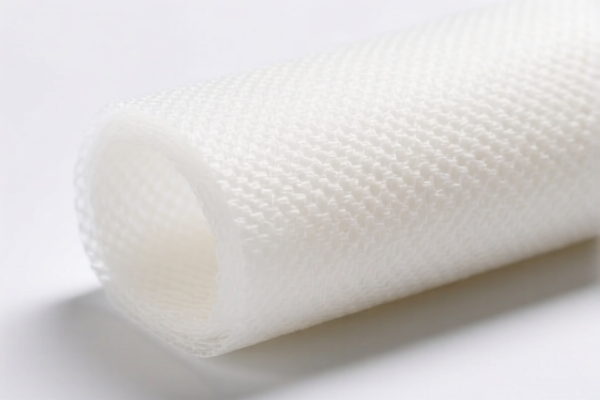
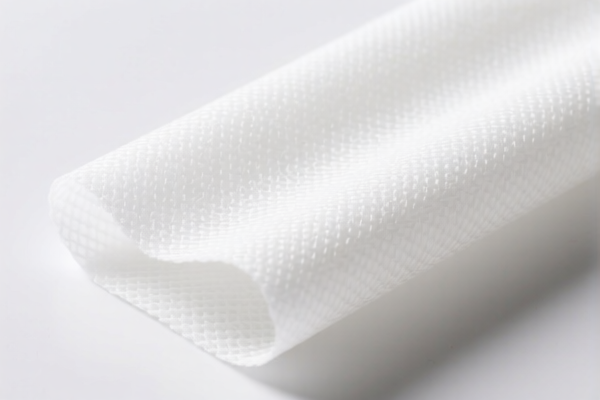
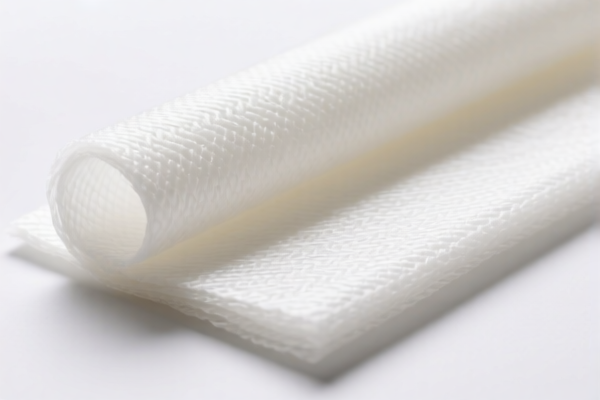
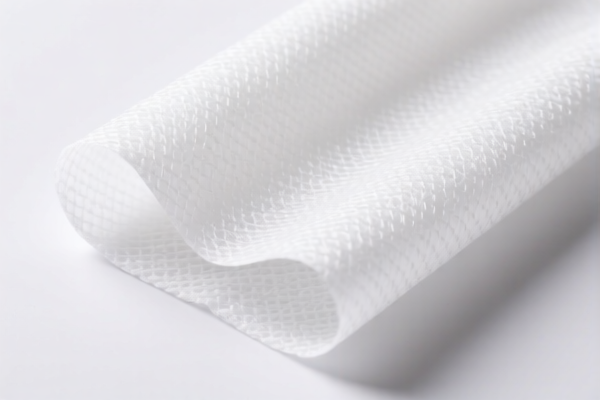
AI Analysis
🌿 Coated Rayon Non-Woven Filter Material
🌐 HS Code Reference & Customs Clearance Guide | 2026 Latest Tariff Analysis | Professional Strategy
📌 I. Product Definition & Classification: What is "Coated Rayon Non-Woven Filter Material"?
Coated Rayon Non-Woven Filter Material is a specialized industrial textile product used primarily in air filtration, liquid filtration, and dust collection systems. It consists of rayon fibers (man-made regenerated cellulose fibers) formed into a non-woven web and then impregnated, coated, covered, or laminated with plastics to enhance durability, chemical resistance, or filtration efficiency.
Key Distinctions: * Material Base: Rayon (Regenerated Cellulose). Note: In HS classification, Rayon is often grouped under "Regenerated Fibers" but can sometimes fall under "Man-made Fibers" depending on specific national interpretations and the exact nature of the coating interaction. However, for Heading 5903, we look at the plastic coating. * Structure: Non-woven fabric (not woven, knitted, or tufted). * Treatment: Coated/Laminated with Plastics (PVC or Polyurethane).
⚠️ Critical Classification Point:
The primary determinant for Heading 5903 is the plastic coating/impregnation.
- If the coating is Polyvinyl Chloride (PVC) → Look at Subheading 5903.10.
- If the coating is Polyurethane (PU) → Look at Subheading 5903.20.
- Note on "Man-made Fibers": While Rayon is technically a "regenerated fiber," many customs authorities and the provided data context group it under the broader "man-made fibers" category for Heading 5903 subheadings involving specific fabric types. The provided data explicitly links these descriptions to "Of man-made fibers."
📦 II. HS Code Classification Details (2026 Latest Tariff Authority对照)
Based on the provided <DATA>, here are the two applicable HS Codes depending on the plastic type used for coating:
| HS Code | Product Description | Application Scenario | Plastic Type |
|---|---|---|---|
5903.10.18.00 |
Textile fabrics impregnated, coated, covered or laminated with plastics: With poly(vinyl chloride): Of man-made fibers: Fabrics specified in note 9 to section XI: Other (229) | Air filters, HVAC filters, dust collector bags coated with PVC for durability and chemical resistance. | PVC (Polyvinyl Chloride) |
5903.20.18.00 |
Textile fabrics impregnated, coated, covered or laminated with plastics, other than those of heading 5902: With polyurethane: Of man-made fibers: Fabrics specified in note 9 to section XI: Other (229) | High-performance filtration, liquid filters, medical filters coated with PU for flexibility and breathability. | PU (Polyurethane) |
🔍 Key Reminder:
- "Note 9 to Section XI": This refers to specific definitions of fabrics in the Harmonized System. Ensure your non-woven material fits the technical definition of "fabrics" under this note (often involving needle-punched or chemically bonded non-wovens). - "Other (229)": This indicates the specific sub-category for non-woven filter materials that do not fall under more specific headings like belting or conveyor belts.
💰 III. 2026 Latest Tariff Rate Details (Including Additional Taxes & Policy Add-ons)
✅ Applicable Country: United States (US)
✅ Origin: China (CN)
✅ Effective Date: 2025 November 10 onwards (for subsequent imports)
🎯 1. 5903.10.18.00 —— Non-Woven Filter Material Coated with PVC
| Item | Content |
|---|---|
| Base Tariff | 0.0% |
| Section 301 Tariff | 0.0% |
| IEEPA Additional Tariff | 0.0% |
| Total Tax Rate | 0.0% |
| Tax Calculation | CIF Value × 0.0% = $0 |
| De Minimis Eligibility | ❌ Not Applicable (Standard for industrial fabrics) |
| Legal Basis Path | HTSUS:5903.10.18.00 → Footnote: 0.0% |
📌 Explanation:
- Both base tariffs and additional Section 301/IEEPA tariffs for this specific HS Code are 0%. - This is a low-risk, low-cost entry point for PVC-coated non-woven filter materials. - Note: Always verify if the specific product qualifies for any potential anti-dumping or countervailing duties (AD/CVD), though none are listed in the provided data.
🎯 2. 5903.20.18.00 —— Non-Woven Filter Material Coated with Polyurethane (PU)
| Item | Content |
|---|---|
| Base Tariff | 0.0% |
| Section 301 Tariff | 0.0% |
| IEEPA Additional Tariff | 0.0% |
| Total Tax Rate | 0.0% |
| Tax Calculation | CIF Value × 0.0% = $0 |
| De Minimis Eligibility | ❌ Not Applicable |
| Legal Basis Path | HTSUS:5903.20.18.00 → Footnote: 0.0% |
📌 Explanation:
- Like the PVC variant, the PU-coated non-woven filter material also enjoys a 0% total tariff rate. - This makes it highly competitive for US importers sourcing from China.
🛠️ IV. Customs Clearance Practical Advice (Real-World Pitfall Avoidance)
✅ 1. Required Documentation Checklist
| Document | Mandatory? | Description |
|---|---|---|
| ✅ Product Specification Sheet | ✔️ | Must detail: Fiber type (Rayon), Non-woven structure (Needle-punched/Spunbond/etc.), Plastic coating type (PVC/PU), Coating weight/percentage. |
| ✅ Commercial Invoice | ✔️ | Clearly state: "Coated Rayon Non-Woven Fabric for Filter Use." Avoid vague terms like "Textile Material." |
| ✅ Packing List | ✔️ | Include net/gross weight, dimensions, and number of rolls/packages. |
| ✅ Certificate of Origin (CO) | ✔️ | If applicable for any potential future exemptions or trade agreements. |
| ✅ Technical Data Sheet (TDS) | ✔️ | Helps Customs verify the "plastic coating" aspect vs. simple lamination or finishing. |
| ✅ Test Reports (Optional but Recommended) | ✔️ | COA (Certificate of Analysis) showing PVC/PU content % can speed up classification reviews. |
✅ 2. Declaration Tips (Key Mantras)
🔥 "Specify Plastic, Specify Base, Avoid 'General' Terms!"
| Scenario | Correct Declaration | Incorrect Declaration |
|---|---|---|
| PVC Coated | "Rayon Non-Woven Fabric, PVC Coated, for Industrial Air Filters" | "Textile Fabric" or "Non-Woven Mat" |
| PU Coated | "Rayon Non-Woven Filter Media, Polyurethane Coated" | "Plastic-Coated Cloth" |
| Mixed Orders | Separate invoices for PVC and PU types to avoid classification confusion | Combining PVC and PU under one generic code |
✅ 3. Special Cases & Handling
| Situation | Handling Advice |
|---|---|
| High PVC Content | If PVC content is >50% by weight, it is firmly in 5903.10. Ensure the invoice reflects this. |
| Multi-Layer Materials | If the material has multiple layers (e.g., fabric + foam + plastic), the classification may change. Provide a cross-section diagram. |
| End-Use Declaration | Explicitly state "For Filter Manufacturing" to help Customs understand the nature of the product as a "fabric" under Section XI Note 9. |
| Anti-Dumping/CVD | Currently 0%, but monitor for any future AD/CVD petitions on synthetic fibers or coated textiles. |
🌍 V. Global Market Comparison (2026 Latest)
| Country/Region | Recommended HS Code | Tariff (China Origin) | Certification/Requirements | Notes |
|---|---|---|---|---|
| 🇺🇸 USA | 5903.10.18.00 (PVC)5903.20.18.00 (PU) |
0.0% | No special certification | Zero duty advantage |
| 🇨🇳 China | 5903.10.18 / 5903.20.18 | Varies (Import Duty) | CCC (if applicable) | Export from China uses these codes |
| 🇪🇺 EU | 5903.10.10 / 5903.20.10 | ~6.5% | REACH Compliance | Higher base duty than US |
| 🇯🇵 Japan | 5903.10.910 / 5903.20.910 | ~6.0% | JIS Standards | Moderate duty |
📌 Conclusion:
- The USA offers the most favorable tariff environment (0%) for these products compared to EU and Japan. - Proper classification is key to maintaining this 0% rate. Misclassification (e.g., as uncoated fabric) could lead to different duties or scrutiny.
📌 VI. Common Mistakes & Pitfalls (Lessons Learned)
❌ Mistake 1: Declaring as "Uncoated Non-Woven Fabric"
👉 Consequence: Incorrect HS Code (e.g., 5603), potential duty discrepancy and delays.
👉 Fix: Always specify "Coated" or "Laminated."
❌ Mistake 2: Failing to distinguish between PVC and PU
👉 Consequence: Using the wrong HS Code (5903.10 vs 5903.20) leads to inaccurate duty calculation and potential audits.
👉 Fix: Check your supplier’s TDS for the exact plastic type.
❌ Mistake 3: Vague Description "Filter Material"
👉 Consequence: Customs may request additional info, delaying clearance.
👉 Fix: Use full description: "Rayon Non-Woven Fabric, PVC Coated, Filter Grade."
✅ Correct Practice:
"Coated Rayon Non-Woven Filter Material, PVC Coated, 200 GSM, for Industrial Air Filtration Systems."
🎯 VII. Conclusion: Professional Declaration for Smooth Clearance
🎯 Remember the Mantra:
🔹 "PVC goes to 5903.10, PU goes to 5903.20."
🔹 "0% Duty in USA, but be precise."
🔹 "Specify the Coating, Save Time and Money."
📌 Pro Tip:
If you are importing large volumes, consider applying for an Advance Ruling from US Customs and Border Protection (CBP) to lock in the 0% duty rate for your specific product configuration.
📣 Immediate Action:
📞 Contact your freight forwarder with the HS Code + Full Product Description.
🚀 Ensure your supplier provides accurate TDS highlighting PVC/PU content.
✨ Professional Customs Clearance Starts with Precise Classification!
💼 Your Cost Savings Start with Accurate Tariff Application!
Customer Reviews
About HS Code Classification
The Harmonized System (HS) is an internationally standardized nomenclature developed by the World Customs Organization (WCO) to classify traded products. Over 200 countries use the HS system as the basis for customs tariffs, trade statistics, and import/export regulations.
Each HS code follows a hierarchical structure:
- Chapter (2 digits) — Broad category of goods (e.g., Chapter 84: Machinery and Mechanical Appliances)
- Heading (4 digits) — More specific grouping within the chapter
- Subheading (6 digits) — Internationally standardized breakdown, used by all WCO member countries
- National subdivisions (8-10 digits) — Country-specific extensions for further classification, such as US HTSUS 10-digit codes
Correct HS code classification is essential for smooth customs clearance, accurate duty payment, and compliance with trade regulations. Misclassification can lead to customs delays, overpayment of duties, or penalties.
When importing from CN to US, the applicable tariff rates may include:
- Most-Favored-Nation (MFN) rate — The standard duty rate applied to WTO members
- General rate — Applied to countries without trade agreements
- Trade remedy duties — Additional tariffs such as Section 301 (anti-dumping), Section 232 (national security), or countervailing duties
The information provided on this page is for reference purposes only. For official classification, please consult with your local customs authority or a licensed customs broker.