Color Copy Film Universal
CN → US| HS Code | Tariff Rate | Origin | Destination | Doc |
|---|---|---|---|---|
| 3706106030 | 35.0% | CN | US | Official Doc |
| 4823903100 | 35.0% | CN | US | Official Doc |
| 4911998000 | 17.5% | CN | US | Official Doc |
| 3706106060 | 35.0% | CN | US | Official Doc |
Product Images
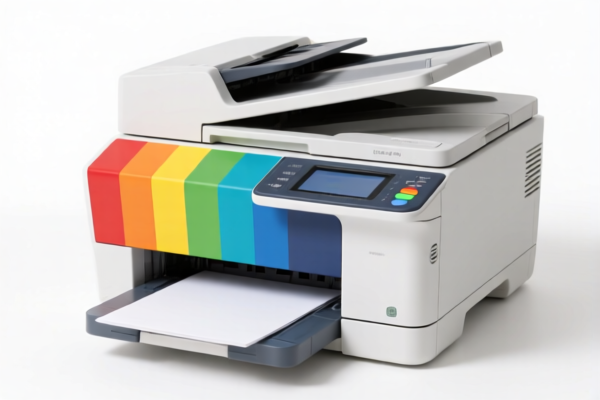
AI Analysis
🖋️ Color Copy Film Universal (General Purpose Copying Film)
🌐 HS Code Reference & Customs Clearance Guide | 2026 Latest Tariff Analysis | Professional Clearance Strategy
📌 Product Definition & Classification: What is "Universal Color Copy Film"?
Universal Color Copy Film (often referred to as NCR paper sheets, carbonless copy paper sheets, or duplicating film) is a specialized intermediate product used in office, printing, and industrial copying processes. Unlike traditional carbon paper, it relies on micro-encapsulated dye and clay coatings to create copies upon pressure.
In international trade, its classification is complex because it can be viewed through three different lenses: 1. As a Photochemical Product: If it functions like a photographic emulsion or sensitized film. 2. As a Paper/Cardboard Product: If it is primarily a cellulose-based substrate with coating. 3. As a Printed/Paper Goods Item: If it is treated as an intermediate printing material or general paper good.
⚠️ Key Classification Distinction: * If the product is primarily a plastic/polymer film or has photo-sensitive characteristics → It falls under Chapter 37 (Photographic/Chemical Films). * If the product is primarily a cellulose/plant fiber sheet with coating → It falls under Chapter 48 (Paper & Paperboard). * If it is considered a general printed accessory → It may fall under Chapter 49 (Printed Matter).
📦 II. HS Code Classification Details (Based on Provided Data)
| HS Code | Product Description (Summary) | Material/Logic Basis | Total Tax Rate (US/China Origin Context) |
|---|---|---|---|
| 3706.10.60.30 | General Purpose Color Copy Film Form: Film. Material: Transparent/Colored Polymer Film. Logic: Fits the category and usage logic of films. |
Film-Type Polymer-based substrate logic. |
35.0% |
| 4823.90.31.00 | General Purpose Color Copy Film Material: Inferred cellulose or plastic film. Category: Film within Paper/Cardboard/Fiber mats. |
Paper/Cardboard Film Cellulose or plastic film within Chapter 48. |
35.0% |
| 4911.99.80.00 | General Purpose Color Copy Film Category: Intermediate printed product. Logic: Printed carrier/material within "Other Printed Matter." |
Printed Material Intermediate form for printing processes. |
17.5% |
| 3706.10.60.60 | General Purpose Color Copy Film Form: Film. Attribute: Consistent with motion picture/film categories. Category: General catch-all for films. |
Film-Type (Catch-all) Functional/physical attribute alignment with general film. |
35.0% |
🔍 Critical Note on Tax Discrepancy: * HS Codes
3706.10.60.30and4823.90.31.00carry a higher tax burden (35.0%). * HS Code4911.99.80.00offers a significantly lower tax burden (17.5%). * Strategy: Unless the product has strict photo-sensitive or optical film characteristics that mandate Chapter 37, classification under Chapter 49 (Printed Matter) or Chapter 48 (Paper) as a general copying sheet may be more cost-effective. However, Chapter 37 codes are often used if the film structure is strictly polymer-based and not paper.
💰 III. 2026 Latest Tariff Rate Breakdown (Detailed Policy Analysis)
✅ Applicable Country: United States (US) ✅ Origin: China (CN) ✅ Effective Time: Post-2025/2026 Trade Policy Framework
🎯 1. 3706.10.60.30 & 3706.10.60.60 – Photochemical/Plastic Film Category
High Tax Bracket
| Item | Content |
|---|---|
| Base Tariff | 0.0% (Ad Valorem) |
| USITC Additional Tariff (Section 301) | +25.0% |
| 122 Clause Tariff (IEEPA/Other) | +10.0% |
| Total Tax Rate | 35.0% |
| Tax Calculation | CIF Value × 35% |
| De Minimis Exemption | ❌ Not Eligible (High tariff items usually excluded) |
| Legal Basis Path | USITC:3706.10.60.30/60 → Footnote: 9903.88.01 → IEEPA:9903.01.25 |
📌 Explanation: * The 25% comes from US Trade Law Section 301 against Chinese goods. * The 10% is attributed to the "122 Clause" (often related to emergency economic powers or specific trade remedy provisions). * Total 35% is a significant cost driver. Importers must ensure the product genuinely fits the "Film" definition (Chapter 37) to avoid misclassification penalties, but be aware of the high cost.
🎯 2. 4823.90.31.00 – Paper/Cardboard Film Category
High Tax Bracket (Same as Film)
| Item | Content |
|---|---|
| Base Tariff | 0.0% |
| USITC Additional Tariff (Section 301) | +25.0% |
| 122 Clause Tariff | +10.0% |
| Total Tax Rate | 35.0% |
| Tax Calculation | CIF Value × 35% |
| De Minimis Exemption | ❌ Not Eligible |
| Legal Basis Path | USITC:4823.90.31.00 → Footnote: 9903.88.01 → IEEPA:9903.01.25 |
📌 Note: * Even though it is classified under "Paper/Cardboard," the 35% rate applies because these specific subheadings are subject to the same Section 301 and 122 tariffs as the film categories. * This suggests that material composition (plastic vs. cellulose) does not lower the tariff if the final HTS code is subject to these high tariffs.
🎯 3. 4911.99.80.00 – Other Printed Matter Category
Optimized Tax Bracket
| Item | Content |
|---|---|
| Base Tariff | 0.0% |
| USITC Additional Tariff (Section 301) | +7.5% |
| 122 Clause Tariff | +10.0% |
| Total Tax Rate | 17.5% |
| Tax Calculation | CIF Value × 17.5% |
| De Minimis Exemption | ❌ Not Eligible (Likely, due to tariff level) |
| Legal Basis Path | USITC:4911.99.80.00 → Footnote: 9903.88.01 → IEEPA:9903.01.24 |
📌 Explanation: * This is the most cost-effective classification provided. * The 7.5% Section 301 rate is significantly lower than the 25% applied to Chapter 37 and specific Chapter 48 films. * Strategic Implication: If the product can be legally justified as an "intermediate printed material" or "general paper good for copying" rather than a technical "photochemical film" or "specialized paper film," this classification saves 17.5% in tariffs.
🛠️ IV. Customs Clearance Practical Advice (Avoiding Pitfalls)
✅ 1. Documentation Checklist (Non-Negotiable)
| Document | Mandatory? | Description |
|---|---|---|
| ✅ Product Specification Sheet | ✔️ | Must detail: Material (Polymer vs. Cellulose), Coating type, Dimensions, Usage (Office Copying vs. Technical). |
| ✅ Composition Analysis Report | ✔️ | Crucial for distinguishing between Chapter 37 (Film) and Chapter 48 (Paper). Proves if it's cellulose-based. |
| ✅ Product Photos (Labeled) | ✔️ | Show packaging, branding, and the film itself. Label must say "Color Copying Film" not "Photographic Film." |
| ✅ Commercial Invoice | ✔️ | Clearly state: "General Purpose Color Copy Film, NCR Type, for Office Use." Avoid vague terms like "Chemical Sheet." |
| ✅ Certificate of Origin (CO) | ✔️ | Required for origin determination (China) and applying correct trade remedies. |
| ✅ Packing List | ✔️ | Detail weight and dimensions per box. |
✅ 2. Declaration Strategy (Key Mantras)
🔥 "Define Material, Define Usage, Avoid 'Photo' Label!"
| Scenario | Recommended Declaration | HS Code Choice | Risk Level |
|---|---|---|---|
| Plastic-based film, generic use | "Colorless Copying Film Sheet, Polymer Substrate" | 3706.10.60.30 |
⚠️ High Tax (35%) |
| Cellulose-based sheet, coated | "Colored Copying Paper Sheet, Cellulose Base, Coated" | 4823.90.31.00 |
⚠️ High Tax (35%) |
| General office copying accessory | "General Purpose Printing Accessory, Copying Film" | 4911.99.80.00 |
✅ Low Tax (17.5%) |
| Technical/Photographic use | "Sensitized Copying Film for Industrial Use" | 3706.10.60.60 |
⚠️ High Tax (35%) |
📌 Pro Tip: * Avoid using the word "Photographic" or "Photo-sensitive" in your description unless it is strictly for industrial lithography or scientific imaging. * Use terms like "Office Copying," "NCR Sheet," or "Intermediate Printing Material" to align with
4911.99.80.00. * If the product is clearly cellulose-based (paper), argue for Chapter 48, but be aware that4823.90.31.00is still taxed at 35% in this dataset. Therefore,4911.99.80.00is the optimal target if defensible.
✅ 3. Special Situations
| Situation | Handling Advice |
|---|---|
| Mixed Packaging | If sold with printers or paper, declare separately. Do not bundle "Copy Film" with "Standard Paper" in one HS Code. |
| Custom OEM Orders | Provide client drawings showing the film is used for "duplication" not "imaging." |
| Small Samples | Check if "De Minimis" applies. However, with 17.5%-35% tariffs, most commercial shipments will not qualify for $800 exemption if classified under these specific codes due to Section 301 exclusions. |
| Dispute on Material | If customs questions if it's "Paper" or "Film," provide a lab test confirming the base substrate. If it's >50% cellulose, Chapter 48/49 is more likely. |
🌍 V. Global Market Comparison (2026 Overview)
| Market | Recommended HS Code | Est. Tariff (China Origin) | Key Requirement |
|---|---|---|---|
| 🇺🇸 USA | 4911.99.80.00 (Optimal) |
17.5% | Clear description as "Copying Film" not "Photo Film." |
| 🇪🇺 EU | 4823.90 / 4911.99 |
~0-5% | CE Marking (if applicable), REACH compliance for coatings. |
| 🇨🇳 China | 4823.90 / 4911.99 |
5-10% | CCC if applicable (unlikely for this item). |
| 🇬🇧 UK | 4823.90 / 4911.99 |
~5% | Post-Brexit UK Global Tariff applies. |
📌 Conclusion: * The US market is the most critical due to the Section 301 tariffs. * Saving 17.5% tariff by correctly classifying under
4911.99.80.00(vs3706or4823) is a significant competitive advantage. * Ensure your product documentation supports the "Printed Matter/Intermediate Good" classification to qualify for the lower rate.
📌 VI. Common Errors & Pitfalls (Lessons Learned)
❌ Error 1: Classifying as "Photographic Film" (3706) when it's just office copying paper.
👉 Result: Not only do you pay 35%, but you risk penalties for misclassification if the "photo" intent isn't proven.
❌ Error 2: Using generic term "Chemical Film." 👉 Result: Customs may inspect thoroughly, delaying clearance. Be specific: "Colorless Copying Film."
❌ Error 3: Ignoring the "122 Clause" 10% tariff. 👉 Result: Underestimating landed cost. Always include the 10% IEEPA/122 tariff in your CIF calculation.
❌ Error 4: Assuming "Paper" = Low Tariff.
👉 Result: In this specific dataset, Chapter 48 film (4823.90.31.00) is taxed at 35%, same as Chapter 37. Do not assume Chapter 48 is always cheaper here. Check the subheading!
✅ Correct Practice:
"General Purpose Color Copying Film, Polymer/Cellulose Base, for Office Duplication, Model XYZ, NCR Type" Target HS Code:
4911.99.80.00(for 17.5% rate)
🎯 VII. Conclusion: Smart Classification Saves Money!
🎯 Remember the Mantra:
🔹 "Don't call it 'Photo,' call it 'Copy.' Don't call it 'Film,' call it 'Sheet.' Aim for Chapter 49!" 🔹 "17.5% vs 35% is a huge margin. Justify the 'Printed Material' status."
📌 Tip:
If your product is NCR (No Carbon Required) paper sheets, argue strongly for Chapter 49 or Chapter 48 but be prepared to prove it's not a "specialized film" under Chapter 37.
Consider applying for an Advance Ruling from US Customs (CBP) to lock in the 4911.99.80.00 classification and secure the 17.5% rate.
📣 Immediate Action:
📞 Contact your freight forwarder with the Product Spec Sheet highlighting "Office Copying Use." 🚀 Request a Pre-Classification Opinion for HS Code
4911.99.80.00to minimize tariff exposure.
✨ Professional Clearance Starts with Precise Classification! 💼 Every 1% of tariff saved adds directly to your profit margin!
Customer Reviews
About HS Code Classification
The Harmonized System (HS) is an internationally standardized nomenclature developed by the World Customs Organization (WCO) to classify traded products. Over 200 countries use the HS system as the basis for customs tariffs, trade statistics, and import/export regulations.
Each HS code follows a hierarchical structure:
- Chapter (2 digits) — Broad category of goods (e.g., Chapter 84: Machinery and Mechanical Appliances)
- Heading (4 digits) — More specific grouping within the chapter
- Subheading (6 digits) — Internationally standardized breakdown, used by all WCO member countries
- National subdivisions (8-10 digits) — Country-specific extensions for further classification, such as US HTSUS 10-digit codes
Correct HS code classification is essential for smooth customs clearance, accurate duty payment, and compliance with trade regulations. Misclassification can lead to customs delays, overpayment of duties, or penalties.
When importing from CN to US, the applicable tariff rates may include:
- Most-Favored-Nation (MFN) rate — The standard duty rate applied to WTO members
- General rate — Applied to countries without trade agreements
- Trade remedy duties — Additional tariffs such as Section 301 (anti-dumping), Section 232 (national security), or countervailing duties
The information provided on this page is for reference purposes only. For official classification, please consult with your local customs authority or a licensed customs broker.