Color Film (for Experiments)
CN → US| HS Code | Tariff Rate | Origin | Destination | Doc |
|---|---|---|---|---|
| 3701996060 | 35.0% | CN | US | Official Doc |
| 3701910060 | 38.7% | CN | US | Official Doc |
| 3702310100 | 38.7% | CN | US | Official Doc |
| 3702530060 | 38.7% | CN | US | Official Doc |
| 9027508060 | 35.0% | CN | US | Official Doc |
Product Images
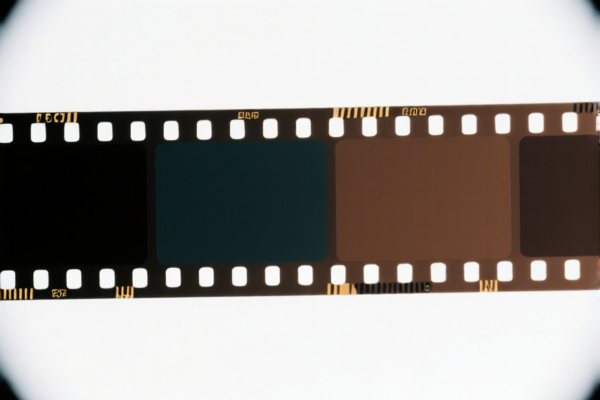
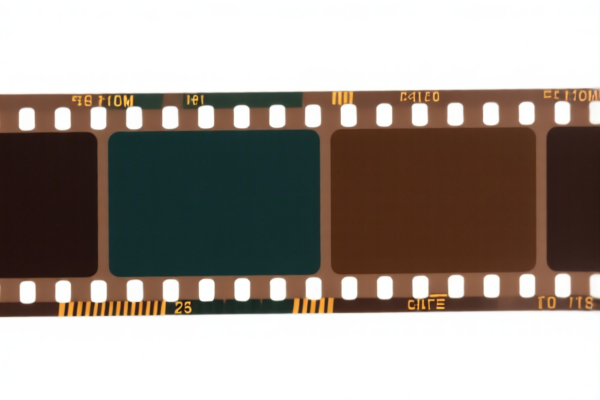
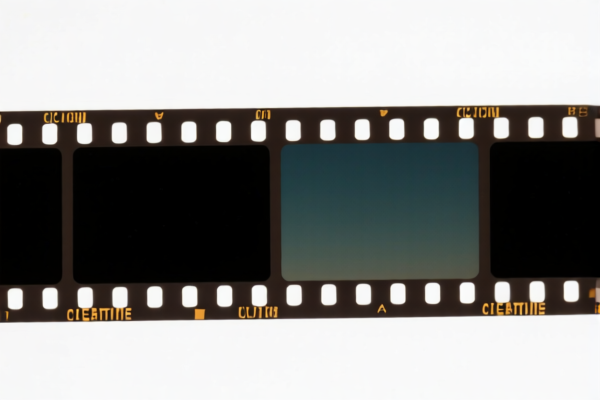

AI Analysis
🎞️ Color Film (For Scientific/Experimental Use)
🌐 HS Code Reference & Customs Clearance Guide | 2026 Latest Tariff Analysis | Professional Strategy for Scientific Photographic Materials
📌 1. Product Definition & Classification: What is "Scientific Color Film"?
In international trade, "Color Film" intended for scientific or experimental use is not treated as consumer photography film (HS 3702/3707). Instead, it is classified based on its physical form (sheet, strip, or roll) and its functional purpose (analytical, testing, or research).
The core distinction lies in whether the film is: * Raw Material (Unexposed): Sent to labs for chemical analysis, light testing, or calibration. * Analytical Tool: Used as a sensor medium in scientific instruments (e.g., spectrophotometry, radiometry).
⚠️ Key Classification Logic:
- If the film is in sheet form (flat) → It falls under HS 3701 (Photographic Plates/Films in Flat Sheets).
- If the film is in roll/strip form → It falls under HS 3702 (Photographic Film in Rolls/Strips).
- If it is explicitly part of a scientific instrument system (e.g., a detector component) → It may fall under HS 9027 (Optical/Photometric Instruments).
📦 2. HS Code Classification Matrix (2026 Official Tariff Data)
Based on the provided dataset, here are the four primary HS Code categories for Color Film for Scientific Use:
| HS Code | Product Description & Summary | Key Identifier | Application Scenario |
|---|---|---|---|
3701.99.60.60 |
Color Film (Flat Sheets): Scientific use, light-sensitive material, non-paper/non-textile. | Form: Flat Sheet | Calibration plates, chemical analysis sheets, raw material for lab testing. |
3701.91.00.60 |
Color Film (Flat Sheets): Scientific use, specific color photography classification, not circular discs. | Form: Flat Sheet | Specialized flat-sheet color film for analytical purposes. |
3702.31.01.00 |
Color Film (Rolls/Strips): Scientific use, standard photo-sensitive material, no shape conflict. | Form: Roll/Strip | Standard rolls of color film used in lab cameras or scanners for research. |
3702.53.00.60 |
Color Film (Rolls/Strips): Scientific use, "Other" category fallback for specialized scientific rolls. | Form: Roll/Strip | Niche or custom-width scientific film rolls not fitting other specific sub-categories. |
9027.50.80.60 |
Scientific Instrument Component: Film used for light/radiation analysis, part of a detection device. | Function: Instrument Part | Film integrated into scientific apparatus for optical/radiometric measurement. |
🔍 Critical Distinction:
- HS 3701 vs. 3702: Determine by physical shape. Flat sheets go to 3701; Rolls/Strips go to 3702.
- HS 37xx vs. 9027: Determine by integration. If the film is a standalone raw material, use 37xx. If it is a component of a machine performing analysis (e.g., a built-in detector), use 9027.
💰 3. 2026 Tariff Rate Analysis (Detailed Breakdown)
✅ Target Market: USA
✅ Origin: China (CN)
✅ Effective Date: 2025-11-10 onwards
The tariff structure is identical for all five HS codes in the dataset due to the "122 Clause" and Section 301 tariffs.
🎯 1. Flat Sheet Films (3701.99.60.60 & 3701.91.00.60)
| Item | Rate | Legal Basis |
|---|---|---|
| Base MFN Duty | 0.0% | Standard Most-Favored-Nation rate for certain photographic materials. |
| Section 301 Duty | +25.0% | USITC Footnote 9903.88.01 (Section 301 List 4A). |
| IEEPA 122 Clause | +10.0% | International Emergency Economic Powers Act (Specific to China imports). |
| Total Landed Duty | 35.0% | Calculated on CIF Value. |
| De Minimis Eligibility | ❌ No | Cannot use $800 de minimis exemption. |
🎯 2. Roll/Strip Films (3702.31.01.00 & 3702.53.00.60)
| Item | Rate | Legal Basis |
|---|---|---|
| Base MFN Duty | 3.7% | Standard MFN rate for photographic film in rolls. |
| Section 301 Duty | +25.0% | USITC Footnote 9903.88.01. |
| IEEPA 122 Clause | +10.0% | IEEPA enforcement. |
| Total Landed Duty | 38.7% | Calculated on CIF Value. |
| De Minimis Eligibility | ❌ No | High tariff rate disqualifies it from de minimis. |
🎯 3. Instrument Component (9027.50.80.60)
| Item | Rate | Legal Basis |
|---|---|---|
| Base MFN Duty | 0.0% | Scientific instruments often enjoy 0% base duty. |
| Section 301 Duty | +25.0% | USITC Footnote 9903.88.01. |
| IEEPA 122 Clause | +10.0% | IEEPA enforcement. |
| Total Landed Duty | 35.0% | Calculated on CIF Value. |
| De Minimis Eligibility | ❌ No | Subject to full tariff assessment. |
📌 Explanation:
- The 25% is the standard Section 301 tariff on many Chinese manufactured goods.
- The 10% is the specific IEEPA surcharge applied to Chinese-origin goods affecting national security or economic interests.
- Total Tax: Ranges from 35% to 38.7% depending on the physical form (sheet vs. roll).
🛠️ 4. Customs Clearance Practical Advice (Risk Mitigation)
✅ 1. Documentation Checklist (Mandatory)
| Document | Required? | Purpose |
|---|---|---|
| Product Specification Sheet | ✔️ | Must clearly state "For Scientific/Experimental Use Only". Avoid words like "Consumer Photography" or "Art". |
| Certificate of Origin (CO) | ✔️ | Proves China origin to apply correct IEEPA/301 rates. |
| Letter of Intent/End-Use Statement | ✔️ | From the buyer: "This film is purchased for R&D/Lab testing, not for commercial consumer sales." |
| Commercial Invoice | ✔️ | Detailed description: "Unexposed Color Photographic Film, Flat Sheet/Roll, HS 3701/3702, Scientific Grade." |
| Packing List | ✔️ | Accurate weight and dimensions. |
| Test Reports (Optional but Recommended) | ✔️ | Any lab data proving its scientific application can help defend against misclassification challenges. |
✅ 2. Classification Strategy & Tips
🔥 "Form Dictates Code, Purpose Dictates Value!"
| Scenario | Correct HS Code | Why? |
|---|---|---|
| Flat Sheets | 3701.99.60.60 or 3701.91.00.60 |
Physical form is flat. Choose 99 vs 91 based on specific chemical sensitivity/manufacturer specs. |
| Rolls/Strips | 3702.31.01.00 or 3702.53.00.60 |
Physical form is rolled. Use 31 for standard widths, 53 for others. |
| Part of a Machine | 9027.50.80.60 |
If the film is sold as part of a kit with a detector device, classify as instrument part. |
⚠️ Warning:
- Do NOT declare as "Camera Film" or "Consumer Photo Film". This triggers higher scrutiny and potential misclassification fines.
- Do NOT split shipments to avoid the $800 de minimis threshold if the intent is evasion; CBP monitors patterns.
✅ 3. Special Case Handling
| Situation | Action |
|---|---|
| Mixed Shipments (Sheets + Rolls) | Declare separately on the same invoice. Each HS Code has its own duty calculation (35% vs 38.7%). |
| OEM/Custom Scientific Film | Provide the custom specification sheet. If it doesn't fit standard 3702 codes, argue for 3702.53.00.60 ("Other"). |
| Used/Exposed Film | Do not import as "Scientific Film". Used film may be classified as waste or hazardous material. Only unexposed film is eligible for these HS codes. |
🌍 5. Global Market Comparison (2026 Outlook)
| Region | HS Code (Typical) | Base Duty | Additional Tariffs (China) | Total Est. Duty |
|---|---|---|---|---|
| 🇺🇸 USA | 3701 / 3702 |
0% - 3.7% | 301 (25%) + IEEPA (10%) | 35% - 38.7% |
| 🇨🇳 China | 3701 / 3702 |
6.5% - 9% | None | 6.5% - 9% |
| 🇪🇺 EU | 3701 / 3702 |
4.5% - 6% | None (GSP not applicable to China) | ~5% |
| 🇯🇵 Japan | 3701 / 3702 |
3% - 6% | None | ~3% |
📌 Conclusion:
- The USA has the highest effective tariff due to the cumulative 35-38.7% rate.
- Supply Chain Tip: If possible, consider sourcing scientific film from non-China origins (e.g., Japan, Germany, or South Korea) to avoid the 25% + 10% surcharges, potentially saving 30%+ in landed cost.
📌 6. Common Mistakes & Pitfalls (Lessons Learned)
❌ Mistake 1: Classifying scientific film as "General Consumer Camera Film" (3702.10).
👉 Consequence: Incorrect tariff calculation and potential rejection if the film does not meet consumer standards.
❌ Mistake 2: Ignoring the "122 Clause" IEEPA tariff.
👉 Consequence: Underpayment of duties. CBP will assess back duties + interest + penalties.
❌ Mistake 3: Using "Photographic Material" as the only description.
👉 Consequence: Ambiguity leads to customs delays for further examination. Be specific: "Unexposed Color Film for Lab Spectrophotometry."
❌ Mistake 4: Confusing "Sheet" vs "Roll".
👉 Consequence: 3701 (Sheets) has 0% base duty; 3702 (Rolls) has 3.7% base duty. Wrong classification = wrong tax amount.
✅ Correct Declaration Example:
"UNEXPOSED COLOR PHOTOGRAPHIC FILM, FLAT SHEETS, FOR SCIENTIFIC EXPERIMENTAL USE, NOT FOR CONSUMER PHOTOGRAPHY, HS 3701.99.60.60"
🎯 7. Conclusion: Precision in Classification Saves Money
🎯 Key Takeaway:
🔹 "Sheets = 3701 (0% Base), Rolls = 3702 (3.7% Base). Both pay 35-38.7% Total."
🔹 "Always declare 'Scientific Use' to prevent consumer classification errors."
🔹 "Check Origin! If not China, you may save 35% in duties."
📌 Pro Tip:
For high-volume imports, consider applying for an Advance Ruling (CBP Form 5515) to lock in the HS Code classification before shipment, providing legal certainty against future tariff changes.
📣 Action Required:
📞 Contact your freight forwarder with the exact HS Code and the Letter of Intent for scientific use.
🚀 Optimize your supply chain by evaluating non-China origins to mitigate the 35%+ tariff burden.
✨ Professional Clearance Starts with Accurate Classification!
💼 Every percentage point matters in international trade!
Customer Reviews
About HS Code Classification
The Harmonized System (HS) is an internationally standardized nomenclature developed by the World Customs Organization (WCO) to classify traded products. Over 200 countries use the HS system as the basis for customs tariffs, trade statistics, and import/export regulations.
Each HS code follows a hierarchical structure:
- Chapter (2 digits) — Broad category of goods (e.g., Chapter 84: Machinery and Mechanical Appliances)
- Heading (4 digits) — More specific grouping within the chapter
- Subheading (6 digits) — Internationally standardized breakdown, used by all WCO member countries
- National subdivisions (8-10 digits) — Country-specific extensions for further classification, such as US HTSUS 10-digit codes
Correct HS code classification is essential for smooth customs clearance, accurate duty payment, and compliance with trade regulations. Misclassification can lead to customs delays, overpayment of duties, or penalties.
When importing from CN to US, the applicable tariff rates may include:
- Most-Favored-Nation (MFN) rate — The standard duty rate applied to WTO members
- General rate — Applied to countries without trade agreements
- Trade remedy duties — Additional tariffs such as Section 301 (anti-dumping), Section 232 (national security), or countervailing duties
The information provided on this page is for reference purposes only. For official classification, please consult with your local customs authority or a licensed customs broker.