Color Film Cleaning Kit
CN → US| HS Code | Tariff Rate | Origin | Destination | Doc |
|---|---|---|---|---|
| 3403114000 | 41.1% | CN | US | Official Doc |
| 3707100090 | 38.0% | CN | US | Official Doc |
| 3707906000 | 35.0% | CN | US | Official Doc |
| 3707903290 | 35.0% | CN | US | Official Doc |
| 3704000000 | 35.0% | CN | US | Official Doc |
Product Images
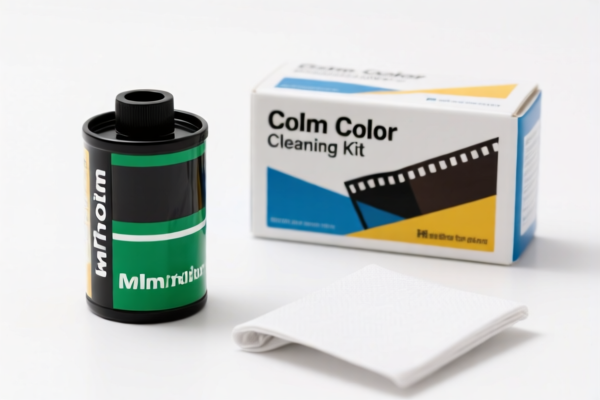
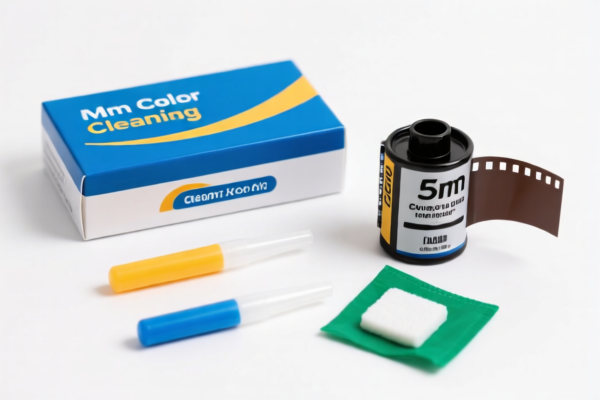
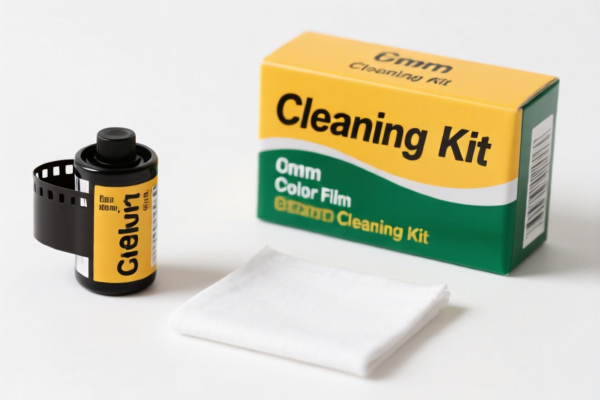
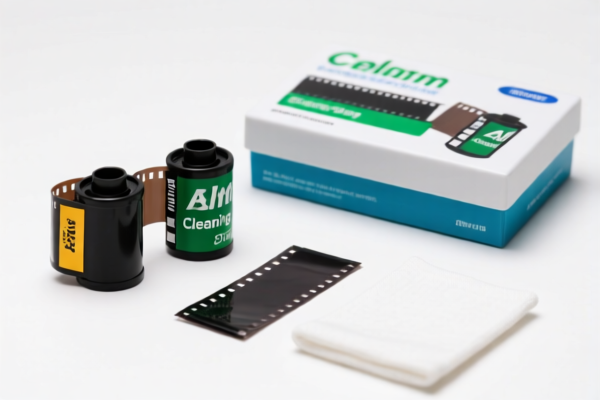
AI Analysis
🎞️ Color Film Cleaning Kit (Chemical Solutions for Photographic Processing)
🌐 HS Code Reference & Customs Clearance Guide | 2026 Latest Tariff Breakdown | Professional Clearance Strategy
📌 I. Product Definition & Classification: What Exactly Is a "Color Film Cleaning Kit"?
A "Color Film Cleaning Kit" in international trade is not a physical tool (like a swab or brush) but a chemical preparation. It consists of liquid or powdered chemicals used to develop, fix, or clean photographic films. The correct HS Code classification depends heavily on the specific composition, state of use (ready-to-use vs. raw chemicals), and intended photographic process (e.g., C-41 color negative vs. black-and-white).
In customs classification, these fall primarily under Chapter 37: Photographic or Cinematographic Goods.
⚠️ Key Distinction:
- If the kit is a pure chemical preparation for treating materials (general industrial or lab use) → Look to 3403.
- If the kit is specifically for photographic processing (developing/coloring) → Look to 3707.
- If the kit includes unexposed film itself → Look to 3704.
📦 II. HS Code Classification Details (2026 Latest Tariff Authority Comparison)
Based on the provided data, here are the precise classifications for a "Color Film Cleaning Kit" (interpreted as chemical solutions for processing/cleaning film):
| HS Code | Product Description | Application Scenario | Tax Rate (Total) |
|---|---|---|---|
3403.11.40.00 |
Preparations for treating materials (Chemical制剂) | General material treatment; cleaning agents not strictly classified as "photographic preparations" but used for film care. | 41.1% |
3707.10.00.90 |
Colloid solutions & other preparations for processing sensitized materials | Specific photographic chemicals; matches the attribute of "chemicals for processing film." | 38.0% |
3707.90.60.00 |
Ready-to-use preparations for photographic purposes (Retail/Metric Pack) | 35mm Color Film Developing Kits; ready-to-use, retail packaging, direct application. | 35.0% |
3707.90.32.90 |
Other photographic preparations (Developers/Fixers) | Chemical agents containing developers, fixers, etc., for photography. | 35.0% |
3704.00.00.00 |
Photographic plates and film (Exposed, for Processing) | Note: This code is for the film itself after exposure but before/during processing, not the cleaning kit chemicals. Included in data for contrast. | 35.0% |
🔍 Important Note:
- Codes3707.90.60.00and3707.90.32.90are the most common for commercial/color film developing kits.
- Code3403.11.40.00may apply if the "cleaning kit" is viewed as a general chemical cleaner rather than a specific photographic developer/fixer, but it attracts a higher tax rate.
💰 III. 2026 Latest Tariff Rate Breakdown (Including Surcharges & Policy Add-ons)
✅ Applicable Country: United States (US)
✅ Origin: China (CN)
✅ Effective Date: From November 10, 2025 (for subsequent imports)
🎯 1. 3403.11.40.00 — Preparations for Treating Materials (Higher Tax Tier)
| Item | Content |
|---|---|
| Base Tariff | 6.1% (ad valorem) |
| USITC Surcharge (Section 301) | +25% |
| IEEPA Surcharge (122 Clause) | +10% |
| Total Tax Rate | 41.1% |
| Tax Calculation | CIF Value × 41.1% |
| De Minimis Eligibility | ❌ No (deny_de_minimis) |
| Legal Basis Path | IEEPA:9903.01.25 → IEEPA:9903.01.24 → USITC:3403.11.40.00 → FOOTNOTE:122 Clause |
📌 Explanation:
- This classification carries the highest tax burden among the options.
- It is often a fallback if the chemical nature is deemed "general industrial chemical" rather than "specific photographic preparation."
- Cost Impact: High. Avoid this code if a specific photographic code applies.
🎯 2. 3707.10.00.90 — Photographic Preparations (Colloid Solutions)
| Item | Content |
|---|---|
| Base Tariff | 3.0% |
| USITC Surcharge (Section 301) | +25% |
| IEEPA Surcharge (122 Clause) | +10% |
| Total Tax Rate | 38.0% |
| Tax Calculation | CIF Value × 38.0% |
| De Minimis Eligibility | ❌ No |
| Legal Basis Path | IEEPA:9903.01.25 → IEEPA:9903.01.24 → USITC:3707.10.00.90 → FOOTNOTE:122 Clause |
📌 Explanation:
- Suitable for colloid-based photographic chemicals.
- Moderate tax rate, but still significant due to the 35% combined surcharge.
🎯 3. 3707.90.60.00 & 3707.90.32.90 — Ready-to-Use Photographic Preparations (Optimal Tier)
| Item | Content |
|---|---|
| Base Tariff | 0.0% |
| USITC Surcharge (Section 301) | +25% |
| IEEPA Surcharge (122 Clause) | +10% |
| Total Tax Rate | 35.0% |
| Tax Calculation | CIF Value × 35.0% |
| De Minimis Eligibility | ❌ No |
| Legal Basis Path | IEEPA:9903.01.25 → IEEPA:9903.01.24 → USITC:3707.90.xxxx → FOOTNOTE:122 Clause |
📌 Explanation:
- This is the most common and cost-effective classification for 35mm color film developing kits.
- The base tariff is 0%, meaning the 35% total is purely due to trade war surcharges.
- Applies to retail-packaged, ready-to-use solutions.
🛠️ IV. Customs Clearance Practical Advice (Real-World Pitfall Guide)
✅ 1. Documentation Checklist (Non-negotiable)
| Document | Required | Description |
|---|---|---|
| ✅ Product Spec Sheet | ✔️ | Must list chemical composition, PH level, and specific use (e.g., C-41 Color Process). |
| ✅ Product Photos | ✔️ | Show the kit contents, labels, and retail packaging. |
| ✅ Commercial Invoice | ✔️ | Clearly state: "Color Film Developing Kit (Chemical Preparations)". Avoid vague terms like "Cleaning Kit." |
| ✅ Safety Data Sheet (SDS) | ✔️ | Required for chemical imports. Verify it lists no prohibited substances. |
| ✅ HS Code Pre-Ruling | ✔️ | Recommended to confirm 3707.90.60.00 vs 3707.90.32.90. |
✅ 2. Declaration Tips (Key Mnemonic)
🔥 “Chemical Nature, Retail Pack, Code 3707, 35% Tax!”
| Scenario | Correct HS Code | Error to Avoid |
|---|---|---|
| Ready-to-use Color Kit (Retail) | 3707.90.60.00 |
Do NOT declare as "Cleaning Supplies" (3403) → 41.1% |
| Bulk Chemicals (Non-retail) | 3707.90.32.90 |
Do NOT declare as "General Chemical" → 41.1% |
| Physical Cleaning Tools (Swabs) | Not Covered in Data | Misclassifying tools as chemicals → Delayed clearance |
| Unexposed Film | 3704.00.00.00 |
Confusing film with chemicals → Wrong tax base |
📌 Critical Advice:
- Do NOT use the term "Cleaning Kit" without specifying it is chemical preparations for photographic processing.
- Customs may interpret "Cleaning Kit" as a mechanical tool (e.g., air blower, swabs) which might fall under a different, potentially higher-taxed or restricted category.
- Always emphasize "Chemical Preparations" and "Photographic Use" in the description.
✅ 3. Special Cases & Mitigation
| Scenario | Handling Advice |
|---|---|
| Mixed Kit (Chemicals + Tools) | Declare the chemicals under 3707. Declare tools separately if possible, or risk higher classification for the whole kit. |
| Bulk Chemicals (Not Retail) | Use 3707.90.32.90. Ensure packaging is not consumer-ready to distinguish from retail kits. |
| Hazardous Chemicals | If the chemicals are flammable or toxic, additional DG (Dangerous Goods) documentation is required. |
🌍 V. Global Market Clearance Comparison (2026 Latest)
| Country/Region | Recommended HS Code | Tariff (China Origin) | Certification | Notes |
|---|---|---|---|---|
| 🇺🇸 USA | 3707.90.60.00 |
35.0% | SDS Required | High surcharges apply. |
| 🇨🇳 China | 3707.90.60.00 |
~0-6% | CCC (if applicable) | Lower baseline tariffs. |
| 🇪🇺 EU | 3707.90.60.00 |
~6% | REACH Compliance | No Section 301 tariffs. |
| 🇬🇧 UK | 3707.90.60.00 |
~6% | UKCA | Post-Brexit rules apply. |
📌 Conclusion:
- USA remains the most expensive market due to the 35% total tariff (25% Section 301 + 10% IEEPA).
- EU/UK offer lower baseline tariffs but require strict REACH/UKCA chemical compliance.
📌 VI. Common Mistakes & Pitfalls (Lessons Learned)
❌ Mistake 1: Using "Cleaning Kit" without "Chemical" in the description
👉 Result: Customs may classify as "General Household Cleaner" (higher tax or restricted) → Delay
❌ Mistake 2: Misclassifying as 3403 (General Chemical) when it’s clearly photographic
👉 Result: Paying 41.1% instead of 35.0% → Unnecessary Cost
❌ Mistake 3: Ignoring the "Retail Packaging" requirement for 3707.90.60.00
👉 Result: If sold in bulk, you must use 3707.90.32.90. Incorrect declaration → Penalty
✅ Correct Practice:
“Color Film Developing Kit, Ready-to-Use Chemical Preparations for Photographic Processing, C-41 Process, Retail Pack, Model XYZ”
🎯 VII. Conclusion: Precision Classification Saves Money!
🎯 Remember the Golden Rule:
🔹 “Photographic Chemicals = 3707.90.60.00”
🔹 “35% Total Tax (USA)”
🔹 “Avoid 3403 unless necessary (41.1%)”
📌 Pro Tip:
- If you are importing large quantities, consider negotiating Exclusions from Section 301 tariffs if available.
- Always provide SDS (Safety Data Sheets) to speed up chemical clearance.
📣 Immediate Action:
📞 Contact your customs broker with the product photo and chemical composition.
🚀 Pre-classify your HS Code to ensure you pay 35.0% and not 41.1%!
✨ Professional Clearance, Start with Accurate Classification!
💼 Every Percentage Point Counts in Tariff Planning!
Customer Reviews
About HS Code Classification
The Harmonized System (HS) is an internationally standardized nomenclature developed by the World Customs Organization (WCO) to classify traded products. Over 200 countries use the HS system as the basis for customs tariffs, trade statistics, and import/export regulations.
Each HS code follows a hierarchical structure:
- Chapter (2 digits) — Broad category of goods (e.g., Chapter 84: Machinery and Mechanical Appliances)
- Heading (4 digits) — More specific grouping within the chapter
- Subheading (6 digits) — Internationally standardized breakdown, used by all WCO member countries
- National subdivisions (8-10 digits) — Country-specific extensions for further classification, such as US HTSUS 10-digit codes
Correct HS code classification is essential for smooth customs clearance, accurate duty payment, and compliance with trade regulations. Misclassification can lead to customs delays, overpayment of duties, or penalties.
When importing from CN to US, the applicable tariff rates may include:
- Most-Favored-Nation (MFN) rate — The standard duty rate applied to WTO members
- General rate — Applied to countries without trade agreements
- Trade remedy duties — Additional tariffs such as Section 301 (anti-dumping), Section 232 (national security), or countervailing duties
The information provided on this page is for reference purposes only. For official classification, please consult with your local customs authority or a licensed customs broker.