Color Film Roll (Low Grain)
CN → US| HS Code | Tariff Rate | Origin | Destination | Doc |
|---|---|---|---|---|
| 3702390100 | 38.7% | CN | US | Official Doc |
| 3702980000 | 38.7% | CN | US | Official Doc |
| 3919102055 | 40.8% | CN | US | Official Doc |
| 3920100000 | 39.2% | CN | US | Official Doc |
| 3920200055 | 39.2% | CN | US | Official Doc |
| 3919905060 | 40.8% | CN | US | Official Doc |
Product Images
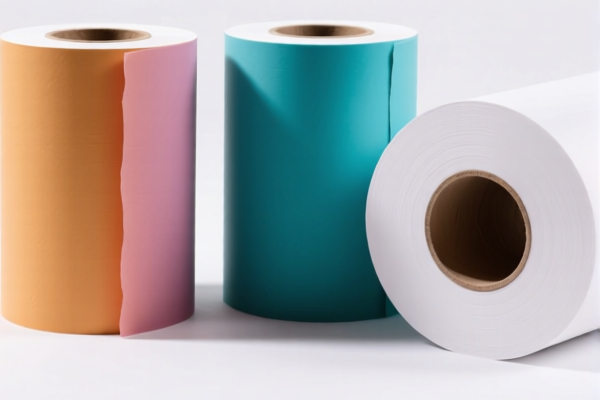
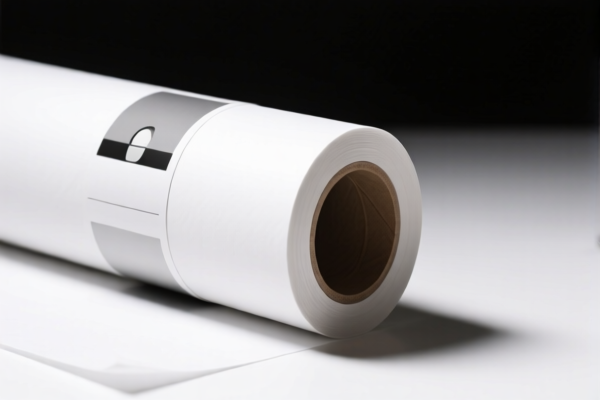
AI Analysis
🎞️ Color Film Roll (Low Grain)
🌐 HS Code Reference & Customs Clearance Guide | 2026 Latest Tariff Analysis | Professional Strategy for Sensitised Materials
📌 I. Product Definition & Classification: Decoding "Color Film"
"Color Film Roll (Low Grain)" refers to photographic film sensitized on a plastic base, designed for capturing color images with minimal visual noise (grain). In international trade, the classification depends heavily on two factors: 1. Form & Use: Is it strictly for photographic/sensitizing purposes (Chapter 37) or treated as a general plastic film (Chapter 39)? 2. Material Base: What is the backing material? (Usually cellulose acetate or polyester).
⚠️ Key Distinction:
- Chapter 37 (3702): Correct for sensitised photographic film intended for imaging. This is the primary classification for "Low Grain" film used in photography/cinema. - Chapter 39 (3919/3920): Incorrect unless the film is un-sensitised (plain plastic film) or used for non-photographic industrial purposes (e.g., protective wrapping). Misclassification here leads to severe penalties.
📦 II. HS Code Classification Details (2026 Latest Tariff Authority)
| HS Code | Product Description | Applicable Scenario | Sensitised? |
|---|---|---|---|
3702.39.01.00 |
Sensitised photographic film, in rolls, of any material other than paper, paperboard or textiles (Other) | Specific sub-category for general sensitised film rolls not covered by other specific sub-headings. | ✅ Yes |
3702.98.00.00 |
Sensitised photographic film, in rolls, of any material other than paper, paperboard or textiles (Other) | Catch-all for sensitised film rolls not specified elsewhere. | ✅ Yes |
3919.10.20.55 |
Self-adhesive plates, sheets, film, foil, strip and other flat shapes, of plastics, in rolls of any length... (Other) | Risky: If customs determines the "film" is plastic-based but un-sensitised or used for industrial labeling/packaging rather than photography. | ❌ No (or Disputed) |
3920.10.00.00 |
Other plates, sheets, film, foil and strip, of polymers of ethylene | Risky: Applies if the base is polyethylene and it is deemed a plain plastic film, not sensitised photographic material. | ❌ No |
3920.20.00.55 |
Other plates, sheets, film, foil and strip, of polymers of propylene | Risky: Similar to above, applies to polypropylene plain films. | ❌ No |
3919.90.50.60 |
Self-adhesive plates, sheets, film, foil, strip and other flat shapes, of plastics, in rolls... (Other) | Risky: General plastic film category. Often used as a fallback if the photographic nature cannot be proven. | ❌ No |
🔍 Key Reminder:
- "Low Grain" implies a photographic quality attribute. Therefore, Chapter 37 (3702) is the correct legal classification for sensitised film. - Classifying under Chapter 39 is only acceptable if the film is un-sensitised (plain plastic) or if the importer falsely declares it as a non-photographic plastic product to avoid higher scrutiny (high risk).
💰 III. 2026 Latest Tariff Rate Breakdown (Including Surcharges & Policy Add-ons)
✅ Applicable Country: United States (US)
✅ Origin: China (CN)
✅ Effective Date: From November 10, 2025 (for imports)
🎯 1. Correct Classification: 3702.39.01.00 & 3702.98.00.00 (Sensitised Film)
| Item | Content |
|---|---|
| Base Tariff Rate | 3.7% (Ad Valorem) |
| Section 301 Surcharge | +25.0% (From USITC Footnote) |
| 122 Clause Surcharge | +10.0% (Section 122 of the Trade Act) |
| Total Effective Rate | 38.7% |
| Tax Calculation | CIF Value × 38.7% |
| De Minimis Exemption? | ❌ No (Not eligible for $800 de minimis) |
| Legal Basis Path | Section 301: 9903.88.01 → Section 122: 10% → USITC: 3702.39.01.00 / 3702.98.00.00 |
📌 Explanation:
- 3.7% Base: Standard MFN rate for photographic film. - 25% Surcharge: Section 301 tariffs on Chinese goods (List 3/4). - 10% Surcharge: Section 122 tariffs (national security/trade defense). - Total 38.7%: This is a high-cost entry. Proper classification is critical to justify this rate rather than facing higher penalties for misclassification.
🎯 2. Incorrect/Risky Classification: Chapter 39 Codes (e.g., 3919.10.20.55, 3920.10.00.00)
| Item | Content |
|---|---|
| Base Tariff Rate | 4.2% - 5.8% (Depends on specific plastic polymer) |
| Section 301 Surcharge | +25.0% |
| 122 Clause Surcharge | +10.0% |
| Total Effective Rate | 39.2% - 40.8% |
| Tax Calculation | CIF Value × Rate |
| De Minimis Exemption? | ❌ No |
| Legal Basis Path | Section 301 → Section 122 → USITC: 39xx.xxxx.xxxx |
📌 Warning:
- While the total rate (39.2%-40.8%) is slightly higher than the correct Chapter 37 rate (38.7%), the legal risk is massive. - Customs may audit the "sensitised" nature. If you declare as3920.10.00.00(Polyethylene film) but it is actually sensitised photographic film, it is misdeclaration. - Consequence: Penalty + Back Taxes + Potential Fraud Charges.
🛠️ IV. Customs Clearance Practical Advice (Real-World Pitfall Guide)
✅ 1. Required Documentation Checklist
| Document | Must Provide | Explanation |
|---|---|---|
| ✅ Product Spec Sheet | ✔️ | Must explicitly state "Sensitised Photographic Film", "Color", "Low Grain", "Base Material (Acetate/Polyester)". |
| ✅ Manufacturer Invoice | ✔️ | Clearly describe as "Photographic Film Roll" not "Plastic Film Roll". |
| ✅ HS Code Justification Memo | ✔️ | Explain why Chapter 37 applies (sensitised emulsion layer). |
| ✅ Photos of Product | ✔️ | Show the roll, packaging, and any markings indicating photographic use. |
| ✅ Certificate of Origin | ✔️ | Confirm Chinese origin to apply Section 301 & 122 correctly. |
✅ 2. Declaration Tips (Critical Mnemonics)
🔥 "Film is Photo, Not Plastic; Emulsion is Key, Don't Pass!"
| Scenario | Correct Declaration | Wrong Declaration |
|---|---|---|
| Sensitised Color Film | 3702.39.01.00 or 3702.98.00.00 |
3920.10.00.00 (Plastic Film) |
| Un-sensitised Plastic Roll | 3920.10.00.00 |
3702.98.00.00 (Misuse) |
| Film + Camera Kit | Declare Kit or separate | Splitting incorrectly |
✅ 3. Special Case Handling
| Situation | Handling Advice |
|---|---|
| OEM/Contract Film | Provide contract showing end-use for photography. |
| Sample Rolls | Still subject to 38.7% tariff. Do not declare as "Free Sample" to avoid suspicion. |
| Industrial Scanning Film | If used for medical/industrial imaging, still Chapter 37. Provide proof of emulsion. |
| High-Volume Import | Consider Advance Ruling from CBP to lock in the HS Code and avoid post-entry audits. |
🌍 V. Global Market Clearance Comparison (2026 Latest)
| Country/Region | Recommended HS Code | Tariff Rate (China Origin) | Certification Requirement | Notes |
|---|---|---|---|---|
| 🇺🇸 USA | 3702.39.01.00 / 3702.98.00.00 |
38.7% | None specific | High tariff due to 301/122. |
| 🇨🇳 China | 3702.39.00.00 |
5% - 10% | CCC (if applicable) | Standard import. |
| 🇪🇺 EU | 3702.39.00 / 3702.99.00 |
0% - 4% | None | No additional surcharges. |
| 🇬🇧 UK | 3702.39.00 / 3702.99.00 |
0% - 4% | None | Post-Brexit, no US-style surcharges. |
| 🇦🇺 Australia | 3702.39.00 / 3702.99.00 |
5% | None | Moderate duty. |
📌 Conclusion:
- USA is the most challenging market due to the 38.7% combined tariff. - Chapter 37 is the only compliant classification for sensitised film. - Misclassifying as Chapter 39 plastics may seem cheaper initially but carries high legal risk and potential penalties exceeding the tax difference.
📌 VI. Common Errors & Pitfall Guide (Lessons Learned)
❌ Mistake 1: Declaring "Sensitised Film" as "Plastic Film Roll" (3920.10.00.00)
👉 Consequence: Customs audit reveals emulsion layer → Penalty + Back Taxes + Interest.
❌ Mistake 2: Ignoring Section 122 (10%) in tariff calculation
👉 Consequence: Underpayment → Audit Trigger.
❌ Mistake 3: Using "Photographic Material" vaguely without specifying "Roll/Sensitised"
👉 Consequence: Delay in clearance → Demurrage Charges.
❌ Mistake 4: Assuming "Low Grain" means a special sub-code
👉 Consequence: No special code exists; it falls under general "Other" sub-headings (3702.39 or 3702.98).
✅ Correct Practice:
"Sensitised Color Photographic Film, Roll, Polyester Base, Low Grain, for Cinematic Use, Model XYZ, Origin China"
🎯 VII. Conclusion: Precise Classification Saves Millions!
🎯 Remember the Mantra:
🔹 "Sensitised = Chapter 37, Not Plastic; 38.7% is the Cost, Misdeclaration is the Loss!"
🔹 "Low Grain is Quality, Not a Code; Declare Photo, Not Plastic, Avoid the Road!"
📌 Pro Tip:
- For large-volume imports, file an Advance Ruling with US CBP to confirm the HS Code and tariff application.
- Ensure your commercial invoice matches the packaging and product description exactly.
- Do not attempt to hide the sensitised nature under Chapter 39. The risk is not worth the minor rate difference.
📣 Immediate Action:
📞 Consult a licensed customs broker.
📄 Prepare detailed product specifications highlighting "Sensitised" and "Photographic Use".
🚀 Clear Customs Smoothly, Protect Your Margins!
✨ Professional Clearance Starts with Accurate Classification!
💼 Every Percent Counts in International Trade!
Customer Reviews
About HS Code Classification
The Harmonized System (HS) is an internationally standardized nomenclature developed by the World Customs Organization (WCO) to classify traded products. Over 200 countries use the HS system as the basis for customs tariffs, trade statistics, and import/export regulations.
Each HS code follows a hierarchical structure:
- Chapter (2 digits) — Broad category of goods (e.g., Chapter 84: Machinery and Mechanical Appliances)
- Heading (4 digits) — More specific grouping within the chapter
- Subheading (6 digits) — Internationally standardized breakdown, used by all WCO member countries
- National subdivisions (8-10 digits) — Country-specific extensions for further classification, such as US HTSUS 10-digit codes
Correct HS code classification is essential for smooth customs clearance, accurate duty payment, and compliance with trade regulations. Misclassification can lead to customs delays, overpayment of duties, or penalties.
When importing from CN to US, the applicable tariff rates may include:
- Most-Favored-Nation (MFN) rate — The standard duty rate applied to WTO members
- General rate — Applied to countries without trade agreements
- Trade remedy duties — Additional tariffs such as Section 301 (anti-dumping), Section 232 (national security), or countervailing duties
The information provided on this page is for reference purposes only. For official classification, please consult with your local customs authority or a licensed customs broker.