Color Film for Night Photography
CN → US| HS Code | Tariff Rate | Origin | Destination | Doc |
|---|---|---|---|---|
| 9010505000 | 35.0% | CN | US | Official Doc |
| 3704000000 | 35.0% | CN | US | Official Doc |
| 9010506000 | 35.0% | CN | US | Official Doc |
| 3702310100 | 38.7% | CN | US | Official Doc |
| 3702520160 | 38.7% | CN | US | Official Doc |
Product Images
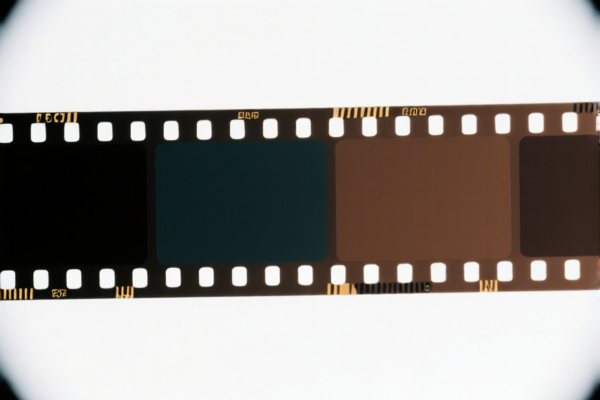
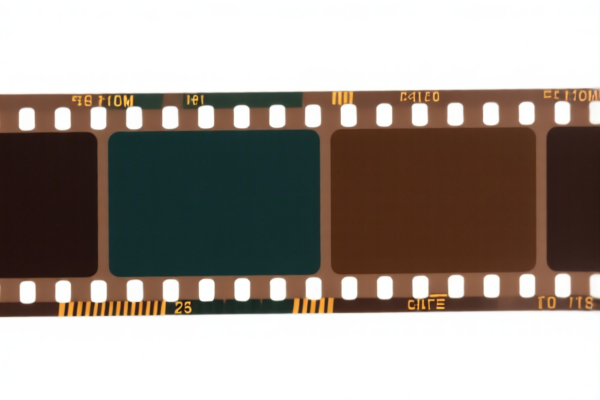
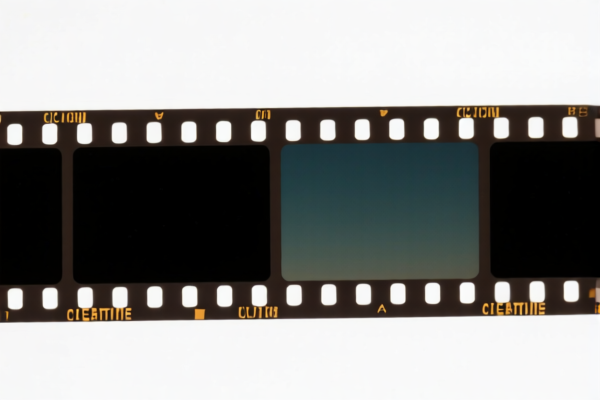

AI Analysis
🎞️ Color Film for Night Photography (Non-Reversal)
🌐 HS Code Reference & Customs Clearance Guide | 2026 Latest Tariff Analysis | Professional Compliance Strategy
📌 I. Product Definition & Classification: What is "Color Film for Night Photography"?
Color film for night photography typically refers to sensitized photographic materials designed to capture images in low-light conditions. In international trade, these are strictly regulated under Chapter 37 (Photographic or Cinematographic Goods).
The classification depends on two critical factors: 1. Physical Form: Is it raw film stock (sheet/roll) or a finished photographic product? 2. Type: Is it negative film (non-reversal) for printing, or positive/reversal film (slide film)?
⚠️ Key Distinction:
- Raw Sensitized Film (Non-Reversal): Raw film rolls/sheets intended for exposure and chemical processing → HS Code 3702.52.01.60.
- Finished Photographic Material: Pre-packaged, specific chemical sensitized materials (e.g., specialized lab supplies) → HS Code 3704.00.00.00.
- Finished Prints/Slides: Not covered in this specific dataset, but generally different codes.
📦 II. HS Code Classification Details (2026 Latest Tariff Authority Comparison)
Based on the provided <DATA>, here are the precise classifications for color film products, specifically focusing on Night Photography applications.
| HS Code | Product Description | Application Scenario | Physical Form | Reversal? |
|---|---|---|---|---|
3702.52.01.60 |
Non-reversal color film | Night photography, low-light conditions | Raw film stock (rolls/sheets) | ❌ No (Negative Film) |
3704.00.00.00 |
Chemical sensitized photographic materials | General photographic use, specialized lab materials | Sensitized material (finished/specialized) | N/A |
3702.31.01.00 |
Color photographic film | General color photography | Raw film stock | Varies |
9010.50.50.00 |
Photographic laboratory equipment & accessories | Supplies for darkrooms/lab processing | Accessories/Chemicals | N/A |
9010.50.60.00 |
Photographic laboratory instruments | Lab machinery, processing units | Equipment | N/A |
🔍 Focus for "Night Photography":
The most direct fit for raw film for night photography is3702.52.01.60(Non-reversal color film). If the product is a specialized chemical material or finished lab supply rather than raw film stock, it may fall under3704.00.00.00.
💰 III. 2026 Latest Tariff Rate Breakdown (Including Surtaxes & Policy Add-ons)
✅ Applicable Country: United States (US)
✅ Origin: China (CN)
✅ Effective Date: From November 10, 2025 (including subsequent imports)
🎯 1. 3702.52.01.60 —— Non-Reversal Color Film (Night Photography)
| Item | Content |
|---|---|
| Base Tariff | 3.7% (ad valorem) |
| Surtax (Section 301) | +25.0% |
| 122 Clause Surcharge | +10.0% |
| Total Effective Rate | 38.7% |
| Tax Calculation | CIF Value × 38.7% |
| De Minimis Eligibility | ❌ Not Eligible (High tax rate excludes $800 de minimis exemption) |
| Legal Basis Path | USITC:3702.52.01.60 → FOOTNOTE:9903.88.01 (Section 301) + IEEPA:9903.01.25 (122 Clause) |
📌 Explanation:
- Base Tariff (3.7%): Standard MFN rate for sensitized film.
- Section 301 Surtax (25%): Applies to all Chinese-origin goods under this heading due to trade tensions.
- 122 Clause Surcharge (10%): An additional penalty tariff often applied to specific sensitive categories.
- Total 38.7%: This is a high-cost import. Profit margins must be carefully calculated.
🎯 2. 3704.00.00.00 —— Chemical Sensitized Photographic Materials
| Item | Content |
|---|---|
| Base Tariff | 0.0% |
| Surtax (Section 301) | +25.0% |
| 122 Clause Surcharge | +10.0% |
| Total Effective Rate | 35.0% |
| Tax Calculation | CIF Value × 35.0% |
| De Minimis Eligibility | ❌ Not Eligible |
| Legal Basis Path | USITC:3704.00.00.00 → FOOTNOTE:9903.88.01 + IEEPA clauses |
📌 Explanation:
- Even though the base tariff is 0%, the surtaxes push the total to 35.0%.
- This code is often used for specialized or finished chemical materials rather than standard raw film stock.
🎯 3. 3702.31.01.00 —— Color Photographic Film (General)
| Item | Content |
|---|---|
| Base Tariff | 3.7% |
| Surtax (Section 301) | +25.0% |
| 122 Clause Surcharge | +10.0% |
| Total Effective Rate | 38.7% |
| Tax Calculation | CIF Value × 38.7% |
| De Minimis Eligibility | ❌ Not Eligible |
📌 Note: If your "night photography film" is actually a standard color negative film (not specifically classified as "non-reversal" in the system), it may still fall here at 38.7%.
🛠️ IV. Customs Clearance Practical Advice (Battle-Tested Pitfall Guide)
✅ 1. Documentation Checklist (Mandatory)
| Document | Required? | Notes |
|---|---|---|
| ✅ Product Specifications | ✔️ | Must specify: ISO speed, film type (Negative/Reversal), format (35mm/120), and sensitivity for low-light/night use. |
| ✅ Composition Statement | ✔️ | Detail the emulsion layers and chemical sensitizers. |
| ✅ Certificate of Origin (CO) | ✔️ | Crucial for determining origin (China vs. other) to apply correct surtaxes. |
| ✅ Commercial Invoice | ✔️ | Clearly state "Sensitized Photographic Film, Non-Reversal, for Night Photography". Avoid vague terms like "Art Supply". |
| ✅ Packing List | ✔️ | Include net/gross weight, dimensions, and number of rolls/sheets. |
| ✅ FCC/Import License (if applicable) | ❓ | Generally not required for simple film, but check if it contains electronic components (e.g., digital film backs). |
✅ 2. Declaration Tips (Critical Mnemonics)
🔥 "Film Type, Speed, Form – Specify All!"
| Scenario | Correct Declaration | Error to Avoid |
|---|---|---|
| Raw Film Stock | "Color Negative Film, 400 ISO, 35mm, Non-Reversal" | "Photographic Paper" → Wrong code, higher tax. |
| Special Lab Material | "Chemical Sensitized Material, Photographic, Special Purpose" | "Photographic Equipment" → Wrong chapter (90). |
| Night Photography Specific | "High Sensitivity Color Film, Night Photography Use" | "General Purpose Film" → May be audited for misclassification. |
| Finished Slides | Not in dataset → Use correct Chapter 37 code for prints. | Declaring as "Raw Film" → Severe penalty. |
✅ 3. Special Circumstances Handling
| Situation | Recommendation |
|---|---|
| OEM/Private Label Film | Provide client order + design specs. Ensure the chemical composition matches the declared HS code. |
| Mixed Containers | If mixing film with lenses/cameras, declare separately. Mixing codes can trigger full container audits. |
| High-Value Imports | Consider Advance Ruling from CBP to lock in the HS Code and avoid post-import audits. |
| De Minimis ($800) | ❌ Do NOT use for B2B shipments. The 35-38.7% tax means you will pay duties on every entry. Use formal entry. |
🌍 V. Global Market Comparison (2026 Update)
| Country/Region | Recommended HS Code | Tariff Rate (CN Origin) | Certification | Notes |
|---|---|---|---|---|
| 🇺🇸 USA | 3702.52.01.60 |
38.7% | None usually | Highest cost. Surtaxes apply. |
| 🇨🇳 China | 3702.52.01.60 |
~6-10% (Import) | CCC (if electronics) | Domestic production common. |
| 🇪🇺 EU | 3702.52.00.00 |
0% | CE (if electronic parts) | Free trade for many goods. |
| 🇬🇧 UK | 3702.52.00.00 |
0% | UKCA | Post-Brexit rules apply. |
| 🇨🇦 Canada | 3702.52.00.00 |
0% (CUSMA) | None | No surtaxes if Canadian/Mexican origin. |
📌 Conclusion:
- USA is the most expensive market for Chinese color film due to 301 + 122 Clause surtaxes.
- EU/UK/Canada are significantly cheaper (0-10%) but may require different certification.
- Strategy: If targeting the US, consider sourcing film from non-China origins (e.g., Japan, Germany, or Southeast Asia) to avoid the 35-38.7% surtax.
📌 VI. Common Mistakes & Pitfall Guide (Lessons from Experience)
❌ Mistake 1: Declaring "Color Film" as "Photographic Paper" (3703)
👉 Consequence: Wrong HS code, potential seizure, back-tariffs.
👉 Correction: Film is sensitized on plastic base, Paper is on paper base.
❌ Mistake 2: Using "De Minimis" ($800 exemption) for bulk film imports
👉 Consequence: CBP rejects entry because high-duty goods are excluded. Shipment held, fees incurred.
👉 Correction: Use formal entry and pay the 38.7% duty upfront.
❌ Mistake 3: Vague description: "Art Supplies"
👉 Consequence: CBP assigns highest generic duty rate or initiates audit.
👉 Correction: Use precise language: "Sensitized Photographic Film, Non-Reversal, Color, for Night Photography".
✅ Correct Declaration Example:
"SENSITIZED PHOTOGRAPHIC FILM, NON-REVERSAL, COLOR, IN ROLLS, FOR NIGHT PHOTOGRAPHY, MODEL XYZ, ISO 800, MANUFACTURED IN CHINA"
🎯 VII. Conclusion: Precision Classification Saves Money!
🎯 Remember:
🔹 "Film is not Paper, Negative is not Positive."
🔹 "38.7% Tax in USA, 0% in EU. Origin Matters."
🔹 "Declare Precisely, Avoid Audits, Protect Margins."
📌 Pro Tip:
If you are importing large volumes of color film for night photography into the US, evaluate supply chain diversification. Sourcing from Japan (Fujifilm/Kodak legacy plants) or Europe could save you ~38% in duties, far outweighing potential shipping cost differences.
📣 Immediate Action:
📞 Consult a licensed customs broker.
📄 Request an Advance Ruling for HS Code3702.52.01.60.
📉 Calculate landed cost including 38.7% duty before finalizing supplier contracts.
✨ Professional Clearance Starts with Accurate Classification!
💼 Every Percent of Tariff Saved is Pure Profit!
Customer Reviews
About HS Code Classification
The Harmonized System (HS) is an internationally standardized nomenclature developed by the World Customs Organization (WCO) to classify traded products. Over 200 countries use the HS system as the basis for customs tariffs, trade statistics, and import/export regulations.
Each HS code follows a hierarchical structure:
- Chapter (2 digits) — Broad category of goods (e.g., Chapter 84: Machinery and Mechanical Appliances)
- Heading (4 digits) — More specific grouping within the chapter
- Subheading (6 digits) — Internationally standardized breakdown, used by all WCO member countries
- National subdivisions (8-10 digits) — Country-specific extensions for further classification, such as US HTSUS 10-digit codes
Correct HS code classification is essential for smooth customs clearance, accurate duty payment, and compliance with trade regulations. Misclassification can lead to customs delays, overpayment of duties, or penalties.
When importing from CN to US, the applicable tariff rates may include:
- Most-Favored-Nation (MFN) rate — The standard duty rate applied to WTO members
- General rate — Applied to countries without trade agreements
- Trade remedy duties — Additional tariffs such as Section 301 (anti-dumping), Section 232 (national security), or countervailing duties
The information provided on this page is for reference purposes only. For official classification, please consult with your local customs authority or a licensed customs broker.