Color Wide Width Film (Industrial Grade)
CN → US| HS Code | Tariff Rate | Origin | Destination | Doc |
|---|---|---|---|---|
| 3919905060 | 40.8% | CN | US | Official Doc |
| 3921904010 | 39.2% | CN | US | Official Doc |
| 7607119090 | 13.0% | CN | US | Official Doc |
| 3921904090 | 39.2% | CN | US | Official Doc |
| 7607116090 | 40.3% | CN | US | Official Doc |
Product Images

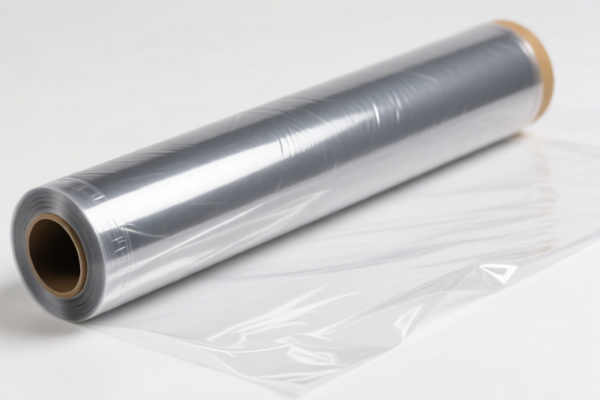
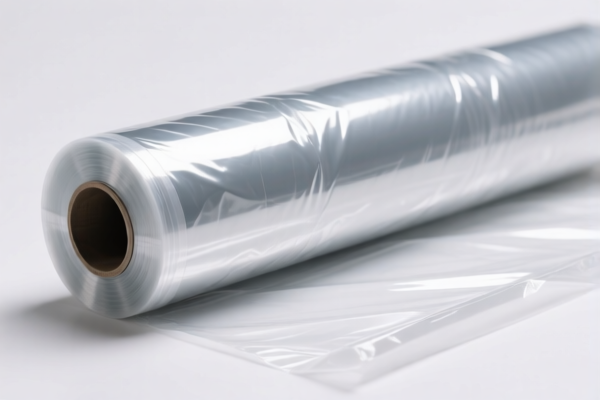
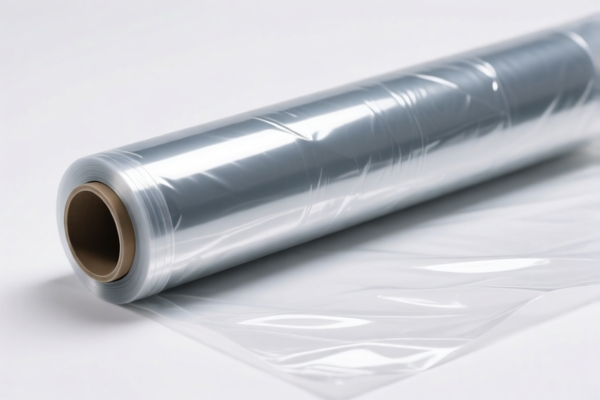
AI Analysis
🎬 Color Wide Width Film (Industrial Grade)
🌐 HS Code Reference & Customs Clearance Guide | 2026 Latest Tariff Analysis | Professional Strategy for Industrial Materials
📌 I. Product Definition & Classification: Decoding "Color Wide Width Film"
Color Wide Width Film (Industrial Grade) refers to large-scale, colored plastic or metallic films used in industrial applications such as packaging, construction, agriculture, or electronics. The key distinguishing factors are: 1. Form: "Film" indicates a flexible, flat sheet format. 2. Material: The term "Industrial Grade" implies a specific quality standard but does not explicitly define the base material. It requires inference: * Plastic (Polymer): Most common for industrial films (PE, PP, PET, etc.). * Aluminum (Metal): Common for high-barrier or heat-resistant industrial films (Aluminum Foil/Film). 3. Width: "Wide Width" suggests it is not a standard consumer roll but an intermediate or bulk industrial product.
⚠️ Critical Distinction Point:
- If the film is Plastic-based: It falls under Chapter 39 (Plastics). The specific HS code depends on whether it is coated, printed, or just plain film.
- If the film is Aluminum-based: It falls under Chapter 76 (Aluminum). Specifically, 7607 covers aluminum foil and similar forms.
- Risk: Misidentifying the material (e.g., declaring aluminum as plastic or vice versa) leads to severe customs penalties and duty discrepancies.
📦 II. HS Code Classification Details (Based on Provided Data)
Based on the provided dataset, the product is evaluated against two primary material hypotheses: Plastic and Aluminum.
| HS Code | Material Inference | Classification Logic | Total Duty Rate |
|---|---|---|---|
3919.90.50.60 |
Plastic | Flat Shape, Other: Matches "Film" morphology. "Industrial Grade" implies no specific consumer use, fitting the "Other" category under self-adhesive or non-adhesive plastic films. | 40.8% |
3921.90.40.10 |
Plastic | Other Plates/Sheets/Films: Matches "Film" shape. Plausible for industrial-grade plastic films not specifically coated or printed. No material conflict with Chapter 39. | 39.2% |
3921.90.40.90 |
Plastic | Other Plates/Sheets/Films: Similar to above. Fits "Other" category for industrial plastic films. No material conflict. | 39.2% |
7607.11.90.90 |
Aluminum | Aluminum Foil/Film: Matches "Film" morphology (non-backed). Assumes material is Aluminum based on industrial foil commonality. No conflict with Chapter 76. | 13.0% |
7607.11.60.90 |
Aluminum | Aluminum Foil/Film (Intermediate): Matches "Film" as a semi-finished/intermediate good. Fits "Industrial Grade" characteristics. | 40.3% |
🔍 Key Insight:
- Plastic Options (39xx): High duty rates (~39-40.8%) due to Section 301 and 122 Clause tariffs.
- Aluminum Option (7607.11.90.90): Significantly lower base duty (13.0%), but still subject to additional tariffs.
- Decision Factor: The actual material composition of the film is the single most critical determinant. You must verify if the "Color" comes from plastic dye (Plastic) or metallic coating (Aluminum).
💰 III. Detailed Tariff Breakdown (US Market Context)
✅ Applicable Country: United States (US)
✅ Origin: China (CN) (Inferred from "122 Clause" and typical Section 301 context)
✅ Effective Time: Current enforcement (2024-2026)
🎯 1. Plastic Film Cases (3919.90.50.60, 3921.90.40.10, 3921.90.40.90)
These codes fall under Chapter 39 (Plastics) and are subject to aggressive US trade policies.
| Tax Component | Details | Legal Basis |
|---|---|---|
| Base Tariff | 4.2% - 5.8% | Standard HTSUS rate |
| Section 301 Tariff | +25.0% | List 4A/B/C/D (China-specific) |
| 122 Clause Tariff | +10.0% | USMCA/Trade Enforcement Clause (often applied to specific plastic categories or general enforcement) |
| Total Effective Duty | 39.2% - 40.8% | Sum of Base + Sec 301 + 122 |
📌 Explanation:
- The 25% is the standard Section 301 tariff on Chinese plastic articles.
- The 10% "122 Clause" is an additional enforcement tariff often applied to prevent transshipment or to specific product categories.
- Total Cost Impact: For a $10,000 shipment, duty costs are $3,920 - $4,080.
🎯 2. Aluminum Film Case (7607.11.90.90)
This code falls under Chapter 76 (Aluminum).
| Tax Component | Details | Legal Basis |
|---|---|---|
| Base Tariff | 3.0% | Standard HTSUS rate for aluminum foil |
| Section 301 Tariff | 0.0% | Note: Some aluminum products have different 301 rates; here listed as 0% in data |
| 122 Clause Tariff | +10.0% | Applied under specific trade enforcement measures |
| Total Effective Duty | 13.0% | Sum of Base + 122 Clause |
📌 Explanation:
- This is the most cost-effective option if the film is indeed Aluminum.
- However, if the film is plastic, declaring it as Aluminum is fraud and leads to heavy penalties.
🎯 3. Aluminum Film Case (Intermediate) (7607.11.60.90)
| Tax Component | Details | Legal Basis |
|---|---|---|
| Base Tariff | 5.3% | Higher base rate for specific intermediate aluminum forms |
| Section 301 Tariff | 25.0% | Standard Section 301 on Chinese aluminum |
| 122 Clause Tariff | +10.0% | Additional enforcement tariff |
| Total Effective Duty | 40.3% | Sum of Base + Sec 301 + 122 |
📌 Note: This intermediate aluminum code is more expensive than
7607.11.90.90due to the higher base rate and full Section 301 application.
🛠️ IV. Customs Clearance Practical Advice
✅ 1. Essential Documentation (Must-Have)
| Document | Requirement | Purpose |
|---|---|---|
| Material Safety Data Sheet (MSDS) | ✔️ Mandatory | To prove material composition (Plastic vs. Aluminum). |
| Product Specification Sheet | ✔️ Mandatory | Details: Width, Thickness, Color, Application, Weight per roll. |
| Commercial Invoice | ✔️ Mandatory | Must clearly state: "Industrial Grade [Plastic/Aluminum] Film". |
| Packing List | ✔️ Mandatory | Include net/gross weight, number of rolls, core diameter. |
| Certificate of Origin (CO) | ✔️ Recommended | To verify Chinese origin and apply correct Section 301 rates. |
| Photos of Product & Label | ✔️ Highly Recommended | Show the film roll, any printing, and manufacturer label. |
✅ 2. Critical Clearance Tips
🔥 "Material First, Form Second, Declare Accurate, Avoid Seizure!"
| Scenario | Correct Declaration | Common Mistake | Consequence |
|---|---|---|---|
| Plastic Film | 3921.90.40.10 or 3919.90.50.60 |
Declaring as Aluminum | Fraud Penalty + 40% Duty Back Pay + Fine |
| Aluminum Film | 7607.11.90.90 |
Declaring as Plastic | Overpayment (Lost Savings) |
| Mixed Material | Split Shipment / Dual Declaration | Single HS Code | Confusion & Delay |
| Wide Width | Specify width in invoice | Omitting dimensions | Customs Request for More Info (RFI) |
✅ 3. Special Considerations for "Industrial Grade"
- No Consumer Packaging: Since it's industrial grade, it likely lacks retail packaging. Ensure the invoice reflects "Bulk Industrial Packaging" to avoid consumer product scrutiny.
- Colorant Composition: If the "Color" is achieved via metallic pigments (aluminum flakes), the product may still be considered plastic. If it's a thin aluminum layer, it's aluminum. Provide a lab test report if possible.
- Adhesive Status: If the film is self-adhesive,
3919is more likely. If it's non-adhesive,3921is more appropriate.
🌍 V. Global Market Comparison (2026 Outlook)
| Country/Region | Recommended HS Code | Est. Duty Rate (China Origin) | Key Certification | Notes |
|---|---|---|---|---|
| 🇺🇸 USA | 3921.90.40.10 (Plastic) or 7607.11.90.90 (Aluminum) |
39.2% (Plastic) / 13.0% (Aluminum) | None specific, but Section 301 applies | Highest risk due to 122 Clause + Sec 301 |
| 🇨🇳 China | 3921.90 or 7607.11 |
4.2% - 5.8% | CCC (if applicable) | No Section 301 |
| 🇪🇺 EU | 3921.90 or 7607.11 |
6.5% | REACH, RoHS | No 122 Clause |
| 🇬🇧 UK | 3921.90 or 7607.11 |
6.5% | UKCA | Post-Brexit rules apply |
📌 Conclusion:
- USA is the most challenging market due to dual tariffs (Section 301 + 122 Clause).
- Aluminum films have a significant cost advantage in the US market if correctly declared.
- Plastic films are heavily taxed; consider supply chain diversification if volumes are high.
📌 VI. Common Errors & Pitfalls (Blood & Tears Lessons)
❌ Error 1: Assuming all "Film" is Plastic.
👉 Consequence: If it's Aluminum, you pay 40% instead of 13%. Cost Increase: ~27%.
❌ Error 2: Declaring Aluminum Film as Plastic to avoid aluminum-specific quotas.
👉 Consequence: Customs will reject via X-ray/spectrometry. Seizure + Fine.
❌ Error 3: Ignoring the "122 Clause" in tariff calculations.
👉 Consequence: Underestimating duty by 10%, leading to cash flow issues.
❌ Error 4: Vague description "Industrial Film" on invoice.
👉 Consequence: Customs delays for material verification. Demurrage Charges.
✅ Correct Approach:
"Polyethylene Film, Industrial Grade, 24" Width, Color: Blue, Non-Adhesive, for Packaging Use, Model: XYZ, Made in China."
OR
"Aluminum Foil, Industrial Grade, 30" Width, Non-Backed, for Insulation Use, Model: ABC, Made in China."
🎯 VII. Conclusion: Precision is Profit
🎯 Key Takeaway:
🔹 "Plastic = 40% Duty. Aluminum = 13% Duty. Verify Material First!"
🔹 "122 Clause + Section 301 = High Barrier. Plan Ahead."
🔹 "Vague Descriptions = Delays. Be Specific."
📌 Pro Tip:
If you are unsure about the material, request a pre-import sample analysis from a lab to determine if it's polymer or metal. This small investment can save thousands in potential duties and penalties.
📣 Immediate Action:
📞 Contact a licensed customs broker with your product specs.
📄 Provide detailed material composition (MSDS/Spec Sheet).
🚀 Apply for an Advance Ruling if your shipment volume is high.
✨ Professional Customs Clearance Starts with Accurate Classification!
💼 Every percentage point of duty is a percentage point of your profit margin!
Customer Reviews
About HS Code Classification
The Harmonized System (HS) is an internationally standardized nomenclature developed by the World Customs Organization (WCO) to classify traded products. Over 200 countries use the HS system as the basis for customs tariffs, trade statistics, and import/export regulations.
Each HS code follows a hierarchical structure:
- Chapter (2 digits) — Broad category of goods (e.g., Chapter 84: Machinery and Mechanical Appliances)
- Heading (4 digits) — More specific grouping within the chapter
- Subheading (6 digits) — Internationally standardized breakdown, used by all WCO member countries
- National subdivisions (8-10 digits) — Country-specific extensions for further classification, such as US HTSUS 10-digit codes
Correct HS code classification is essential for smooth customs clearance, accurate duty payment, and compliance with trade regulations. Misclassification can lead to customs delays, overpayment of duties, or penalties.
When importing from CN to US, the applicable tariff rates may include:
- Most-Favored-Nation (MFN) rate — The standard duty rate applied to WTO members
- General rate — Applied to countries without trade agreements
- Trade remedy duties — Additional tariffs such as Section 301 (anti-dumping), Section 232 (national security), or countervailing duties
The information provided on this page is for reference purposes only. For official classification, please consult with your local customs authority or a licensed customs broker.