Colored Film (Customizable Substrate Thickness)
CN → US| HS Code | Tariff Rate | Origin | Destination | Doc |
|---|---|---|---|---|
| 3702530060 | 38.7% | CN | US | Official Doc |
| 3702520160 | 38.7% | CN | US | Official Doc |
| 3702550030 | 35.0% | CN | US | Official Doc |
| 3702550060 | 35.0% | CN | US | Official Doc |
| 3920992000 | 39.2% | CN | US | Official Doc |
Product Images
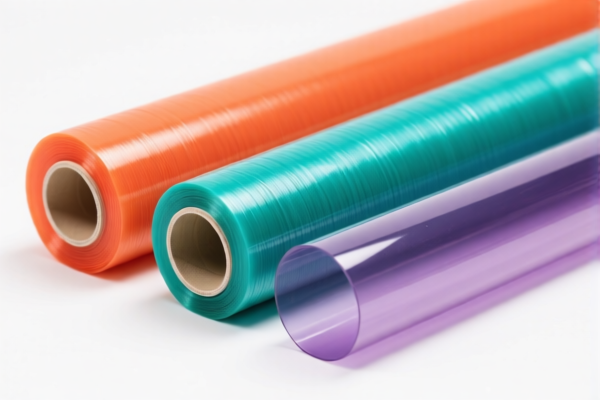
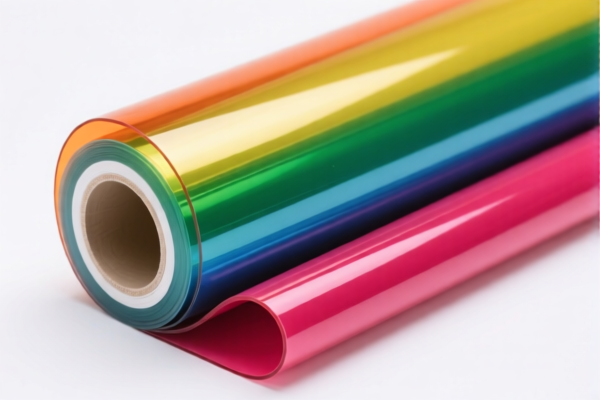
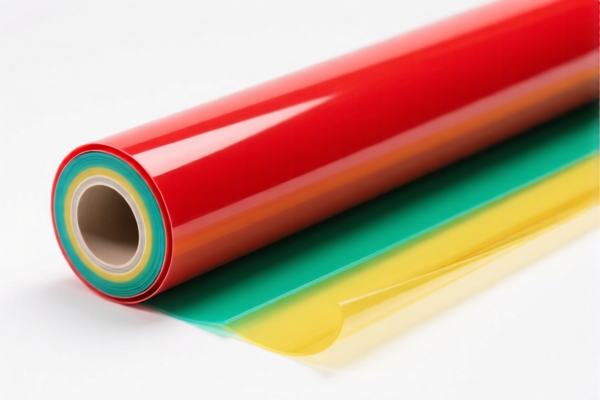

AI Analysis
🎞️ Colored Film (Customizable Substrate Thickness)
🌐 HS Code Reference & Customs Clearance Guide | 2026 Latest Tariff Analysis | Professional Strategy
📌 Part 1: Product Definition & Classification: What Exactly is "Colored Film"?
"Colored Film" is a broad term in international trade that can refer to photochemical感光 materials (used in photography/imaging) or polymer films (plastic sheets used for packaging, optical, or industrial applications). The classification hinges entirely on the material composition and specific use.
The input "Customizable Substrate Thickness" suggests a material property rather than a specific photographic format (like 35mm roll). This ambiguity creates three distinct classification paths based on the data provided:
- Photochemical Path: If it is light-sensitive film for imaging.
- Plastic/Polymer Path: If it is a non-sensitive colored plastic sheet.
- Uncertainty: Without knowing if it is "light-sensitive," the classification splits.
⚠️ Key Distinction Point:
- Is it light-sensitive (requires darkroom/special handling)? → Chapter 37 (Photographic)
- Is it non-sensitive plastic (used for wrapping, display, or industrial coating)? → Chapter 39 (Plastics)
📦 Part 2: HS Code Classification Details (2026 Latest Tariff Authority)
Based on the provided data, here are the five possible HS Codes, grouped by logical category:
📷 Category A: Photochemical Films (Chapter 37)
Assumes the product is light-sensitive film for photography or imaging.
| HS Code | Product Description | Application Scenario | Tax Rate |
|---|---|---|---|
3702.53.00.60 |
Other color photographic film (unexposed), >105mm wide | General color film, not specified width, falls under "Other" | 38.7% |
3702.52.01.60 |
Color photographic film (unexposed), other than reversal film, ≤105mm wide | Standard consumer color negative film | 38.7% |
3702.55.00.30 |
Reversal color photographic film (Slide Film) | Professional slide film, specialized imaging | 35.0% |
3702.55.00.60 |
Other color photographic film (unexposed), including custom lengths | Custom-length film, non-standard sizes, "Other" category | 35.0% |
🔍 Analysis:
- Codes ending in.60under3702.53and3702.55carry a 35.0% total tax.
- Codes under3702.52(negative film) carry a higher 38.7% total tax due to higher base duties.
- "Customizable Substrate Thickness" does not inherently conflict with photochemical classification if the product is indeed light-sensitive.
🧪 Category B: Plastic/Polymer Films (Chapter 39)
Assumes the product is a non-sensitive colored plastic film.
| HS Code | Product Description | Application Scenario | Tax Rate |
|---|---|---|---|
3920.99.20.00 |
Other plates, sheets, film, foil, and strip, of plastics | Colored plastic sheets, packaging films, non-photo plastics | 39.2% |
🔍 Analysis:
- This code is a "fallback" category for plastic films not specified elsewhere.
- It carries the highest total tax rate of 39.2% in the dataset.
- Critical Risk: If the product is actually photochemical film but declared as plastic, this is a misclassification leading to severe penalties.
💰 Part 3: 2026 Tariff Rate Breakdown (Detailed & Transparent)
✅ Applicable Country: USA (US)
✅ Origin: China (CN)
✅ Effective Date: Post-November 2025 (Including subsequent imports)
🎯 Scenario 1: Photochemical Film (HS 3702.55.00.30 / .60)
Recommended if the product is genuine photographic/imaging film.
| Item | Detail |
|---|---|
| Base Duty | 0.0% |
| Section 301 Duty (USITC) | +25.0% |
| IEEPA Surcharge (China) | +10.0% |
| Total Effective Tax | 35.0% |
| Calculation | CIF Value × 35% |
| De Minimis Exemption | ❌ NOT Applicable |
| Legal Basis | IEEPA:9903.01.25 → USITC:3702.55 → FOOTNOTE:9903.88.01 |
📌 Why 35%?
- The base duty for certain photographic films is 0%, making the added tariffs the sole driver.
- Section 301 (25%) is applied to all Chinese-origin Chapter 37 goods.
- IEEPA (10%) is a separate surcharge on Chinese imports.
🎯 Scenario 2: Photochemical Film (HS 3702.52.01.60 / 3702.53.00.60)
If classified as negative film or wider format.
| Item | Detail |
|---|---|
| Base Duty | 3.7% |
| Section 301 Duty (USITC) | +25.0% |
| IEEPA Surcharge (China) | +10.0% |
| Total Effective Tax | 38.7% |
| Calculation | CIF Value × 38.7% |
| De Minimis Exemption | ❌ NOT Applicable |
📌 Why 38.7%?
- These codes have a 3.7% base duty, which is also subject to the 25% and 10% surcharges, resulting in a higher total burden.
🎯 Scenario 3: Plastic Film (HS 3920.99.20.00)
If classified as non-sensitive plastic.
| Item | Detail |
|---|---|
| Base Duty | 4.2% |
| Section 301 Duty (USITC) | +25.0% |
| IEEPA Surcharge (China) | +10.0% |
| Total Effective Tax | 39.2% |
| Calculation | CIF Value × 39.2% |
| De Minimis Exemption | ❌ NOT Applicable |
📌 Why 39.2%?
- Highest total tax rate in the dataset.
- Risk: High likelihood of customs audit if product is mislabeled.
🛠️ Part 4: Customs Clearance Practical Advice
✅ 1. Critical Documentation Checklist
| Document | Mandatory? | Notes |
|---|---|---|
| ✅ Product Specification Sheet | ✔️ | Must specify: Light-sensitive? Yes/No. Material (Acetate, Polyester, Cellulose Triacetate?). |
| ✅ Material Safety Data Sheet (MSDS) | ✔️ | If plastic, confirm polymer type. If photochemical, confirm emulsion type. |
| ✅ Product Photos | ✔️ | Show packaging (dark boxes imply photochemical; clear rolls imply plastic). |
| ✅ Commercial Invoice | ✔️ | Use precise description: "Exposure-sensitive color photographic film" vs "Colored PET plastic film". |
| ✅ Origin Certificate | ✔️ | Required for US origin determination. |
| ✅ IEEPA Declaration | ✔️ | Confirm CN origin to trigger correct tariff codes. |
✅ 2. Strategic Recommendations for "Colored Film"
🎯 If it is PHOTO CHEMICAL FILM (Recommended for lower tax if possible):
- Choose HS 3702.55.00.30 or .60: These have a 35.0% total tax rate.
- Justification: Emphasize "Custom Length" and "Substrate Thickness" as variations of standard photographic film formats.
- Avoid HS 3702.52: Unless it is strictly negative film ≤105mm, the tax is higher (38.7%).
⚠️ If it is PLASTIC FILM:
- Accept HS 3920.99.20.00: Tax is 39.2%.
- Risk Mitigation: Ensure the product is NOT light-sensitive. If it is, declaring it as plastic is customs fraud.
🚫 Common Mistakes to Avoid:
| Mistake | Consequence |
|---|---|
| Mislabeling Photo Film as Plastic | Customs may reclassify, leading to penalties, back taxes, and seizure. |
| Using "Film" without Material Spec | Customs will request additional info, causing delays. |
| Assuming De Minimis Exemption | ❌ Never. All these codes are subject to high tariffs and do not qualify for the $800 de minimis exemption. |
🌍 Part 5: Global Market Comparison (2026)
| Country | Recommended HS Code | Total Tax Rate (China Origin) | Key Requirement |
|---|---|---|---|
| 🇺🇸 USA | 3702.55.00.60 (Photo) |
35.0% | IEEPA Declaration, USITC Footnote |
| 🇪🇺 EU | 3702.55 (Photo) |
~8-12% (Base) | CE, RoHS, REACH |
| 🇨🇳 China | 3702.55 (Photo) |
~6-10% (Base) | CCC (if applicable), Standard GB |
| 🇯🇵 Japan | 3702.55 (Photo) |
~6-8% (Base) | PSE (if electronic), Safety Standards |
📌 Note: The US has the highest effective tax burden due to Section 301 and IEEPA surcharges.
📌 Part 6: Final Verdict & Action Plan
🎯 Which HS Code Should You Choose?
-
Step 1: Confirm Product Nature
- Is it light-sensitive? → Go to Chapter 37.
- Is it non-sensitive plastic? → Go to Chapter 39.
-
Step 2: Select Specific Code
- If Photochemical:
- Preferred:
3702.55.00.60(Total Tax: 35.0%) - Reason: "Other" category, flexible for custom lengths/thicknesses, lower base duty.
- Preferred:
- If Plastic:
- Only Choice:
3920.99.20.00(Total Tax: 39.2%) - Reason: Fallback code for unspecified plastic films.
- Only Choice:
- If Photochemical:
🚀 Immediate Action Items
- Update Product Description:
- Bad: "Colored Film"
- Good: "Unexposed Color Photographic Film, Custom Length, Polyester Substrate, 0.175mm Thickness"
- Prepare IEEPA Documentation: Ensure all paperwork reflects Chinese origin.
- Budget for Taxes: Plan for 35.0% (if photo) or 39.2% (if plastic) of CIF value.
- Consult a Customs Broker: Submit a Pre-Ruling Request to CBP if the product nature is ambiguous.
✨ Professional Clearance, Start with Precise Classification!
💼 Your bottom line depends on getting this right!
Customer Reviews
About HS Code Classification
The Harmonized System (HS) is an internationally standardized nomenclature developed by the World Customs Organization (WCO) to classify traded products. Over 200 countries use the HS system as the basis for customs tariffs, trade statistics, and import/export regulations.
Each HS code follows a hierarchical structure:
- Chapter (2 digits) — Broad category of goods (e.g., Chapter 84: Machinery and Mechanical Appliances)
- Heading (4 digits) — More specific grouping within the chapter
- Subheading (6 digits) — Internationally standardized breakdown, used by all WCO member countries
- National subdivisions (8-10 digits) — Country-specific extensions for further classification, such as US HTSUS 10-digit codes
Correct HS code classification is essential for smooth customs clearance, accurate duty payment, and compliance with trade regulations. Misclassification can lead to customs delays, overpayment of duties, or penalties.
When importing from CN to US, the applicable tariff rates may include:
- Most-Favored-Nation (MFN) rate — The standard duty rate applied to WTO members
- General rate — Applied to countries without trade agreements
- Trade remedy duties — Additional tariffs such as Section 301 (anti-dumping), Section 232 (national security), or countervailing duties
The information provided on this page is for reference purposes only. For official classification, please consult with your local customs authority or a licensed customs broker.