Composite Board (under 1 sqm)
CN → US| HS Code | Tariff Rate | Origin | Destination | Doc |
|---|---|---|---|---|
| 6815190000 | 35.0% | CN | US | Official Doc |
| 6815994170 | 35.0% | CN | US | Official Doc |
| 3921905050 | 39.8% | CN | US | Official Doc |
| 3921904090 | 39.2% | CN | US | Official Doc |
Product Images
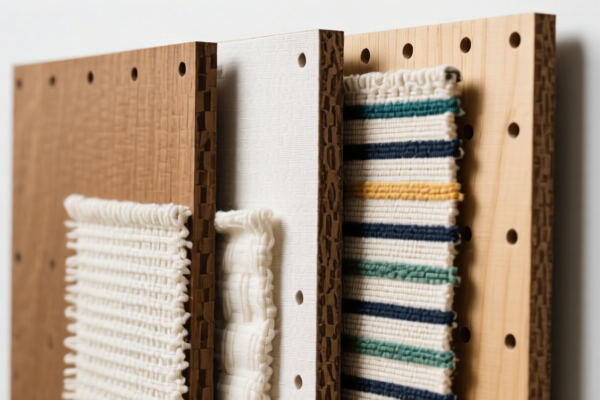
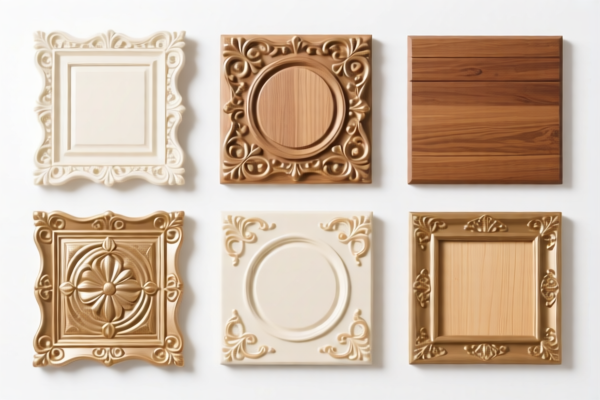


AI Analysis
🛠️ Composite Board (Under 1 sqm) – The Ultimate Clearance Guide
🌐 HS Code Reference & Clearance Strategy | 2026 Tax Rules | Professional Decoding
📌 One: What Exactly is "Composite Board" Under 1 sqm?
In international trade, the term "Composite Board" is dangerously ambiguous. It is not a single scientific category but a family of materials that can fall into radically different HS Codes depending on the core composition.
For a board under 1 sqm, size does not change the HS Code, but the material makeup (Plastic vs. Stone/Carbon vs. Bamboo/Wood) determines the Tax Rate, which can swing from 4.2% to 33.0%.
⚠️ Critical Decision Point:
- If it is Plastic-based (sheets/film) → HS 3921.90 (Tax: 4.2% or 29.8%)
- If it is Stone/Carbon/Graphite (non-electrical) → HS 6815 (Tax: 25.0%)
- If it is Wood/Bamboo Plywood (laminated) → HS 4412 (Tax: 33.0% for specific tropical woods)
🚨 You cannot use "Composite Board" as a description for customs clearance. It will trigger a "Missing Classification" seizure.
📦 Two: HS Code Breakdown (2026 Data Analysis)
Based on the exact product data provided for "Composite Board" variants, here are the four specific classifications you must choose from:
| HS Code | Material Core | Product Description | Tax Rate (Total) | Key Condition | | :--- | :--- | :--- | :--- :--- | | 3921.90.40.90 | Plastic (Flexible) | Other plates, sheets, film, foil of plastics (Flexible) | 4.2% | Must be Flexible (e.g., flexible composite sheeting). | | 3921.90.50.50 | Plastic (Rigid/Other) | Other plates, sheets, film of plastics (Other) | 29.8% | Rigid or non-flexible plastic composites. Heavy penalty! | | 6815.19.00.00 | Carbon/Graphite | Carbon fibers or graphite articles (Non-electrical) | 25.0% | High-tech carbon fiber composites, not used for electricity. | | 6815.99.41.70 | Stone/Mineral/Peat | Other articles of stone or mineral (including carbon fiber) | 25.0% | Stone-based composites, carbon fiber composites (non-electrical). | | 4412.31.48.50 | Bamboo/Tropical Wood | Plywood, Veneered Panels (Bamboo + Tropical Wood) | 33.0% | Bamboo core with tropical outer ply (Meranti, etc.), thin panels. | | 4412.33.32.65 | Hardwood (Non-conifer) | Plywood (Alder, Ash, Beech, Oak, etc.) | 33.0% | Non-coniferous wood core, thin panels, specific species list. |
🔍 The "1 sqm" Factor:
Note that the size "under 1 sqm" does not exempt you from these HS codes. However, it ensures the product fits the dimensions specified in the Wood (4412) codes (max 1.2m width / 2.2m length), but if you misidentify the material, the tax remains the same regardless of size.
💰 Three: 2026 Tariff Rate Deep Dive (The Cost Trap)
✅ Applicable Country: USA (US)
✅ Origin: China (CN)
✅ Effective Date: Current 2026 Tax Regime (301 + Base Tariffs)
🎯 Scenario A: Plastic Composite Board
| Item | Content |
|---|---|
| HS Code | 3921.90.40.90 (Flexible) vs. 3921.90.50.50 (Other/Rigid) |
| Base Duty | 4.2% (Flexible) / 4.8% (Other) |
| Section 301 (Add-on) | 0.0% (Flexible) / 25.0% (Other) |
| Total Tax | 4.2% (Flexible) vs. 29.8% (Rigid) |
| Risk | If you declare a rigid plastic board as flexible to save tax, US Customs will reject it immediately. |
🎯 Scenario B: Carbon/Stone Composite Board
| Item | Content |
|---|---|
| HS Code | 6815.19.00.00 or 6815.99.41.70 |
| Base Duty | 0.0% |
| Section 301 (Add-on) | 25.0% |
| Total Tax | 25.0% |
| Risk | High. Carbon fiber is a high-priority item for "Made in USA" competition. No base duty, but heavy 301 penalty. |
🎯 Scenario C: Bamboo/Wood Composite Board
| Item | Content |
|---|---|
| HS Code | 4412.31.48.50 (Bamboo) or 4412.33.32.65 (Hardwood) |
| Base Duty | 8.0% |
| Section 301 (Add-on) | 25.0% |
| Total Tax | 33.0% |
| Risk | Extremely High. This is the highest tax bracket in your data. Applies specifically to tropical woods (Meranti, Mahogany) or specific hardwoods (Beech, Oak) combined with bamboo or non-conifer. |
📌 Interpretation:
- The 33.0% rate is a "tax trap" for wood-based composites.
- The 29.8% rate is a "tax trap" for rigid plastic composites.
- The 4.2% rate is the only low-cost option, available only if the board is explicitly flexible plastic.
🛠️ Four: Clearance Practical Advice (The "How-To")
✅ 1. Material Declaration (The Most Critical Step)
You must provide a Material Composition Sheet. * ❌ BAD: "Composite Board" (Too vague). * ✅ GOOD: "50% PVC, 30% Glass Fiber, 20% Resin - Flexible Sheet" (For HS 3921.90.40.90). * ✅ GOOD: "Carbon Fiber Reinforced Polymer (CFRP) - Non-conductive" (For HS 6815). * ✅ GOOD: "Bamboo Core with Meranti Veneer (3.6mm thick)" (For HS 4412).
✅ 2. Classification Strategy (Avoiding the 33% Trap)
| Situation | Correct HS Code | Why? |
|---|---|---|
| Flexible Plastic Sheet | 3921.90.40.90 |
Lowest tax (4.2%). Must be bendable. |
| Rigid Plastic Panel | 3921.90.50.50 |
High tax (29.8%). Common for rigid composites. |
| Carbon Fiber Sheet | 6815.19.00.00 |
Medium tax (25.0%). Verify it's non-electrical. |
| Bamboo/Tropical Wood | 4412.31.48.50 |
Highest Tax (33.0%). Verify exact wood species. |
🔥 Pro Tip: If your "Composite Board" is actually a hardwood plywood (e.g., Beech + Birch), it MUST go to
4412.33.32.65(33.0%). Do not try to hide it under "Plastic" or "Carbon" to avoid tax. Customs will perform a chemical/physical test and fine you.
✅ 3. Documentation Checklist
- Technical Data Sheet (TDS): Must explicitly state: "Composition: X% Wood, Y% Plastic, Z% Resin."
- Photos: Must show the cross-section (layers) to prove the core material (Bamboo vs. Wood vs. Plastic).
- Application: "Is it used for flooring, signage, or industrial parts?" (Differentiates 6815 from 4412).
🌍 Five: Global Market Comparison (2026)
| Market | Recommended HS Code | Est. Duty (China Origin) | Notes |
|---|---|---|---|
| 🇺🇸 USA | Varies (See above) | 4.2% – 33.0% | High Section 301 (25% add-on) applies to almost all composites. |
| 🇪🇺 EU | Varies | 0% – 5% (Base) | No Section 301. Lower taxes, but strict REACH compliance needed for plastics. |
| 🇨🇳 China | Varies | 0% – 4.8% | Base rates only. No 25% add-on. |
📌 Conclusion:
The US market is the most expensive for "Composite Board" due to the 25% Section 301 surcharge on almost every category in your data.
The only low-cost route is if your product is Flexible Plastic (3921.90.40.90) at 4.2%.
📌 Six: Common Mistakes & Pitfalls
❌ Mistake 1: Calling it "Plastic" when it's "Wood"
👉 Result: If you declare Bamboo/Wood under 3921.90, Customs will audit. If found guilty, you face 33.0% + penalties + seizure.
❌ Mistake 2: Ignoring the "Flexible" Requirement
👉 Result: To get 4.2%, the board MUST be flexible. If it's a stiff board, it falls to 29.8%. Don't gamble on "flexible" claims for stiff boards.
❌ Mistake 3: Vague "Composite" Description
👉 Result: Customs will assign the highest tax code they can find (likely 25% or 33%) because they cannot verify the material composition.
🎯 Seven: Final Verdict & Action Plan
For "Composite Board (Under 1 sqm)": 1. Identify Core Material: Is it Plastic? Carbon? Stone? Bamboo? Wood? 2. Check Flexibility: Is the plastic flexible? (Only way to get 4.2%). 3. Verify Wood Species: If wood, is it tropical (Meranti/Mahogany) or hardwood (Beech/Oak)? Both are 33.0%. 4. Select HS Code: * Flexible Plastic → 3921.90.40.90 (4.2%) * Rigid Plastic → 3921.90.50.50 (29.8%) * Carbon/Stone → 6815.19.00.00 or 6815.99.41.70 (25.0%) * Bamboo/Wood → 4412.31.48.50 or 4412.33.32.65 (33.0%)
🚀 Strategy:
"If your composite board is flexible plastic, claim 3921.90.40.90 immediately. If it is wood or carbon, prepare for 25%–33% tax and ensure your paperwork proves the material composition to avoid misclassification fines."
✨ Professional Clearance Start!
💼 Don't guess the HS Code. Test the material. Save the tax.
Customer Reviews
About HS Code Classification
The Harmonized System (HS) is an internationally standardized nomenclature developed by the World Customs Organization (WCO) to classify traded products. Over 200 countries use the HS system as the basis for customs tariffs, trade statistics, and import/export regulations.
Each HS code follows a hierarchical structure:
- Chapter (2 digits) — Broad category of goods (e.g., Chapter 84: Machinery and Mechanical Appliances)
- Heading (4 digits) — More specific grouping within the chapter
- Subheading (6 digits) — Internationally standardized breakdown, used by all WCO member countries
- National subdivisions (8-10 digits) — Country-specific extensions for further classification, such as US HTSUS 10-digit codes
Correct HS code classification is essential for smooth customs clearance, accurate duty payment, and compliance with trade regulations. Misclassification can lead to customs delays, overpayment of duties, or penalties.
When importing from CN to US, the applicable tariff rates may include:
- Most-Favored-Nation (MFN) rate — The standard duty rate applied to WTO members
- General rate — Applied to countries without trade agreements
- Trade remedy duties — Additional tariffs such as Section 301 (anti-dumping), Section 232 (national security), or countervailing duties
The information provided on this page is for reference purposes only. For official classification, please consult with your local customs authority or a licensed customs broker.