Cork Granules (Horticultural Use)
CN → US| HS Code | Tariff Rate | Origin | Destination | Doc |
|---|---|---|---|---|
| 4501904000 | 35.0% | CN | US | Official Doc |
| 4501902000 | 35.0% | CN | US | Official Doc |
Product Images
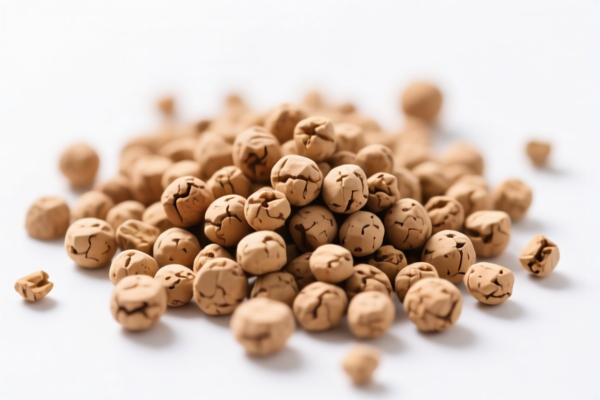
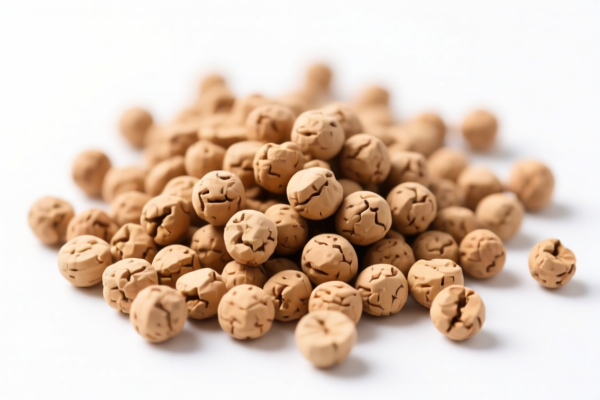
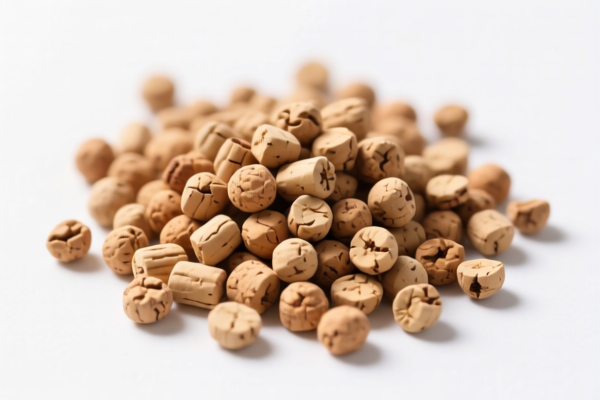
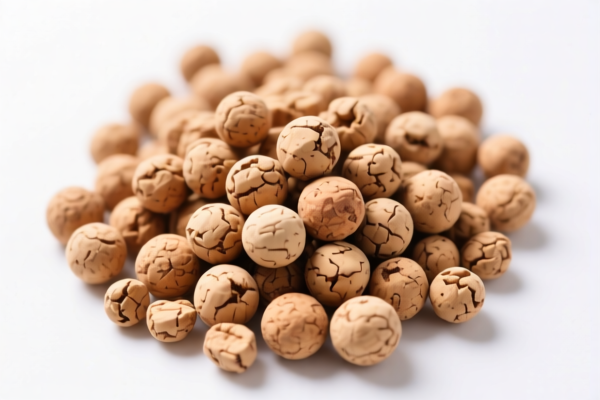
AI Analysis
🌳 Cork Granules (Horticultural Use)
🌐 HS Code Reference & Clearance Guide | 2026 Latest Tariff Analysis | Professional Import Strategy
📌 Part 1: Product Definition & Classification: Do You Really Understand "Cork Granules"?
Cork granules, particularly those intended for horticultural use (such as orchid potting mix, soil aeration, or mulch), are derived from the bark of the cork oak (Quercus suber). In international trade, the classification depends strictly on the physical state and processing level of the cork.
While "natural cork" (blocks) is classified under 4501.10, waste cork and processed cork (granules) fall under Chapter 45, Heading 4501.
Key Distinction:
- Raw Cork Blocks/Planks: 4501.10
- Waste Cork (Shavings/Sponge waste): 4501.90.20.00
- Crushed, Granulated, or Ground Cork: 4501.90.40.00
⚠️ Critical Note for Horticultural Use:
Most commercial "cork granules" for planting are either waste cork (from stopper manufacturing) or granulated cork. Even if marketed as "horticultural grade," if the physical form is granulated, it typically falls under4501.90.40.00. If it is simply shavings or sponge waste without being crushed/granulated, it may fall under4501.90.20.00.
For "Granules," the default and most common classification is4501.90.40.00.
📦 Part 2: HS Code Classification Details (Based on Provided Data)
| HS Code | Product Description | Key Characteristics | Tax Rate (China to US) |
|---|---|---|---|
4501.90.40.00 |
Crushed, granulated or ground cork | Includes cork granules used in horticulture, landscaping, or insulation. Physically processed into small particles. | 25.0% |
4501.90.20.00 |
Waste cork | Cork shavings, sponge waste, or unprocessed waste from cork stopper manufacturing. Not yet crushed/granulated. | 25.0% |
🔍 Important:
- The provided data does not include a 0% or low-tariff option. Both subheadings carry a 25% total tax.
- The distinction between20(Waste) and40(Granulated) is physical form, not end-use.
- Horticultural use does not grant an automatic exemption from the 25% tariff under the provided data.
💰 Part 3: 2026 Tariff Rate Breakdown (Detailed)
✅ Applicable Country: United States (US)
✅ Origin: China (CN)
✅ Effective Date: As per data, 25.0% total tax
✅ Breakdown:
- Base Tariff: 0.0%
- Additional Tariff (Section 301/IEEPA): 25.0%
- Total Effective Rate: 25.0%
🎯 1. 4501.90.40.00 — Crushed, Granulated, or Ground Cork (Most Likely for "Granules")
| Item | Detail |
|---|---|
| Base Duty | 0.0% |
| Additional Duty | +25.0% |
| Total Tax | 25.0% |
| De Minimis Exemption? | ❌ No (High-risk category for trade remedies) |
| Legal Basis | Section 301 / IEEPA provisions applying to Chinese-origin goods |
📌 Explanation:
- Even though the base duty for cork products is 0%, the 25% additional tariff applies due to US trade policy on Chinese goods.
- This is a flat 25% on the CIF (Cost, Insurance, Freight) value.
- No优惠税率 (Preferential Rate) is available for horticultural use under this classification.
🎯 2. 4501.90.20.00 — Waste Cork
| Item | Detail |
|---|---|
| Base Duty | 0.0% |
| Additional Duty | +25.0% |
| Total Tax | 25.0% |
| De Minimis Exemption? | ❌ No |
| Legal Basis | Same as above |
📌 Explanation:
- If your product is unprocessed waste (shavings), it still incurs 25%.
- Misclassification Risk: Do not declare "granules" as "waste" to avoid scrutiny. Customs looks at physical form, not just the label.
🛠️ Part 4: Customs Clearance Practical Advice
✅ 1. Documentation Checklist (Essential)
| Document | Required? | Purpose |
|---|---|---|
| ✅ Commercial Invoice | ✔️ | Must clearly state: "Cork Granules for Horticultural Use" and HS Code 4501.90.40.00 |
| ✅ Packing List | ✔️ | Weight, volume, and packaging details |
| ✅ Product Specification | ✔️ | Describe particle size (e.g., 1-5mm), origin (Cork Oak), and processing method |
| ✅ Photo of Product | ✔️ | Show granule size and packaging |
| ✅ Phytosanitary Certificate | ✔️ | Critical for Horticultural Products: Proof that cork is free from pests/diseases |
| ✅ ISPM 15 Marking (if wooden pallets) | ✔️ | If shipped on wood pallets, ensure they are heat-treated |
✅ 2. Classification Strategy (Key Tips)
| Scenario | Correct HS Code | Reason |
|---|---|---|
| Commercial Cork Granules (1-10mm) | 4501.90.40.00 |
Physical form is "granulated" |
| Cork Shavings/Sponge Waste | 4501.90.20.00 |
Physical form is "waste," not granulated |
| Whole Cork Blocks | 4501.10.00.00 |
Not applicable for granules |
🔥 Golden Rule:
"Form Dictates Code, Not Use."
Even if used for orchids, if it’s granulated, use4501.90.40.00. If you declare it as "Waste" (4501.90.20.00) but it’s clearly granulated, customs may reject it or reclassify it, causing delays.
✅ 3. Common Mistakes & Pitfalls
❌ Mistake 1: Declaring as "Natural Cork" (4501.10)
👉 Consequence: Rejected by customs because 4501.10 is for raw blocks, not granules.
❌ Mistake 2: Claiming "Horticultural Use" for tariff exemption
👉 Consequence: No such exemption exists for cork under the provided data. Still 25%.
❌ Mistake 3: Ignoring Phytosanitary Requirements
👉 Consequence: Customs may hold or destroy the shipment for pest control reasons.
✅ Correct Declaration Example:
"Cork Granules, Granulated, for Horticultural Use, HS Code 4501.90.40.00, Origin: Portugal, 25% Duty Applicable"
🌍 Part 5: Global Market Comparison (2026)
| Country | HS Code | Tariff Rate | Notes |
|---|---|---|---|
| 🇺🇸 USA | 4501.90.40.00 |
25% | Additional tariff applies. No exemption for horticultural use. |
| 🇨🇳 China | 4501.90.40.00 |
0% - 5% | Varies by specific subheading. Lower import tax for Chinese importers. |
| 🇪🇺 EU | 4501.90.90 |
0% | Generally duty-free for cork products in EU. |
| 🇬🇧 UK | 4501.90.90 |
0% | Post-Brexit, generally 0% for cork granules. |
📌 Conclusion:
- USA is the most expensive market for importing cork granules from China due to the 25% additional tariff.
- If sourcing from Portugal, Spain, or Italy, check for GSP or bilateral agreements that might reduce tariffs.
- China-to-USA trade carries a high cost burden for horticultural cork.
📌 Part 6: Final Recommendations
💡 Cost-Saving Tips:
- Verify Origin: If cork is sourced from non-China countries (e.g., Portugal), check if it qualifies for exemptions from the 25% tariff.
- Pre-Clearance Ruling: Apply for an Advance Ruling from US Customs to confirm the HS Code and duty rate.
- Phytosanitary Compliance: Ensure ISPM 15 compliance and obtain a Phytosanitary Certificate to avoid delays.
- Packaging: Use palletized and securely wrapped shipments to prevent contamination and ensure easy inspection.
⚠️ Warning:
- Do not under-declare value: Customs may audit and impose penalties.
- Do not misclassify: Declaring granules as "waste" to save time is risky. Granulated =
4501.90.40.00.
🎯 Part 7: Summary & Action Plan
🎯 Key Takeaways:
🔹 HS Code:
4501.90.40.00(Granulated) or4501.90.20.00(Waste)
🔹 Total Tax: 25.0% (0% Base + 25% Additional)
🔹 Critical Doc: Phytosanitary Certificate
🔹 No Exemption: Horticultural use does not reduce the 25% tariff.
📌 Pro Tip:
If you are importing large volumes, consider consolidating shipments or exploring third-country transshipment (if legally compliant) to optimize logistics, but always declare the true origin to avoid fraud penalties.
📣 Immediate Action:
📞 Contact a Customs Broker + Prepare Phytosanitary Certificate + Confirm HS Code
4501.90.40.00
🚀 Ensure Smooth Clearance for Your Horticultural Cork Granules!
✨ Accurate Classification Saves Money!
💼 25% is 25% — Plan Your Budget Accordingly!
Customer Reviews
About HS Code Classification
The Harmonized System (HS) is an internationally standardized nomenclature developed by the World Customs Organization (WCO) to classify traded products. Over 200 countries use the HS system as the basis for customs tariffs, trade statistics, and import/export regulations.
Each HS code follows a hierarchical structure:
- Chapter (2 digits) — Broad category of goods (e.g., Chapter 84: Machinery and Mechanical Appliances)
- Heading (4 digits) — More specific grouping within the chapter
- Subheading (6 digits) — Internationally standardized breakdown, used by all WCO member countries
- National subdivisions (8-10 digits) — Country-specific extensions for further classification, such as US HTSUS 10-digit codes
Correct HS code classification is essential for smooth customs clearance, accurate duty payment, and compliance with trade regulations. Misclassification can lead to customs delays, overpayment of duties, or penalties.
When importing from CN to US, the applicable tariff rates may include:
- Most-Favored-Nation (MFN) rate — The standard duty rate applied to WTO members
- General rate — Applied to countries without trade agreements
- Trade remedy duties — Additional tariffs such as Section 301 (anti-dumping), Section 232 (national security), or countervailing duties
The information provided on this page is for reference purposes only. For official classification, please consult with your local customs authority or a licensed customs broker.