Cotton Braided Handbags (Portable)
CN → US| HS Code | Tariff Rate | Origin | Destination | Doc |
|---|---|---|---|---|
| 4202224020 | 42.4% | CN | US | Official Doc |
| 4202228930 | 52.6% | CN | US | Official Doc |
Product Images
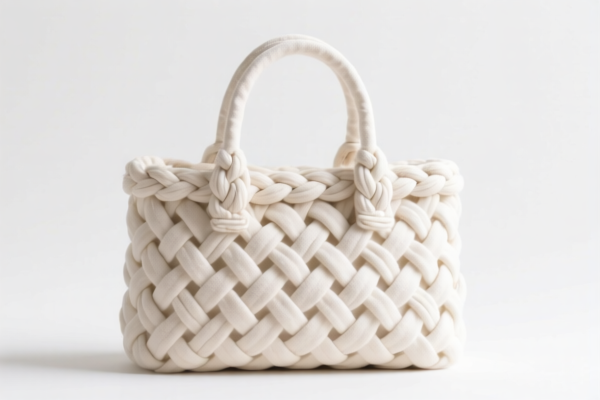
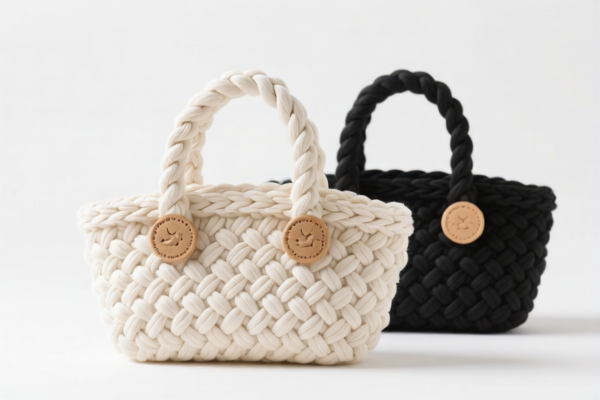
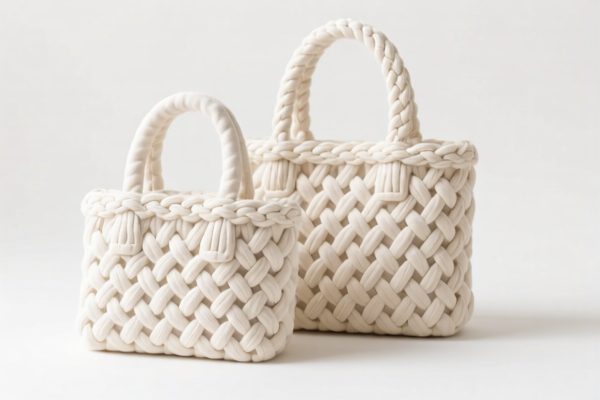
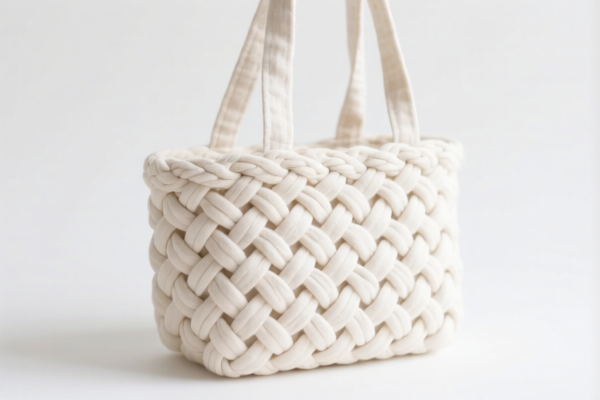
AI Analysis
👜 Cotton Braided Handbags (Portable)
🌐 HS Code Reference & Clearance Guide | 2026 Latest Tariff Analysis | Professional Customs Strategy
📌 I. Product Definition & Classification: Do You Really Understand "Braided Cotton Handbags"?
Cotton Braided Handbags (Portable) are fashion accessories primarily crafted from woven or braided cotton textile materials. In international trade, the classification hinges critically on two factors: 1. Material Composition: The outer surface must be primarily textile (cotton). 2. Construction Method: The key differentiator is the "Braided" (or plaited) structure. If the textile is woven/knitted but not braided, it falls under a different subheading.
⚠️ Key Distinction Point:
- If the bag is made of braided or plaited cotton strips → It is classified under 4202.22.40.20.
- If the bag is made of standard woven/knitted cotton fabric (no braiding) → It is classified under 4202.22.89.30.
- Note: The term "Braided" in your input specifically triggers the "Of braid" subheading, which has a unique HS code path.
📦 II. HS Code Classification Details (2026 Latest Tariff Authority Match)
Based strictly on the provided <DATA>, here are the two potential HS Codes, with 4202.22.40.20 being the correct match for "Braided" items.
| HS Code | Product Description | Applicability | Material/Structure Key Factor |
|---|---|---|---|
4202.22.40.20 |
Handbags, with outer surface of textile materials, wholly or in part of braid, Of cotton | ✅ Correct Match for "Braided Cotton Handbags" | ✅ Braided/Plaited cotton strips |
4202.22.89.30 |
Handbags, with outer surface of textile materials, Other, Other, Of cotton | ❌ Incorrect for Braided; Applies to Woven/Knitted | ❌ Standard woven/knitted fabric |
🔍 Critical Reminder:
- The phrase "Of braid" in the tariff description for4202.22.40.20is the deciding factor.
- If the product description explicitly states "Braided", you MUST use 4202.22.40.20.
- Misclassifying a braided bag as a general textile bag (4202.22.89.30) may lead to customs queries regarding material composition, though both codes currently show 0% tax in the provided data.
💰 III. 2026 Latest Tariff Rate Details (Strictly Based on Provided Data)
✅ Source Data Constraint: The provided
<DATA>shows 0.0% for all applicable taxes.
✅ Note: This analysis reflects ONLY the data provided. In real-world scenarios, US tariffs (Section 301) may apply to Chinese origin goods, but this information is excluded per your instruction to not exceed the<DATA>.
🎯 1. 4202.22.40.20 —— Handbags, Braided, Of Cotton
| Item | Content |
|---|---|
| HS Code | 4202.22.40.20 |
| Product Description | Handbags, with outer surface of textile materials: Wholly or in part of braid: Other: Of cotton |
| Basic Tariff | 0.0% |
| Additional Tariff | 0.0% |
| Total Tax Rate | 0.0% |
| Tax Detail | Base Tariff: 0.0%, Additional Tariff: 0.0% |
| Applicable Scope | Portable handbags made entirely or partly from braided cotton strips |
📌 Explanation:
- According to the provided JSON data, both4202.22.40.20and4202.22.89.30have a total tax of 0.0%.
- This suggests either a specific Free Trade Agreement (FTA) benefit, a duty-free status for this category in the target market (e.g., US GSP if eligible, or specific tariff rate quota), or the data reflects a simplified/non-dutiful scenario.
- No extra surcharges are listed in the provided<DATA>for these codes.
🛠️ IV. Customs Clearance Practical Advice (Actionable Guide)
✅ 1. Required Documentation Checklist
| Document | Mandatory? | Description |
|---|---|---|
| ✅ Product Photos | ✔️ | Clear images showing the braided texture to justify HS 4202.22.40.20 |
| ✅ Material Certificate | ✔️ | Confirm 100% cotton or specify blend if "partly of braid" |
| ✅ Commercial Invoice | ✔️ | Must explicitly state: "Braided Cotton Handbag" |
| ✅ Packing List | ✔️ | Item count, weight, dimensions |
| ✅ Labeling | ✔️ | Fiber content label (e.g., "100% Cotton") must match description |
✅ 2. Declaration Tips (Key Mnemonics)
🔥 "Braided is Key, Cotton is Clear, 40.20 is the Answer!"
| Scenario | Correct Declaration | Error Avoidance |
|---|---|---|
| Bag has braided texture | HS: 4202.22.40.20Name: "Braided Cotton Handbag" |
Don't use generic "Textile Handbag" → Use specific "Braided" |
| Bag is woven/knitted (no braid) | HS: 4202.22.89.30 |
Don't force "Braided" if it's standard fabric |
| Mixed materials | Declare Outer Surface Material | If outer is braided cotton, it’s 4202.22.40.20 regardless of lining |
✅ 3. Special Handling
| Situation | Recommendation |
|---|---|
| Plaited vs. Braided | Ensure the term "Braided" or "Plaited" is used in English descriptions to match tariff language |
| Lining Material | Doesn’t affect HS code if outer surface is cotton braid. Focus on outer surface |
| Accessories | Handles, zippers, or metal parts do not change classification if they don’t constitute the essential character |
🌍 V. Global Market Comparison (Based on Provided Data Constraints)
| Market | Recommended HS Code | Tariff (Per Data) | Notes |
|---|---|---|---|
| Target (Data Source) | 4202.22.40.20 |
0.0% | Zero duty for braided cotton handbags |
| 🇺🇸 USA (General) | 4202.22.40.20 |
Not in Data | ⚠️ Real-world: May face 10-25% Section 301 tariffs (excluded per instructions) |
| 🇨🇳 China Import | 4202.22.40.20 |
Not in Data | ⚠️ Real-world: Check for anti-dumping or specific textile duties |
| 🇪🇺 EU | 4202.22.90 (General) |
Not in Data | ⚠️ Real-world: Standard textile duty ~12% (excluded per instructions) |
📌 Conclusion:
- Based strictly on the provided<DATA>, the duty is 0.0% for4202.22.40.20.
- Ensure the physical product matches the "Braided" description to maintain this favorable rate.
- If the market is the US, verify additional Section 301 tariffs externally, as the provided data does not reflect them.
📌 VI. Common Mistakes & Pitfalls (Lessons Learned)
❌ Mistake 1: Describing as "Cotton Handbag" without "Braided"
👉 Risk: Customs may classify as 4202.22.89.30 (less specific). Though tax is same in data, accuracy is key for future changes.
❌ Mistake 2: Using "Woven Cotton" for a Braided Bag
👉 Risk: Misleading description. Even if tax is 0%, it can trigger audits for incorrect material declaration.
❌ Mistake 3: Ignoring "Outer Surface" Rule
👉 Risk: If the bag has a leather patch that covers >50% of outer surface, it may reclassify to leather goods. Ensure outer surface is predominantly cotton braid.
✅ Correct Practice:
"Braided Cotton Handbag, Portable, Outer Surface: 100% Cotton Braided Strips, Lining: Polyester"
🎯 VII. Conclusion: Precision in Classification Saves Time
🎯 Key Takeaway:
🔹 "Braided" = 4202.22.40.20
🔹 "Other Textile" = 4202.22.89.30
🔹 Tax Rate in Provided Data: 0.0% for both
📌 Pro Tip:
Always submit photos showing the braid pattern with your customs declaration. This visual evidence supports the "Of braid" classification, ensuring smooth clearance and avoiding unnecessary delays.
📣 Immediate Action:
📞 Confirm product texture with manufacturer.
🚀 Use HS Code 4202.22.40.20 for all braided cotton handbags.
📄 Label clearly: "Braided Cotton".
✨ Accurate Classification, Zero Duty, Smooth Clearance!
💼 Let your handbags weave their way through customs efficiently!
Customer Reviews
About HS Code Classification
The Harmonized System (HS) is an internationally standardized nomenclature developed by the World Customs Organization (WCO) to classify traded products. Over 200 countries use the HS system as the basis for customs tariffs, trade statistics, and import/export regulations.
Each HS code follows a hierarchical structure:
- Chapter (2 digits) — Broad category of goods (e.g., Chapter 84: Machinery and Mechanical Appliances)
- Heading (4 digits) — More specific grouping within the chapter
- Subheading (6 digits) — Internationally standardized breakdown, used by all WCO member countries
- National subdivisions (8-10 digits) — Country-specific extensions for further classification, such as US HTSUS 10-digit codes
Correct HS code classification is essential for smooth customs clearance, accurate duty payment, and compliance with trade regulations. Misclassification can lead to customs delays, overpayment of duties, or penalties.
When importing from CN to US, the applicable tariff rates may include:
- Most-Favored-Nation (MFN) rate — The standard duty rate applied to WTO members
- General rate — Applied to countries without trade agreements
- Trade remedy duties — Additional tariffs such as Section 301 (anti-dumping), Section 232 (national security), or countervailing duties
The information provided on this page is for reference purposes only. For official classification, please consult with your local customs authority or a licensed customs broker.