Cotton Handbag (Modern Style)
CN → US| HS Code | Tariff Rate | Origin | Destination | Doc |
|---|---|---|---|---|
| 6307909891 | 24.5% | CN | US | Official Doc |
| 6307908940 | 17.0% | CN | US | Official Doc |
| 4202224020 | 42.4% | CN | US | Official Doc |
| 4202228930 | 52.6% | CN | US | Official Doc |
| 6307909882 | 24.5% | CN | US | Official Doc |
Product Images
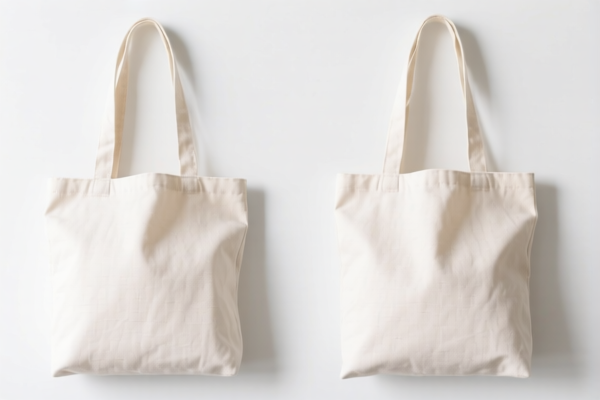
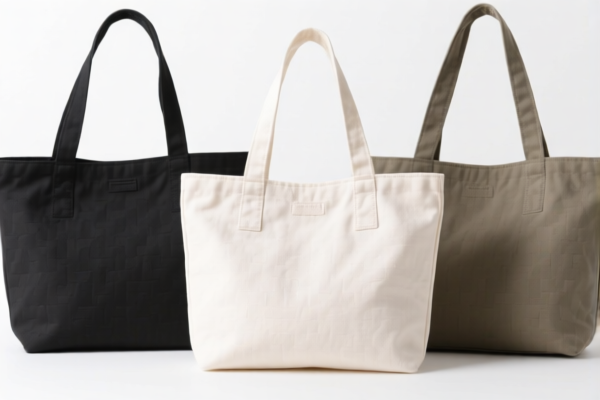
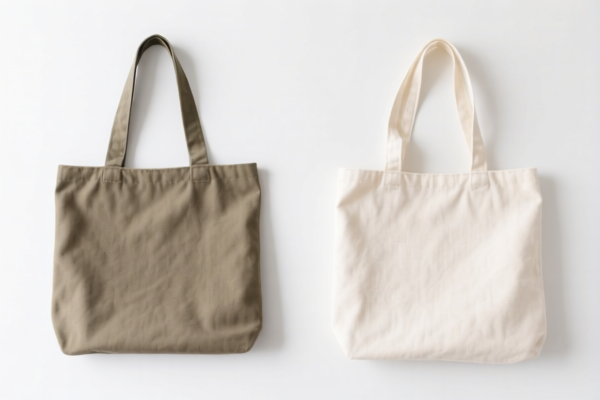
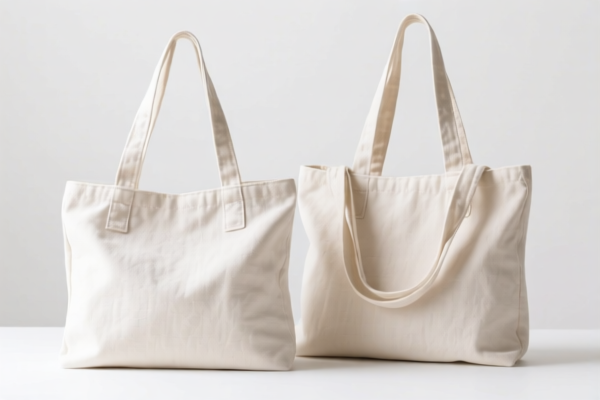
AI Analysis
👜 Cotton Handbag (Modern Style)
🌐 HS Code Reference & Clearance Guide | 2026 Latest Tariff Analysis | Professional Customs Strategy
📌 I. Product Definition & Classification: Are You Classifying "Cotton Handbag" Correctly?
A Cotton Handbag is a portable accessory made primarily of cotton textile, designed for carrying personal items. In international trade, classification hinges on two critical factors: 1. Material Composition: Is it predominantly cotton (textile)? 2. Functionality: Is it considered a "handbag" (Article 42) or "other made-up textile articles" (Article 63)?
⚠️ Key Distinction Point:
- If classified as a handbag under Chapter 42 (Leather/Textile Articles), it often attracts higher tariffs due to specific "Section XI" exclusions and additional duties. - If classified as a made-up textile article under Chapter 63, it may benefit from lower base duties, though still subject to additional levies.
📦 II. HS Code Classification Matrix (2026 Latest Tariff Data)
Based on the provided data, here are the 6 possible HS Codes for a Cotton Handbag, along with their tax implications:
| HS Code | Summary Description | Total Tax Rate | Tax Breakdown (Base + Additional) |
|---|---|---|---|
6307.90.98.91 |
Cotton handbag, classified as other made-up textile article. | 24.5% | Base: 7.0% Add. 1: 7.5% Section 122: 10% |
6307.90.89.40 |
Cotton handbag, classified as other made-up textile consumer good. | 17.0% | Base: 7.0% Add. 1: 0.0% Section 122: 10% |
4202.22.40.20 |
Cotton handbag, exterior surface is textile material. | 42.4% | Base: 7.4% Add. 1: 25.0% Section 122: 10% |
4202.22.89.30 |
Cotton handbag, fits cotton material & handbag definition. | 52.6% | Base: 17.6% Add. 1: 25.0% Section 122: 10% |
6307.90.98.82 |
Cotton handbag, classified as made-up textile article. | 24.5% | Base: 7.0% Add. 1: 7.5% Section 122: 10% |
4202.22.45.00 |
Cotton handbag, fits cotton material & handbag requirement. | 41.3% | Base: 6.3% Add. 1: 25.0% Section 122: 10% |
🔍 Critical Insight:
- Chapter 63 Codes (6307.90.xx.xx) generally result in lower total taxes (17%–24.5%) because they are treated as "other made-up textile articles." - Chapter 42 Codes (4202.22.xx.xx) result in higher total taxes (41.3%–52.6%) due to a steep +25% additional duty (likely Section 301 or similar trade remedy).
💰 III. Detailed Tariff Rate Explanation (2026 Latest)
✅ Applicable Region: USA (Assumed based on "Section 122" and high additional duties)
✅ Origin: China (CN) (Assumed based on typical "122" and high additional duty patterns)
✅ Effective Time: 2025–2026 Period
🎯 1. Low-Tax Option: HS Code 6307.90.89.40
- Description: Cotton handbag, other made-up textile consumer good.
- Total Tax: 17.0%
- Breakdown:
- Base Duty: 7.0%
- Additional Duty 1: 0.0% (Crucial Advantage!)
- Section 122 Duty: 10%
- Why This Matters: This code avoids the heavy 25% additional duty, making it the most cost-effective classification if the product qualifies.
🎯 2. Mid-Tax Option: HS Codes 6307.90.98.91 & 6307.90.98.82
- Description: Cotton handbag, other made-up textile articles.
- Total Tax: 24.5%
- Breakdown:
- Base Duty: 7.0%
- Additional Duty 1: 7.5%
- Section 122 Duty: 10%
- Note: These codes apply if the bag doesn't fit the "consumer good" subheading but is still considered a general textile article.
🎯 3. High-Tax Option: HS Code 4202.22.45.00
- Description: Cotton handbag, fitting material & handbag definition.
- Total Tax: 41.3%
- Breakdown:
- Base Duty: 6.3%
- Additional Duty 1: 25.0% (Heavy Penalty)
- Section 122 Duty: 10%
- Risk: Misclassification as a "handbag" under Chapter 42 triggers the 25% surcharge.
🎯 4. Highest-Tax Option: HS Codes 4202.22.40.20 & 4202.22.89.30
- Description: Cotton handbag, textile exterior, specific handbag definitions.
- Total Tax: 42.4% – 52.6%
- Breakdown:
- Base Duty: 7.4% – 17.6%
- Additional Duty 1: 25.0%
- Section 122 Duty: 10%
- Why So High?: These codes represent the strictest interpretation of "handbags" under Chapter 42, attracting the maximum additional tariffs.
🛠️ IV. Customs Clearance Practical Advice (Avoid Pitfalls)
✅ 1. Material & Structure Declaration Strategy
| Fact | Recommended Declaration | Risk of Misclassification |
|---|---|---|
| Cotton Content > 50% | Declare as "Cotton Textile" | If declared as "Leather-like" or "Synthetic," tax rates change. |
| Structure: Soft-sided, no rigid frame | Use HS Code 6307.xx (Textile Article) | If declared as "Handbag" (Chapter 42), tax jumps to 41%+. |
| Lining/Material Mix | Specify Cotton is dominant material | Mixed materials may shift classification to other chapters. |
| Handles/Straps | Same material as body (Cotton) | If handles are leather, it may be classified as a leather bag (Chapter 42). |
📌 Key Tip:
- Emphasize "Made-up textile article" in product description, not "Handbag" if possible, to target HS Code 6307. - Avoid words like "Luxury Handbag" or "Structured Handbag" which imply Chapter 42.
✅ 2. Documentation Checklist
| Document | Requirement | Purpose |
|---|---|---|
| Commercial Invoice | Clearly state "Cotton Textile Handbag" | Clarifies material and function. |
| Packing List | Include dimensions, weight, and material breakdown | Helps customs verify textile content. |
| Bill of Lading/Air Waybill | Consignee/Consignor details must match invoice | Standard customs requirement. |
| Certificate of Origin | If applicable, for potential FTA benefits | May reduce base duty. |
| Product Photos | Show cotton texture, handles, and interior | Proves textile nature, not leather/synthetic. |
✅ 3. Clearance Optimization Strategies
| Scenario | Recommendation | Expected Tax Impact |
|---|---|---|
| Targeting Lowest Tax | Classify under HS Code 6307.90.89.40 | 17.0% (Saves ~25% vs. Chapter 42) |
| If Structure is Rigid | May be forced to Chapter 42 | Tax ~41–52%. Try to use soft lining to justify Chapter 63. |
| Section 122 Applicability | Confirm if Section 122 applies to your origin | If origin is not China, Section 122 may not apply, saving 10%. |
| Additional Duty 1 | Check if 0% additional duty code (6307.90.89.40) is eligible |
This is the biggest savings opportunity. |
🌍 V. Global Market Comparison (2026)
| Market | Recommended HS Code | Estimated Tax | Notes |
|---|---|---|---|
| 🇺🇸 USA | 6307.90.89.40 |
17.0% | Lowest tax among options. Avoid Chapter 42 codes (41%+). |
| 🇪🇺 EU | 4202.22 or 6307 |
~0–12% | No "Section 122" equivalent. Check for anti-dumping. |
| 🇨🇳 China | 6307 or 4202 |
~5–10% | Base duty only. No additional Section 122. |
| 🇬🇧 UK | 4202 or 6307 |
~5–10% | Post-Brexit tariffs may differ. |
📌 Conclusion for USA Imports:
- Strongly recommend classifying as HS Code 6307.90.89.40 if the product is a soft-sided cotton bag.
- Avoid Chapter 42 codes (4202.22.xxxx) unless the bag has rigid structure or leather components, as taxes are 2.5x higher.
📌 VI. Common Errors & Pitfalls (Lessons Learned)
❌ Error 1: Declaring as "Handbag" (Chapter 42) when it's a soft textile bag.
👉 Consequence: Tax jumps from 17% to 42–52%.
✅ Fix: Use "Made-up Cotton Textile Article" in description.
❌ Error 2: Ignoring "Additional Duty 1" breakdown.
👉 Consequence: Unexpected bill at customs.
✅ Fix: Pre-calculate tax using HS Code 6307.90.89.40 (0% Add. Duty).
❌ Error 3: Assuming all cotton bags are the same.
👉 Consequence: Misclassification due to differing structure (e.g., lined vs. unlined).
✅ Fix: Provide detailed product specs to customs broker.
🎯 VII. Final Recommendation: How to Save Money
🎯 Action Plan:
1. Check Material: Ensure cotton is the primary fabric (>50%).
2. Choose HS Code: Select 6307.90.89.40 if applicable.
- Tax Rate: 17.0%
- Savings: Up to 35% less tax compared to Chapter 42 codes.
3. Document Carefully: Use terms like "Cotton Textile Bag" instead of "Luxury Handbag."
4. Consult Broker: Verify if Section 122 applies to your specific origin and product type.
📞 Immediate Action:
- Contact your customs broker with product photos and material composition.
- Request pre-classification ruling if importing large volumes.
- Optimize supply chain to ensure cotton content is documented and verified.
✨ Professional Clearance Starts with Accurate Classification!
💼 Every percentage point of tax saved is pure profit!
Customer Reviews
About HS Code Classification
The Harmonized System (HS) is an internationally standardized nomenclature developed by the World Customs Organization (WCO) to classify traded products. Over 200 countries use the HS system as the basis for customs tariffs, trade statistics, and import/export regulations.
Each HS code follows a hierarchical structure:
- Chapter (2 digits) — Broad category of goods (e.g., Chapter 84: Machinery and Mechanical Appliances)
- Heading (4 digits) — More specific grouping within the chapter
- Subheading (6 digits) — Internationally standardized breakdown, used by all WCO member countries
- National subdivisions (8-10 digits) — Country-specific extensions for further classification, such as US HTSUS 10-digit codes
Correct HS code classification is essential for smooth customs clearance, accurate duty payment, and compliance with trade regulations. Misclassification can lead to customs delays, overpayment of duties, or penalties.
When importing from CN to US, the applicable tariff rates may include:
- Most-Favored-Nation (MFN) rate — The standard duty rate applied to WTO members
- General rate — Applied to countries without trade agreements
- Trade remedy duties — Additional tariffs such as Section 301 (anti-dumping), Section 232 (national security), or countervailing duties
The information provided on this page is for reference purposes only. For official classification, please consult with your local customs authority or a licensed customs broker.