Cotton Woven Handbag (Minimalist Style)
CN → US| HS Code | Tariff Rate | Origin | Destination | Doc |
|---|---|---|---|---|
| 4202224020 | 42.4% | CN | US | Official Doc |
| 4202228930 | 52.6% | CN | US | Official Doc |
| 6307909882 | 24.5% | CN | US | Official Doc |
| 6307909891 | 24.5% | CN | US | Official Doc |
| 4202224500 | 41.3% | CN | US | Official Doc |
Product Images
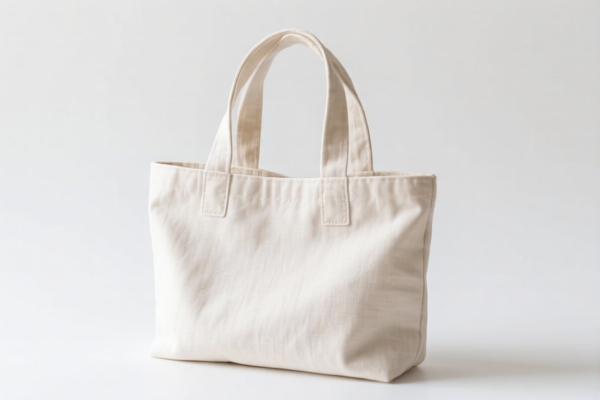
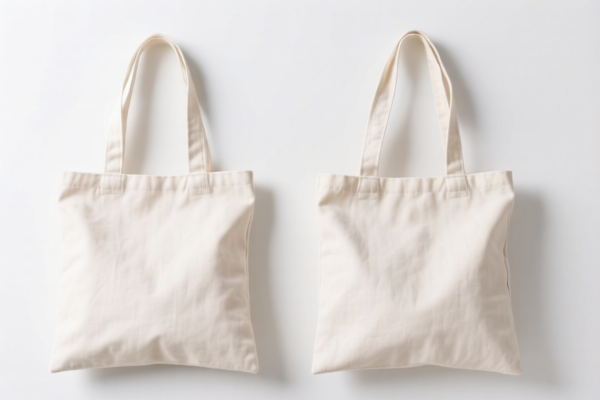
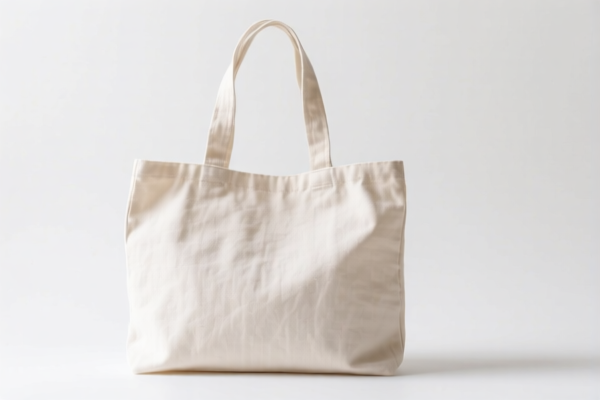
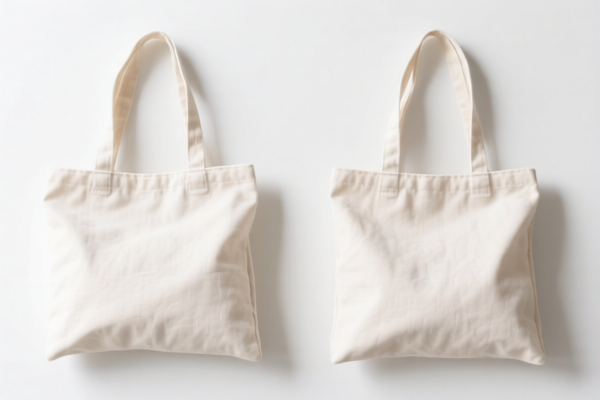
AI Analysis
🖐️ Cotton Woven Handbag (Minimalist Style)
🌐 HS Code Reference & Customs Clearance Guide | 2026 Latest Tariff Analysis | Professional Clearance Strategy
📌 I. Product Definition & Classification: Do You Truly Understand "Cotton Woven Handbag"?
A Cotton Woven Handbag is a fashion accessory made primarily from cotton fibers, characterized by a woven structural integrity. In international trade, classification depends heavily on: 1. Material Composition: Is the outer surface exclusively or predominantly cotton? 2. Structure/Form: Is it a "woven" fabric bag or a general "bag of textiles"? 3. End-Use: Is it a "handbag" (Chapter 42) or a "finished article" (Chapter 63)?
⚠️ Key Classification Distinction: - Woven Structure + Cotton Surface: Falls under Chapter 42 (Articles of leather; travel goods, handbags...). Specifically, bags of textile materials. - Generic Finished Cotton Item: If the weaving is incidental or it’s considered a general "made-up article" rather than a specialized handbag, it may fall under Chapter 63 (Other made up textile articles).
📦 II. HS Code Classification Details (2026 Latest Tariff Authoritative Comparison)
| HS Code | Product Description | Applicable Scenario | Tax Rate (Total) |
|---|---|---|---|
4202.22.40.20 |
Cotton Woven Handbag: Meets requirements for cotton material and woven form. | Handbags with distinct woven cotton outer layer. | 42.4% |
4202.22.89.30 |
Cotton Handbag: Outer surface is textile material and cotton. | General cotton handbags not specified in narrower subheadings. | 52.6% |
6307.90.98.82 |
Cotton Handbag: Form is "finished article," material is cotton. | Classified as other made-up textile articles (non-handbag specific). | 24.5% |
6307.90.98.91 |
Cotton Finished Bag: Belongs to "other finished articles" category, no material conflict. | Generic cotton bags treated as general textile goods. | 24.5% |
4202.22.45.00 |
Cotton Handbag: Fully complies with cotton material and handbag form requirements. | Standard cotton handbags meeting specific textile criteria in Ch 42. | 41.3% |
🔍 Critical Note: - Chapter 42 (4202) generally carries higher tariffs due to additional duties (25% Section 301 + 10% IEEPA). - Chapter 63 (6307) carries lower tariffs but only if the item is deemed a "general textile article" rather than a specific "handbag." - Misclassification from Ch 42 to Ch 63 can save ~18% in taxes, but requires strong justification that it is not a primary "handbag" function.
💰 III. 2026 Latest Tariff Rate Breakdown (Including Additional Taxes)
✅ Applicable Country: United States (US)
✅ Origin: China (CN)
✅ Effective Date: November 10, 2025 (for subsequent imports)
🎯 1. 4202.22.40.20 – Cotton Woven Handbag (Woven Form)
| Item | Content |
|---|---|
| Base Duty Rate | 7.4% (ad valorem) |
| Section 301 Additional Duty | +25.0% (USITC Footnote 9903.88.01) |
| IEEPA Additional Duty | +10.0% (Against China/HK products, effective Nov 10, 2025) |
| Total Effective Rate | 42.4% |
| Tax Calculation | CIF Value × 42.4% |
| De Minimis Exemption | ❌ Not Eligible (deny_de_minimis) |
| Legal Authority Path | IEEPA:9903.01.25 → IEEPA:9903.01.24 → USITC:4202.22.40.20 → FOOTNOTE:9903.88.01 |
📌 Explanation: - The 25% Section 301 duty applies to most textile handbags from China. - The 10% IEEPA duty is a new layer added in 2025. - Total 42.4% is significant. This classification assumes the bag is a true "handbag" under Chapter 42.
🎯 2. 4202.22.89.30 – Cotton Handbag (Textile Outer Surface)
| Item | Content |
|---|---|
| Base Duty Rate | 17.6% |
| Section 301 Additional Duty | +25.0% |
| IEEPA Additional Duty | +10.0% |
| Total Effective Rate | 52.6% |
| Tax Calculation | CIF Value × 52.6% |
| De Minimis Exemption | ❌ Not Eligible |
| Legal Authority Path | IEEPA:9903.01.25 → IEEPA:9903.01.24 → USITC:4202.22.89.30 → FOOTNOTE:9903.88.01 |
📌 Warning: - This is the highest tax bracket for cotton handbags. - Applies when the bag doesn't fit narrower "woven" or specific cotton subheadings but is still clearly a handbag.
🎯 3. 6307.90.98.82 & 6307.90.98.91 – Cotton Finished Article (Non-Handbag Specific)
| Item | Content |
|---|---|
| Base Duty Rate | 7.0% |
| Section 301 Additional Duty | +7.5% |
| IEEPA Additional Duty | +10.0% |
| Total Effective Rate | 24.5% |
| Tax Calculation | CIF Value × 24.5% |
| De Minimis Exemption | ❌ Not Eligible |
| Legal Authority Path | IEEPA:9903.01.25 → IEEPA:9903.01.24 → USITC:6307.90.98.82/91 |
📌 Strategic Insight: - These codes have a much lower Section 301 rate (7.5%) compared to Chapter 42 (25%). - Risk: Customs may challenge this classification if the item is clearly a handbag. You must prove it is a "general textile article" (e.g., a storage bag, not a fashion handbag).
🛠️ IV. Customs Clearance Practical Advice (Real-World Pitfall Guide)
✅ 1. Documentation Checklist (All are Mandatory)
| Document | Required? | Notes |
|---|---|---|
| ✅ Product Specifications | ✔️ | Must detail: "Cotton," "Woven," dimensions, lining material. |
| ✅ Material Composition Certificate | ✔️ | Prove ≥50% cotton in outer surface. |
| ✅ Product Photos (Labeled) | ✔️ | Clear view of weave structure, handles, and closure. |
| ✅ Commercial Invoice | ✔️ | Description must match HS code logic (e.g., "Woven Cotton Bag"). |
| ✅ Packing List | ✔️ | Weight and dimensions. |
| ✅ Origin Certificate | ✔️ | If not China origin, may reduce IEEPA duty. |
✅ 2. Declaration Strategy (Key Mnemonics)
🔥 "Weave Matters, Chapter 42 is Heavy, Chapter 63 is Light but Risky!"
| Scenario | Correct Declaration | Wrong Practice |
|---|---|---|
| Fashion Handbag with Woven Cotton | 4202.22.40.20 (42.4%) |
Misdeclare as 6307 → 24.5% (High Risk of Audit) |
| Simple Cotton Storage Pouch | 6307.90.98.82 (24.5%) |
Declare as Handbag → 42.4% (Overpay) |
| Cotton Bag with Leather Trim | Check if "Textile Surface" > "Leather Surface" | Misclassify as Leather Goods → Different Duty |
| OEM Custom Cotton Bag | Provide Design Specs | Vague Description "Bag" → Delayed Clearance |
✅ 3. Special Cases Handling
| Case | Handling Advice |
|---|---|
| Mixed Material (Cotton + Poly) | If cotton < 50%, may fall out of "Cotton" specific codes. Check general textile rates. |
| Woven vs. Knitted | "Woven" is critical for 4202.22.40.20. Knitted may fall under different subheadings. |
| Minimalist Style | Does not change HS code, but helps define "Handbag" vs. "Accessory." |
🌍 V. Global Market Clearance Comparison (2026 Latest)
| Country/Region | Recommended HS Code | Duty Rate | Certification Requirements | Notes |
|---|---|---|---|---|
| 🇺🇸 USA | 4202.22.40.20 |
42.4% | No specific tech cert | Highest duty due to 301 + IEEPA |
| 🇨🇳 China | 4202.22.40.20 |
~5-10% | No specific cert | Low import duty to China |
| 🇪🇺 EU | 4202.22.40.20 |
4-6% | REACH (Chemicals) | No Section 301 equivalent |
| 🇬🇧 UK | 4202.22.40.20 |
4-6% | UKCA (if applicable) | Post-Brexit rules apply |
| 🇨🇦 Canada | 4202.22.40.20 |
0-5% | N/A | No major additional tariffs |
📌 Conclusion: - USA is the most expensive market for cotton handbags due to political tariffs. - Duty Saving Opportunity: If the bag can be legally classified as a "textile accessory" (Ch 63) rather than a "handbag" (Ch 42), you save ~18%. However, this requires robust documentation.
📌 VI. Common Errors & Pitfall Guide (Lessons Learned)
❌ Error 1: Declaring a woven handbag under 6307.90.98.82 without proof it’s not a handbag.
👉 Consequence: Customs reclassifies → Back pay 42.4% - 24.5% = 17.9% difference + penalties.
❌ Error 2: Ignoring the 10% IEEPA duty in 2025.
👉 Consequence: Underpayment by 10% on every shipment → Seizure risk.
❌ Error 3: Confusing Woven vs. Knitted.
👉 Consequence: Wrong HS subheading → Potential misclassification fines.
❌ Error 4: Using vague terms like "Fabric Bag."
👉 Consequence: CBP assigns default higher duty or requests detailed breakdown → Delays.
✅ Correct Practice:
“Woven Cotton Handbag, Outer Material: 100% Cotton, Style: Minimalist Tote, No Leather Components”
🎯 VII. Conclusion: Precise Classification, Cost Optimization!
🎯 Remember the Mnemonic:
🔹 “Ch 42 is Fashion, Ch 63 is Generic. 42 pays 42%, 63 pays 24%. Don’t lie, just justify!”
🔹 “Cotton Woven means 4202.22.40.20 unless you prove it’s just a ‘textile bag’.”
📌 Pro Tip:
If your cotton handbag is originated in Vietnam, Mexico, or Cambodia, you may avoid the IEEPA 10% and potentially the Section 301 25% duties, reducing the total rate to base duty only (~7.4%).
👉 Recommendation: Apply for Pre-Ruling (CBP Advance Ruling) to lock in the HS code and avoid post-clearance audits.
📣 Immediate Action:
📞 Contact a licensed customs broker
📸 Provide high-res photos of the weave
🚀 Ensure smooth clearance, maximize profit, minimize duty!
✨ Professional Clearance Starts with Accurate Classification!
💼 Every cent in duty is a cent of profit lost if misclassified!
Customer Reviews
About HS Code Classification
The Harmonized System (HS) is an internationally standardized nomenclature developed by the World Customs Organization (WCO) to classify traded products. Over 200 countries use the HS system as the basis for customs tariffs, trade statistics, and import/export regulations.
Each HS code follows a hierarchical structure:
- Chapter (2 digits) — Broad category of goods (e.g., Chapter 84: Machinery and Mechanical Appliances)
- Heading (4 digits) — More specific grouping within the chapter
- Subheading (6 digits) — Internationally standardized breakdown, used by all WCO member countries
- National subdivisions (8-10 digits) — Country-specific extensions for further classification, such as US HTSUS 10-digit codes
Correct HS code classification is essential for smooth customs clearance, accurate duty payment, and compliance with trade regulations. Misclassification can lead to customs delays, overpayment of duties, or penalties.
When importing from CN to US, the applicable tariff rates may include:
- Most-Favored-Nation (MFN) rate — The standard duty rate applied to WTO members
- General rate — Applied to countries without trade agreements
- Trade remedy duties — Additional tariffs such as Section 301 (anti-dumping), Section 232 (national security), or countervailing duties
The information provided on this page is for reference purposes only. For official classification, please consult with your local customs authority or a licensed customs broker.