Crankshaft Removal Tool
CN → US| HS Code | Tariff Rate | Origin | Destination | Doc |
|---|---|---|---|---|
| 7326908688 | 87.9% | CN | US | Official Doc |
| 8205591000 | 42.2% | CN | US | Official Doc |
| 7326190080 | 87.9% | CN | US | Official Doc |
| 8205595560 | 40.3% | CN | US | Official Doc |
Product Images
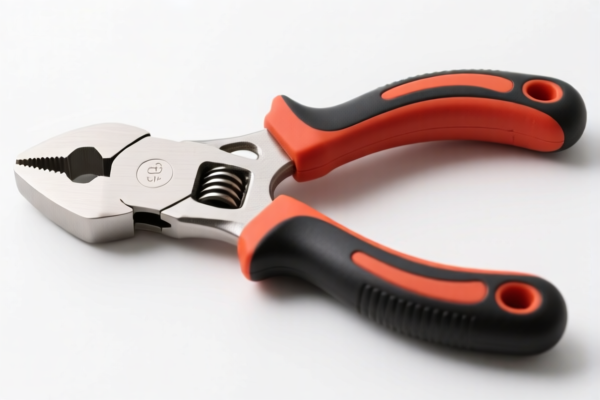
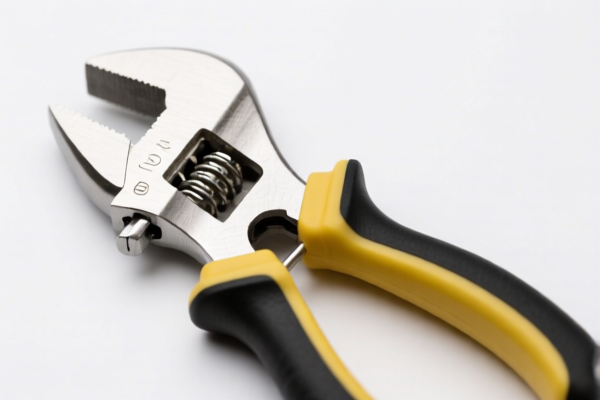
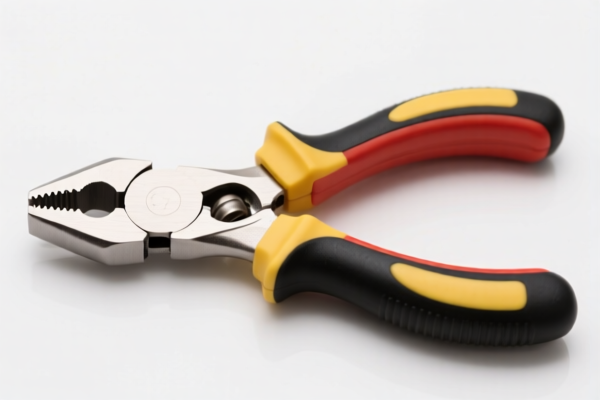
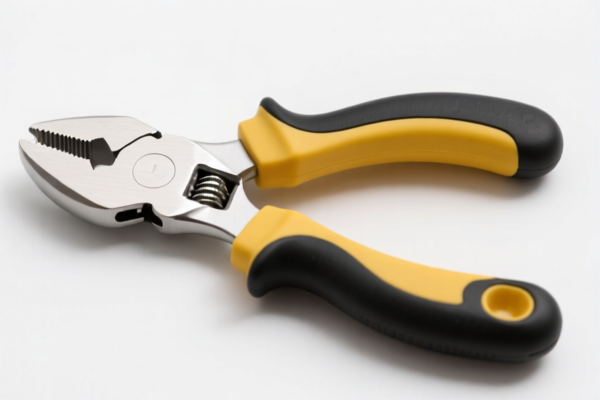
AI Analysis
🔧 Crankshaft Removal Tool (Hand Tools & Mechanical Tools)
🌐 HS Code Reference & Customs Clearance Guide | 2026 Latest Tariff Analysis | Professional-Level Clearance Strategy
📌 I. Product Definition & Classification: Do You Really Understand "Crankshaft Removal Tools"?
A Crankshaft Removal Tool is a specialized instrument used in automotive and industrial maintenance to extract crankshafts from engines. In international trade, its classification depends heavily on material, specific function, and whether it is considered a "hand tool" or a general mechanical part.
Based on the provided data, there are three primary classification paths depending on the tool's specific design and material:
1. Hand Tools (8205 Series): If the tool is a simple lever, puller, or wrench designed for manual operation, it falls under "Hand Tools." 2. General Iron/Steel Articles (7326 Series): If the tool is a complex mechanical fixture, bracket, or part that doesn't fit specific hand tool descriptions, it may be classified as "Other articles of iron or steel." 3. Forged/Stamped Parts (7326 Series): If the tool is a basic forged or stamped component without further working, it may fall under "Other forged/stamped articles."
⚠️ Key Distinction Point:
- If the tool has a handle and is operated by hand → Hand Tools (8205).
- If the tool is a structural part or complex assembly without a dedicated handle → Iron/Steel Articles (7326).
📦 II. HS Code Classification Details (2026 Latest Tariff Authority Comparison)
| HS Code | Product Description | Application Scenario | Material/Workmanship |
|---|---|---|---|
8205.59.10.00 |
Hand tools; spanners; wrenches; other hand tools; parts thereof | Manual crankshaft pullers, simple lever tools | Metal hand tools, functional consistency with pipe wrenches |
8205.59.55.60 |
Other hand tools | General hand-operated extraction tools | Iron or steel hand tools |
7326.90.86.88 |
Other articles of iron or steel; mechanical tools | Complex mechanical fixtures, non-hand-held tools | Iron/Steel, mechanical tool category |
7326.19.00.80 |
Other forged or stamped articles of iron or steel | Basic forged/stamped tool parts | Iron/Steel, forged/stamped, no further processing |
🔍 Important Reminder:
- Hand Tools (8205) generally have lower total tariffs compared to general steel articles due to specific exemptions or lower base rates, but they are subject to Section 301 tariffs. - General Steel Articles (7326) are often subject to the highest additional tariffs (Section 232 Steel/Aluminum duties + Section 301).
💰 III. 2026 Latest Tariff Rate Details (Including Additional Taxes)
✅ Applicable Country: United States (US)
✅ Origin: China (CN)
✅ Effective Date: Current tariffs apply (Section 301 + Section 232)
🎯 1. 8205.59.10.00 —— Hand Tools (Manual Crankshaft Pullers)
| Item | Content |
|---|---|
| Base Tariff | 7.2% |
| Section 301 Additional Tariff | +25.0% |
| Total Rate | 42.2% |
| Tax Calculation | CIF Value × 42.2% |
| De Minimis Exemption | ❌ Not Available (Subject to Section 301) |
| Legal Basis Path | HTSUS 8205.59.10.00 → Section 301 Footnote |
📌 Explanation:
- This classification applies to tools that are clearly "hand tools" (e.g., wrenches, levers). - The 25% additional tariff is applied on top of the base 7.2%. - Total: 42.2%. This is the lowest tariff option among the listed codes.
🎯 2. 8205.59.55.60 —— Other Hand Tools
| Item | Content |
|---|---|
| Base Tariff | 5.3% |
| Section 301 Additional Tariff | +25.0% |
| Total Rate | 40.3% |
| Tax Calculation | CIF Value × 40.3% |
| De Minimis Exemption | ❌ Not Available |
| Legal Basis Path | HTSUS 8205.59.55.60 → Section 301 Footnote |
📌 Note:
- Slightly lower base rate (5.3%) than8205.59.10.00, resulting in a 40.3% total rate. - Suitable for general hand-operated tools that don't fit specific sub-categories like spanners.
🎯 3. 7326.90.86.88 —— Other Articles of Iron or Steel (Mechanical Tools)
| Item | Content |
|---|---|
| Base Tariff | 2.9% |
| Section 301 Additional Tariff | +25.0% |
| Section 232 Additional Tariff (Steel/Aluminum) | +50.0% |
| Total Rate | 87.9% |
| Tax Calculation | CIF Value × 87.9% |
| De Minimis Exemption | ❌ Not Available |
| Legal Basis Path | HTSUS 7326.90.86.88 → Section 232 & 301 |
📌 Warning:
- This classification triggers both Section 301 (25%) and Section 232 (50% for steel/aluminum). - Total: 87.9%. This is an extremely high tariff. Avoid this classification if possible.
🎯 4. 7326.19.00.80 —— Other Forged or Stamped Articles of Iron or Steel
| Item | Content |
|---|---|
| Base Tariff | 2.9% |
| Section 301 Additional Tariff | +25.0% |
| Section 232 Additional Tariff (Steel/Aluminum) | +50.0% |
| Total Rate | 87.9% |
| Tax Calculation | CIF Value × 87.9% |
| De Minimis Exemption | ❌ Not Available |
| Legal Basis Path | HTSUS 7326.19.00.80 → Section 232 & 301 |
📌 Warning:
- Same as above: 87.9% total rate due to dual additional tariffs (Steel/Aluminum). - Applies to tools that are classified as basic forged/stamped parts rather than finished hand tools.
🛠️ IV. Customs Clearance Practical Advice (Avoiding Pitfalls)
✅ 1. Recommended Strategy: Classify as Hand Tools
| Situation | Recommended HS Code | Total Rate | Reason |
|---|---|---|---|
| Manual Crankshaft Puller (with handle) | 8205.59.55.60 |
40.3% | Lowest tariff; clearly a hand tool |
| Simple Lever Tool | 8205.59.10.00 |
42.2% | Clearly a hand tool; slightly higher base rate |
| Complex Mechanical Fixture | 7326.90.86.88 |
87.9% | High tariff; avoid if possible |
| Basic Forged Part | 7326.19.00.80 |
87.9% | High tariff; avoid if possible |
🔥 Key Insight:
- Classifying as a "Hand Tool" (8205) saves you 45.7%–47.6% in tariffs compared to classifying as a "General Steel Article" (7326). - Evidence is Key: Provide photos showing the tool has a handle, is operated manually, and is not part of a larger machine.
✅ 2. Declaration Tips (Critical)
| Situation | Correct Declaration | Incorrect Declaration |
|---|---|---|
| Manual Puller | "Hand Tool: Crankshaft Removal Puller, Manual, Steel" | "Steel Part: Mechanical Tool" |
| Complex Fixture | "Mechanical Tool Part: Crankshaft Extraction Bracket" | "Hand Tool" (if it lacks a handle) |
| Forged Component | "Forged Steel Part: Crankshaft Support" | "Hand Tool" |
📌 Documentation Required:
- Product Photos: Clear images showing the tool’s structure, handles, and operation method. - User Manual: If available, extract pages showing manual operation. - Commercial Invoice: Clearly state "Hand Tool" for 8205 codes; avoid vague terms like "Machine Part" for hand tools.
✅ 3. Special Cases
| Situation | Advice |
|---|---|
| OEM Custom Tools | Provide design drawings to prove manual operation if claiming 8205. |
| Electric/Pneumatic Tools | If the tool requires power, it may not qualify as a "Hand Tool" under 8205; re-evaluate classification. |
| Set of Tools | If sold as a kit, declare the primary tool (usually the hand tool) as the main item. |
🌍 V. Global Market Comparison (2026 Latest)
| Country/Region | Recommended HS Code | Tariff | Notes |
|---|---|---|---|
| 🇺🇸 USA | 8205.59.55.60 |
40.3% | Lowest US tariff for crankshaft tools |
| 🇪🇺 EU | 8205.59 | ~6.5% | No Section 301/232 duties |
| 🇨🇳 China | 8205.59 | ~5-7% | Low import duty for hand tools |
| 🇯🇵 Japan | 8205.59 | ~5% | No additional duties |
📌 Conclusion:
- USA is the most expensive market due to Section 301 and Section 232 tariffs. - EU, China, and Japan have much lower tariffs for hand tools. - Strategy: If exporting to the US, ensure your product is clearly marketed and documented as a Hand Tool to maximize tariff savings.
📌 VI. Common Mistakes & Pitfalls (Lessons Learned)
❌ Mistake 1: Declaring a manual puller as "Steel Part" (7326)
👉 Consequence: Tariff jumps from 40.3% to 87.9%.
Result: Significant cost increase, potential audit flag.
❌ Mistake 2: Using vague terms like "Mechanical Tool" without proof of hand operation
👉 Consequence: Customs may reclassify to 7326 with 87.9% tariff.
Result: Delays, penalties, and back taxes.
❌ Mistake 3: Ignoring Section 232 Steel/Aluminum Duties
👉 Consequence: If classified under 7326, 50% additional tariff applies.
Result: Total 87.9% tariff.
✅ Correct Approach:
"Manual Crankshaft Puller, Hand Tool, Steel, Model XYZ"
HS Code:8205.59.55.60
Tariff: 40.3%
🎯 VII. Conclusion: Smart Classification, Save Money!
🎯 Remember:
🔹 "Hand Tool? Use 8205. Pay 40%. Steel Part? Use 7326. Pay 88%."
🔹 "Photos Prove, Invoice Clarifies, Save Thousands."
📌 Pro Tip:
If your crankshaft tool is electric or pneumatic, it may fall under different HS codes (e.g., 8467). Re-evaluate your classification if it’s not a manual tool.
📣 Immediate Action:
📞 Consult a licensed customs broker.
📷 Provide clear photos of your tool.
📝 Ensure your commercial invoice says "Hand Tool".
✨ Professional Clearance Starts with Accurate Classification!
💼 Every Percent Saved is Profit Gained!
Customer Reviews
About HS Code Classification
The Harmonized System (HS) is an internationally standardized nomenclature developed by the World Customs Organization (WCO) to classify traded products. Over 200 countries use the HS system as the basis for customs tariffs, trade statistics, and import/export regulations.
Each HS code follows a hierarchical structure:
- Chapter (2 digits) — Broad category of goods (e.g., Chapter 84: Machinery and Mechanical Appliances)
- Heading (4 digits) — More specific grouping within the chapter
- Subheading (6 digits) — Internationally standardized breakdown, used by all WCO member countries
- National subdivisions (8-10 digits) — Country-specific extensions for further classification, such as US HTSUS 10-digit codes
Correct HS code classification is essential for smooth customs clearance, accurate duty payment, and compliance with trade regulations. Misclassification can lead to customs delays, overpayment of duties, or penalties.
When importing from CN to US, the applicable tariff rates may include:
- Most-Favored-Nation (MFN) rate — The standard duty rate applied to WTO members
- General rate — Applied to countries without trade agreements
- Trade remedy duties — Additional tariffs such as Section 301 (anti-dumping), Section 232 (national security), or countervailing duties
The information provided on this page is for reference purposes only. For official classification, please consult with your local customs authority or a licensed customs broker.