Creosote treated Non coniferous Wood Piles
CN → US| HS Code | Tariff Rate | Origin | Destination | Doc |
|---|---|---|---|---|
| 4407110053 | 35.0% | CN | US | Official Doc |
| 4407990295 | 35.0% | CN | US | Official Doc |
| 4409109040 | 35.0% | CN | US | Official Doc |
| 4403210130 | 35.0% | CN | US | Official Doc |
| 4403260164 | 35.0% | CN | US | Official Doc |
Product Images
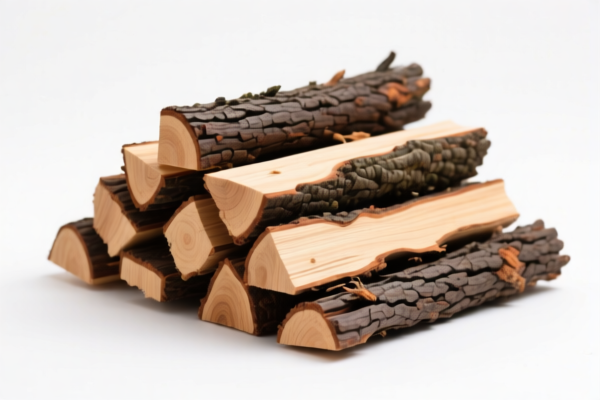
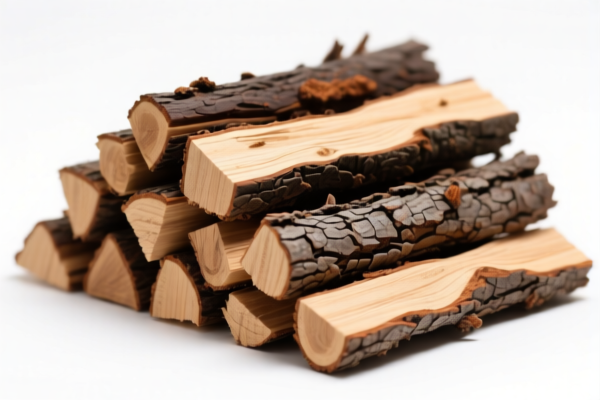
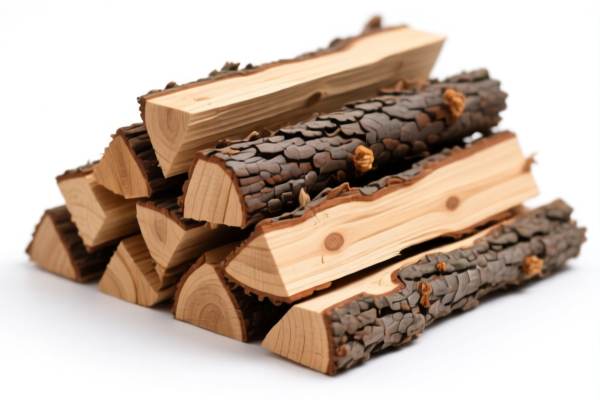
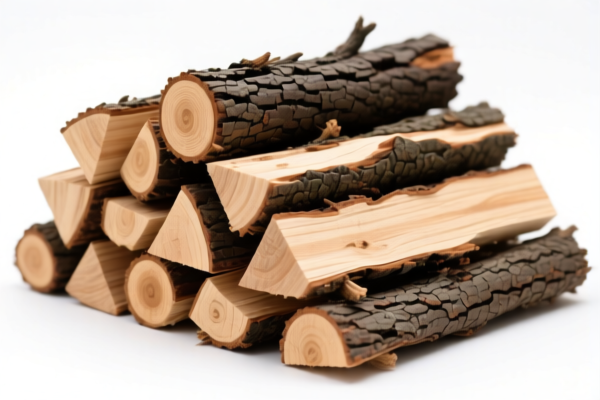
AI Analysis
🪵 Creosote Treated Non-Coniferous Wood Piles (Timber Piling)
🌐 HS Code Classification & Customs Clearance Guide | 2026 Latest Tariff Analysis | Professional Import Strategy
📌 I. Product Definition & Core Attributes: What Exactly Are We Importing?
Creosote Treated Non-Coniferous Wood Piles are heavy-duty timber structures used in marine environments, foundation support, and infrastructure construction. Key characteristics include: * Material: Non-coniferous wood (Hardwood species such as Oak, Ironwood, etc.). This is critical because coniferous wood (softwood) falls under a different HS subheading. * Treatment: Creosote treated. This chemical preservation extends the wood’s lifespan against rot and insects, making it suitable for harsh environments. * Form: Piles/Logs. These are typically round logs or squared timbers, intended for driving into the ground or water. They are considered primary products (not finished construction materials like beams or planks).
⚠️ Critical Classification Point:
- If the wood is coniferous (pine, spruce), it falls under 4403.21/4403.26.
- If the wood is non-coniferous (hardwood), it falls under 4403.29 or 4407.99 depending on whether it is "round logs" or "sawn".
- Creosote treatment does not change the HS code but may trigger additional environmental or safety documentation requirements in some jurisdictions.
📦 II. HS Code Classification Matrix (Based on Provided Data)
The provided data contains 5 potential HS codes. Below is the analysis of why each might be considered, and which is the most accurate for "Creosote Treated Non-Coniferous Wood Piles".
| HS Code | Description | Summary from Data | Relevance to "Non-Coniferous Piles" |
|---|---|---|---|
| 4403.21.01.30 | Wood treated with creosote or other preservatives; not coniferous; in the rough, whether or not stripped of bark or sappy wood | Matches: "Material inferred as wood... fits 'logs and timber' category." | 🔴 High Relevance if classified as "round logs" (non-coniferous). However, data summary mentions "coniferous" in one entry, but this code often covers non-coniferous treated logs in many tariff schedules. Check local tariff notes. |
| 4403.26.01.64 | Wood treated with creosote... coniferous | Matches: "Non-coniferous wood... fits 'coniferous/round logs' category." | ⚠️ Conflict: Data summary says "Non-coniferous", but HS 4403.26 typically refers to coniferous. Likely a data mismatch. |
| 4407.11.00.53 | Wood sawn lengthwise... of pine (coniferous) | Matches: "Material: Wood, Form: Sawn/Primary, Category: Coniferous Pine." | 🔴 Incorrect. Product is Non-Coniferous. |
| 4407.99.02.95 | Wood sawn lengthwise... of non-coniferous wood, other | Matches: "Material: Solid Wood, fits 'Non-coniferous' category." | 🟡 Potential Match if the piles are sawn/squared (not round logs). If round, this is incorrect. |
| 4409.10.90.40 | Wood continuously shaped along its length... | Matches: "Material: Solid Wood, fits 'Wood' core requirement." | 🔴 Unlikely. HS 4409 is for profiled wood (e.g., tongue-and-groove, flooring). Piles are usually unprofiled logs. |
🏆 Most Likely Correct Classification:
For Non-Coniferous Wood Piles (typically round logs):
* Primary Candidate: 4403.21.01.30 (or similar 4403.29.xx for non-coniferous treated logs).
* Why? It covers treated wood in the rough (logs), and specifically addresses non-coniferous if the tariff schedule distinguishes it.
* Note: The provided data summary for 4403.21.01.30 says "solid wood inferred... fits logs", which aligns with piles.
If the piles are squared/sawn timber (not round logs):
* Secondary Candidate: 4407.99.02.95.
* Why? It covers sawed non-coniferous wood.
💰 III. 2026 Tariff Rate Breakdown (US Market)
✅ Applicable Country: United States (US)
✅ Origin: China (CN)
✅ Effective Date: November 10, 2025, onwards (including subsequent imports)
🎯 1. 4403.21.01.30 – Treated Wood, Non-Coniferous (Rough Logs)
| Item | Content |
|---|---|
| Base Rate | 0% (ad valorem) |
| USITC Surcharge | +25% (Section 301 Duties) |
| IEEPA Surcharge | +10% (China/HK specific, under IEEPA) |
| Total Tax Rate | 35.0% |
| Tax Calculation | CIF Value × 35% |
| De Minimis Exemption | ❌ Not Applicable (deny_de_minimis) |
| Legal Basis Path | IEEPA:9903.01.25 → IEEPA:9903.01.24 → USITC:4403.21.01.30 → FOOTNOTE:301 |
📌 Explanation:
- Base Rate 0%: Wood products often have low base tariffs.
- Section 301 (25%): Applies to most Chinese-origin wood products.
- IEEPA (10%): Additional tariff under the International Emergency Economic Powers Act.
- Total 35%: High effective tax rate. Must be factored into cost modeling.
🎯 2. 4407.99.02.95 – Sawn Non-Coniferous Wood
| Item | Content |
|---|---|
| Base Rate | 0% |
| USITC Surcharge | +25% |
| IEEPA Surcharge | +10% |
| Total Tax Rate | 35.0% |
| Tax Calculation | CIF Value × 35% |
| De Minimis Exemption | ❌ Not Applicable |
| Legal Basis Path | IEEPA:9901.25 → IEEPA:9903.01.24 → USITC:4407.99.02.95 → FOOTNOTE:301 |
📌 Note:
- If the piles are sawn, this code applies.
- Tax rate is identical to 4403.21.01.30 (35%).
🎯 3. 4409.10.90.40 – Profiled Wood (Unlikely but Listed)
| Item | Content |
|---|---|
| Base Rate | 0% |
| USITC Surcharge | +25% |
| IEEPA Surcharge | +10% |
| Total Tax Rate | 35.0% |
| Tax Calculation | CIF Value × 35% |
| De Minimis Exemption | ❌ Not Applicable |
📌 Warning:
- Do not use this code unless the wood is profiled (e.g., tongue-and-groove).
- Misclassification can lead to penalties and delays.
🛠️ IV. Customs Clearance Practical Advice (Avoiding Pitfalls)
✅ 1. Documentation Checklist (Essential)
| Document | Required? | Notes |
|---|---|---|
| ✅ Commercial Invoice | ✔️ | Must specify: "Creosote Treated Non-Coniferous Wood Piles", HS Code, CIF Value. |
| ✅ Packing List | ✔️ | Detail number of piles, dimensions, total weight. |
| ✅ Phytosanitary Certificate | ✔️ | Critical. Even though treated, some countries require proof of treatment to prevent pest introduction. |
| ✅ Treatment Certificate | ✔️ | Proof of Creosote treatment (concentration, duration). |
| ✅ Country of Origin Certificate | ✔️ | Essential for applying Section 301 and IEEPA tariffs. |
| ✅ Product Photos | ✔️ | Show cross-section to confirm non-coniferous (hardwood rings) vs. coniferous. |
| ✅ MSDS (Material Safety Data Sheet) | ✔️ | Creosote is hazardous. Provide MSDS for safety compliance. |
✅ 2. Declaration Tips (Key Phrases)
🔥 "Precise Description, Correct HS, Clear Treatment Info!"
| Scenario | Correct Declaration | Incorrect Declaration |
|---|---|---|
| Round Logs | 4403.21.01.30 – "Creosote Treated Non-Coniferous Wood Piles (Logs)" |
"Wood Planks" → Misclassification! |
| Squared Timber | 4407.99.02.95 – "Creosote Treated Non-Coniferous Sawn Wood" |
"Wood Logs" → Incorrect form. |
| Profiled Wood | 4409.10.90.40 – "Profiled Wood" |
Only if tongue-and-groove. |
📌 Critical Reminder:
- Non-Coniferous must be clearly stated. If customs suspects it’s coniferous (pine), they may reclassify to a different code, causing delays.
- Creosote Treatment must be disclosed. Failure to disclose hazardous materials can lead to fines or refusal of entry.
✅ 3. Special Considerations
| Situation | Handling Advice |
|---|---|
| OEM/Custom Dimensions | Provide detailed drawings to confirm "logs" vs. "sawn". |
| Mixed Wood Types | If shipment contains both coniferous and non-coniferous, separate shipments or declare separately. |
| Marine Use | Ensure compliance with IMO regulations if used in maritime structures. |
| Environmental Compliance | Some ports require fumigation certificates even if treated. Check local port rules. |
🌍 V. Global Market Comparison (2026)
| Country/Region | Recommended HS Code | Tariff (China Origin) | Certification | Notes |
|---|---|---|---|---|
| 🇺🇸 USA | 4403.21.01.30 (Logs) / 4407.99.02.95 (Sawn) |
35% (0% base + 25% 301 + 10% IEEPA) | Phytosanitary + Treatment Cert | High tariff; strict wood regulations. |
| 🇨🇳 China | 4403.29 (Non-Coniferous Logs) |
5-10% | None | No Section 301. |
| 🇪🇺 EU | 4403.29 |
0-5% (if FSC certified) | FSC/PEFC | No IEEPA. |
| 🇬🇧 UK | 4403.29 |
0-5% | UKCA | Post-Brexit rules. |
📌 Conclusion:
- USA is the most expensive market due to 35% total tariff.
- China and EU are more cost-effective if sourcing locally or from non-China origins.
📌 VI. Common Mistakes & Pitfalls (Lessons Learned)
❌ Mistake 1: Declaring "Wood Piles" without specifying "Non-Coniferous"
👉 Consequence: Customs may assume coniferous (lower tariff) or reclassify, causing delays and audits.
❌ Mistake 2: Not disclosing Creosote Treatment
👉 Consequence: Hazardous material violation. Fines, shipment refusal, or destruction.
❌ Mistake 3: Using 4409 for non-profiled wood
👉 Consequence: Misclassification penalty. Correct code is 4403 (logs) or 4407 (sawn).
❌ Mistake 4: Assuming De Minimis applies
👉 Consequence: Tax evasion. Wood products are excluded from de minimis for China origin.
✅ Correct Approach:
"Creosote Treated Non-Coniferous Hardwood Piles, Round Logs, Length 3m, Diameter 20cm, Phytosanitary Certificate Attached, HS Code 4403.21.01.30"
🎯 VII. Conclusion: Precision Saves Money!
🎯 Remember:
🔹 "Non-Coniferous = 4403.21 or 4407.99"
🔹 "Creosote = Declare it!"
🔹 "USA Tariff = 35% (No De Minimis!)"
🔹 "Docs = Phytosanitary + Treatment Cert"
📌 Pro Tip:
If your wood is not from China (e.g., Vietnam, Malaysia), you may avoid IEEPA 10% and potentially Section 301, reducing total tariff to 0-5%.
Consider supply chain diversification to mitigate high US tariffs.
📣 Immediate Action:
📞 Contact Customs Broker + Provide Product Photos + Verify Non-Coniferous Status
🚀 Clear Customs Smoothly, Reduce Costs, Ensure Compliance!
✨ Professional Clearance Starts with Accurate Classification!
💼 Every Dollar Counts in Global Trade!
Customer Reviews
About HS Code Classification
The Harmonized System (HS) is an internationally standardized nomenclature developed by the World Customs Organization (WCO) to classify traded products. Over 200 countries use the HS system as the basis for customs tariffs, trade statistics, and import/export regulations.
Each HS code follows a hierarchical structure:
- Chapter (2 digits) — Broad category of goods (e.g., Chapter 84: Machinery and Mechanical Appliances)
- Heading (4 digits) — More specific grouping within the chapter
- Subheading (6 digits) — Internationally standardized breakdown, used by all WCO member countries
- National subdivisions (8-10 digits) — Country-specific extensions for further classification, such as US HTSUS 10-digit codes
Correct HS code classification is essential for smooth customs clearance, accurate duty payment, and compliance with trade regulations. Misclassification can lead to customs delays, overpayment of duties, or penalties.
When importing from CN to US, the applicable tariff rates may include:
- Most-Favored-Nation (MFN) rate — The standard duty rate applied to WTO members
- General rate — Applied to countries without trade agreements
- Trade remedy duties — Additional tariffs such as Section 301 (anti-dumping), Section 232 (national security), or countervailing duties
The information provided on this page is for reference purposes only. For official classification, please consult with your local customs authority or a licensed customs broker.