Crochet Fabric
CN → US| HS Code | Tariff Rate | Origin | Destination | Doc |
|---|---|---|---|---|
| 6109100027 | 34.0% | CN | US | Official Doc |
| 6109100070 | 34.0% | CN | US | Official Doc |
| 6112110010 | 32.4% | CN | US | Official Doc |
Product Images
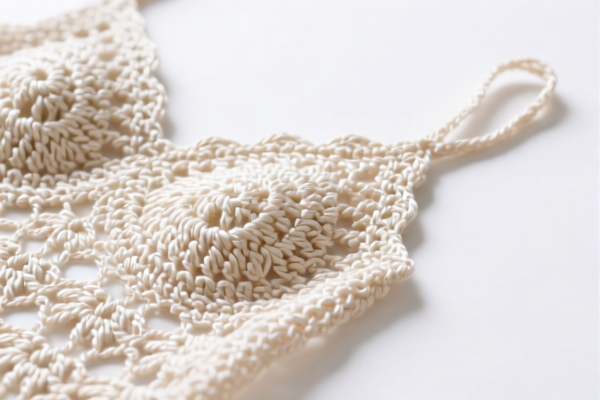
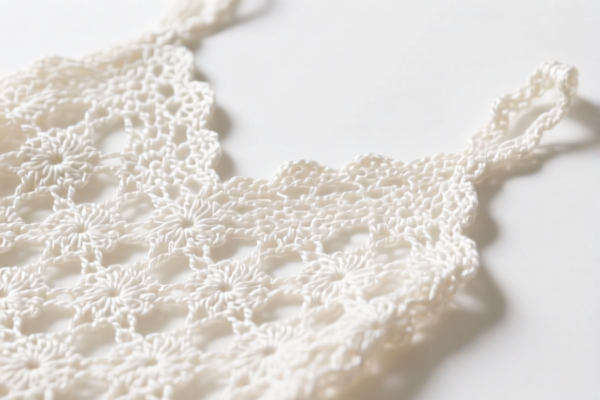
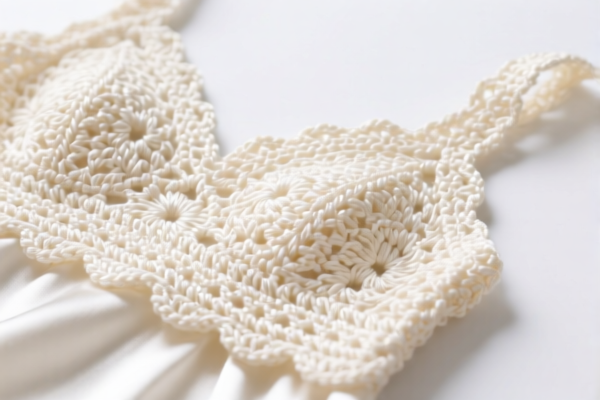

AI Analysis
🧵 Crochet Fabric (Handmade/Knitted Textile Goods)
🌐 HS Code Reference & Customs Clearance Guide | 2026 Latest Tariff Analysis | Professional Clearance Strategy
📌 I. Product Definition & Classification: Do You Really Understand "Crochet Fabric"?
Crochet fabric refers to textiles produced by interlocking loops of yarn using a single hook. In international trade, it is primarily classified under Chapter 61 (Articles of Apparel and Clothing Accessories, Knitted or Crocheted) if it is in a recognizable clothing form (e.g., T-shirts, tops, swimsuits), or potentially under Chapter 60 if it is plain fabric.
However, based on the provided <DATA>, the items are classified under Chapter 61, implying they are recognized as garments or garment parts (such as shirts, bodysuits, or swimsuits) rather than raw yardage.
⚠️ Key Distinction Point:
- If the item is a finished garment (e.g., a T-shirt, tank top, or swimsuit) made by knitting or crocheting → It falls under 6109 or 6112.
- If it is raw fabric (by the yard/meter) → It typically falls under Chapter 60 (Knitted/Crocheted Fabrics), but NOT included in the provided<DATA>.
- The provided HS codes specifically target apparel articles, not raw textile rolls.
📦 II. HS Code Classification Details (2026 Latest Tariff Authority Reference)
| HS Code | Product Description | Application Scenario | Material/Type |
|---|---|---|---|
| 6109.10.00.27 | Knitted or crocheted T-shirts, singlets, and similar vests | Casual wear, summer tops, base layers | Cotton or Polyester blend inferred |
| 6109.10.00.70 | Knitted or crocheted T-shirts, singlets, and similar vests | Apparel category, cotton-based | Cotton-based inference |
| 6112.11.00.10 | Knitted or crocheted tracksuits, ski suits, and swimwear | Sportswear, swimwear, active wear | Material unspecified but likely suitable |
🔍 Key Reminder:
- 6109: Covers T-shirts, singlets, and similar vests. This is the most common category for "crochet tops" or "crochet tanks."
- 6112: Covers specific functional wear, most notably swimwear and tracksuits. If your crochet fabric is made into a bikini or swimsuit, it falls here.
- Material Inference: The tax rates differ slightly based on material (Cotton vs. Polyester/Other). Customs often infer material from the product type if not explicitly stated.
💰 III. 2026 Latest Tariff Rate Details (Including Surcharges & Policy Add-ons)
✅ Applicable Country: United States (US)
✅ Origin: China (CN)
✅ Effective Date: Current trade policies (Section 301 & 122 provisions)
🎯 1. 6109.10.00.27 —— Knitted/Crocheted T-shirts & Singlets (Polyester/Other Fiber Inference)
| Item | Content |
|---|---|
| Base Tariff | 16.5% (Standard MFN Rate) |
| Section 301 Tariff | +7.5% (Retaliatory/Add-on Tariff) |
| Section 122 Tariff | +10% (Specific Import Surcharge) |
| Total Tariff | 34.0% |
| Tax Calculation | CIF Value × 34% |
| De Minimis Exemption | ❌ Not Applicable (High tariff threshold usually blocks de minimis benefits for direct imports) |
| Legal Basis Path | USITC:6109.10.00.27 → Section 301: 7.5% → Section 122: 10% |
📌 Explanation:
- Base 16.5%: Standard tariff for knitted cotton/polyester tops.
- Section 301 (7.5%): Additional duty on Chinese textiles under trade remedy actions.
- Section 122 (10%): Specific surcharge on imports of certain goods (often applied to textiles/apparel to protect domestic manufacturing).
- Total 34%: A significant cost burden. Importers must price accordingly.
🎯 2. 6109.10.00.70 —— Knitted/Crocheted T-shirts & Singlets (Cotton Inference)
| Item | Content |
|---|---|
| Base Tariff | 16.5% |
| Section 301 Tariff | +7.5% |
| Section 122 Tariff | +10% |
| Total Tariff | 34.0% |
| Tax Calculation | CIF Value × 34% |
| De Minimis Exemption | ❌ Not Applicable |
| Legal Basis Path | USITC:6109.10.00.70 → Section 301: 7.5% → Section 122: 10% |
📌 Note:
- Despite being "Cotton" (often lower base rates), the total effective rate remains 34.0% due to the fixed add-ons.
- Do not assume cotton always means lower total duty; the surcharges dominate the cost structure here.
🎯 3. 6112.11.00.10 —— Knitted/Crocheted Swimwear & Sportswear
| Item | Content |
|---|---|
| Base Tariff | 14.9% |
| Section 301 Tariff | +7.5% |
| Section 122 Tariff | +10% |
| Total Tariff | 32.4% |
| Tax Calculation | CIF Value × 32.4% |
| De Minimis Exemption | ❌ Not Applicable |
| Legal Basis Path | USITC:6112.11.00.10 → Section 301: 7.5% → Section 122: 10% |
📌 Advantage:
- This code has a slightly lower base rate (14.9% vs. 16.5%), resulting in a 32.4% total rate.
- Savings: 1.6% lower than T-shirts.
- Usage: Only applicable if the crochet fabric is made into swimwear or tracksuits. Casual crochet tops still fall under 6109.
🛠️ IV. Customs Clearance Practical Advice (实战避坑指南)
✅ 1. Preparation Checklist (Must-Have Documents)
| Document | Required | Notes |
|---|---|---|
| ✅ Product Specification Sheet | ✔️ | Must specify: Fiber content (Cotton %, Polyester %), Weight, Dimensions. |
| ✅ Photos of Final Product | ✔️ | Show neckline, hem, and any tags. Crucial for distinguishing T-shirt (6109) vs. Swimsuit (6112). |
| ✅ Commercial Invoice | ✔️ | Clearly state "Crochet Top" or "Knitted Swimsuit." Avoid vague terms like "Fabric" if it's a garment. |
| ✅ Country of Origin Certificate | ✔️ | Essential for calculating Section 301 and 122 tariffs. |
| ✅ Packing List | ✔️ | Include gross/net weight, piece count. |
✅ 2. Declaration Tips (Key Mantras)
🔥 "Garment, not Fabric; Material, not Guess; Name, not Vague."
| Scenario | Correct Declaration | Wrong Practice | Consequence |
|---|---|---|---|
| Crochet T-shirt | 6109.10.00.70 (Cotton) or .27 (Poly) |
Declared as "Fabric" | Rejection/Inspection delay |
| Crochet Swimsuit | 6112.11.00.10 |
Declared as "T-shirt" | Potential under/over-duty issues |
| Raw Crochet Yarn/Fabric | Chapter 60 (Not in Data) | Declared as Garment | Misclassification penalty |
| Mixed Fiber (e.g., 50% Cotton/50% Poly) | Check HTSUS rules for principal fiber | Guessing | Audit risk |
✅ 3. Special Cases
| Situation | Handling Advice |
|---|---|
| OEM Custom Crochet Tops | Provide design sketches and fabric swatches to prove fiber content. |
| Sample vs. Bulk | Samples may still be subject to tariffs if commercial value is declared. Use "Non-commercial Sample" label only if truly exempt, but expect duty on return. |
| De Minimis (Section 321) | ❌ Generally NOT applicable for China-origin goods under current trade rules for these categories. Do not rely on $800 exemption. |
| Material Ambiguity | If fiber content is unknown, customs may apply the highest duty rate within the heading or require a lab test. Always declare accurately. |
🌍 V. Global Market Comparison (2026 Update)
| Country/Region | Recommended HS Code | Base Tariff | Total Effective Rate (China Origin) | Notes |
|---|---|---|---|---|
| 🇺🇸 USA | 6109.10.00.27/.70 |
16.5% | 34.0% | High Section 301 + 122 surcharges |
| 🇺🇸 USA | 6112.11.00.10 |
14.9% | 32.4% | Lower base rate for swimwear |
| 🇨🇳 China | 6109.10.00.27 |
5-15% | ~5-15% | No Section 122/301 |
| 🇪🇺 EU | 6109.10.00.27 |
12% | ~12% | No Section 301/122 equivalents |
| 🇬🇧 UK | 6109.10.00.27 |
12% | ~12% | Post-Brexit tariff structure |
📌 Conclusion:
- USA is the most expensive market due to layered surcharges (16.5% + 7.5% + 10%).
- Cost Optimization: Consider classifying as Swimwear (6112) if functionally appropriate to save 1.6%.
- Supply Chain: For US exports, explore third-country assembly (e.g., Vietnam, Bangladesh) if eligible for duty exemptions, though "substantial transformation" rules are strict.
📌 VI. Common Errors & Pitfalls (Lessons Learned)
❌ Error 1: Declaring "Crochet Fabric" as "Knitted Fabric" (Chapter 60)
👉 Result: Customs reclassifies to Chapter 61 (Garment) due to shape/use → Penalty + Back Taxes.
❌ Error 2: Ignoring Fiber Content
👉 Result: Misdeclaration of cotton vs. polyester → Audit Flag. Even a 1% difference matters.
❌ Error 3: Assuming De Minimis Applies
👉 Result: Shipments under $800 held at border → Storage Fees + Delays. Section 122 goods are excluded.
❌ Error 4: Using "T-shirt" for a "Tank Top"
👉 Result: Both fall under 6109, but precise description helps avoid scrutiny. Ensure HTS code matches the exact cut.
✅ Correct Practice:
"Women's Crochet Knitted Tank Top, 100% Cotton, Summer Style, Model XYZ, Origin China"
🎯 VII. Conclusion: Precision in Classification Saves Money!
🎯 Remember the Mantra:
🔹 "Garment, not Fabric; Material, not Guess; Total 34%, Price in Early!"
🔹 "Swimwear saves 1.6%; T-shirt pays 34%; Don't guess, test!"
📌 Pro Tip:
If your crochet fabric is intended for non-apparel uses (e.g., home decor, bags), it may fall under Chapter 63 (Other Made-up Textile Articles), which has different tariffs. Ensure your final product matches the HS code description.
📣 Immediate Action:
📞 Contact your Customs Broker + Provide Fabric Swatch + Verify Fiber Content
🚀 Ensure Compliance, Avoid Delays, Protect Your Margin!
✨ Professional Clearance Starts with Accurate Classification!
💼 Every Percentage Point Counts in 2026!
Customer Reviews
About HS Code Classification
The Harmonized System (HS) is an internationally standardized nomenclature developed by the World Customs Organization (WCO) to classify traded products. Over 200 countries use the HS system as the basis for customs tariffs, trade statistics, and import/export regulations.
Each HS code follows a hierarchical structure:
- Chapter (2 digits) — Broad category of goods (e.g., Chapter 84: Machinery and Mechanical Appliances)
- Heading (4 digits) — More specific grouping within the chapter
- Subheading (6 digits) — Internationally standardized breakdown, used by all WCO member countries
- National subdivisions (8-10 digits) — Country-specific extensions for further classification, such as US HTSUS 10-digit codes
Correct HS code classification is essential for smooth customs clearance, accurate duty payment, and compliance with trade regulations. Misclassification can lead to customs delays, overpayment of duties, or penalties.
When importing from CN to US, the applicable tariff rates may include:
- Most-Favored-Nation (MFN) rate — The standard duty rate applied to WTO members
- General rate — Applied to countries without trade agreements
- Trade remedy duties — Additional tariffs such as Section 301 (anti-dumping), Section 232 (national security), or countervailing duties
The information provided on this page is for reference purposes only. For official classification, please consult with your local customs authority or a licensed customs broker.