Crochet Lined Skirt (Other Fabrics)
CN → US| HS Code | Tariff Rate | Origin | Destination | Doc |
|---|---|---|---|---|
| 6104198010 | 23.1% | CN | US | Official Doc |
| 6114909070 | 15.6% | CN | US | Official Doc |
| 6114909010 | 15.6% | CN | US | Official Doc |
| 6103398010 | 23.1% | CN | US | Official Doc |
| 6103398030 | 23.1% | CN | US | Official Doc |
Product Images
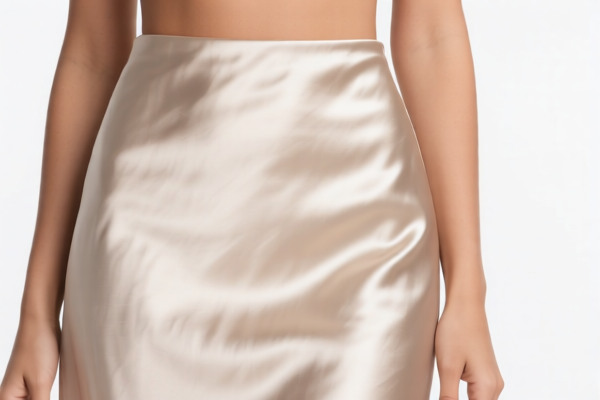

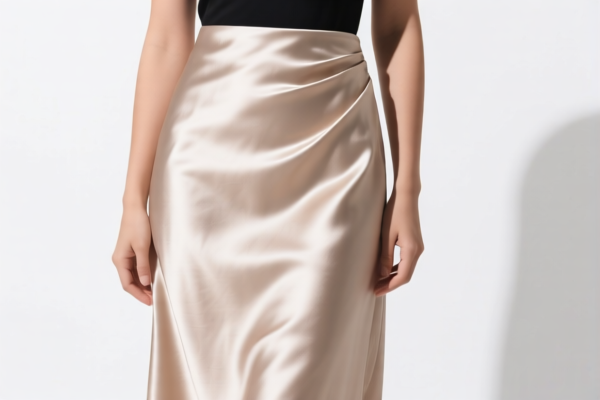
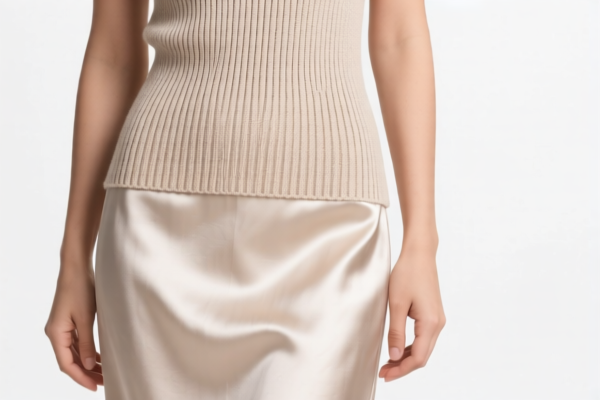
AI Analysis
🧶 Crochet Lined Skirt (Other Fabrics)
🌐 HS Code Reference & Customs Clearance Guide | 2026 Latest Tariff Breakdown | Professional Compliance Strategy
📌 I. Product Definition & Classification: Do You Really Understand "Crochet Lined Skirts"?
A Crochet Lined Skirt (Other Fabrics) is a women’s or children’s bottom garment made from knitted or crocheted fabric, where the outer layer or lining consists of non-standard textile materials not explicitly listed in primary categories (e.g., wool, cotton, or silk). This product falls under Chapter 61 of the Harmonized System (HS), which covers "Articles of Apparel and Clothing Accessories, Knitted or Crocheted."
⚠️ Key Classification Factors:
- Knitted/Crocheted: Must be made using knitting or crochet techniques.
- Lined: May include an inner lining, but the outer fabric determines the primary classification.
- "Other Fabrics": Refers to textiles not categorized under specific fibers like wool, cotton, or man-made fibers—often a catch-all category.
- Skirt: Must be a bottom garment covering the waist to the thigh or lower.
📦 II. HS Code Classification Details (2026 Latest Tariff Reference)
| HS Code | Product Description | Applicable Scenario | Total Tax Rate |
|---|---|---|---|
6104.19.80.10 |
Crochet Suit Jacket (Other Materials) | Crochet jackets with other textile materials | 23.1% |
6114.90.90.70 |
Crochet Jacket (Other Materials) | Crochet tops with other textile materials (catch-all) | 15.6% |
6114.90.90.10 |
Crochet Suit Jacket (Other Materials) | Crochet garments with other textile materials | 15.6% |
6103.39.80.10 |
Crochet Suit Jacket (Other Materials) | Crochet suit jackets with other textile materials | 23.1% |
6103.39.80.30 |
Crochet Suit Jacket (Other Materials) | Crochet suit jackets with non-specific fiber restrictions | 23.1% |
🔍 Critical Note:
- None of the HS codes in the provided data explicitly mention "Skirt". All listed codes are for jackets or upper-body garments.
- If the product is truly a skirt, it should ideally be classified under 6104.63 (women's skirts, knitted/crocheted, other fibers) or similar, which is not included in the current dataset.
- Misclassification Risk: Reporting a skirt under a jacket code (6104or6103) may lead to customs delays, penalties, or reclassification.
- "Other Materials" Clause: This implies the fabric is not wool, cotton, or synthetic fibers, falling into residual categories.
💰 III. 2026 Latest Tariff Rate Breakdown (Including Additional Taxes & Policy Surcharges)
✅ Applicable Country: United States (US)
✅ Country of Origin: China (CN)
✅ Effective Date: Starting November 10, 2025 (for subsequent imports)
🎯 1. 6104.19.80.10 – Crochet Suit Jacket (Other Materials)
| Item | Content |
|---|---|
| Base Tariff | 5.6% |
| Additional Tariff (Section 301) | +7.5% |
| 122 Clause Tariff | +10% |
| Total Tax Rate | 23.1% |
| Tax Calculation | CIF Value × 23.1% |
| De Minimis Exemption | ❌ Not Applicable |
| Legal Basis Path | 122 Clause:122-1 → Section 301:301-7.5 → Base:5.6 |
📌 Explanation:
- The 5.6% is the standard Most Favored Nation (MFN) duty.
- 7.5% is the Section 301 additional tariff for specific Chinese goods.
- 10% is the Section 122 tariff, imposed on certain textile products from China.
- Total: 23.1%, representing a high tariff burden.
🎯 2. 6114.90.90.70 – Crochet Jacket (Other Materials)
| Item | Content |
|---|---|
| Base Tariff | 5.6% |
| Additional Tariff (Section 301) | 0.0% |
| 122 Clause Tariff | +10% |
| Total Tax Rate | 15.6% |
| Tax Calculation | CIF Value × 15.6% |
| De Minimis Exemption | ❌ Not Applicable |
| Legal Basis Path | 122 Clause:122-1 → Base:5.6 |
📌 Note:
- This code applies to crochet tops/jackets with no Section 301 surcharge, resulting in a lower total tax (15.6%).
- Suitable for non-jacketed crochet garments not classified under specific fiber restrictions.
🛠️ IV. Customs Clearance Practical Advice (Real-World Pitfall Avoidance)
✅ 1. Documentation Checklist (Mandatory)
| Document | Must Provide | Description |
|---|---|---|
| ✅ Product Specification Sheet | ✔️ | Include fabric composition, dimensions, lining details, crochet pattern |
| ✅ Product Photos (with Labels) | ✔️ | Clearly show model number, brand, material, and "skirt" designation |
| ✅ Commercial Invoice | ✔️ | Must state "Crochet Lined Skirt (Other Fabrics)" |
| ✅ Packing List | ✔️ | Show item count, packaging, and weight |
| ✅ Certificate of Origin (CO) | ✔️ | Required for any potential tariff preferences |
| ✅ Third-Party Test Report | ✔️ | Fiber composition test (e.g., lab report) |
| ✅ Customs Declaration Form | ✔️ | Accurate HS code and tax declaration |
✅ 2. Declaration Tips (Key Mantra)
🔥 "Classify by Type, Not by Look; Fabric Defines Rate; Lining Doesn't Change Code!"
| Situation | Correct Declaration | Wrong Practice |
|---|---|---|
| Skirt made of crochet fabric | Use proper skirt HS code (not listed here) | Use jacket codes (6104, 6103) → Risk of audit |
| Skirt with lining | Still classified as skirt | Misreport as "jacket" due to lining |
| "Other fabrics" (non-standard) | Declare as "Other textile materials" | Use cotton/wool codes → Penalties |
| Crochet vs. Knitted | Confirm production method | Confusing knitted/crocheted = wrong rate |
✅ 3. Special Cases Handling
| Situation | Recommended Action |
|---|---|
| Custom Crochet Skirts | Provide design drawings + photos; avoid "skirt" misclassification |
| Skirts with Linings | Still classified as skirts; lining material doesn't change code |
| OEM Orders | Provide client PO + specs to avoid "non-standard" classification |
| Skirts for Special Use (e.g., uniforms) | May qualify for duty exemptions; provide proof of use |
🌍 V. Global Customs Clearance Comparison (2026 Latest)
| Country/Region | Recommended HS Code | Tariff | Certification | Notes |
|---|---|---|---|---|
| 🇺🇸 USA | 6104.63.10.00 (Example for skirts) |
15.6% – 23.1% | No specific | High tariff risk if misclassified |
| 🇨🇳 China | 6104.63.10.00 |
5% – 15% | CCC | No additional tariffs |
| 🇪🇺 EU | 6104.63.10.00 |
0% – 5% | CE, REACH | No Section 301/122 |
| 🇦🇺 Australia | 6104.63.10.00 |
5% | RCM | No extra surcharges |
| 🇯🇵 Japan | 6104.63.10.00 |
0% – 5% | PSE | No additional tariffs |
📌 Conclusion:
- USA is the only market with high additional tariffs (Section 301 + 122) for textile products from China.
- Correct HS Code selection is critical to avoid penalties and delays.
- Skirts should NOT be declared under jacket codes unless explicitly reclassified.
📌 VI. Common Mistakes & Pitfall Avoidance (Lessons from Experience)
❌ Mistake 1: Declaring a skirt under a jacket code (6104, 6103)
👉 Consequence: Customs audit, reclassification, potential fines.
❌ Mistake 2: Using "Other Fabrics" loosely without fiber composition proof
👉 Consequence: Tariff miscalculation, penalties, delayed clearance.
❌ Mistake 3: Ignoring lining material's role
👉 Consequence: Misclassification risk if lining dominates garment value.
❌ Mistake 4: Confusing "Crochet" with "Knitted"
👉 Consequence: Incorrect HS code → wrong tariff.
✅ Correct Approach:
"Crochet Lined Skirt (Other Fabrics), 100% Polyester/Cotton Blend, Women's, Waist-to-Knee Length, Model XYZ, Certified."
🎯 VII. Conclusion: Precision Classification Saves Time, Money, and Stress!
🎯 Remember the Mantra:
🔹 "Skirt ≠ Jacket; Fabric Defines Rate; Lining Doesn’t Change Code!"
🔹 "HS Code is Life or Death; 1% error = Thousands in Penalties!"
📌 Pro Tip:
If your skirt is sourced from Vietnam, Mexico, Thailand, or Malaysia, you may qualify for Section 301 exemptions, reducing tariffs to 0%–5%.
Recommendation: Apply for an Advance Ruling before shipment to avoid risks.
📣 Take Action Now:
📞 Contact a Professional Customs Broker + Provide Product Photos + Specs + Request HS Code Advance Ruling
🚀 Let your crochet skirts clear customs smoothly, boost profits, and scale globally!
✨ Professional Clearance Starts with Accurate Classification!
💼 Every Dollar Counted, Every Risk Minimized!
Customer Reviews
About HS Code Classification
The Harmonized System (HS) is an internationally standardized nomenclature developed by the World Customs Organization (WCO) to classify traded products. Over 200 countries use the HS system as the basis for customs tariffs, trade statistics, and import/export regulations.
Each HS code follows a hierarchical structure:
- Chapter (2 digits) — Broad category of goods (e.g., Chapter 84: Machinery and Mechanical Appliances)
- Heading (4 digits) — More specific grouping within the chapter
- Subheading (6 digits) — Internationally standardized breakdown, used by all WCO member countries
- National subdivisions (8-10 digits) — Country-specific extensions for further classification, such as US HTSUS 10-digit codes
Correct HS code classification is essential for smooth customs clearance, accurate duty payment, and compliance with trade regulations. Misclassification can lead to customs delays, overpayment of duties, or penalties.
When importing from CN to US, the applicable tariff rates may include:
- Most-Favored-Nation (MFN) rate — The standard duty rate applied to WTO members
- General rate — Applied to countries without trade agreements
- Trade remedy duties — Additional tariffs such as Section 301 (anti-dumping), Section 232 (national security), or countervailing duties
The information provided on this page is for reference purposes only. For official classification, please consult with your local customs authority or a licensed customs broker.