Crocheted Shirt (Other Textile Materials) Wool Trim
CN → US| HS Code | Tariff Rate | Origin | Destination | Doc |
|---|---|---|---|---|
| 5806391000 | 41.6% | CN | US | Official Doc |
| 6117909015 | 32.1% | CN | US | Official Doc |
| 6117909035 | 32.1% | CN | US | Official Doc |
Product Images
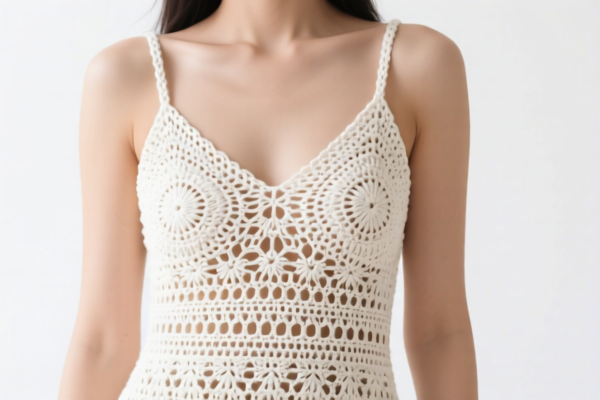
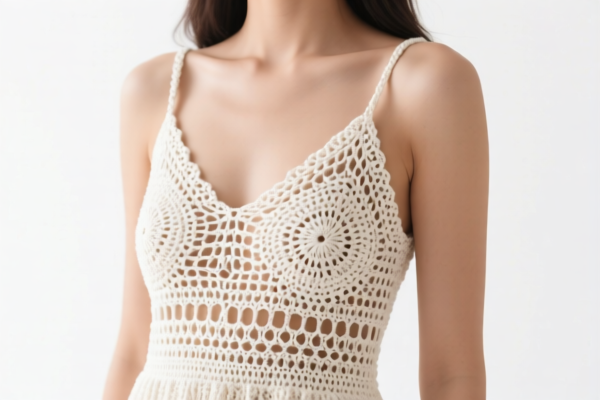
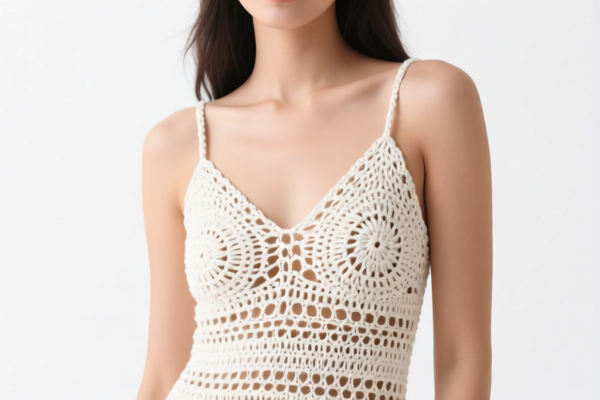

AI Analysis
🧵 Crocheted Shirt with Wool Trim (Other Textile Materials)
🌐 HS Code Reference & Customs Clearance Guide | 2026 Latest Tariff Analysis | Professional Strategy
📌 I. Product Definition & Classification: Is it a Shirt or a Ribbon?
The product is described as a "Crocheted Shirt with Wool Trim," specifically involving "Other Textile Materials" and "Wool."
In international trade, the classification hinges on two critical factors:
1. The Nature of the Goods: Is it a finished garment (shirt) or a textile accessory/trim (ribbon)?
2. The Material Composition: Does it meet the definition of "Wool" or "Other Textiles"?
⚠️ Key Distinction Point:
- If the item is a finished garment (shirt) with wool components → It may fall under general apparel headings (not listed in the provided data).
- If the item is classified as "Other Textile Materials" such as woven strips, ribbons, or trims (even if named "shirt" due to marketing) → It falls under Chapter 58 (Special Woven Fabrics) or Chapter 61 (Articles of Apparel, Knitted or Crocheted).
- Based on the provided data, the classification leans towards textile materials/trims (ribbons/strips) rather than a full garment, likely due to the "Wool Trim" or "Other Textile Materials" description dominating the component value or functional description.
📦 II. HS Code Classification Details (2026 Latest Tariff Authority Match)
Based on the provided data, three potential HS Codes are matched. Each has specific logical reasoning for classification.
| HS Code | Product Description | Matching Logic & Reasoning |
|--------|--------------------------|
| 5806.39.10.00 | Other Woven Fabrics of Narrow Width (Textile Materials) | ✅ Match Reason: The material matches "Wool" requirements. The form matches "Other Textile Materials." Although named "Shirt," the component description "Wool Trim" fits the definition of narrow woven fabrics (ribbons/trims). This is the most precise match for the "material/trim" aspect. |
| 6117.90.90.15 | Other Made-Up Clothing Accessories, Knitted or Crocheted (Ribbon) | ✅ Match Reason: The item is Crocheted Ribbon. It fits the "Knitted or Crocheted" form requirement. The material is non-cotton, non-synthetic, inferred as Wool or Fine Animal Hair (based on common sense for "Wool Trim"). It is classified as an accessory/trim. |
| 6117.90.90.35 | Other Made-Up Clothing Accessories (Shirt Part/Ribbon) | ✅ Match Reason: The item is Crocheted and a Shirt Part/Ribbon. The material is Wool. Although "Other" is stated, it fits the "Non-cotton, Non-synthetic" catch-all logic. No material conflict exists. |
🔍 Important Note:
-5806.39.10.00is likely the most accurate if the item is fundamentally a textile strip/ribbon.
-6117.90.90.15/35are alternative matches if customs views it as a made-up accessory rather than a raw textile strip.
- Do not assume it is a standard shirt (HS 6109/6110) because the provided data explicitly maps it to "Other Textile Materials" and "Ribbons/Trims."
💰 III. 2026 Latest Tariff Rate Breakdown (Including Surtaxes & Policy Add-ons)
✅ Applicable Country: United States (US)
✅ Country of Origin: China (CN)
✅ Effective Date: From November 10, 2025 (and subsequent imports)
🎯 1. 5806.39.10.00 —— Other Woven Fabrics of Narrow Width (Wool/Other Textile)
| Item | Content |
|---|---|
| Base Tariff | 6.6% (Ad Valorem) |
| Section 301 Surtax | +25.0% (Trade War Tariff) |
| Section 122 Tariff | +10.0% (Specific China-related surcharge) |
| Total Tariff Rate | 41.6% |
| Tax Calculation | CIF Value × 41.6% |
| De Minimis Exemption | ❌ Not Available (High tariff rates disqualify from $800 exemption) |
| Legal Basis Path | Section 301: 9903.88.01 → Section 122: 9903.01.24 → HTSUS: 5806.39.10.00 |
📌 Explanation:
- The 6.6% is the standard US Most Favored Nation (MFN) rate for this narrow textile.
- The 25% is the standard Section 301 surcharge for Chinese textile products.
- The 10% is an additional surcharge under Section 122 (often applied to specific Chinese imports).
- Total: 41.6%. This is a high-cost item for importers.
🎯 2. 6117.90.90.15 —— Other Made-Up Clothing Accessories (Crocheted Ribbon)
| Item | Content |
|---|---|
| Base Tariff | 14.6% (Ad Valorem) |
| Section 301 Surtax | +7.5% (Note: Reduced surcharge for this specific sub-category/accessory) |
| Section 122 Tariff | +10.0% |
| Total Tariff Rate | 32.1% |
| Tax Calculation | CIF Value × 32.1% |
| De Minimis Exemption | ❌ Not Available |
| Legal Basis Path | Section 301: 9903.88.01 → Section 122: 9903.01.24 → HTSUS: 6117.90.90.15 |
📌 Explanation:
- The base rate is higher (14.6%) than woven fabrics, but the Section 301 surcharge is lower (7.5% vs 25%) for this specific crocheted accessory sub-category.
- The Section 122 10% still applies.
- Total: 32.1%. This is ~9.5% lower than the5806classification.
🎯 3. 6117.90.90.35 —— Other Made-Up Clothing Accessories (Shirt Part)
| Item | Content |
|---|---|
| Base Tariff | 14.6% (Ad Valorem) |
| Section 301 Surtax | +7.5% |
| Section 122 Tariff | +10.0% |
| Total Tariff Rate | 32.1% |
| Tax Calculation | CIF Value × 32.1% |
| De Minimis Exemption | ❌ Not Available |
| Legal Basis Path | Section 301: 9903.88.01 → Section 122: 9903.01.24 → HTSUS: 6117.90.90.35 |
📌 Explanation:
- Identical tax structure to6117.90.90.15.
- The difference lies in the functional description ("Ribbon" vs "Shirt Part"). Customs may accept either if the product is clearly an accessory/trim.
🛠️ IV. Customs Clearance Practical Advice (Real-World Pitfall Guide)
✅ 1. Required Documentation Checklist
| Document | Must Provide | Description |
|---|---|---|
| ✅ Product Specification Sheet | ✔️ | Detail the crocheted process, wool content %, and dimensions. |
| ✅ Material Composition Label | ✔️ | Explicitly state "100% Wool" or "Wool Blend" to justify "Other Textile Materials." |
| ✅ Product Photos | ✔️ | Clear images showing the crocheted texture and trim/ribbon nature. Avoid photos that look like a full garment if claiming accessory status. |
| ✅ Commercial Invoice | ✔️ | Describe as "Wool Crocheted Ribbon/Trim" rather than "Shirt" to avoid misclassification as apparel (which may have different tariffs). |
| ✅ Origin Certificate | ✔️ | Proof of Chinese origin to apply the correct Section 301/122 rates. |
| ✅ Packing List | ✔️ | Ensure units are counted correctly (meters/yards for fabric, pieces for accessories). |
✅ 2. Declaration Strategy (Key Tips)
🔥 "Describe the Material, Not Just the Name!"
| Scenario | Correct Declaration | Wrong Practice |
|---|---|---|
| Item is a strip/ribbon used for shirts | Declare as "Wool Crocheted Ribbon, HS 6117.90.90.15" | Declare as "Shirt" → Risk of penalty for misdeclaration |
| Item is a woven trim | Declare as "Narrow Woven Fabric, HS 5806.39.10.00" | Declare as "Clothing" → Higher base tariff risk |
| Item is a full garment | Declare as "Knitted Shirt, HS 6110.xx" | Declare as "Trim" → Severe penalty for misclassification |
📌 Critical Note:
- If you declare it as a "Shirt" but it is actually a trim/ribbon, Customs may reclassify it and charge higher penalties.
- If you declare it as "Other Textile Materials" but it is a full shirt, Customs may reclassify it to apparel chapters (61/62) which may have different tariff rates (not covered in the provided data, but potentially higher or lower depending on the exact garment).
✅ 3. Special Circumstances Handling
| Situation | Handling Advice |
|---|---|
| Wool Content < 10% | If wool content is very low, it may not qualify for "Wool" classification. Check if it falls under "Synthetic Fiber" or "Other" with different rates. |
| Mixed Materials | If it contains both wool and synthetic fibers, determine the principal material by weight. Wool-dominated → Wool rates. Synthetic-dominated → Synthetic rates. |
| OEM Custom Goods | Provide design drawings and customer orders to prove the item is a "trim" or "accessory" and not a standalone garment. |
| Small Quantity Imports | Even if small, Section 301 and 122 tariffs apply. De Minimis ($800) exemption does NOT apply to these high-tariff codes. |
🌍 V. Global Market Comparison (2026 Latest)
| Country/Region | Recommended HS Code | Tariff Rate | Certification | Notes |
|---|---|---|---|---|
| 🇺🇸 USA | 6117.90.90.15 / 5806.39.10.00 |
32.1% - 41.6% | No specific certs | High surcharges due to Section 301 & 122 |
| 🇪🇺 EU | 6117.90.90 |
~8-12% | CE/RoHS (if applicable) | Lower base tariffs, no Section 301 |
| 🇨🇳 China | 5806.39.10.00 |
~6-8% | N/A | Import duty for raw textiles |
| 🇬🇧 UK | 6117.90.90 |
~8-12% | UKCA | Post-Brexit rates similar to EU |
📌 Conclusion:
- The USA is the most expensive market for this product due to Section 301 and 122 tariffs.
- Cost-saving Strategy: Consider direct export to EU/UK if possible, where tariffs are significantly lower.
- If exporting to the US, ensure accurate classification to avoid penalties.
📌 VI. Common Mistakes & Pitfalls (Blood-Teaching Lessons)
❌ Mistake 1: Declaring a crocheted ribbon as a "Shirt"
👉 Consequence: Customs may classify it as apparel (HS 6110/6109), which may have different tariffs (potentially higher or lower, but misdeclaration leads to fines).
❌ Mistake 2: Ignoring Section 122 Tariff
👉 Consequence: The 10% surcharge is often overlooked. Total tariff becomes 41.6% or 32.1%, not just 25% or 30%. This is a hidden cost.
❌ Mistake 3: Assuming De Minimis Exemption applies
👉 Consequence: Items under $800 still pay tariffs because these HS codes are subject to Section 301 and 122. No exemption!
❌ Mistake 4: Vague Material Description ("Other Textile")
👉 Consequence: Customs may demand additional documentation or reclassify the goods, causing delays.
✅ Correct Approach:
"Wool Crocheted Ribbon, 100% Wool, for Shirt Trim, HS 6117.90.90.15, Origin: China"
🎯 VII. Conclusion: Precise Classification Saves Money!
🎯 Remember:
🔹 "Name doesn't matter, Material and Form do!"
🔹 "Section 301 + Section 122 = High Tariffs. No Exemption!"
🔹 "Declare as Trim/Ribbon, not Shirt, to avoid Apparel Classification!"
📌 Pro Tip:
If your product is 100% Wool, ensure the wool content declaration is clear. If it is a blend, specify the percentage.
For US imports, budget for 32-42% total tax.
Consult a licensed customs broker to file a Pre-Ruling (ISF/Entry) before shipping.
📣 Action Required:
📞 Contact a Customs Broker
📄 Provide Product Photos & Material Specs
📋 Apply for HS Code Pre-Ruling
🚀 Ensure Smooth Customs Clearance & Maximize Profit Margins!
✨ Professional Customs Clearance Starts with Accurate Classification!
💼 Every Cent Counts!
Customer Reviews
About HS Code Classification
The Harmonized System (HS) is an internationally standardized nomenclature developed by the World Customs Organization (WCO) to classify traded products. Over 200 countries use the HS system as the basis for customs tariffs, trade statistics, and import/export regulations.
Each HS code follows a hierarchical structure:
- Chapter (2 digits) — Broad category of goods (e.g., Chapter 84: Machinery and Mechanical Appliances)
- Heading (4 digits) — More specific grouping within the chapter
- Subheading (6 digits) — Internationally standardized breakdown, used by all WCO member countries
- National subdivisions (8-10 digits) — Country-specific extensions for further classification, such as US HTSUS 10-digit codes
Correct HS code classification is essential for smooth customs clearance, accurate duty payment, and compliance with trade regulations. Misclassification can lead to customs delays, overpayment of duties, or penalties.
When importing from CN to US, the applicable tariff rates may include:
- Most-Favored-Nation (MFN) rate — The standard duty rate applied to WTO members
- General rate — Applied to countries without trade agreements
- Trade remedy duties — Additional tariffs such as Section 301 (anti-dumping), Section 232 (national security), or countervailing duties
The information provided on this page is for reference purposes only. For official classification, please consult with your local customs authority or a licensed customs broker.