Decals
CN → US| HS Code | Tariff Rate | Origin | Destination | Doc |
|---|---|---|---|---|
| 3919905060 | 40.8% | CN | US | Official Doc |
| 4821902000 | 35.0% | CN | US | Official Doc |
| 4911914040 | 17.5% | CN | US | Official Doc |
| 4911998000 | 17.5% | CN | US | Official Doc |
| 3919102055 | 40.8% | CN | US | Official Doc |
| 4821904000 | 35.0% | CN | US | Official Doc |
Product Images

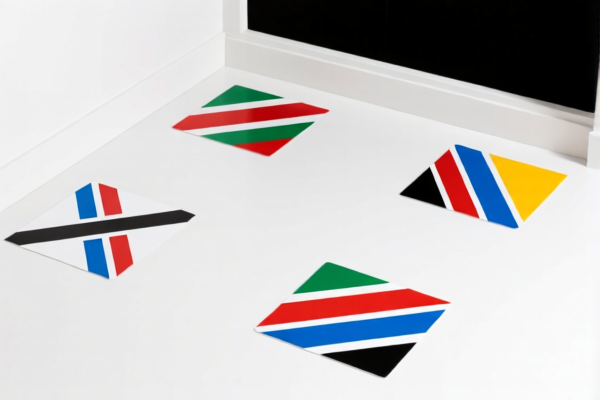
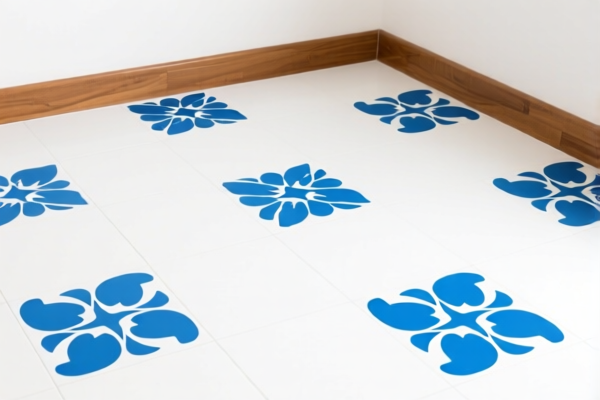
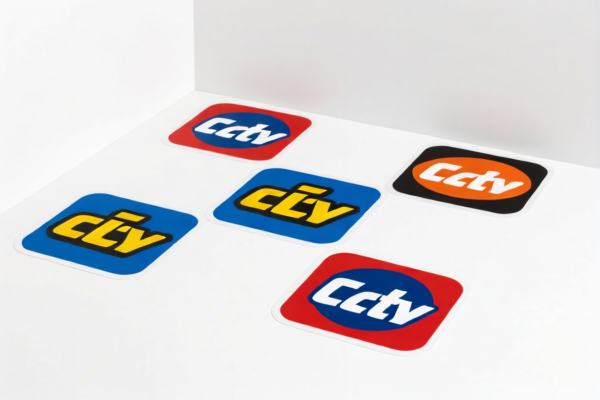
AI Analysis
🏷️ Decals (Stickers/Labels)
🌐 HS Code Reference & Customs Clearance Guide | 2026 Latest Tariff Full Analysis | Professional-Level Clearance Strategy
📌 I. Product Definition and Classification: Do You Really Understand “Decals”?
Decals, commonly known as stickers or labels, are flat, self-adhesive products used for branding, decoration, or information labeling. In international trade, their classification heavily depends on material (plastic vs. paper) and function (printed image vs. functional label).
1. Plastic-Based Self-Adhesive Films:
If the material is primarily plastic (e.g., vinyl, polyester, PVC), it falls under Chapter 39 (Plastics). These are often treated as "Self-adhesive plates, sheets, film, foil, tape, strip, and other flat shapes."
2. Paper-Based or Mixed Material Labels:
If the material is primarily paper, or if it functions primarily as a printed informational label, it may fall under Chapter 48 (Paper) or Chapter 49 (Printed Materials). These are classified as "Self-adhesive paper labels" or "Other printed matter."
⚠️ Key Distinction Point:
- If the product is plastic-based and self-adhesive → Chapter 39 (Higher tariff risk due to 301/122 clauses).
- If the product is paper-based or primarily printed information → Chapter 48/49 (Potentially lower base tariff, but still subject to surcharges).
- Material Composition is Critical: Customs will inspect the physical sample. If a "sticker" has a plastic backing but a paper face, the classification may still lean towards Chapter 39 depending on the essential character.
📦 II. HS Code Classification Details (2026 Latest Tariff Authority Comparison)
Based on the provided data, here are the potential HS Codes and their logic:
| HS Code | Product Description | Application Scenario | Material/Logic |
|---|---|---|---|
3919.90.50.60 |
Self-adhesive plastic films, strips, sheets, etc. | Plastic vinyl stickers, industrial plastic labels, decorative plastic decals | ✅ Plastic base |
4821.90.20.00 |
Self-adhesive paper labels | Paper-based product labels, shipping labels, price tags | ✅ Paper base, functional label |
4911.91.40.40 |
Other printed images, designs, photographs | Decorative stickers with printed graphics, wall decals, artistic prints | ✅ Printed Image focus |
4911.99.80.00 |
Other printed matter (catch-all) | Miscellaneous printed stickers not fitting other specific categories | ✅ Printed Matter catch-all |
3919.10.20.55 |
Other self-adhesive plastic articles | Generic plastic stickers not specifically described elsewhere | ✅ Plastic base (Generic) |
4821.90.40.00 |
Other self-adhesive paper labels | Generic paper labels not fitting specific sub-categories | ✅ Paper base (Generic) |
🔍 Key Insight:
- Plastic Decals (3919.x.x): Always attract the 5.8% base duty + 25% Section 301 Tariff + 10% Section 122 Tariff = 40.8% Total.
- Paper/Printed Decals (4821.x.x&4911.x.x): Attract 0% base duty + 7.5%~25% Surcharge + 10% Section 122 Tariff = 17.5%~35% Total.
- Critical Choice: Importers often try to classify as Chapter 48/49 to save costs, but if the product is clearly plastic, Customs will reclassify it, leading to penalties.
💰 III. 2026 Latest Tariff Rate Details (Including Surcharges & Policy Add-ons)
✅ Applicable Country: United States (US)
✅ Origin: China (CN)
✅ Effective Date: Including imports from 2025 onwards
🎯 1. 3919.90.50.60 & 3919.10.20.55 —— Plastic Self-Adhesive Decals
| Item | Detail |
|---|---|
| Base Duty | 5.8% (Ad valorem) |
| Section 301 Surcharge | +25.0% |
| Section 122 Surcharge | +10.0% |
| Total Tax Rate | 40.8% |
| Tax Calculation | CIF Value × 40.8% |
| De Minimis Exemption | ❌ Not Eligible (High risk of seizure/penalty if shipped via low-value parcel) |
| Legal Basis Path | USITC:3919.90.50.60 → Section 301 (Footnote 9903.88.01) → Section 122 (IEEPA) |
📌 Explanation:
- Base 5.8%: Standard MFN duty for plastic self-adhesive products.
- 25% Section 301: Retaliatory tariff on Chinese plastics and related goods.
- 10% Section 122: National security tariff on steel/aluminum/associated products (often applied broadly to industrial inputs).
- Result: A very high cost burden. Plastic decals are expensive to import into the US.
🎯 2. 4821.90.20.00 & 4821.90.40.00 —— Paper Self-Adhesive Labels
| Item | Detail |
|---|---|
| Base Duty | 0.0% |
| Section 301 Surcharge | +25.0% |
| Section 122 Surcharge | +10.0% |
| Total Tax Rate | 35.0% |
| Tax Calculation | CIF Value × 35.0% |
| De Minimis Exemption | ❌ Not Eligible (Subject to scrutiny if value is low) |
| Legal Basis Path | USITC:4821.90.20.00 → Section 301 → Section 122 |
📌 Note:
- Even with 0% base duty, the 25% + 10% surcharges make this category costly.
- These are typically used for shipping labels, barcode labels, or product identification labels where functionality is key.
🎯 3. 4911.91.40.40 & 4911.99.80.00 —— Printed Decals/Labels
| Item | Detail |
|---|---|
| Base Duty | 0.0% |
| Section 301 Surcharge | +7.5% |
| Section 122 Surcharge | +10.0% |
| Total Tax Rate | 17.5% |
| Tax Calculation | CIF Value × 17.5% |
| De Minimis Exemption | ❌ Not Eligible (Printed goods are often scrutinized for IP infringement) |
| Legal Basis Path | USITC:4911.91.40.40 → Section 301 (Footnote 9903.01.24) → Section 122 |
📌 Advantage:
- This is the most cost-effective classification for decorative stickers, posters, or printed images.
- The Section 301 rate is only 7.5% (lower than the 25% for plastics/paper labels).
- Caution: Must be clearly "printed" and not primarily "plastic self-adhesive film." If it's a plastic sheet with print, Customs may argue for Chapter 39.
🛠️ IV. Customs Clearance Practical Advice (Battle-Tested Pitfall Avoidance)
✅ 1. Documentation Checklist (All Required)
| Document | Mandatory? | Description |
|---|---|---|
| ✅ Product Composition Sheet | ✔️ | Must specify % of Plastic vs. Paper vs. Ink. Crucial for HS Code determination. |
| ✅ Product Photos (Front/Back/Edge) | ✔️ | Show adhesive side, material thickness, and print quality. |
| ✅ Commercial Invoice | ✔️ | Clearly describe as "Paper Decal" or "Plastic Sticker" based on actual material. Do not use vague terms like "Gift Item." |
| ✅ Packing List | ✔️ | Weight and dimensions must match invoice. |
| ✅ IP Authorization Letter | ✔️ | Critical for Chapter 49. If decals feature branded logos (Nike, Disney, etc.), you must prove you are authorized to print them. Otherwise, CBP will seize for IP infringement. |
| ✅ Certificate of Origin | ✔️ | Required for duty calculation and Section 122 applicability. |
✅ 2. Declaration Strategy (Key Mnemonics)
🔥 “Material First, Function Second; Plastic is Expensive, Paper/Print is Cheaper!”
| Scenario | Correct Declaration | Incorrect Declaration | Consequence |
|---|---|---|---|
| Vinyl Sticker (Plastic) | 3919.90.50.60 - "Self-adhesive plastic sticker" |
4911.91.40.40 - "Printed sticker" |
Reclassification → Pay 40.8% instead of 17.5% + Penalties |
| Paper Shipping Label | 4821.90.20.00 - "Self-adhesive paper label" |
4911.99.80.00 - "Other printed matter" |
Potential audit if value is high; 35% vs 17.5% difference |
| Decorative Wall Decal (Printed) | 4911.91.40.40 - "Printed image on self-adhesive backing" |
3919.10.20.55 - "Plastic sticker" |
Missed Savings → Pay 40.8% instead of 17.5% |
| Logo Sticker (No IP Proof) | Any | "Nike Decal" without permission | Seizure for Trademark Infringement |
✅ 3. Special Case Handling
| Case | Handling Advice |
|---|---|
| Mixed Material Decals (e.g., Paper face, Plastic backing) | Provide a detailed cross-section diagram. If the paper face provides the essential character (printing), argue for Chapter 49. If the plastic backing provides durability/adhesion, argue for Chapter 39. |
| High-Value Decorative Stickers | Ensure Section 301 (7.5%) vs Section 301 (25%) distinction is clear. Chapter 49 enjoys the lower 7.5% rate. |
| Small Parcels (De Minimis) | ❌ Avoid. Even for low-value items, Section 122 and 301 tariffs often negate the de minimis benefit for Chinese goods. Declare properly. |
| IP-Branded Decals | Mandatory: Provide brand authorization letter. CBP’s ACE system flags branded goods automatically. |
🌍 V. Global Market Comparison (2026 Latest)
| Country/Region | Recommended HS Code | Tariff (China Origin) | Certification/Requirements | Notes |
|---|---|---|---|---|
| 🇺🇸 USA | 4911.91.40.40 (Print) / 3919... (Plastic) |
17.5% (Print) / 40.8% (Plastic) | CBP Pre-arrival filing, IP check | Highest complexity. Tariff difference is huge. |
| 🇨🇳 China | 4821.90.20.00 |
~5-7% | CCC (if applicable) | Standard export duty |
| 🇪🇺 EU | 4821.10.00 (Labels) |
~0-2% | CE (if electronics attached) | Lower base duties, but VAT applies. |
| 🇬🇧 UK | 4821.10.00 |
~0-2% | UKCA | Post-Brexit rules similar to EU. |
📌 Conclusion:
- The US market is the most punitive for decals, with tariffs ranging from 17.5% to 40.8%.
- Chapter 49 (Printed) is significantly cheaper than Chapter 39 (Plastic).
- Accuracy in Material Declaration is the #1 factor in controlling costs.
📌 VI. Common Mistakes & Pitfall Guide (Lessons Learned)
❌ Mistake 1: Calling all stickers "Decals" and using 4911.99.80.00 for plastic vinyl stickers.
👉 Consequence: CBP reclassifies to 3919.x.x, charges 40.8%, and issues a penalty.
Fix: Declare material accurately. If it’s plastic, use Chapter 39.
❌ Mistake 2: Ignoring IP rights for branded stickers.
👉 Consequence: Seizure by CBP. Goods destroyed. Legal action against importer.
Fix: Always have a Letter of Authorization from the brand owner.
❌ Mistake 3: Assuming De Minimis ($800) applies to all low-value shipments.
👉 Consequence: Section 122 (10%) and Section 301 may still apply, and shipments are subject to intense scrutiny.
Fix: Budget for duties even on small shipments if origin is China.
✅ Correct Practice:
"Paper-based self-adhesive label, printed with product info, model XYZ, authorized for distribution in US."
OR
"Plastic vinyl sticker, decorative print, model ABC, no brand logos."
🎯 VII. Conclusion: Precision in Classification Saves Money!
🎯 Remember the Mnemonic:
🔹 "Plastic is 40%, Paper is 35%, Print is 17%."
🔹 "Material Matters More Than Name."
🔹 "IP Proof Saves Your Goods from Seizure."
📌 Pro Tip:
If your decal is decorative (e.g., wall art, car graphics), ensure it is printed on paper or a paper-like composite to qualify for the 17.5% rate under 4911.91.40.40. If you must use plastic for durability, expect the 40.8% rate.
Always consult a licensed customs broker before shipping high-volume decal orders to the US to verify the latest HTSUS interpretations.
📣 Immediate Action:
📞 Contact your customs broker + Provide material composition + Prepare IP authorization.
🚀 Let your decals clear smoothly, maximize profit margins, and enter the US market efficiently!
✨ Professional clearance starts with precise classification!
💼 Your every dollar of cost deserves to be calculated precisely!
Customer Reviews
About HS Code Classification
The Harmonized System (HS) is an internationally standardized nomenclature developed by the World Customs Organization (WCO) to classify traded products. Over 200 countries use the HS system as the basis for customs tariffs, trade statistics, and import/export regulations.
Each HS code follows a hierarchical structure:
- Chapter (2 digits) — Broad category of goods (e.g., Chapter 84: Machinery and Mechanical Appliances)
- Heading (4 digits) — More specific grouping within the chapter
- Subheading (6 digits) — Internationally standardized breakdown, used by all WCO member countries
- National subdivisions (8-10 digits) — Country-specific extensions for further classification, such as US HTSUS 10-digit codes
Correct HS code classification is essential for smooth customs clearance, accurate duty payment, and compliance with trade regulations. Misclassification can lead to customs delays, overpayment of duties, or penalties.
When importing from CN to US, the applicable tariff rates may include:
- Most-Favored-Nation (MFN) rate — The standard duty rate applied to WTO members
- General rate — Applied to countries without trade agreements
- Trade remedy duties — Additional tariffs such as Section 301 (anti-dumping), Section 232 (national security), or countervailing duties
The information provided on this page is for reference purposes only. For official classification, please consult with your local customs authority or a licensed customs broker.