Deep Red Mahogany
CN → US| HS Code | Tariff Rate | Origin | Destination | Doc |
|---|---|---|---|---|
| 9403308001 | 35.0% | CN | US | Official Doc |
| 9403308005 | 35.0% | CN | US | Official Doc |
| 4410110030 | 35.0% | CN | US | Official Doc |
| 4410110020 | 35.0% | CN | US | Official Doc |
| 4407210000 | 35.0% | CN | US | Official Doc |
| 4407290206 | 35.0% | CN | US | Official Doc |
Product Images
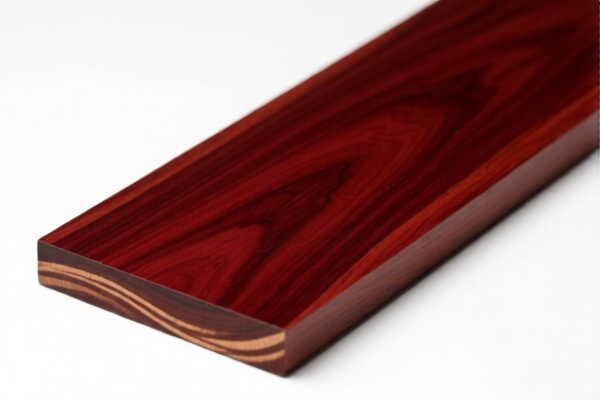
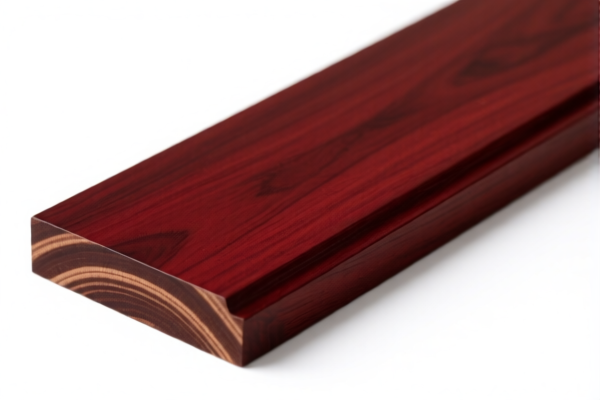
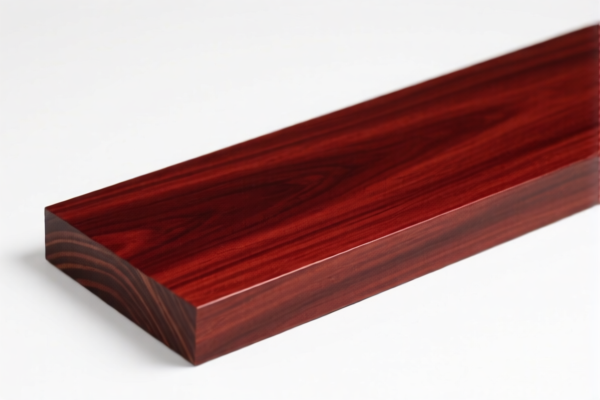
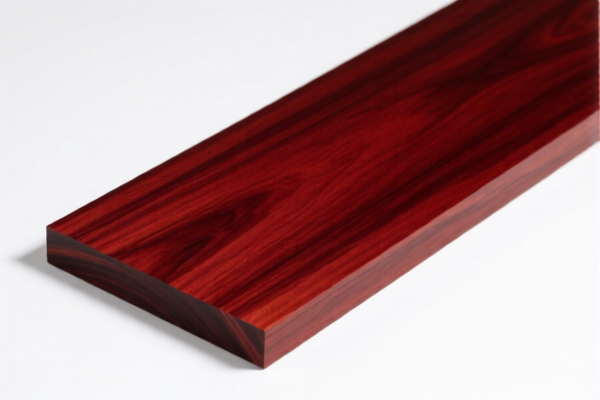
AI Analysis
🪵 Deep Red Mahogany (Swietenia spp.)
🌐 HS Code Reference & Customs Clearance Guide | 2026 Latest Tariff Analysis | Professional Clearance Strategy
📌 1. Product Definition & Classification: Do You Really Understand "Deep Red Mahogany"?
"Deep Red Mahogany" is a high-value tropical timber, scientifically classified under Swietenia species. It is prized for its rich color, stability, and workability, commonly used in luxury furniture, musical instruments, and fine cabinetry. In international trade, it is strictly regulated due to its classification as tropical wood.
⚠️ Key Distinction:
- "Deep Red Mahogany" (Swietenia spp.) is NOT the same as "African Mahogany" (Khaya spp.).
- Misclassification leads to significant tax penalties and customs delays.
- The key identifier is the scientific name and physical characteristics (color, grain, density).
📦 2. HS Code Classification Details (2026 Latest Tariff Authoritative Comparison)
Based on the provided , here is the exact HS Code classification for Deep Red Mahogany:
| HS Code | Product Description | Application Scenario | Tax Rate (US, CN Origin) |
|---|---|---|---|
4407.21.00.00 |
Wood sawn or chipped lengthwise, sliced or peeled, whether or not planed, sanded or end-jointed, of a thickness exceeding 6 mm: Of tropical wood: Mahogany (Swietenia spp.) | Raw timber, lumber, planks, or finished wood products made from Swietenia species. | 25.0% (Total) |
🔍 Critical Note:
- This HS Code applies only to wood from Swietenia species (true mahogany).
- If the wood is from Khaya spp. (African Mahogany), it falls under4407.29.02.06(also 25% tax, but different code).
- Do not confuse with furniture products (which fall under Chapter 94).
💰 3. 2026 Latest Tariff Rate Details (Including Additional Taxes, Policy Add-ons)
✅ Applicable Country: United States (US)
✅ Country of Origin: China (CN)
✅ Effective Date: From 2025-11-10 onwards
🎯 1. 4407.21.00.00 —— Mahogany (Swietenia spp.) Sawed Wood
| Item | Content |
|---|---|
| Base Tariff Rate | 0.0% (ad valorem) |
| Additional Tariff (Section 301) | +25.0% (USITC Footnote 9903.88.01) |
| Total Tariff Rate | 25.0% |
| Tax Calculation | CIF Value × 25.0% |
| De Minimis Exemption Available? | ❌ No (deny_de_minimis) |
| Legal Basis Path | USITC:4407.21.00.00 → FOOTNOTE:9903.88.01 |
📌 Explanation:
- The 0% base tariff is standard for most wood products under normal trade relations.
- The +25% additional tariff is imposed under Section 301 of the Trade Act against Chinese-origin goods.
- Total effective rate: 25%. This is a high tariff that must be factored into cost calculations.
🛠️ 4. Customs Clearance Practical Advice (Real-World Pitfall Avoidance Guide)
✅ 1. Documentation Checklist (All Required)
| Document | Required | Description |
|---|---|---|
| ✅ Scientific Name Confirmation | ✔️ | Must explicitly state Swietenia spp. in commercial invoice and packing list. |
| ✅ Phytosanitary Certificate | ✔️ | Issued by the exporting country's plant protection agency. |
| ✅ Logwood Declaration | ✔️ | Statement confirming compliance with CITES (if applicable) and Lacey Act. |
| ✅ Product Specifications | ✔️ | Thickness, dimensions, treatment status (seasoned/kiln-dried). |
| ✅ Commercial Invoice | ✔️ | Clearly describe as "Sawn Mahogany Wood (Swietenia spp.)". |
| ✅ Packing List | ✔️ | Detail quantity, weight, and packaging type. |
✅ 2. Declaration Tips (Key Mnemonics)
🔥 "True Mahogany, Swietenia Name, 25% Tax, No De Minimis!"
| Scenario | Correct Declaration | Wrong Practice |
|---|---|---|
| Raw Sawed Mahogany (Swietenia) | 4407.21.00.00 |
Mislabel as "Furniture" → Wrong Chapter, Penalty |
| Furniture made from Mahogany | 9403.30.80.01 (if Padauk/Narra) or 9403.30.80.05 (if Rosewood) |
Declare wood as furniture → Under/Over Tax |
| African Mahogany (Khaya) | 4407.29.02.06 |
Declare as Swietenia → Risk of Misclassification |
| Processed Panels (e.g., Plywood) | 4412.xx.xx |
Declare as solid sawn wood → Wrong Code |
✅ 3. Special Situation Handling
| Situation | Handling Advice |
|---|---|
| Mixed Shipments (Mahogany + Other Woods) | Declare each wood type separately with exact HS Codes. |
| CITES-Listed Species | If Swietenia is listed under CITES Appendix II, provide CITES Permit. |
| Lacey Act Compliance | Ensure declaration of species and country of harvest for all timber products. |
| Furniture vs. Wood | If the product is finished furniture, do not use 4407.21.00.00. Use Chapter 94 codes instead. |
🌍 5. Global Market Comparison (2026 Latest)
| Country/Region | Recommended HS Code | Tariff (China Origin) | Certification Requirements | Notes |
|---|---|---|---|---|
| 🇺🇸 USA | 4407.21.00.00 |
25% (Section 301) | Phytosanitary, CITES (if applicable) | High tariff; no de minimis. |
| 🇨🇳 China | 4407.21.00.00 |
~5-10% | Import License (if restricted) | Domestic demand for luxury wood. |
| 🇪🇺 EU | 4407.21.00.00 |
0-4% | EUTR (EU Timber Regulation) Compliance | Strict legality verification. |
| 🇦🇺 Australia | 4407.21.00.00 |
5% | Biosecurity Clearance | Rigorous inspection. |
| 🇯🇵 Japan | 4407.21.00.00 |
0-5% | Phytosanitary Certificate | High demand for quality timber. |
📌 Conclusion:
- USA imposes a 25% additional tariff on Chinese-origin Swietenia mahogany wood.
- No de minimis exemption applies; even small shipments are taxed.
- CITES and Lacey Act compliance is critical to avoid seizure.
📌 6. Common Mistakes & Pitfall Avoidance (Lessons Learned)
❌ Mistake 1: Declaring Swietenia wood as "African Mahogany" (Khaya)
👉 Consequence: Potential misclassification, though tax rate may be similar, legal risks under CITES/Lacey Act increase.
❌ Mistake 2: Treating "Mahogany Furniture" as "Raw Wood"
👉 Consequence: Wrong HS Code (4407 vs 9403); leads to delayed customs release or penalties.
❌ Mistake 3: Ignoring CITES Requirements
👉 Consequence: Shipment seized or destroyed. Swietenia species are often CITES-listed.
❌ Mistake 4: Assuming De Minimis Exemption Applies
👉 Consequence: Tax applies to all shipments, regardless of value. No $800 exemption for Section 301 goods.
✅ Correct Practice:
"Sawn Mahogany Wood, Swietenia spp., Kiln-Dried, Thickness >6mm, Compliant with CITES & Lacey Act, HS Code: 4407.21.00.00"
🎯 7. Conclusion: Professional Declaration, Save Time and Money!
🎯 Remember the Mnemonic:
🔹 "Swietenia Name, 25% Tax, No De Minimis, CITES Check!"
🔹 "HS Code Defines Tax, 25% Difference, Declaration Matters, Avoid Seizure!"
📌 Pro Tip:
If your mahogany wood is originally from Brazil, Peru, or other non-Chinese countries, it may not be subject to the 25% Section 301 tariff, but base tariffs and CITES/Lacey Act rules still apply.
Consider Advance Ruling from US Customs (CBP) for complex shipments.
📣 Immediate Action:
📞 Contact a licensed customs broker + Provide CITES Permit (if required) + Apply for HS Code Advance Ruling
🚀 Ensure your Deep Red Mahogany shipments clear customs smoothly, avoid penalties, and maximize profit!
✨ Professional Clearance Starts with Accurate Classification!
💼 Every Dollar Saved Counts in International Trade!
Customer Reviews
About HS Code Classification
The Harmonized System (HS) is an internationally standardized nomenclature developed by the World Customs Organization (WCO) to classify traded products. Over 200 countries use the HS system as the basis for customs tariffs, trade statistics, and import/export regulations.
Each HS code follows a hierarchical structure:
- Chapter (2 digits) — Broad category of goods (e.g., Chapter 84: Machinery and Mechanical Appliances)
- Heading (4 digits) — More specific grouping within the chapter
- Subheading (6 digits) — Internationally standardized breakdown, used by all WCO member countries
- National subdivisions (8-10 digits) — Country-specific extensions for further classification, such as US HTSUS 10-digit codes
Correct HS code classification is essential for smooth customs clearance, accurate duty payment, and compliance with trade regulations. Misclassification can lead to customs delays, overpayment of duties, or penalties.
When importing from CN to US, the applicable tariff rates may include:
- Most-Favored-Nation (MFN) rate — The standard duty rate applied to WTO members
- General rate — Applied to countries without trade agreements
- Trade remedy duties — Additional tariffs such as Section 301 (anti-dumping), Section 232 (national security), or countervailing duties
The information provided on this page is for reference purposes only. For official classification, please consult with your local customs authority or a licensed customs broker.