Design Cotton Paper Roll
CN → US| HS Code | Tariff Rate | Origin | Destination | Doc |
|---|---|---|---|---|
| 4811902000 | 35.0% | CN | US | Official Doc |
| 4811904090 | 35.0% | CN | US | Official Doc |
| 4811909010 | 35.0% | CN | US | Official Doc |
| 4911911500 | 17.5% | CN | US | Official Doc |
| 4811904090 | 35.0% | CN | US | Official Doc |
Product Images
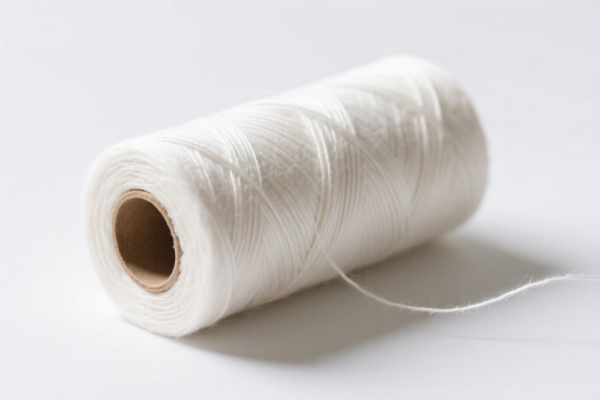
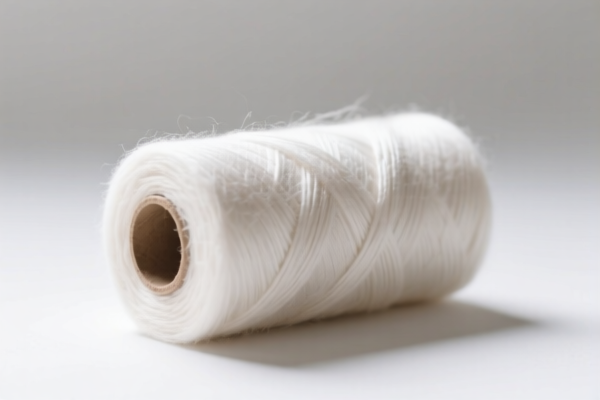
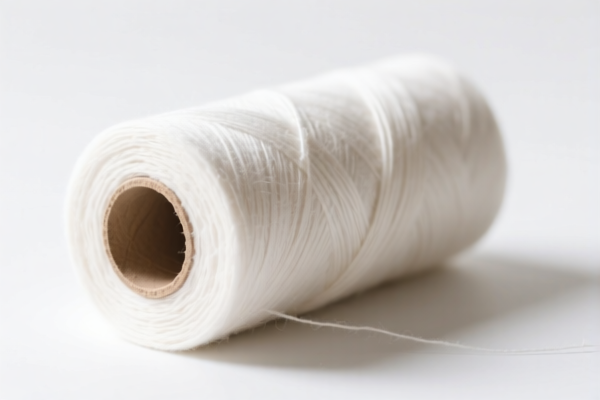
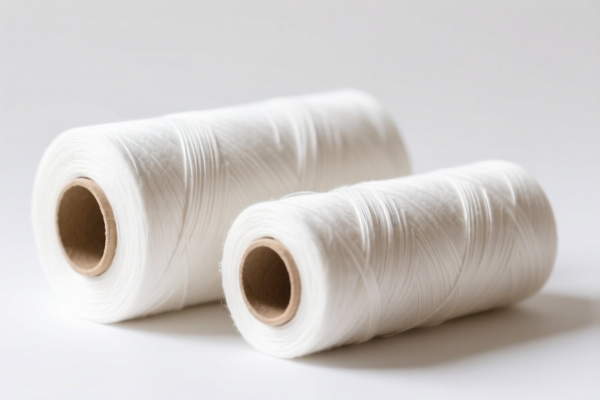
AI Analysis
🎨 Cotton Paper Roll (Design/Architectural Grade)
🌐 HS Code Reference & Customs Clearance Guide | 2026 Latest Tariff Analysis | Professional Strategy for US Market
📌 One, Product Definition & Classification: What Exactly is "Cotton Paper Roll"?
Cotton paper rolls are high-quality, archival-grade paper products primarily composed of cellulose fibers or cotton lint. In international trade, they are often categorized based on their physical form, processing method, and specific application (e.g., blueprinting, artistic printing, or general packaging).
Key Distinction Points: * Raw/General Purpose Rolls: Plain or lightly coated rolls used for general packaging or basic drafting. → Harmonized Under Chapter 48 (Paper & Paperboard). * Specialized/Processed Rolls: Rolls treated for specific functions like blueprint reproduction, artistic printing, or heavy coating. → May fall under Chapter 48 (Coated/Decorative) or Chapter 49 (Printed Matter/Designs) depending on the extent of printing/processing.
⚠️ Critical Customs Warning:
- If the paper is unprinted but coated/processed for specific industrial use (like blueprints), it generally stays in Chapter 48.
- If the paper is printed with designs, images, or technical drawings intended for immediate commercial use, it may shift to Chapter 49.
- Misclassification Risk: Declaring a printed blueprint roll as "raw paper" (Chapter 48) or vice versa can lead to significant duty discrepancies and customs holds.
📦 Two, HS Code Classification Details (2026 Latest Tariff Alignment)
Based on the provided data, here are the precise HS Code mappings for Design Cotton Paper Rolls:
| HS Code | Product Description | Classification Logic | Primary Use Case |
|---|---|---|---|
4811.90.20.00 |
Art-grade cotton paper rolls, cellulose/cotton fiber net, roll form, categorized as other coated or decorative paper. | Classified under Chapter 48 (Paper) because it focuses on the material structure and coating/decoration process, not the final printed content. | High-end art printing, museum reproduction, premium decorative packaging. |
4811.90.40.90 |
Cotton paper rolls, cellulose-based paper products, roll form, compliant with general paper product categories. | Also under Chapter 48. This is a broad "catch-all" for cellulose/cotton rolls that do not fit specific sub-categories like coated inkjet paper but are still processed paper. | General drafting, basic blueprinting, industrial wrapping where "cotton" content is specified. |
4811.90.90.10 |
Blueprint cotton paper rolls, paper/cellulose material, roll form, compliant with "other" paper descriptions. | Under Chapter 48. Specifically identified for blueprint application but classified as "other" processed paper due to lack of complex printing in the raw stage. | Architectural/blueprint drafting, engineering sketches. |
4911.91.15.00 |
Blueprint cotton paper rolls, roll form, cotton material, used for design-printed matter, compliant with printed images/design categories. | Chapter 49 (Printed Matter). This is the key differentiator: if the roll is pre-printed with design images or is specifically categorized as "printed matter" for design use, it moves here. | Pre-printed design templates, artistic prints, finished graphic media. |
4811.90.40.90 |
Blueprint cotton paper rolls, cellulose/cotton characteristics, roll form, categorized as printed/coated paper products. | Duplicate HS Code from above (4811.90.40.90). This indicates ambiguity in customs data. It can refer to either general cellulose rolls or blueprint-specific rolls if not clearly distinguished as "printed." |
Ambiguous: Could be raw blueprint paper or lightly treated drafting paper. |
🔍 Key Insight:
- Chapter 48 Codes (4811.90.xx.xx) apply to the physical product (paper) regardless of its intended artistic use, as long as it isn't pre-printed commercial media.
- Chapter 49 Code (4911.91.15.00) applies when the function is explicitly "printed matter" or "design images."
- Note: The data shows4811.90.40.90appearing twice with slightly different summaries. This suggests it is a flexible code for unprinted cotton/blueprint paper.
💰 Three, 2026 Latest Tariff Rate Breakdown (Including Additional Duties & Policy Surcharges)
✅ Applicable Country: United States (US)
✅ Origin: China (CN)
✅ Effective Time: 2025/2026 (Current Trade Policy)
🎯 1. Chapter 48 Classification (4811.90.20.00, 4811.90.40.90, 4811.90.90.10)
These codes carry the higher tariff burden due to the "122 Section" classification.
| Item | Detail |
|---|---|
| Base Duty Rate | 0.0% |
| Additional Duty (Section 301/USITC) | +25.0% |
| 122 Section Duty (China Specific) | +10.0% |
| Total Effective Tariff | 35.0% |
| Calculation Base | CIF Value × 35% |
| De Minimis Exemption | ❌ Not Eligible (Section 321 de minimis does not apply to goods subject to Section 301 or 122 duties) |
| Legal Basis Path | USITC: 4811.90.xx.xx → Footnote: Section 301 (25%) → Section 122 (10%) |
📌 Explanation:
- The 25% is the standard Section 301 tariff on Chinese goods.
- The 10% is a specific punitive tariff ("122 Clause") often applied to Chinese textiles/paper products under specific trade remedy lists.
- Total 35% is a significant cost driver. Many importers attempt to reclassify here to Chapter 49 to avoid this, but risk audits.
🎯 2. Chapter 49 Classification (4911.91.15.00)
This code carries a lower tariff burden, potentially saving 17.5% in duties.
| Item | Detail |
|---|---|
| Base Duty Rate | 0.0% |
| Additional Duty (Section 301/USITC) | +7.5% |
| 122 Section Duty (China Specific) | +10.0% |
| Total Effective Tariff | 17.5% |
| Calculation Base | CIF Value × 17.5% |
| De Minimis Exemption | ❌ Not Eligible (Still subject to Section 301/122) |
| Legal Basis Path | USITC: 4911.91.15.00 → Footnote: Section 301 (7.5%*) → Section 122 (10%) |
📌 Explanation:
- The 7.5% additional duty reflects a lower priority or different trade list for "printed matter/designs" compared to raw processed paper.
- Total 17.5% is half the cost of Chapter 48 codes.
- ⚠️ Risk: To use this code, you must prove the product is "printed matter" or "design material." If customs inspects and finds it is blank/unprinted cotton paper, they will reclassify it to Chapter 48 and charge 35% + penalties.
🛠️ Four, Customs Clearance Practical Advice (Pitfall Avoidance Guide)
✅ 1. Documentation Checklist (Mandatory)
| Document | Requirement | Why It Matters |
|---|---|---|
| Product Specification Sheet | ✔️ Must state: "Cotton Content %", "Weight (GSM)", "Coating Type (if any)", "Blank vs. Printed". | Determines if it's Chapter 48 (unprinted) or 49 (printed). |
| Commercial Invoice | ✔️ Must clearly describe as "Cotton Paper Rolls for Artistic Use" or "Blueprint Paper." | Vague descriptions like "Paper" trigger manual reviews. |
| Photo of Product | ✔️ Show the roll end (texture) and surface. If printed, show the design. | Proves "printed" status for 4911.91.15.00. |
| Material Safety Data Sheet (MSDS) | ✔️ If chemical coatings are used for blueprinting. | Required for hazardous chemical handling. |
| Certificate of Origin | ✔️ Must indicate China origin. | Triggers Section 301 & 122 duties. |
✅ 2. Classification Strategy (The "Save 17.5%" Dilemma)
| Scenario | Recommended HS Code | Duty Rate | Strategy |
|---|---|---|---|
| Blank/Unprinted Cotton Paper (Raw art paper, uncoated or lightly coated) | 4811.90.20.00 or 4811.90.90.10 |
35.0% | Be Honest. Do not try to classify blank paper as "printed." The risk of penalties exceeds the savings. |
| Blueprint Paper (Unprinted, light blue surface, chemical treated) | 4811.90.90.10 |
35.0% | Commonly misclassified. Ensure the "chemical treatment" is documented, but stick to Chapter 48. |
| Pre-Printed Design Paper (Art prints, patterned paper, finished graphic media) | 4911.91.15.00 |
17.5% | Optimize Here. If the paper is shipped with visible images/designs, this code is legitimate and saves money. |
🔥 Pro Tip:
- If you are shipping blank cotton paper, do not use4911.91.15.00.
- If you are shipping pre-printed design paper, must use4911.91.15.00.
- Gray Area: "Blueprint paper" is usually blank but chemically sensitized. It typically falls under 4811.90.90.10 (35%).
✅ 3. Special Handling for "122 Section" Duties
- The 10% surcharge is non-negotiable for Chinese-origin cotton/paper goods under current policy.
- No De Minimis Exemption: Small packages (under $800) do not escape these duties. All 50+ packages are subject to the 35% or 17.5% rate.
- Audit Risk: Customs aggressively audits "low-value" shipments from China claiming to be "personal use" or "samples" to avoid duties. Ensure accurate valuation.
🌍 Five, Global Market Comparison (2026)
| Market | HS Code | Base Duty | Additional (China) | Total Est. | Notes |
|---|---|---|---|---|---|
| 🇺🇸 USA | 4811.90.xx |
0% | 35% (301+122) | 35% | High barrier. Consider Vietnam/Mexico sourcing if volume is high. |
| 🇺🇸 USA | 4911.91.15 |
0% | 17.5% (301+122) | 17.5% | Only for printed/design paper. |
| 🇪🇺 EU | 4811.90 | 0-3% | 0% (No Section 301) | ~3% | No 122 clause. Much cheaper than US. |
| 🇨🇳 China | 4811.90 | 0-10% | 0% | ~0-10% | Import into China is cheaper. |
📌 Conclusion:
- The US market is the most expensive for Chinese cotton paper due to dual tariffs (301 + 122).
- Chapter 49 classification offers a 50% duty reduction but requires the product to be printed/design material.
📌 Six, Common Mistakes & Pitfalls (Lessons Learned)
❌ Mistake 1: Classifying blank blueprint paper as 4911.91.15.00 to save taxes.
👉 Consequence: Customs rejects it as "not printed matter," reclassifies to 4811.90.90.10, and charges 35% + interest.
❌ Mistake 2: Ignoring the 122 Clause (10%) in cost calculations.
👉 Consequence: Budget shortfall. Many importers only account for Section 301 (25%) and miss the extra 10%.
❌ Mistake 3: Vague description: "Cotton Paper."
👉 Consequence: Customs assigns the highest duty code available in the chapter. Always specify "Art Grade," "Blueprint," or "Printed Design."
✅ Correct Approach:
"Cotton Art Paper Roll, 300 GSM, White, Unprinted" →
4811.90.20.00(35%)
"Pre-Printed Watercolor Paper Roll, Art Design" →4911.91.15.00(17.5%)
🎯 Seven, Conclusion: Professional Classification Saves Money!
🎯 Key Takeaway:
🔹 Blank Paper = 35% Duty (Chapter 48)
🔹 Printed/Design Paper = 17.5% Duty (Chapter 49)
🔹 No De Minimis Exemption for Chinese goods.
📌 Action Item:
1. Audit your SKU list: Separate blank cotton rolls from pre-printed design rolls.
2. Update Commercial Invoices: Clearly describe the "printed" status if using 4911.91.15.00.
3. Consult a Customs Broker: If you have high volumes, request a Binding Tariff Ruling (BTR) from CBP to legally secure the 17.5% rate for design paper.
📣 Immediate Action:
📞 Review your current HS Codes.
🚀 Switch to4911.91.15.00ONLY if printed.
💼 Accurate classification = Lower Landed Cost.
✨ Precision in Classification is Profitability!
💼 Every percent of duty saved goes straight to your bottom line.
Customer Reviews
About HS Code Classification
The Harmonized System (HS) is an internationally standardized nomenclature developed by the World Customs Organization (WCO) to classify traded products. Over 200 countries use the HS system as the basis for customs tariffs, trade statistics, and import/export regulations.
Each HS code follows a hierarchical structure:
- Chapter (2 digits) — Broad category of goods (e.g., Chapter 84: Machinery and Mechanical Appliances)
- Heading (4 digits) — More specific grouping within the chapter
- Subheading (6 digits) — Internationally standardized breakdown, used by all WCO member countries
- National subdivisions (8-10 digits) — Country-specific extensions for further classification, such as US HTSUS 10-digit codes
Correct HS code classification is essential for smooth customs clearance, accurate duty payment, and compliance with trade regulations. Misclassification can lead to customs delays, overpayment of duties, or penalties.
When importing from CN to US, the applicable tariff rates may include:
- Most-Favored-Nation (MFN) rate — The standard duty rate applied to WTO members
- General rate — Applied to countries without trade agreements
- Trade remedy duties — Additional tariffs such as Section 301 (anti-dumping), Section 232 (national security), or countervailing duties
The information provided on this page is for reference purposes only. For official classification, please consult with your local customs authority or a licensed customs broker.