Diesel Engine (HS Code 8408909020)
CN → US| HS Code | Tariff Rate | Origin | Destination | Doc |
|---|---|---|---|---|
| 8408909030 | 35.0% | CN | US | Official Doc |
| 8408909040 | 35.0% | CN | US | Official Doc |
| 8408909030 | 35.0% | CN | US | Official Doc |
| 8408909040 | 35.0% | CN | US | Official Doc |
| 8408909030 | 35.0% | CN | US | Official Doc |
Product Images
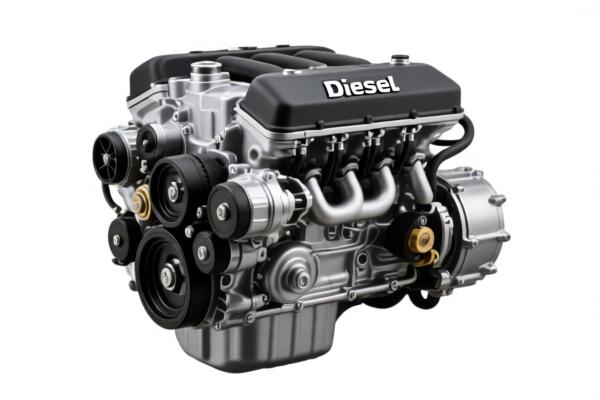
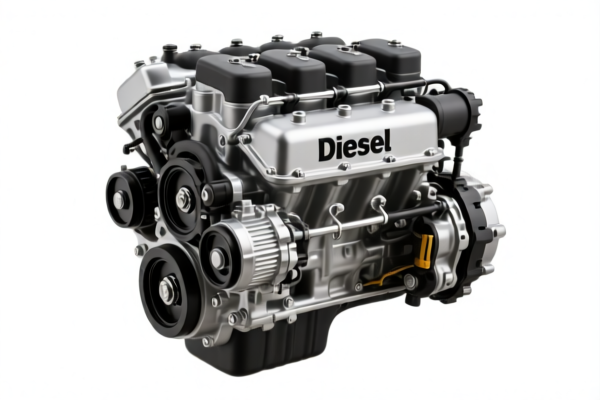
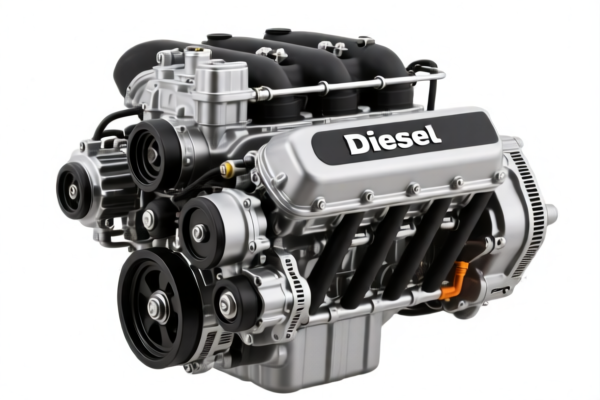
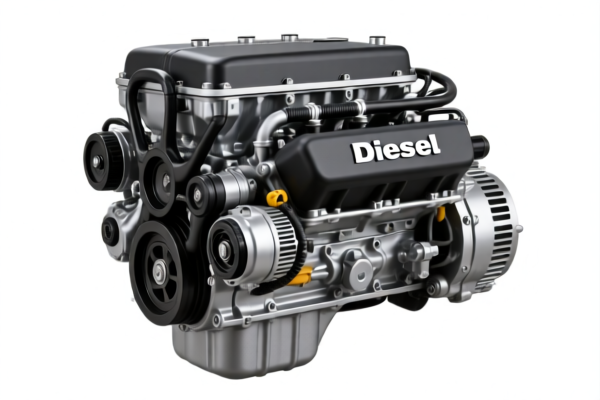
AI Analysis
🚛 Diesel Engines (Compression-Ignition Internal Combustion Piston Engines)
🌐 HS Code Classification & Customs Clearance Guide | 2026 Tax Regime Analysis | Professional Compliance Strategy
📌 I. Product Definition & Classification: What is a "Diesel Engine"?
A Diesel Engine, technically classified as a Compression-Ignition Internal Combustion Engine (CIE), is a power unit that ignites fuel by compression rather than a spark plug. In international trade, precise classification is critical because minor variations in technical specifications or intended use can shift the HS code, drastically altering tax liabilities.
Key Technical Attributes: * Ignition Type: Compression (Self-ignition). * Mechanism: Piston-based internal combustion. * Fuel: Diesel or Heavy Oil (Petroleum-based).
⚠️ Critical Distinction:
- If the engine is not a compression-ignition piston type (e.g., Gasoline/Spirit ignition), it does NOT belong to Heading 8408.
- If it is a gas turbine or rotary engine, it also does NOT belong to Heading 8408.
- Scope: This guide strictly covers Compression-Ignition Piston Engines as per the provided dataset (HS 8408.90.90.30 / 8408.90.90.40).
📦 II. HS Code Classification Details (2026 Latest Tariff Schedule)
Based on the specific technical attributes and usage scenarios provided in the data, diesel engines fall into two primary sub-headings within 8408.90.90. The distinction often lies in specific power intervals, material composition, or detailed functional descriptions recognized by customs authorities.
| HS Code | Product Description | Key Matching Criteria | Application Scenario |
|---|---|---|---|
8408.90.90.30 |
Diesel Engine: Compression-Ignition Internal Combustion Piston Engine (Diesel/Half-Diesel) | Matches power interval parameters; material and use fully aligned with the heading definition. | Industrial machinery, heavy-duty trucks, generators with specific power ratings. |
8408.90.90.40 |
Diesel Engine: Compression-Ignition Internal Combustion Engine | Material and purpose are completely consistent with the heading; standard diesel engine classification. | General-purpose diesel engines, marine applications, agricultural equipment. |
🔍 Important Note:
- Both8408.90.90.30and8408.90.90.40are sub-classifications under the broader 8408 heading.
- The choice between.30and.40often depends on specific power output (kW/HP) or manufacturer-specific customs rulings.
- Do not confuse these with gasoline engines (Heading 8407) or gas turbines (Heading 8411).
💰 III. 2026 Latest Tariff Rate Details (Including Surcharges & Policy Add-ons)
✅ Applicable Country: USA (US)
✅ Country of Origin: China (CN)
✅ Effective Date: Current regulations apply (Post-2025 Trade Policy Adjustments)
🎯 1. HS Code 8408.90.90.30 & 8408.90.90.40 – Diesel Engines
| Item | Detail |
|---|---|
| Base Tariff Rate | 0.0% (ad valorem) |
| Section 301 Surcharge (Added Tariff) | +25.0% |
| Section 122 Tariff | +10.0% |
| Total Effective Tax Rate | 35.0% |
| Tax Calculation Basis | CIF Value × 35% |
| De Minimis Exemption Eligibility | ❌ Not Eligible (deny_de_minimis) |
| Legal Basis Path | USITC:8408.90.90.30/40 → Section 301: 25% → Section 122: 10% |
📌 Explanation:
- Base Rate (0%): Under normal Most Favored Nation (MFN) treatment, these mechanical engines often have low or zero base duties.
- Section 301 Surcharge (+25%): Imposed under the U.S. Trade Act of 1974, Section 301, targeting specific Chinese imports. This is a significant cost driver.
- Section 122 Tariff (+10%): Additional statutory surcharge applicable to certain industrial imports.
- Total Burden: The combined 35% rate makes importing diesel engines from China to the US highly taxable. Cost-protection strategies are essential.
🛠️ IV. Customs Clearance Operational Advice (Practical Pitfall Guide)
✅ 1. Documentation Checklist (Non-negotiable)
| Document | Required? | Description |
|---|---|---|
| ✅ Product Specification Sheet | ✔️ | Must clearly state: Power (kW/HP), Cylinder Count, Fuel Type, Emission Standards (EPA Tier 4, etc.). |
| ✅ Commercial Invoice | ✔️ | Must explicitly state: "Diesel Engine, Compression-Ignition Internal Combustion Piston Engine, Origin: China." |
| ✅ Bill of Lading (B/L) | ✔️ | Consistency with invoice; proper packaging details. |
| ✅ Certificate of Origin (CO) | ✔️ | Proof of Chinese origin; critical for surcharge calculation. |
| ✅ Engine Serial Number Plate Photo | ✔️ | For verification of model and manufacturing details. |
| ✅ EPA/Emissions Compliance Doc | ✔️ | If used in US domestic market, EPA compliance is mandatory for registration, though customs focuses on HS/Tax. |
✅ 2. Declaration Strategy (Key Mnemonics)
🔥 "Power Interval Matters, Material Matches, Don't Split!"
| Scenario | Correct Declaration | Risk of Incorrect Declaration |
|---|---|---|
| Standard Diesel Engine | 8408.90.90.40 (if no specific power interval match) or .30 |
Misclassification → Penalties + Back Taxes |
| Diesel Engine + Control Unit | Declare as Single Unit under 8408 | Splitting into "Engine" + "Controller" → Higher Combined Tax Risk |
| Gasoline Engine | NOT 8408 (Go to 8407) | Declaring Gasoline as Diesel → Customs Audit & Seizure |
| Diesel Generator Set (Complete) | May fall under 8502 (Electrical Generating Sets) | Declaring only the engine under 8408 → Undervaluation/Incorrect Class |
📌 Critical Tip:
- If the diesel engine is part of a complete generator set, the entire unit may be classified under 8502.31 (Electrical generating sets) rather than 8408. Check if the value of the engine is incidental to the generator function. If so, 8502 might have different tax implications.
- However, if importing the engine alone, it strictly follows 8408.
✅ 3. Special Circumstances Handling
| Situation | Handling Advice |
|---|---|
| OEM Custom Engines | Provide original equipment manufacturer contracts and design specs to prove material/use alignment with 8408. |
| Used/Refurbished Engines | Must declare as "Used"; some restrictions may apply depending on EPA/Clean Air Act regulations. |
| High-Power Industrial Engines | Verify if power output triggers a different sub-heading under 8408.90.90. Precision is key. |
| Hybrid/Dual-Fuel Engines | If primarily diesel-compression ignition, it still falls under 8408. Clearly label "Diesel-Dual Fuel." |
🌍 V. Global Market Customs Comparison (2026 Outlook)
| Country/Region | Recommended HS Code | Base Tariff | Surcharges/Notes |
|---|---|---|---|
| 🇺🇸 USA | 8408.90.90.30/40 |
0% | +35% Total (25% Sec 301 + 10% Sec 122). High Cost. |
| 🇨🇳 China | 8408.90.90 |
Varies | Import duties for Chinese engines into China are low/zero for domestic circulation, but irrelevant for export. |
| 🇪🇺 EU | 8408.90 |
~2.5% | No Section 301/122 equivalents. Standard duty applies. Lower Total Tax. |
| 🇯🇵 Japan | 8408.90 |
~0-2.5% | FTAs may reduce rates. No US-style punitive tariffs. |
| 🇦🇺 Australia | 8408.90 |
~5% | ChAFTA may reduce to 0%. Competitive. |
📌 Conclusion:
- USA is the most expensive market due to 35% combined surcharges.
- EU, Japan, Australia offer significantly lower total duty burdens for diesel engines.
- Consider supply chain diversification if targeting the US market to mitigate 35% duty costs.
📌 VI. Common Mistakes & Pitfall Guide (Lessons Learned)
❌ Mistake 1: Confusing Diesel (Compression Ignition) with Gasoline (Spark Ignition)
👉 Consequence: Gasoline engines are under 8407. Misclassifying as 8408 (or vice versa) leads to incorrect tax calculation and potential fraud accusations.
❌ Mistake 2: Ignoring Section 122 Tariff
👉 Consequence: Many traders only account for Section 301 (25%). Missing the additional 10% leads to unexpected budget shortfalls.
❌ Mistake 3: Declaring Generator Sets as Engine Parts
👉 Consequence: If the unit is a complete generator (8502), declaring it as an engine (8408) might trigger over-taxation or customs rejection for incorrect classification.
❌ Mistake 4: Omitting Power Interval Details
👉 Consequence: Customs may question whether .30 or .40 is correct. Incomplete specs lead to clearance delays.
✅ Correct Approach:
"Diesel Engine, Compression-Ignition, Piston Type, Power: 500kW, Model XYZ, Origin: China, EPA Compliant"
🎯 VII. Conclusion: Professional Classification Saves Money!
🎯 Remember the Rules:
🔹 "Diesel = Compression Ignition = 8408"
🔹 "Gasoline = Spark Ignition = 8407"
🔹 "US Import = 35% Total Burden (0% Base + 25% Sec 301 + 10% Sec 122)"
🔹 "Check Power Interval: .30 vs .40"
📌 Pro Tip:
If your diesel engines are destined for the US market, calculate the 35% landed cost impact immediately. Consider:
1. Advance Ruling (CBSA/USCBP): Apply for a binding ruling to confirm .30 vs .40.
2. Supply Chain Shift: Evaluate sourcing from non-China origins to avoid Section 301/122 tariffs.
3. Generator vs. Engine: If selling complete units, explore HS 8502 to see if tax advantages exist.
📣 Immediate Action:
📞 Engage a Licensed Customs Broker
📝 Provide Full Technical Specs (Power, Fuel, Ignition Type)
🚀 Ensure Compliance with EPA & Customs Regulations
✨ Accurate Classification = Lower Risk = Higher Profit!
💼 Your Diesel Engine’s Journey Starts with the Right HS Code!
Customer Reviews
About HS Code Classification
The Harmonized System (HS) is an internationally standardized nomenclature developed by the World Customs Organization (WCO) to classify traded products. Over 200 countries use the HS system as the basis for customs tariffs, trade statistics, and import/export regulations.
Each HS code follows a hierarchical structure:
- Chapter (2 digits) — Broad category of goods (e.g., Chapter 84: Machinery and Mechanical Appliances)
- Heading (4 digits) — More specific grouping within the chapter
- Subheading (6 digits) — Internationally standardized breakdown, used by all WCO member countries
- National subdivisions (8-10 digits) — Country-specific extensions for further classification, such as US HTSUS 10-digit codes
Correct HS code classification is essential for smooth customs clearance, accurate duty payment, and compliance with trade regulations. Misclassification can lead to customs delays, overpayment of duties, or penalties.
When importing from CN to US, the applicable tariff rates may include:
- Most-Favored-Nation (MFN) rate — The standard duty rate applied to WTO members
- General rate — Applied to countries without trade agreements
- Trade remedy duties — Additional tariffs such as Section 301 (anti-dumping), Section 232 (national security), or countervailing duties
The information provided on this page is for reference purposes only. For official classification, please consult with your local customs authority or a licensed customs broker.