Disposable Face Towel
CN → US| HS Code | Tariff Rate | Origin | Destination | Doc |
|---|---|---|---|---|
| 4818200020 | 35.0% | CN | US | Official Doc |
| 4818900020 | 17.5% | CN | US | Official Doc |
Product Images
AI Analysis
🧻 Disposable Face Towels & Toilet Paper (Hygiene Papers)
🌐 HS Code Reference & Customs Clearance Guide | 2026 Latest Tariff Analysis | Professional Import Strategy
📌 I. Product Definition & Classification: What Exactly Are "Disposable Face Towels"?
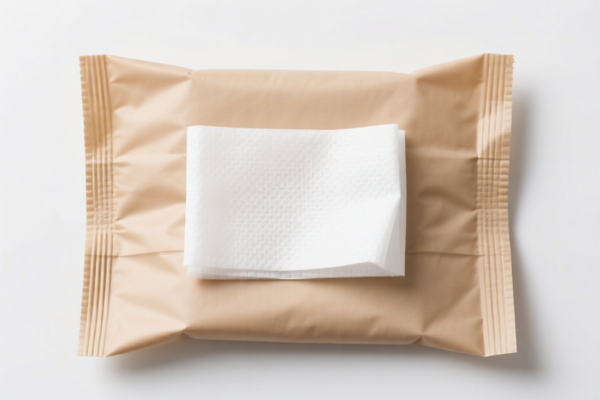
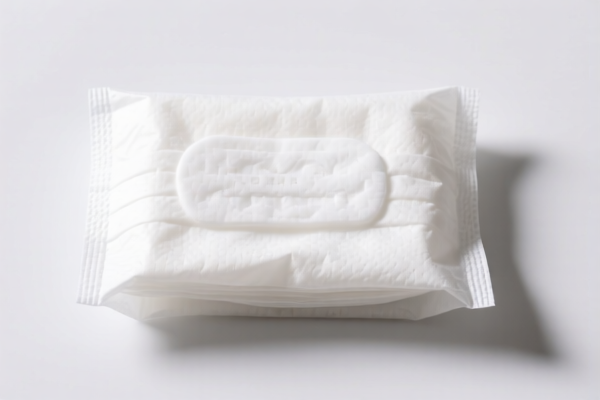
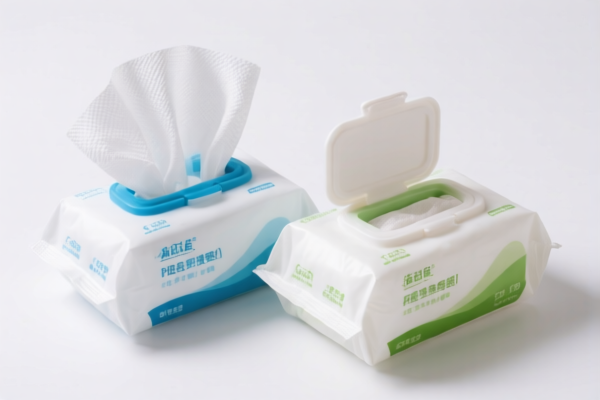
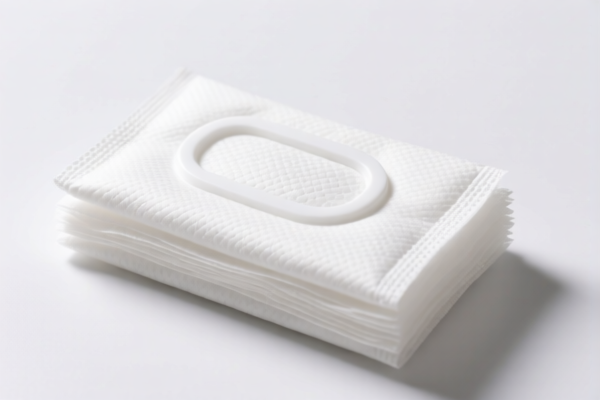
Disposable face towels, often referred to as "facial tissues" or "cleaning tissues," are sanitary paper products designed for single-use hygiene. In international trade, these items fall strictly under Heading 4818 of the Harmonized System (HS).
They are categorized based on their form and specific function: 1. Folded Tissues/Towels: These are usually packaged individually or in stacks, used for facial cleansing, makeup removal, or general hygiene. They fall under the subheading for "Handkerchiefs, cleansing or facial tissues and towels." 2. Mask-like Paper Goods: If the product is shaped specifically as a face mask (e.g., disposable non-woven face masks or paper-based sanitary masks), it may fall under "Other" articles.
⚠️ Critical Distinction:
- If the item is a soft, folded tissue or small towel for face/hands → It is a "Facial Tissue/Towel" (HS 4818.20).
- If the item is a structured mask covering the face → It is an "Other Face Mask" (HS 4818.90).
- Note: Standard toilet paper rolls are excluded from this specific scope if not cut to size, but these "disposable" formats are explicitly covered under 4818.
📦 II. HS Code Classification Details (2026 Latest Tariff Authority)
Based on the provided DATA, here are the two precise HS codes applicable to "Disposable Face Towels" depending on their specific physical form.
| HS Code | Product Description | Application Scenario | Form Factor |
|---|---|---|---|
4818.20.00.20 |
Handkerchiefs, cleansing tissues, and towels | Daily facial cleansing, makeup removal, post-wash drying | Folded sheets, small towels, non-woven wipes |
4818.90.00.20 |
Other Face masks | Disposable sanitary face masks, protective paper masks | Structured masks (nose-to-chin), often ear-looped |
🔍 Key Reminder:
- HS 4818.20 is for tissues and towels (soft, absorbent, flat or folded).
- HS 4818.90 is for masks (structured, covering the face, often with elastic).
- Do not classify standard toilet paper rolls (width > 36cm or continuous rolls) under these codes; they have different subheadings.
💰 III. 2026 Latest Tariff Rate Breakdown (Including Additional Duties & Policy Surcharges)
✅ Applicable Country: United States (US)
✅ Origin: China (CN) (Assumed based on typical 25%/7.5% surcharge patterns in provided data)
✅ Effective Date: Current Trade Policy
🎯 1. 4818.20.00.20 —— Facial Tissues, Cleansing Tissues, and Towels
| Item | Detail |
|---|---|
| Base Tariff | 0.0% (Ad Valorem) |
| Section 301 Additional Duty | +25.0% |
| Total Tax Rate | 25.0% |
| Tax Calculation | CIF Value × 25% |
| De Minimis Exemption? | ❌ No (Subject to full duty assessment) |
| Legal Basis Path | USITC:4818.20.00.20 → Footnote 9903.88.01 (Section 301 List 4) |
📌 Explanation:
- Although the base tariff for paper products is often 0%, these sanitary paper goods imported from China are subject to a 25% additional duty under the Section 301 trade actions.
- This is a high-cost item for importers. The "25%" is not optional; it is mandated by US Trade Representatives.
🎯 2. 4818.90.00.20 —— Other Face Masks
| Item | Detail |
|---|---|
| Base Tariff | 0.0% (Ad Valorem) |
| Section 301 Additional Duty | +7.5% |
| Total Tax Rate | 7.5% |
| Tax Calculation | CIF Value × 7.5% |
| De Minimis Exemption? | ❌ No (Subject to full duty assessment) |
| Legal Basis Path | USITC:4818.90.00.20 → Footnote 9903.88.01 (Section 301 List 4C) |
📌 Explanation:
- Disposable face masks (paper-based) attract a lower additional duty of 7.5% compared to facial towels.
- This difference is significant for profit margins. If your product can be classified as a "mask" rather than a "tissue/towel," the duty savings are substantial (17.5% difference).
- Caution: Customs will scrutinize the physical shape. A flat towel will not be accepted as a mask.
🛠️ IV. Customs Clearance Practical Advice (Combat Pitfalls Guide)
✅ 1. Preparation Checklist (Non-negotiable)
| Document | Required | Description |
|---|---|---|
| ✅ Product Specification Sheet | ✔️ | Must clearly state: Material (Paper pulp/Non-woven), Weight (gsm), Dimensions, Usage (Facial vs. Mask). |
| ✅ High-Resolution Photos | ✔️ | Show the product in packaging AND the product itself. Crucial to distinguish "Towel" (flat/folded) from "Mask" (3D/structured). |
| ✅ Commercial Invoice | ✔️ | Description must match HS code exactly. - For 4818.20: "Disposable Facial Cleaning Tissues" - For 4818.90: "Disposable Non-Woven Face Masks" |
| ✅ Packing List | ✔️ | Detail net/gross weight. Paper is lightweight but bulky; volume weight may apply. |
| ✅ Composition Statement | ✔️ | Confirm if wood pulp or synthetic fibers are used. Pure paper pulp simplifies HS 4818 classification. |
✅ 2. Declaration Strategy (Key Mnemonics)
🔥 "Towel is 25, Mask is 7.5, Form Defines Fate!"
| Scenario | Correct Classification | Common Mistake | Consequence |
|---|---|---|---|
| Flat, folded soft sheets | 4818.20.00.20 (Towels/Tissues) |
Declaring as "Masks" | ❌ Rejection & Penalty. Customs will see it's not a mask. Duty jumps to 25%. |
| 3D, structured, ear-looped | 4818.90.00.20 (Masks) |
Declaring as "Tissues" | ⚠️ Underpayment Risk. If it looks like a mask but declared as tissue, you might get caught for under-declaring duties. |
| Rolls > 36cm width | Exclude | Including in this list | ❌ Wrong HS Code. Rolls go to 4818.10. This data only covers cut-to-size or folded items. |
| Wet Wipes (Non-paper) | Exclude | Including in this list | ❌ Wrong HS Code. Non-paper wipes go to 33.07 or 34.01. HS 4818 is strictly paper/cellulose. |
✅ 3. Special Situations & Optimization
| Situation | Handling Advice |
|---|---|
| OEM/Private Label | Ensure the invoice lists the manufacturer's name and origin clearly. "Made in China" triggers the 25%/7.5% surcharges. |
| Mixed Containers | If shipping both towels and masks, separate the declarations. Do not lump them into one line item. Use one line for 4818.20.00.20 and another for 4818.90.00.20. |
| Value-Added Processing | If the paper is printed with lotions/medicines, ensure it doesn't cross into cosmetic classification (Chapter 33). If it's just scented paper, it remains 4818. |
| Pre-Commitment (Advance Ruling) | For large importers, apply for an Advance Ruling from CBP. If you are unsure if a product is a "towel" or "mask," a ruling provides legal protection against back-duties. |
🌍 V. Global Market Comparison (2026 Context)
| Market | Recommended HS | Duty Rate (China Origin) | Notes |
|---|---|---|---|
| 🇺🇸 USA | 4818.20.00.20 |
25% | High barrier. Focus on cost efficiency. |
| 🇺🇸 USA | 4818.90.00.20 |
7.5% | Lower barrier. Mask classification is preferable if product allows. |
| 🇪🇺 EU | 4818.20.00 |
~0-5% | No Section 301 equivalent. Generally more favorable for paper products. |
| 🇨🇳 China | 4818.20.00 |
0% | Import into China is duty-free for many paper goods. |
📌 Conclusion for US Importers:
The 25% duty on facial towels is a major cost driver.
The 7.5% duty on face masks is significantly more competitive.
Strategy: If your product can be engineered to have a mask-like structure (even if used for cleaning), classify it under4818.90to save 17.5% in taxes. However, accuracy is key to avoid customs seizures.
📌 VI. Common Errors & Pitfalls (Lessons Learned)
❌ Error 1: Calling a "Towel" a "Mask" to save duty.
👉 Result: CBP will examine the product, reject the classification, and charge the 25% rate + penalties.
👉 Fix: Be honest. Use 4818.20 for towels.
❌ Error 2: Including "Rolls" in this declaration.
👉 Result: Rejection for incorrect HS Code. Rolls of toilet paper are 4818.10.
👉 Fix: Ensure the description says "Cut to size," "Folded," or "Discrete Sheets."
❌ Error 3: Ignoring the "Paper" requirement.
👉 Result: If the product is 100% plastic non-woven (polypropylene), it might be 56.03 or 39.26.
👉 Fix: Confirm material composition. HS 4818 requires cellulose/paper.
🎯 VII. Conclusion: Professional Clearance, Cost Optimization
🎯 Remember the Golden Rules:
🔹 "Tissues = 25%, Masks = 7.5%. Shape Determines Cost."
🔹 "Paper Only. No Plastic. No Rolls."
🔹 "Accurate Description = Smooth Clearance."
📌 Pro Tip:
For large volumes of facial tissues (4818.20.00.20), consider:
1. Supply Chain Diversification: Look for production in countries exempt from Section 301 tariffs (e.g., Vietnam, Mexico) to avoid the 25% duty.
2. Product Design: If feasible, redesign the product to meet the definition of a "disposable mask" (4818.90.00.20) to leverage the 7.5% rate, provided it functions effectively for its intended use.
📣 Immediate Action:
📞 Verify Product Shape: Is it flat (Towel) or structured (Mask)?
📄 Update Commercial Invoice: Use precise HS descriptions.
🚀 Calculate Landed Cost: Include 25% or 7.5% duty in your margin analysis.
✨ Precision in Classification, Precision in Profit!
💼 Every percentage point of duty saved is pure margin added!
Customer Reviews
About HS Code Classification
The Harmonized System (HS) is an internationally standardized nomenclature developed by the World Customs Organization (WCO) to classify traded products. Over 200 countries use the HS system as the basis for customs tariffs, trade statistics, and import/export regulations.
Each HS code follows a hierarchical structure:
- Chapter (2 digits) — Broad category of goods (e.g., Chapter 84: Machinery and Mechanical Appliances)
- Heading (4 digits) — More specific grouping within the chapter
- Subheading (6 digits) — Internationally standardized breakdown, used by all WCO member countries
- National subdivisions (8-10 digits) — Country-specific extensions for further classification, such as US HTSUS 10-digit codes
Correct HS code classification is essential for smooth customs clearance, accurate duty payment, and compliance with trade regulations. Misclassification can lead to customs delays, overpayment of duties, or penalties.
When importing from CN to US, the applicable tariff rates may include:
- Most-Favored-Nation (MFN) rate — The standard duty rate applied to WTO members
- General rate — Applied to countries without trade agreements
- Trade remedy duties — Additional tariffs such as Section 301 (anti-dumping), Section 232 (national security), or countervailing duties
The information provided on this page is for reference purposes only. For official classification, please consult with your local customs authority or a licensed customs broker.