Disposable Tableware
CN → US| HS Code | Tariff Rate | Origin | Destination | Doc |
|---|---|---|---|---|
| 4419901100 | 15.3% | CN | US | Official Doc |
| 3924102000 | 24.0% | CN | US | Official Doc |
| 3924104000 | 13.4% | CN | US | Official Doc |
| 3902300000 | 41.5% | CN | US | Official Doc |
| 3902100000 | 41.5% | CN | US | Official Doc |
| 6911108010 | 38.3% | CN | US | Official Doc |
Product Images
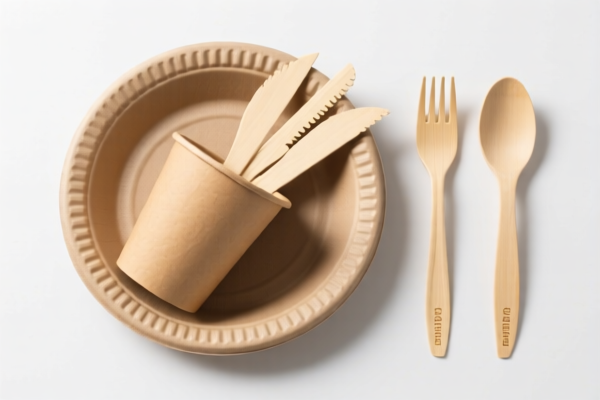
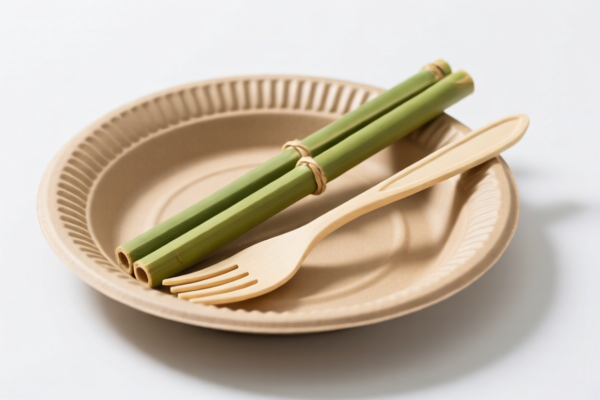
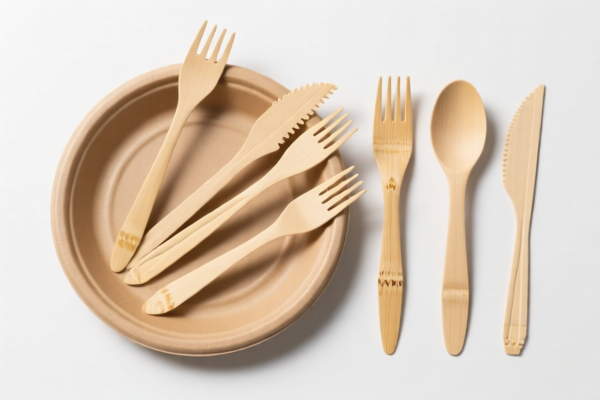
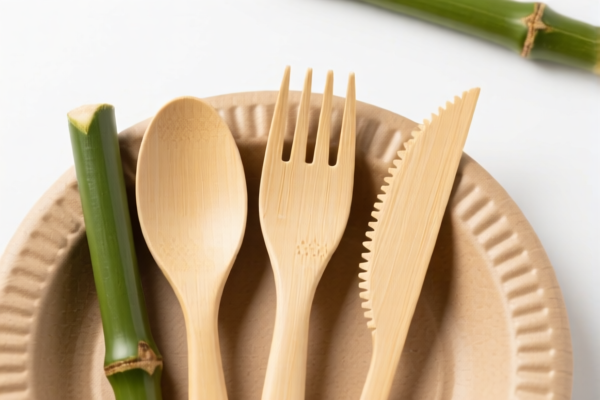
AI Analysis
🍽️ Disposable Tableware: HS Code Classification & US Customs Clearance Guide (2026)
🌐 HS Code Reference & Customs Clearance Strategy | 2026 Latest Tariff Analysis | Professional Compliance Guide
📌 Disclaimer: The following analysis is strictly based on the provided data context. It focuses on imports into the United States from China, considering the specific tariff structures including Section 122 tariffs.
📦 1. HS Code Classification Matrix
Disposable tableware is not a single unified category. The classification depends entirely on the material composition. Below is the precise breakdown based on the provided dataset:
| Material | HS Code | Product Description | Key Identifier |
|---|---|---|---|
| Plastic (Standard) | 3924.10.40.00 |
Disposable plastic tableware | Matched purpose and form; inferred material: Plastic |
| Wood | 4419.90.11.00 |
Disposable wooden tableware | Inferred material: Wood; Category: Other wooden tableware |
| Plastic (High Tariff) | 3924.10.20.00 |
Disposable plastic tableware | Basic common sense inference: Plastic (Different subheading) |
| Ceramic / Porcelain | 6911.10.80.10 |
Portable tableware | Inferred material: Ceramic/Porcelain; Purpose: Tableware |
| Raw Material (PP) | 3902.30.00.00 |
Polypropylene (PP) Raw Material | Explicit material: Polypropylene; Form: Primary Raw Material |
⚠️ Critical Distinction:
- Finished Goods (Plates, forks, chopsticks) fall under3924,4419, or6911.
- Raw Materials (Pellets, sheets) fall under3902.
- Misclassification Risk: Declaring PP pellets as "plastic cutlery" will result in severe penalties and duty discrepancies.
💰 2. 2026 Tariff Rate Breakdown (Detailed Analysis)
✅ Applicable Country: United States (US)
✅ Origin: China (CN)
✅ Key Policy: 122 Clause Tariffs (10%) + Section 301/Other Additional Duties
🎯 1. 3924.10.40.00 – Disposable Plastic Tableware (Standard)
| Item | Detail |
|---|---|
| Base Tariff | 3.4% |
| Additional Tariff | 0.0% |
| 122 Clause Tariff | 10.0% |
| Total Effective Rate | 13.4% |
| Calculation Basis | CIF Value × 13.4% |
| Legal Basis | Standard HTSUS for plastic tableware + 122 Clause Application |
📌 Explanation:
- This is the lowest cost option for plastic disposable goods among the listed plastic variants.
- The 122 Clause adds a flat 10% on top of the base duty.
- No additional "Section 301" or extra punitive tariffs are applied in this specific subheading according to the provided data.
🎯 2. 4419.90.11.00 – Disposable Wooden Tableware
| Item | Detail |
|---|---|
| Base Tariff | 5.3% |
| Additional Tariff | 0.0% |
| 122 Clause Tariff | 10.0% |
| Total Effective Rate | 15.3% |
| Calculation Basis | CIF Value × 15.3% |
| Legal Basis | HTSUS for wooden tableware + 122 Clause Application |
📌 Explanation:
- Wooden tableware is subject to a slightly higher base duty (5.3%) than standard plastic (3.4%).
- The 122 Clause (10%) still applies.
- Total: 15.3%. This is the second-lowest duty rate in the dataset.
🎯 3. 3924.10.20.00 – Disposable Plastic Tableware (High Tariff Variant)
| Item | Detail |
|---|---|
| Base Tariff | 6.5% |
| Additional Tariff | 7.5% |
| 122 Clause Tariff | 10.0% |
| Total Effective Rate | 24.0% |
| Calculation Basis | CIF Value × 24.0% |
| Legal Basis | HTSUS for plastic tableware (different subheading) + Additional Duties + 122 Clause |
📌 Explanation:
- ⚠️ Warning: Do not confuse this with3924.10.40.00.
- This subheading incurs a higher base duty (6.5%) AND an additional duty of 7.5% (likely Section 301 or similar trade remedy).
- Plus the 122 Clause (10%).
- Total: 24.0%. This is significantly more expensive than the40.00variant.
🎯 4. 6911.10.80.10 – Portable Ceramic Tableware
| Item | Detail |
|---|---|
| Base Tariff | 20.8% |
| Additional Tariff | 7.5% |
| 122 Clause Tariff | 10.0% |
| Total Effective Rate | 38.3% |
| Calculation Basis | CIF Value × 38.3% |
| Legal Basis | HTSUS for ceramic tableware + Additional Duties + 122 Clause |
📌 Explanation:
- Ceramic/Porcelain items face very high base tariffs (20.8%).
- The 7.5% additional duty applies.
- The 122 Clause (10%) applies.
- Total: 38.3%. This is the most expensive category for finished disposable tableware.
🎯 5. 3902.30.00.00 – Polypropylene (PP) Raw Material
| Item | Detail |
|---|---|
| Base Tariff | 6.5% |
| Additional Tariff | 25.0% |
| 122 Clause Tariff | 10.0% |
| Total Effective Rate | 41.5% |
| Calculation Basis | CIF Value × 41.5% |
| Legal Basis | HTSUS for Polyethylene/Propylene polymers + Section 301 (25%) + 122 Clause |
📌 Explanation:
- This is NOT tableware. This is raw material.
- It incurs the highest additional duty of 25% (likely heavy Section 301 tariffs on chemical polymers).
- Total: 41.5%.
- Note: If you are importing finished plastic cutlery, ensure you do not declare this HS Code, or you will pay 41.5% instead of 13.4% or 24.0%.
🛠️ 3. Customs Clearance Practical Advice
✅ 1. Document Preparation Checklist
| Document | Requirement | Notes |
|---|---|---|
| Product Description | Must specify material (Plastic, Wood, Ceramic) | "Disposable Tableware" is too vague. Use "Disposable Plastic Forks" or "Wooden Chopsticks". |
| Material Composition | 100% Plastic / 100% Wood / Ceramic | Must match the HS Code exactly. |
| Usage Statement | "Single-use / Disposable" | Essential for distinguishing from durable kitchenware (which may have different duties). |
| HS Code Declaration | Exact 10-digit code | Use the codes above based on material. |
| Origin Certificate | China (CN) | Required for applying 122 Clause and any exemptions. |
| Packing List | Detailed items per carton | Ensure no mixed materials in a single HS Code declaration unless properly separated. |
✅ 2. Strategic Clearance Tips
🔥 Key Takeaway: Material is King.
| Scenario | Recommended HS Code | Total Duty | Strategy |
|---|---|---|---|
| Plastic Cutlery/Plates | 3924.10.40.00 |
13.4% | ✅ BEST CHOICE. Lowest duty for plastic. Avoid 3924.10.20.00. |
| Wooden Chopsticks/Spoons | 4419.90.11.00 |
15.3% | ✅ Good alternative to plastic. |
| Plastic Cutlery (High Risk) | 3924.10.20.00 |
24.0% | ⚠️ Check if your product fits 40.00 better. If not, budget for 24%. |
| Ceramic Plates | 6911.10.80.10 |
38.3% | 💸 High cost. Consider if ceramic is necessary or if plastic/wood is viable. |
| PP Pellets/Sheets | 3902.30.00.00 |
41.5% | 🚫 NOT TABLEWARE. Only declare if importing raw polymer for manufacturing. |
✅ 3. Common Mistakes to Avoid
❌ Mistake 1: Declaring Plastic PP Raw Material as "Disposable Tableware".
👉 Consequence: You will pay 41.5% instead of 13.4%. Huge financial loss.
👉 Fix: Only use 3902.30.00.00 if you are importing pellets/shapes, not finished items.
❌ Mistake 2: Assuming all plastic tableware has the same duty.
👉 Consequence: Using 3924.10.20.00 (24.0%) when 3924.10.40.00 (13.4%) applies.
👉 Fix: Verify the specific subheading with your customs broker. The difference is 10.6% (over $10,000 on $100k shipment).
❌ Mistake 3: Ignoring the "122 Clause".
👉 Consequence: Underpaying duties. The 122 Clause adds 10% to all listed items.
👉 Fix: Ensure your broker includes the 122 Clause in the calculation for every item.
🌍 4. Global Market Comparison (Snapshot)
| Market | Plastic Tableware Duty | Wood Tableware Duty | Ceramic Tableware Duty |
|---|---|---|---|
| 🇺🇸 USA | 13.4% or 24.0% | 15.3% | 38.3% |
| 🇪🇺 EU | Varies (Check EORI) | Varies | Varies |
| 🇨🇳 China | Import Duty Applies | Import Duty Applies | Import Duty Applies |
📌 Conclusion:
The US market imposes significant tariffs via the 122 Clause (10%) and potentially additional duties (7.5% or 25%).
- Plastic (3924.10.40.00) remains the most cost-effective for finished goods.
- Wood (4419.90.11.00) is a competitive alternative.
- Ceramic (6911.10.80.10) and Raw Materials (3902.30.00.00) are high-cost categories.
🎯 5. Final Checklist for Importers
- Identify Material: Is it Plastic, Wood, or Ceramic?
- Identify Form: Is it a finished utensil or raw material?
- Select HS Code:
- Plastic Finished →
3924.10.40.00(13.4%) - Wood Finished →
4419.90.11.00(15.3%) - Ceramic Finished →
6911.10.80.10(38.3%) - PP Raw Material →
3902.30.00.00(41.5%)
- Plastic Finished →
- Confirm 122 Clause: Ensure 10% is added to all.
- Prepare Docs: Material declaration, usage statement, origin certificate.
📌 Pro Tip:
Always request a Pre-Ruling from CBP (U.S. Customs and Border Protection) if your product is borderline between 3924.10.40.00 and 3924.10.20.00. The 10.6% duty difference is worth the small filing fee.
📣 Act Now:
📞 Contact your customs broker with product photos and material specs.
🚀 Optimize your HS Code to save up to 25% in duties!
✨ Precision in Classification = Profit in Your Pocket!
💼 Don't let tariff mistakes eat your margin!
Customer Reviews
About HS Code Classification
The Harmonized System (HS) is an internationally standardized nomenclature developed by the World Customs Organization (WCO) to classify traded products. Over 200 countries use the HS system as the basis for customs tariffs, trade statistics, and import/export regulations.
Each HS code follows a hierarchical structure:
- Chapter (2 digits) — Broad category of goods (e.g., Chapter 84: Machinery and Mechanical Appliances)
- Heading (4 digits) — More specific grouping within the chapter
- Subheading (6 digits) — Internationally standardized breakdown, used by all WCO member countries
- National subdivisions (8-10 digits) — Country-specific extensions for further classification, such as US HTSUS 10-digit codes
Correct HS code classification is essential for smooth customs clearance, accurate duty payment, and compliance with trade regulations. Misclassification can lead to customs delays, overpayment of duties, or penalties.
When importing from CN to US, the applicable tariff rates may include:
- Most-Favored-Nation (MFN) rate — The standard duty rate applied to WTO members
- General rate — Applied to countries without trade agreements
- Trade remedy duties — Additional tariffs such as Section 301 (anti-dumping), Section 232 (national security), or countervailing duties
The information provided on this page is for reference purposes only. For official classification, please consult with your local customs authority or a licensed customs broker.