Dried Cowhide Leather
CN → US| HS Code | Tariff Rate | Origin | Destination | Doc |
|---|---|---|---|---|
| 4101201010 | 17.5% | CN | US | Official Doc |
| 4101901030 | 17.5% | CN | US | Official Doc |
| 4107117030 | 15.0% | CN | US | Official Doc |
| 4107127030 | 15.0% | CN | US | Official Doc |
| 4103901130 | 17.5% | CN | US | Official Doc |
Product Images
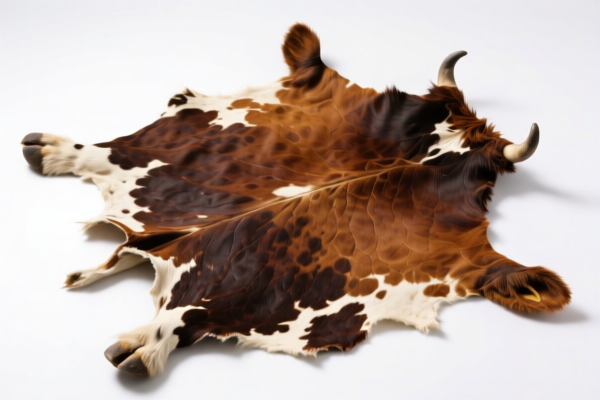
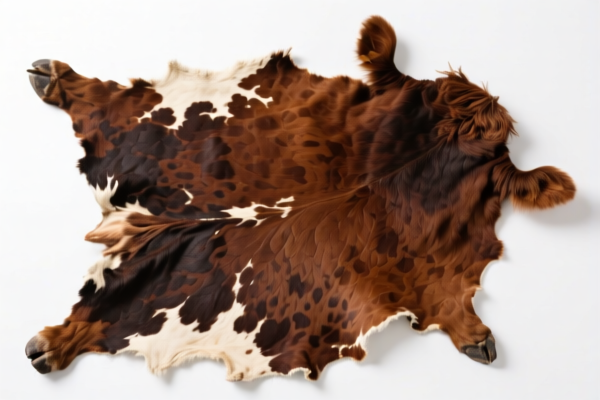
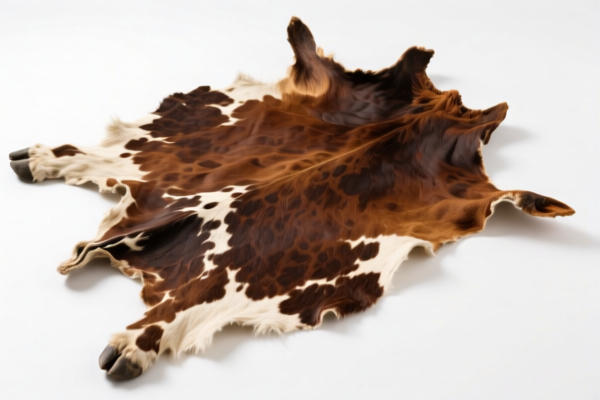
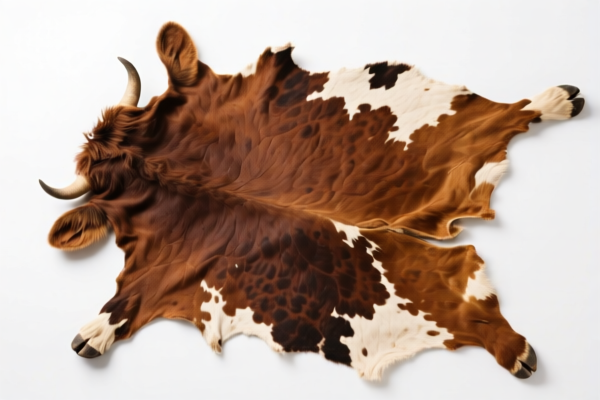
AI Analysis
🐄 Dried Cowhide Leather: The Ultimate HS Code & Taxation Guide
🌐 HS Code Reference & Customs Clearance Guide | 2026 Latest Tariff Analysis | Professional Entry Strategy
📌 I. Product Definition & Classification: Do You Really Understand "Dried Cowhide"?
Dried Cowhide Leather is the raw material foundation of the global leather industry. In international trade, it is not a single entity but is categorized by its processing state (raw vs. tanned) and physical form (whole hide vs. split). Misclassification is the #1 cause of customs delays and tax disputes.
Key Distinctions:
1. Un-tanned Raw Hides (Dry): Not chemically treated to prevent decay. High risk of inspection.
2. Chrome-Tanned Hides: Processed with chromium salts. Stable, durable, ready for shoebag manufacturing.
3. Splits vs. Full Grain: "Splits" are the fibrous layers split from the grain side. They are significantly cheaper and have different HS codes than "Full Grain."
⚠️ Critical Note:
- Dry & Un-tanned = High Tariff (7.5% + 10% punitive).
- Chrome-Tanned = Moderate Tariff (5% + 10% punitive).
- Misclassification Risk: Declaring chrome-tanned leather as "raw" or vice versa can trigger customs audits for fraud or incorrect declaration.
📦 II. HS Code Classification Details (2026 Latest Tariff Authority)
Based on the provided data, here are the precise classifications for dried cowhide products.
| HS Code | Product Description (Summary) | Processing State | Physical Form | Key Identifier |
|---|---|---|---|---|
| 4101.20.10.10 | Dried Cowhide, Untanned Raw Hide | Raw (Un-tanned) | Dry Preserved | Whole hide, no chemical stabilization |
| 4101.90.10.30 | Dried Cowhide, Bovine Raw Hide | Raw (Un-tanned) | Dry Preserved | General bovine raw hide, dried |
| 4107.11.70.30 | Dried Cowhide Splits, Chrome-Tanned | Tanned (Chrome) | Full Grain | Top layer, smooth grain, chrome-stabilized |
| 4107.12.70.30 | Dried Cowhide Splits, Chrome-Tanned | Tanned (Chrome) | Split/Layer | Fibrous layer, split from grain, chrome-stabilized |
| 4103.90.11.30 | Dried Deer Skin | Raw (Un-tanned) | Dry Preserved | Note: Similar form to cowhide, but different species (Deer) |
🔍 Important Clarification:
- 4101.xxxx codes refer to Raw, Un-tanned Skins. These are the "starting material."
- 4107.xxxx codes refer to Tanned Skins (specifically Chrome-Tanned). These are "semi-finished" leather ready for manufacturing.
- 4103.xxxx is for Other Raw Skins (e.g., Deer, Goat, Sheep). Do not confuse Deer Skin (4103.90.11.30) with Cowhide (4101). They have identical tax structures but different biological origins.
💰 III. 2026 Latest Tariff Rate Breakdown (Including Surcharges & Policy Add-ons)
✅ Applicable Country: United States (US)
✅ Origin: China (CN)
✅ Effective Date: 2025/2026 Tariff Schedule
🎯 1. Raw, Dried, Un-tanned Cowhide (4101.20.10.10 & 4101.90.10.30)
Includes: Whole dried hides, raw bovine skins.
| Item | Content |
|---|---|
| Base Tariff | 0.0% (Free) |
| Section 301 Surcharge | +7.5% |
| Section 122 Tariff | +10.0% (Specific punitive tariff for certain agricultural/raw materials) |
| Total Effective Tax | 17.5% |
| Tax Calculation | CIF Value × 17.5% |
| De Minimis Eligibility | ❌ NO (Generally restricted for raw hides due to sanitary risks) |
| Legal Basis | HTSUS 4101 → Section 301 Footnote → Section 122 Order |
📌 Explanation:
- Although the base tariff is 0%, the 7.5% Section 301 tariff applies to Chinese-origin raw hides.
- The 10% Section 122 tariff is a specific punitive measure often applied to raw agricultural or animal products to protect domestic supply chains.
- Total 17.5% is significant for low-value raw materials, impacting margins heavily.
🎯 2. Chrome-Tanned Cowhide Splits (4107.11.70.30 & 4107.12.70.30)
Includes: Full grain chrome-tanned hides, split leather layers.
| Item | Content |
|---|---|
| Base Tariff | 5.0% |
| Section 301 Surcharge | 0.0% (No additional Section 301 tariff for this specific sub-category in this data set) |
| Section 122 Tariff | +10.0% |
| Total Effective Tax | 15.0% |
| Tax Calculation | CIF Value × 15.0% |
| De Minimis Eligibility | ❌ NO |
| Legal Basis | HTSUS 4107 → Section 122 Order |
📌 Explanation:
- Tanned leather starts with a 5% base tariff because it is a "processed" good, not raw.
- However, it is still subject to the 10% Section 122 punitive tariff.
- The 7.5% Section 301 does not appear in the tax detail for these codes, making the total 15.0% (lower than raw hides).
- Strategy: If you can process raw hides into chrome-tanned splits before export, the tax rate drops from 17.5% to 15.0%.
🎯 3. Dried Deer Skin (4103.90.11.30)
Includes: Un-tanned, dried deer skins (similar form to cowhide).
| Item | Content |
|---|---|
| Base Tariff | 0.0% |
| Section 301 Surcharge | +7.5% |
| Section 122 Tariff | +10.0% |
| Total Effective Tax | 17.5% |
| Tax Calculation | CIF Value × 17.5% |
| De Minimis Eligibility | ❌ NO |
📌 Note: Deer skin is grouped with other raw skins. It shares the same high tax burden as raw cowhide (17.5%).
🛠️ IV. Customs Clearance Practical Advice (Real-World Pitfall Guide)
✅ 1. Documentation Checklist (Non-Negotiable)
| Document | Required | Purpose |
|---|---|---|
| ✅ Commercial Invoice | ✔️ | Must explicitly state "Dried Cowhide, Un-tanned" or "Chrome-Tanned Split." Do NOT just say "Leather." |
| ✅ Packing List | ✔️ | Must detail weight (Gross/Net) and number of hides. |
| ✅ Veterinary Certificate | ✔️ | CRITICAL for Raw Hides (4101/4103). Proves disease-free status (e.g., BSE-free). |
| ✅ Tanning Certificate | ✔️ | CRITICAL for Tanned Hides (4107). Proves chrome-tanning method (prevents mercury/chromium pollution disputes). |
| ✅ Origin Certificate | ✔️ | Required to apply Section 122/301 duties accurately. |
✅ 2. Declaration Tips (Key Mnemonics)
🔥 "Raw Needs Vet Cert, Tanned Needs Tanning Cert, Name Must Be Precise!"
| Scenario | Correct Declaration | Wrong Declaration | Consequence |
|---|---|---|---|
| Raw Dried Hide | 4101.20.10.10 - "Dried Bovine Raw Hide, Un-tanned" |
"Leather Hides" | Denied Entry (No Vet Cert) or Wrong Tax |
| Chrome-Tanned Split | 4107.12.70.30 - "Chrome-Tanned Cowhide Split" |
"Raw Hide" | Overpayment (17.5% vs 15.0%) |
| Full Grain Tanned | 4107.11.70.30 - "Chrome-Tanned Full Grain Hide" |
"Split Leather" | Underpayment Risk (Different base rates) |
| Deer Skin | 4103.90.11.30 - "Dried Deer Skin" |
"Cowhide" | Misclassification Fine |
✅ 3. Special Circumstances Handling
| Situation | Handling Advice |
|---|---|
| Mix of Raw and Tanned | DO NOT MIX in one shipment. Declare separately. Mixed shipments cause massive delays. |
| Salting vs. Drying | Specify "Dry" vs. "Salted." Salting may fall under different preservation rules (still 4101, but inspection differs). |
| De Minimis | Raw hides are never eligible for de minimis (Section 321) due to agricultural health risks. Must file formal entry. |
| Environmental Compliance | Tanned hides must comply with REACH (if EU) or US EPA standards. Ensure chrome content is declared to avoid "toxic waste" classification. |
🌍 V. Global Market Clearance Comparison (2026 Latest)
| Country/Region | Recommended HS Code | Tariff (CN Origin) | Key Certification | Remarks |
|---|---|---|---|---|
| 🇺🇸 USA | 4101.20.10.10 / 4107.11.70.30 |
17.5% (Raw) 15.0% (Tanned) |
USDA Vet Cert Chrome Tanning Proof |
Section 122 and 301 apply. High scrutiny. |
| 🇪🇺 EU | 4101 / 4107 |
0% (Most Raw) ~12% (Tanned) |
REACH Compliance Eco-Label (Optional) |
No Section 301/122. Lower tax, higher environmental standards. |
| 🇨🇳 China | 4101 / 4107 |
0% (Raw) 5% (Tanned) |
CIQ Inspection | Import duty is low. Export tax rebate applies if exporting from CN. |
| 🇻🇳 Vietnam | 4101 / 4107 |
Varies | GSP/CPTPP Rules | Potential hub for further processing to avoid US tariffs. |
📌 Conclusion:
- USA is the most expensive market due to the 10% Section 122 tariff.
- Tanning before export reduces the US tax rate from 17.5% to 15.0% by removing the 7.5% Section 301 component (based on provided data).
- EU has no punitive tariffs, making it a more cost-effective destination for tanned goods, provided environmental regulations are met.
📌 VI. Common Mistakes & Pitfall Guide (Lessons Learned)
❌ Mistake 1: Declaring "Chrome-Tanned" as "Raw Hide"
👉 Consequence: If caught, it’s fraud. If missed, you pay 17.5% instead of 15.0% (Overpayment).
👉 Fix: Always include tanning method in description.
❌ Mistake 2: Forgetting Veterinary Certificate for Raw Hides
👉 Consequence: Seizure or Destruction at port. Raw hides are biohazards.
👉 Fix: Secure USDA-approved vet cert before shipping.
❌ Mistake 3: Mixing Full Grain and Split in One HS Code
👉 Consequence: 4107.11.70.30 (Full Grain) and 4107.12.70.30 (Split) have different values and uses.
👉 Fix: Separate by product type in invoice and packing list.
❌ Mistake 4: Using "Leather" as a Generic Term
👉 Consequence: Customs will ask for clarification, causing 3-7 day delays.
👉 Fix: Use precise terms: "Dried, Un-tanned Cowhide" or "Chrome-Tanned Cowhide Split."
✅ Best Practice:
"Item: Dried Cowhide, Un-tanned, HS 4101.20.10.10, Origin China, No BSE Risk, Vet Cert Attached."
🎯 VII. Conclusion: Precision in Classification Saves Money!
🎯 Remember the Rules:
🔹 Raw Hide = 17.5% (0% Base + 7.5% 301 + 10% 122)
🔹 Tanned Split = 15.0% (5% Base + 0% 301 + 10% 122)
🔹 Deer Skin = 17.5% (Same as Raw Cowhide)
🔹 Never Ship Without Vet/Tanning Certs!
📌 Pro Tip:
If you are exporting from China to the US, tanning the hides locally before export can save 2.5% in duties (17.5% → 15.0%). However, factor in the cost of tanning and environmental compliance.
📣 Immediate Action:
📞 Contact your freight forwarder with exact HS Codes and processing status.
📄 Attach Vet Certs (for Raw) or Tanning Certs (for Tanned) to your documentation package.
🚀 Clear Customs Fast, Avoid Penalties, Maximize Profit!
✨ Professional Clearance Starts with Precise Classification!
💼 Your Cost Efficiency Depends on This 5% Difference!
Customer Reviews
About HS Code Classification
The Harmonized System (HS) is an internationally standardized nomenclature developed by the World Customs Organization (WCO) to classify traded products. Over 200 countries use the HS system as the basis for customs tariffs, trade statistics, and import/export regulations.
Each HS code follows a hierarchical structure:
- Chapter (2 digits) — Broad category of goods (e.g., Chapter 84: Machinery and Mechanical Appliances)
- Heading (4 digits) — More specific grouping within the chapter
- Subheading (6 digits) — Internationally standardized breakdown, used by all WCO member countries
- National subdivisions (8-10 digits) — Country-specific extensions for further classification, such as US HTSUS 10-digit codes
Correct HS code classification is essential for smooth customs clearance, accurate duty payment, and compliance with trade regulations. Misclassification can lead to customs delays, overpayment of duties, or penalties.
When importing from CN to US, the applicable tariff rates may include:
- Most-Favored-Nation (MFN) rate — The standard duty rate applied to WTO members
- General rate — Applied to countries without trade agreements
- Trade remedy duties — Additional tariffs such as Section 301 (anti-dumping), Section 232 (national security), or countervailing duties
The information provided on this page is for reference purposes only. For official classification, please consult with your local customs authority or a licensed customs broker.