Dried Sheepskin (Hairless)
CN → US| HS Code | Tariff Rate | Origin | Destination | Doc |
|---|---|---|---|---|
| 4301300000 | 10.0% | CN | US | Official Doc |
| 4105300000 | 12.0% | CN | US | Official Doc |
| 4105109000 | 12.0% | CN | US | Official Doc |
| 4102291090 | 17.5% | CN | US | Official Doc |
| 4102101000 | 17.5% | CN | US | Official Doc |
| 4301900000 | 10.0% | CN | US | Official Doc |
Product Images
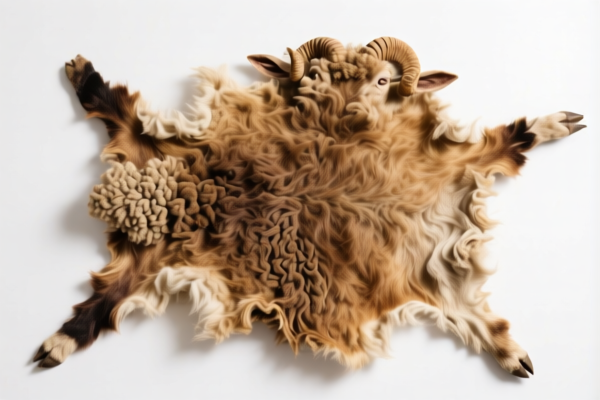
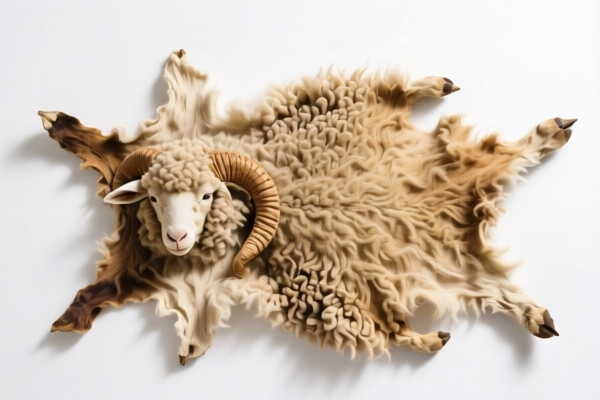
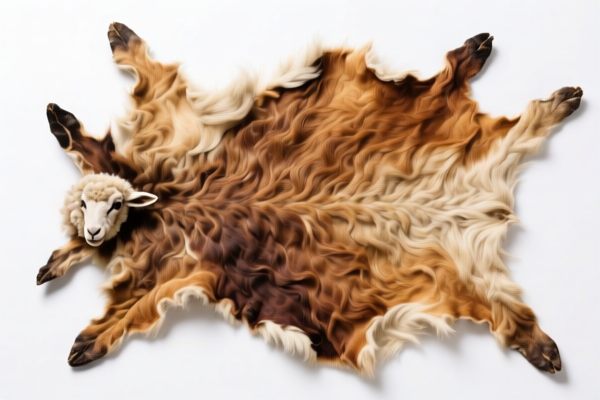
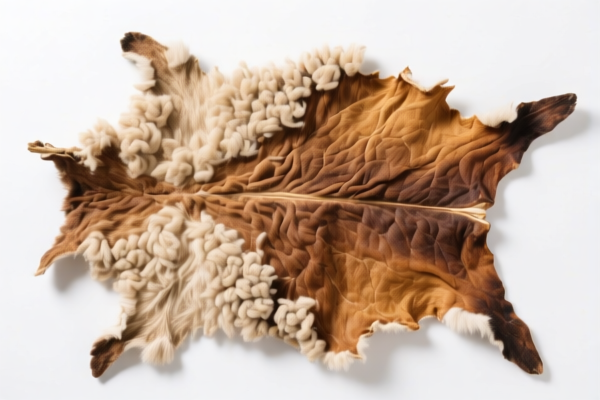
AI Analysis
🐑 Dried Sheepskin (Hairless) – Comprehensive HS Code & Tariff Guide (US Import)
🌐 HS Code Reference & Customs Clearance Strategy | 2026 Latest Tariff Analysis | Professional Compliance
📌 Part 1: Product Definition & Classification Logic
Dried Sheepskin (Hairless), also known as "Sheepskin without wool" or "Sheep pelts," refers to raw sheep skins that have been preserved through drying but do not contain wool fibers. They are distinct from "With Wool" sheepskins and other fur skins (like lamb pelts with specific fur characteristics).
In international trade, precise classification depends on two key factors: 1. State of Processing: Are they merely dried/raw, or further processed? 2. Presence of Wool: Does the skin retain the woolly undercoat?
⚠️ Critical Distinction:
- "Hairless" (Without Wool):归入 4102.29.10.90 or 4105 series (depending on exact description and duty nuances).
- "With Wool":归入 4102.10.10.00.
- "Fur Skin/Lamb Pelt" (General Fur Category):归入 4301 series (Often for higher-value ornamental pelts or specific lamb definitions).
📦 Part 2: HS Code Classification Details (2026 Latest Tariff Reference)
Based on the provided data, here are the five possible HS Codes for Dried Sheepskin (Hairless) and the logic for each:
| HS Code | Product Description | Classification Logic | Key Feature |
|---|---|---|---|
4102.29.10.90 |
Sheep Skin (Hairless), Unprocessed & Dried | Specific subheading for sheep pelts without wool, not further tanned. | ❌ No Wool |
4105.30.00.00 |
Sheep Skin, Dried & Unprocessed | General category for dried sheepskins fitting the "raw/dried" definition. | 📄 Dried State |
4105.10.90.00 |
Sheep Skin, Dry/Unprocessed | Broad category for unprocessed sheepskins in dry state. | 📄 Unprocessed Logic |
4102.10.10.00 |
Sheep Skin, Unprocessed & Dried (With Wool) | Note: While labeled "With Wool" in data, often confused. If your goods are truly hairless, this is INCORRECT unless mislabeled. | ✅ With Wool (Avoid if Hairless) |
4301.30.00.00 |
Sheep Skin (Lamb-like), Dried & Unprocessed | Classified as "Fur Skin" for lamb-like sheep pelts. | 🐑 Lamb-like Feature |
4301.90.00.00 |
Sheep Skin, Unprocessed (Fur Skin Feature) | General "Fur Skin" category for sheep pelts not specified elsewhere. | 🐾 Fur Skin Feature |
🔍 Key Insight:
- If the skin is truly hairless (de-wooled),4102.29.10.90is the most specific and accurate classification for "Sheep Skin Without Wool."
- If the product is described broadly as "Dried Sheepskin," customs may accept4105.30.00.00or4105.10.90.00.
- Warning:4102.10.10.00explicitly states "With Wool." Using this for hairless skins will lead to misdeclaration penalties.
💰 Part 3: 2026 Latest Tariff Rate Breakdown (Including Additional Duties & Policy Surcharges)
✅ Applicable Country: United States (US)
✅ Origin: China (CN)
✅ Effective Time: 2025/2026 Import Period
✅ Trade War Context: Section 301 & IEEPA Surcharges Apply
🎯 1. 4102.29.10.90 —— Sheep Skin (Hairless), Unprocessed & Dried
| Item | Detail |
|---|---|
| Base Tariff | 0.0% |
| Section 301 Surcharge | +7.5% (USITC Additional Duty) |
| IEEPA Surcharge | +10.0% (China-specific, under Section 122/IEEPA) |
| Total Duty Rate | 17.5% |
| Calculation Basis | CIF Value × 17.5% |
| De Minimis Exemption | ❌ Not Applicable (Goods subject to Section 301/IEEPA are excluded from de minimis rules) |
| Legal Path | USITC:4102.29.10.90 → Section 301:7.5% → IEEPA:10% |
📌 Explanation:
- This is the most specific code for hairless sheepskins.
- Although base duty is 0%, the 7.5% Section 301 and 10% IEEPA surcharges make the total 17.5%.
- High Priority for Accurate Classification: Misclassifying this as a lower-duty item (if any) is risky due to audit scrutiny.
🎯 2. 4105.30.00.00 & 4105.10.90.00 —— Dried Sheepskin (General)
| Item | Detail |
|---|---|
| Base Tariff | 2.0% |
| Section 301 Surcharge | 0.0% (Note: Data indicates 0% here, possibly exempted or different footnote) |
| IEEPA Surcharge | +10.0% |
| Total Duty Rate | 12.0% |
| Calculation Basis | CIF Value × 12.0% |
| De Minimis Exemption | ❌ Not Applicable (Due to IEEPA 10%) |
| Legal Path | USITC:4105... → IEEPA:10% |
📌 Explanation:
- These codes apply if the "Hairless" distinction is not emphasized or if the skin is considered a general "Dried Sheepskin."
- Savings Alert: 12% vs. 17.5% — but only if the product legitimately fits this broader description. Misclassification is illegal.
🎯 3. 4301.30.00.00 & 4301.90.00.00 —— Sheep Skin (Fur Skin Category)
| Item | Detail |
|---|---|
| Base Tariff | 0.0% |
| Section 301 Surcharge | 0.0% |
| IEEPA Surcharge | +10.0% |
| Total Duty Rate | 10.0% |
| Calculation Basis | CIF Value × 10.0% |
| De Minimis Exemption | ❌ Not Applicable |
| Legal Path | USITC:4301... → IEEPA:10% |
📌 Explanation:
- This is the lowest duty rate (10%).
- Risk: This classification is for "Fur Skins" where the sheepskin is treated as a general fur item (often for lamb-like pelts).
- Crucial: You can only use this if your "Hairless Sheepskin" is considered a "Fur Skin" under Chapter 43 (e.g., if it’s a lamb pelt with specific fur characteristics, even if hairless). If it’s strictly a hide for leather, Chapter 41 is correct, and using Chapter 43 may be challenged.
🎯 4. 4102.10.10.00 —— INCORRECT FOR HAIRLESS (With Wool)
| Item | Detail |
|---|---|
| Total Duty Rate | 17.5% |
| Status | ❌ Do Not Use for Hairless Skins |
📌 Warning: This code is for sheepskins WITH WOOL. Using it for hairless skins is a clear misdeclaration.
🛠️ Part 4: Customs Clearance Practical Advice
✅ 1. Documentation Checklist (Essential)
| Document | Required? | Purpose |
|---|---|---|
| ✅ Product Specification Sheet | ✔️ | Must clearly state: "Dried," "Sheepskin," "Hairless/Without Wool," and Dimensions. |
| ✅ Photos (Front/Back) | ✔️ | Must show no wool fibers. If wool is visible, it must be classified as "With Wool." |
| ✅ Commercial Invoice | ✔️ | Describe as: "Dried Sheepskin, Hairless, Raw, For Leather Production." |
| ✅ Packing List | ✔️ | Detail count, weight, and dimensions. |
| ✅ Origin Certificate | ✔️ | To confirm Chinese origin (for IEEPA calculation). |
| ✅ Third-Party Test Report | ✔️ | Optional but recommended: Proof of "Hairless" status (e.g., microscopic analysis or manufacturer statement). |
✅ 2. Declaration Strategy
🔥 “No Wool, No 4102.10; Be Clear, Be Accurate, Avoid Penalties!”
| Scenario | Recommended HS Code | Duty Rate | Reason |
|---|---|---|---|
| Truly Hairless, Raw, Dried | 4102.29.10.90 |
17.5% | Most specific for "Sheepskin without wool." |
| General Dried Sheepskin (No Wool Emphasis) | 4105.30.00.00 |
12.0% | Broader category, lower duty, if description allows. |
| Lamb-like Pelt (Fur Use) | 4301.90.00.00 |
10.0% | Lowest duty, but must qualify as "Fur Skin." |
| With Wool Visible | 4102.10.10.00 |
17.5% | Mandatory if wool is present. |
📌 Critical Tip:
- If you declare4301.90.00.00(10%) but customs inspect and find the skin is not "fur-like" but rather a "hide," you may face reclassification to 4102 + penalties.
- If you declare4102.29.10.90(17.5%) but the skin is actually a "lamb pelt" eligible for 4301, you overpay duty.
- Best Practice: Provide high-resolution photos and a manufacturer’s certification stating the exact nature of the skin (Hairless vs. With Wool, Leather Hide vs. Fur Skin).
✅ 3. Special Circumstances
| Situation | Advice |
|---|---|
| Mixed Shipment (Hairless + With Wool) | Must separate shipments or declare separately. Mixed classification is high-risk. |
| Wet/Preserved Sheepskin | Not in dataset. If not dried, it may fall under different Chapter 41 subheadings. Ensure "Dried" status is documented. |
| Value Declaration | Ensure CIF value includes freight and insurance. Duties are calculated on CIF. |
| De Minimis (Section 321) | ❌ No de minimis exemption for goods subject to IEEPA (10% surcharge). All shipments pay duty, regardless of value. |
🌍 Part 5: Global Market Comparison (Quick Reference)
| Market | Recommended HS Code | Base Duty | US Surcharges | Total Rate |
|---|---|---|---|---|
| 🇺🇸 USA | 4102.29.10.90 (Hairless) |
0.0% | +17.5% (301+IEEPA) | 17.5% |
| 🇨🇳 China | 4102.29.10.90 |
~2-5% | None | ~2-5% |
| 🇪🇺 EU | 4102.29 |
~0-5% | None | ~0-5% |
| 🇬🇧 UK | 4102.29 |
~0-5% | None | ~0-5% |
📌 Conclusion:
- The US market is significantly more expensive due to Section 301 and IEEPA tariffs.
- Accurate classification is vital to avoid overpaying (if misclassified as higher duty) or underpaying (if misclassified as lower duty).
📌 Part 6: Common Mistakes & Pitfalls
❌ Mistake 1: Declaring "Sheepskin" without specifying "Hairless" or "With Wool"
👉 Result: Customs may assign 4102.10.10.00 (With Wool) by default, leading to 17.5% duty and potential misdeclaration flags.
❌ Mistake 2: Using 4301.90.00.00 (10%) for a standard leather hide
👉 Result: Customs may reclassify to 4102.29.10.90 (17.5%) and impose penalties for undervaluation/misclassification.
❌ Mistake 3: Ignoring the IEEPA 10% surcharge
👉 Result: Underpaying duties, leading to back taxes + interest + fines.
❌ Mistake 4: Claiming de minimis exemption for low-value shipments
👉 Result: Rejected. All Chinese-origin sheepskins subject to IEEPA must pay duties.
✅ Correct Approach:
Description: "Dried Sheepskin, Hairless, Raw, For Leather Production, No Wool, Model XYZ"
HS Code:4102.29.10.90(or4105.30.00.00if acceptable)
Duty: 17.5% (or 12%) + IEEPA 10% (included in total)
🎯 Part 7: Final Recommendations
🎯 Key Takeaways:
🔹 "Hairless" is the Key Word: Ensure your documentation explicitly states "Hairless" or "Without Wool."
🔹 Chapter 41 vs. 43: If it’s for leather, use Chapter 41. If it’s for ornamental fur (lamb pelt), use Chapter 43 (but risk audit).
🔹 Total Duty is 10-17.5%: Do not ignore the 10% IEEPA surcharge. It applies to all these codes.
🔹 No De Minimis: Even small shipments pay duties.📞 Action Item:
- Contact your customs broker with product photos and a manufacturer’s specification.
- Consider applying for a Binding Tariff Information (BTI) or US CBP Ruling if your shipment volume is high.
- Always declare accurately to avoid costly penalties.
✨ Professional Customs Clearance Starts with Precise Classification!
💼 Your Cost Efficiency Depends on Accuracy!
Customer Reviews
About HS Code Classification
The Harmonized System (HS) is an internationally standardized nomenclature developed by the World Customs Organization (WCO) to classify traded products. Over 200 countries use the HS system as the basis for customs tariffs, trade statistics, and import/export regulations.
Each HS code follows a hierarchical structure:
- Chapter (2 digits) — Broad category of goods (e.g., Chapter 84: Machinery and Mechanical Appliances)
- Heading (4 digits) — More specific grouping within the chapter
- Subheading (6 digits) — Internationally standardized breakdown, used by all WCO member countries
- National subdivisions (8-10 digits) — Country-specific extensions for further classification, such as US HTSUS 10-digit codes
Correct HS code classification is essential for smooth customs clearance, accurate duty payment, and compliance with trade regulations. Misclassification can lead to customs delays, overpayment of duties, or penalties.
When importing from CN to US, the applicable tariff rates may include:
- Most-Favored-Nation (MFN) rate — The standard duty rate applied to WTO members
- General rate — Applied to countries without trade agreements
- Trade remedy duties — Additional tariffs such as Section 301 (anti-dumping), Section 232 (national security), or countervailing duties
The information provided on this page is for reference purposes only. For official classification, please consult with your local customs authority or a licensed customs broker.