Drilling Dust Collection Bowl
CN → USProduct Images
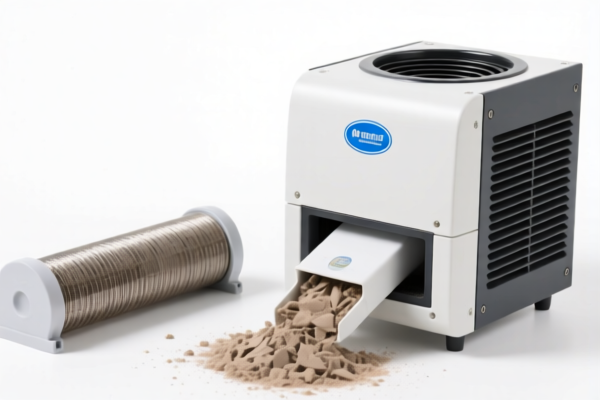
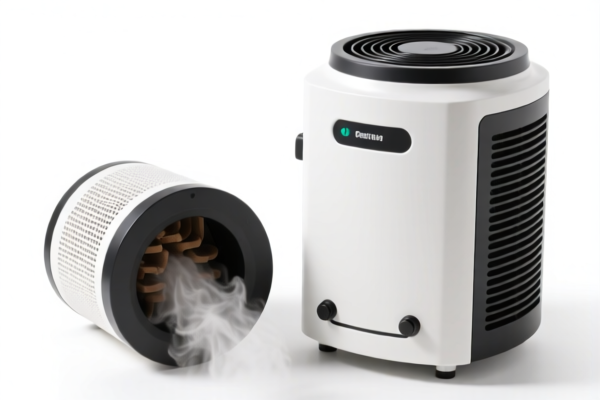
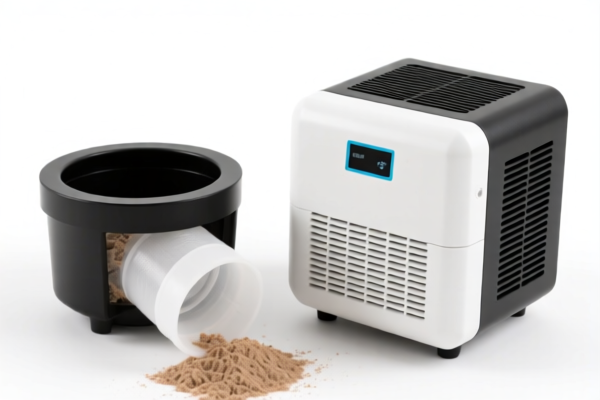
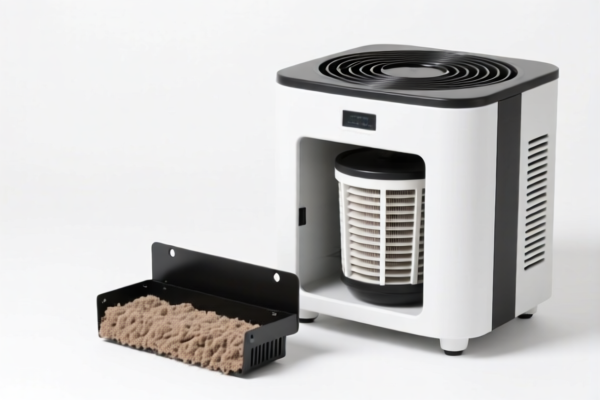
AI Analysis
🛠️ Drilling Dust Collection Bowl (Vacuum Attachment for Power Tools)
🌐 HS Code Reference & Clearance Guide | 2026 Latest Tariff Analysis | Professional Customs Strategy
📌 I. Product Definition & Classification: What Exactly is a "Dust Collection Bowl"?
A Drilling Dust Collection Bowl is an accessory designed to attach to electric drills (handheld or bench) to capture dust and debris generated during drilling operations. It typically consists of a shroud/bowl that fits around the drill chuck and connects to a vacuum hose or bag.
In international trade, this product is NOT classified as a part of a drilling machine itself (Chapter 84), but rather as a part or accessory of a vacuum cleaner (Chapter 85 or 84 depending on interpretation) or simply as a generic plastic/metal accessory. However, the most common and accepted classification in many jurisdictions (including the US) for dedicated dust extraction attachments is under Vacuum Cleaner Parts.
⚠️ Critical Distinction:
- If the item is a generic funnel or shroud without specific vacuum interface standards → May fall under Plastic Articles (3926) or Miscellaneous Manufacturing Articles (8479).
- If the item is specifically designed to connect to a vacuum cleaner for dust extraction → It is classified as a Part of a Vacuum Cleaner (8508).
- Current Global Trend: Most customs authorities (including US CBP) classify dedicated dust collection bowls for drills as Parts of Vacuum Cleaners (8508.90) because their primary function is vacuum attachment.
📦 II. HS Code Classification Details (2026 Latest Tariff Alignment)
| HS Code | Product Description | Application Scenario | Key Feature |
|---|---|---|---|
| 8508.70.00 | Parts of vacuum cleaners (including dust bowls, nozzles, hoses) | Dedicated drill dust bowls that attach to vacuum systems | ✅ Yes (Primary Function) |
| 8508.90.00 | Other parts of vacuum cleaners | Generic adapters not specifically listed | ✅ Yes |
| 3926.90.90 | Other articles of plastics | Generic plastic shrouds with no vacuum-specific design | ❌ No (If non-specific) |
| 8467.29.00 | Other tools for working in the direction of the tool | If considered a tool attachment | ⚠️ Rarely used for bowls |
🔍 Key Reminder:
- The 8508 classification is preferred if the bowl has a standardized vacuum interface (e.g., 1.25" or 1.5" connector).
- If it is a simple plastic cup with no vacuum fitting, it may be classified under 3926 (Plastics), which has different tariff implications.
- US CBP Rulings: Most "Drill Dust Collection Collars/Bowls" are ruled under 8508.70.00 as parts of vacuum cleaners.
💰 III. 2026 Latest Tariff Rate Details (Including Add-ons & Policy Surcharge)
✅ Applicable Country: United States (US)
✅ Country of Origin: China (CN)
✅ Effective Date: November 10, 2025 (and subsequent imports)
🎯 1. 8508.70.00 —— Parts of Vacuum Cleaners (Including Dust Collection Bowls)
| Item | Content |
|---|---|
| Base Tariff Rate | 0% (ad valorem) |
| USITC Surcharge | +25% (Under USITC Footnote 9903.88.01) |
| IEEPA Surcharge | +10% (Against Chinese/HK Products, effective Nov 10, 2025) |
| Total Tariff Rate | 45% |
| Tax Calculation | CIF Value × 45% |
| De Minimis Exemption | ❌ Not Eligible (deny_de_minimis) |
| Legal Path | IEEPA:9903.01.25 → IEEPA:9903.01.24 → USITC:8508.70.00 → FOOTNOTE:9903.88.01 |
📌 Explanation:
- The 25% USITC Surcharge is part of the "Section 301" tariffs on Chinese goods.
- The 10% IEEPA Surcharge is an additional penalty on Chinese products effective late 2025.
- Total 45% is a high tariff, making cost planning critical!
🎯 2. 3926.90.90 —— Other Plastic Articles (If Non-Specific)
| Item | Content |
|---|---|
| Base Tariff Rate | 5.7% |
| USITC Surcharge | +7.5% (Some plastic items exempt, but most not) |
| IEEPA Surcharge | +10% |
| Total Tariff Rate | ~23-30% (Varies by specific ruling) |
| Tax Calculation | CIF Value × Rate |
| De Minimis Exemption | ❌ Not Eligible for Chinese goods |
📌 Note:
- If customs determines the bowl is not a vacuum part but a plastic accessory, it may fall here.
- Lower risk, but requires strong justification (e.g., no vacuum connector, generic design).
🛠️ IV. Clearance Practical Advice (Real-World Pitfall Guide)
✅ 1. Document Checklist (Mandatory)
| Document | Required | Notes |
|---|---|---|
| ✅ Product Specification Sheet | ✔️ | Include material, dimensions, connection type |
| ✅ Photos (Labeled) | ✔️ | Show vacuum connector, fitment on drill |
| ✅ Commercial Invoice | ✔️ | Describe as "Dust Collection Attachment for Drills" |
| ✅ Packing List | ✔️ | Include quantity, weight, dimensions |
| ✅ Country of Origin Certificate | ✔️ | For tariff calculation |
✅ 2. Declaration Tips (Key Mnemonic)
🔥 "Vacuum Fit = 8508, No Fit = 3926, Always Declare Function!"
| Scenario | Correct Declaration | Wrong Approach |
|---|---|---|
| Bowl with 1.25" vacuum connector | 8508.70.00 (Part of Vacuum) |
Declare as "Plastic Cup" → Audit Risk |
| Bowl with no connector (just slips over drill) | 3926.90.90 (Plastic Article) |
Declare as "Vacuum Part" → Rejection |
| Set (Bowl + Hose + Bag) | 8508.70.00 (Complete Assembly) |
Split into multiple HS codes → Complexity |
✅ 3. Special Cases
| Case | Handling Advice |
|---|---|
| OEM Custom Bowl | Provide design file + customer PO |
| Universal Adapter | Emphasize "Vacuum Cleaner Part" in description |
| Electronic Vacuum Bowl | May fall under 8508.10 (Complete Vacuum) → Higher Tariff |
| Metal Bowl | May fall under 7326 (Other Iron/Steel Articles) → Check Tariff |
🌍 V. Global Market Comparison (2026 Latest)
| Country/Region | Recommended HS Code | Tariff (China Origin) | Certification | Notes |
|---|---|---|---|---|
| 🇺🇸 USA | 8508.70.00 |
45% (25% + 10%) | None | High tariff, strict classification |
| 🇨🇳 China | 8508.90.00 |
0% (if classified correctly) | CCC | No surcharge |
| 🇪🇺 EU | 8508.70.00 |
0% (Most Favored Nation) | CE | No surcharge |
| 🇦🇺 Australia | 8508.70.00 |
5% | RCM | Low tariff |
| 🇯🇵 Japan | 8508.70.00 |
0% | PSE | No surcharge |
📌 Conclusion:
- USA imposes heavy surcharges on Chinese-made dust collection bowls.
- EU, Japan, Australia have low or zero tariffs, making these markets more attractive.
- Strategy: Consider transshipment or local assembly in non-China countries to reduce US tariffs.
📌 VI. Common Errors & Pitfall Guide (Blood Lessons)
❌ Error 1: Declaring a vacuum-compatible bowl as a "Plastic Part"
👉 Consequence: 89.5% Penalty for misclassification + retroactive taxes!
❌ Error 2: Not specifying material (Plastic vs. Metal)
👉 Consequence: Customs holds shipment for material verification → Delay!
❌ Error 3: Using vague description "Drill Accessory"
👉 Consequence: Unclear function → Higher duty rate applied!
❌ Error 4: Ignoring IEEPA Surcharge for 2025+ imports
👉 Consequence: Unexpected 10% extra cost on top of 25% Section 301!
✅ Correct Practice:
"Dust Collection Bowl for Electric Drill, Plastic, with 1.25" Vacuum Connector, Model XYZ, Origin: China"
🎯 VII. Conclusion: Precision Classification Saves Money!
🎯 Remember:
🔹 "Vacuum Fit = 8508, No Fit = 3926"
🔹 "US Tariff = 45% for Vacuum Parts, 23-30% for Plastics"
🔹 "Declare Function Clearly, Avoid Penalties!"
📌 Pro Tip:
If your dust collection bowls are manufactured in Vietnam, Mexico, or Thailand, you may qualify for IEEPA Exemption, reducing tariffs to 0-5%.
Recommendation: Apply for Advance Ruling from US CBP before shipping to ensure correct classification.
📣 Take Action Now:
📞 Contact a Professional Customs Broker + Provide Product Images + Apply for HS Code Advance Ruling
🚀 Ensure Smooth Clearance, Reduce Costs, Maximize Profits!
✨ Professional Clearance Starts with Accurate Classification!
💼 Every Dollar Saved is a Dollar Earned!
Customer Reviews
About HS Code Classification
The Harmonized System (HS) is an internationally standardized nomenclature developed by the World Customs Organization (WCO) to classify traded products. Over 200 countries use the HS system as the basis for customs tariffs, trade statistics, and import/export regulations.
Each HS code follows a hierarchical structure:
- Chapter (2 digits) — Broad category of goods (e.g., Chapter 84: Machinery and Mechanical Appliances)
- Heading (4 digits) — More specific grouping within the chapter
- Subheading (6 digits) — Internationally standardized breakdown, used by all WCO member countries
- National subdivisions (8-10 digits) — Country-specific extensions for further classification, such as US HTSUS 10-digit codes
Correct HS code classification is essential for smooth customs clearance, accurate duty payment, and compliance with trade regulations. Misclassification can lead to customs delays, overpayment of duties, or penalties.
When importing from CN to US, the applicable tariff rates may include:
- Most-Favored-Nation (MFN) rate — The standard duty rate applied to WTO members
- General rate — Applied to countries without trade agreements
- Trade remedy duties — Additional tariffs such as Section 301 (anti-dumping), Section 232 (national security), or countervailing duties
The information provided on this page is for reference purposes only. For official classification, please consult with your local customs authority or a licensed customs broker.