Drinking Glass
CN → US| HS Code | Tariff Rate | Origin | Destination | Doc |
|---|---|---|---|---|
| 7013371001 | 46.0% | CN | US | Official Doc |
| 7013372090 | 40.0% | CN | US | Official Doc |
| 7010905039 | 35.0% | CN | US | Official Doc |
| 7010905029 | 35.0% | CN | US | Official Doc |
| 4823690020 | 35.0% | CN | US | Official Doc |
Product Images

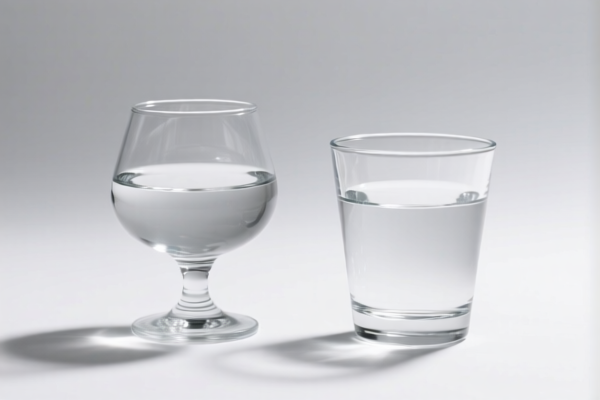


AI Analysis
🥛 Drinking Glass & Glassware Containers (Glassware for Drinking or Other Uses)
🌐 HS Code Reference & Customs Clearance Guide | 2026 Latest Tariff Analysis | Professional Clearance Strategy
📌 I. Product Definition & Classification: What Exactly is "Drinking Glass"?
"Drinking Glass" is a broad category in international trade, encompassing various glass products used for beverages. The classification depends heavily on the primary function (drinking vs. storage/container) and material properties.
In customs declarations, these items are primarily divided into two functional groups: 1. Tableware for Drinking (Glassware): Items designed specifically for holding drinks for immediate consumption (e.g., tumblers, wine glasses, beer mugs). 2. Glass Containers (Jars/Bottles): Items designed primarily for storing, preserving, or transporting liquids (e.g., beverage jars, bottles).
⚠️ Critical Distinction:
- If the item is a cup, tumbler, or goblet meant for drinking → It falls under HS 7013.37 (Tableware).
- If the item is a jar, bottle, or vessel meant for storage/packaging → It falls under HS 7010.90 (Containers).
- ⚠️ Do not confuse with Paper Cups: If the material is paper, it falls under HS 4823.69, not glass codes!
📦 II. HS Code Classification Details (2026 Latest Tariff Authority Comparison)
| HS Code | Product Description | Application Scenario | Material/Function |
|---|---|---|---|
7013.37.10.01 |
Glass tableware for drinking | Everyday water glasses, tumblers | ✅ Glass, for drinking |
7013.37.20.90 |
Other glass tableware for drinking | Decorative glasses, specific shapes | ✅ Glass, for drinking |
7010.90.50.39 |
Glass containers (other) | Beverage bottles, storage jars | ✅ Glass, for container use |
7010.90.50.29 |
Glass containers (other) | General glass vessels/packaging | ✅ Glass, container class |
4823.69.00.20 |
Paper cups for beverages | Disposable paper drinking cups | ❌ Paper, not glass |
🔍 Key Reminder:
- Glassware (7013.37): These are tableware. Even if used for drinking, if the shape is clearly that of a container (like a jar or bottle), it may be classified differently. However, standard drinking vessels are 7013.37.
- Containers (7010.90): These are for storage/packaging. If you are importing empty bottles for soda or water, they go here.
- Paper Cups (4823.69): Do not misclassify paper products as glass. The tariff structure differs significantly.
💰 III. 2026 Latest Tariff Rate Breakdown (Including Surtaxes & Policy Add-ons)
✅ Applicable Country: United States (US)
✅ Origin: China (CN)
✅ Effective Date: From November 10, 2025 (and subsequent imports)
🎯 1. 7013.37.10.01 & 7013.37.20.90 —— Glass Tableware for Drinking
| Item | Content |
|---|---|
| Basic Tariff | 28.5% (7013.37.10.01) / 22.5% (7013.37.20.90) |
| Section 301 Surtax | +7.5% |
| Section 122 Tariff | +10% |
| Total Tariff Rate | 46.0% (10.01) / 40.0% (20.90) |
| Tax Calculation | CIF Value × Total Rate |
| De Minimis Eligibility | ❌ Not Applicable (Subject to full duty calculation) |
| Legal Basis Path | Base Rate + Section 301 (7.5%) + Section 122 (10%) |
📌 Explanation:
- Section 301: The additional 7.5% is part of the broader trade measures affecting Chinese goods.
- Section 122: A specific 10% surtax applicable to certain glass products from China.
- High Cost Alert: With rates reaching 40-46%, these goods are significantly impacted by trade policies. Importers must factor this into landed cost calculations.
🎯 2. 7010.90.50.39 & 7010.90.50.29 —— Glass Containers (Jars/Bottles)
| Item | Content |
|---|---|
| Basic Tariff | 0.0% |
| Section 301 Surtax | +25.0% |
| Section 122 Tariff | +10% |
| Total Tariff Rate | 35.0% |
| Tax Calculation | CIF Value × 35.0% |
| De Minimis Eligibility | ❌ Not Applicable |
| Legal Basis Path | Base Rate (0%) + Section 301 (25%) + Section 122 (10%) |
📌 Note:
- Although the basic tariff is 0%, the Section 301 surtax of 25% is much higher than for tableware.
- Combined with the 10% Section 122 tariff, the total effective rate is 35%.
- This makes glass containers (like beverage bottles) slightly cheaper in total duty than drinking glasses, but still subject to significant trade barriers.
🎯 3. 4823.69.00.20 —— Paper Cups (For Comparison)
| Item | Content |
|---|---|
| Basic Tariff | 0.0% |
| Section 301 Surtax | +25.0% |
| Section 122 Tariff | +10% |
| Total Tariff Rate | 35.0% |
| Tax Calculation | CIF Value × 35.0% |
| Legal Basis Path | Base Rate (0%) + Section 301 (25%) + Section 122 (10%) |
📌 Note:
- Paper cups are NOT glass. However, they share the same surtax structure (301 + 122) as glass containers.
- Ensure your declaration explicitly states "Paper" to avoid misclassification penalties.
🛠️ IV. Customs Clearance Practical Advice (Real-World Pitfall Guide)
✅ 1. Required Documentation Checklist (No Exceptions)
| Document | Mandatory? | Description |
|---|---|---|
| ✅ Product Specification Sheet | ✔️ | Must specify: Material (Glass/Paper), Shape, Capacity, Intended Use (Drinking/Storage). |
| ✅ Product Photos | ✔️ | Clear images showing the item is a "glass" (not ceramic/plastic) and its form factor. |
| ✅ Commercial Invoice | ✔️ | Must clearly state "Glass Drinking Glass" or "Glass Bottle" – do not use vague terms like "Glass Item". |
| ✅ Packing List | ✔️ | Detail weight and volume accurately for valuation. |
| ✅ Origin Certificate (if applicable) | ✔️ | Required to verify Country of Origin (China) for surtax application. |
✅ 2. Declaration Tips (Key Mantras)
🔥 “Material First, Function Second, Name Specific, Duty Accurate!”
| Scenario | Correct Declaration | Wrong Practice |
|---|---|---|
| Drinking Glasses | 7013.37.10.01 - "Glass drinking glass" |
Vague: "Glass cup" (may trigger manual review) |
| Glass Bottles | 7010.90.50.39 - "Glass container for beverages" |
Misclassified as tableware (7013) → 46% instead of 35% |
| Paper Cups | 4823.69.00.20 - "Paper cup for drinks" |
Misclassified as glass → Severe penalty for false declaration |
| Mixed Shipment | Declare separately | Mixing paper and glass in one line item → Rejection |
✅ 3. Special Cases Handling
| Scenario | Handling Advice |
|---|---|
| OEM Custom Shapes | Provide design blueprints or photos. Ensure the description matches the physical appearance. |
| Gift Sets (Glass + Box) | Declare glass separately. Do not bundle if it complicates HS code identification. |
| Broken/Damaged Goods | Declare as "damaged glassware". Tariff may still apply, but customs may offer duty drawback options. |
| Sample Shipments | Even for samples, if value exceeds de minimis thresholds or is subject to Section 122/301, declare correctly. No duty-free exemption for these HS codes under typical de minimis rules for China-origin goods subject to surtaxes. |
🌍 V. Global Market Comparison (2026 Latest)
| Country/Region | Recommended HS Code | Tariff (China Origin) | Certification Requirements | Notes |
|---|---|---|---|---|
| 🇺🇸 USA | 7013.37.10.01 / 7010.90.50.39 |
46% / 35% | FDA (if food contact), Prop 65 | High surtaxes apply. |
| 🇨🇳 China | 7013.37.10.01 / 7010.90.50.39 |
8% / 0% | CCC (if applicable) | Export duties may apply. |
| 🇪🇺 EU | 7013.37 / 7010.90 |
6.5% / 0% | CE, Food Contact Regulations | No Section 301/122. |
| 🇦🇺 Australia | 7013.37 / 7010.90 |
5% / 5% | G label | Standard MFN rates. |
📌 Conclusion:
- USA is the most expensive market due to Section 301 and Section 122 tariffs.
- Glass Containers (7010) have a lower total rate (35%) than Glass Tableware (7013) (40-46%), despite having a 0% basic rate. This is due to the higher Section 301 surtax on containers.
- Strategy: If possible, analyze if the product can be legally classified as a "container" rather than "tableware" to save 5-11% in duties, but only if the functional definition supports it. Misclassification is risky.
📌 VI. Common Mistakes & Pitfall Guide (Lessons Learned)
❌ Mistake 1: Calling a "Glass Bottle" a "Drinking Glass" to avoid container classification.
👉 Consequence: Customs may reclassify it, but if the intent is storage, you might face penalties for misdeclaration. Plus, the rate difference is small (46% vs 35%), so the risk may not be worth it.
❌ Mistake 2: Confusing Paper Cups with Glass Cups.
👉 Consequence: If you declare paper cups as glass, you violate material description. If declared correctly, the tax is still 35%, but accuracy is key for compliance audits.
❌ Mistake 3: Assuming "De Minimis" ($800) exemption applies.
👉 Consequence: NO. Goods from China subject to Section 301 and Section 122 tariffs do not qualify for the $800 de minimis exemption (Section 321) in the US. You must file an entry and pay duties.
✅ Correct Practice:
"Clear Glass Tumbler, 12oz, Made in China, For Drinking, HS 7013.37.10.01"
🎯 VII. Conclusion: Professional Declaration, Cost Control, Compliance!
🎯 Remember the Mantra:
🔹 "Glass vs. Container? Check Function. China Origin? Expect Surtax. Paper? Not Glass. De Minimis? Not for China Glass!"
🔹 "HS Code Determines Duty, 35% vs 46%, Accuracy Saves Money, Mistakes Cost More!"
📌 Tips:
- If your glassware is originating from Vietnam, Thailand, or Mexico, you may avoid US Section 301 and 122 tariffs, reducing duties to basic rates only (0-8%).
- Always apply for an Advance Ruling if your product shape is ambiguous (e.g., a glass vase used for drinking).
- Keep samples for customs inspection if required.
📣 Take Action Now:
📞 Contact a professional customs broker + Provide product images + Verify Country of Origin
🚀 Ensure smooth clearance, accurate duties, and protected margins!
✨ Professional clearance starts with precise classification!
💼 Every cent of duty is worth calculating precisely!
Customer Reviews
About HS Code Classification
The Harmonized System (HS) is an internationally standardized nomenclature developed by the World Customs Organization (WCO) to classify traded products. Over 200 countries use the HS system as the basis for customs tariffs, trade statistics, and import/export regulations.
Each HS code follows a hierarchical structure:
- Chapter (2 digits) — Broad category of goods (e.g., Chapter 84: Machinery and Mechanical Appliances)
- Heading (4 digits) — More specific grouping within the chapter
- Subheading (6 digits) — Internationally standardized breakdown, used by all WCO member countries
- National subdivisions (8-10 digits) — Country-specific extensions for further classification, such as US HTSUS 10-digit codes
Correct HS code classification is essential for smooth customs clearance, accurate duty payment, and compliance with trade regulations. Misclassification can lead to customs delays, overpayment of duties, or penalties.
When importing from CN to US, the applicable tariff rates may include:
- Most-Favored-Nation (MFN) rate — The standard duty rate applied to WTO members
- General rate — Applied to countries without trade agreements
- Trade remedy duties — Additional tariffs such as Section 301 (anti-dumping), Section 232 (national security), or countervailing duties
The information provided on this page is for reference purposes only. For official classification, please consult with your local customs authority or a licensed customs broker.