Dripping Plastic Mold
CN → US| HS Code | Tariff Rate | Origin | Destination | Doc |
|---|---|---|---|---|
| 3926909910 | 22.8% | CN | US | Official Doc |
| 8480718045 | 38.1% | CN | US | Official Doc |
| 8480799090 | 38.1% | CN | US | Official Doc |
| 3917290090 | 38.1% | CN | US | Official Doc |
| 3926909989 | 22.8% | CN | US | Official Doc |
Product Images
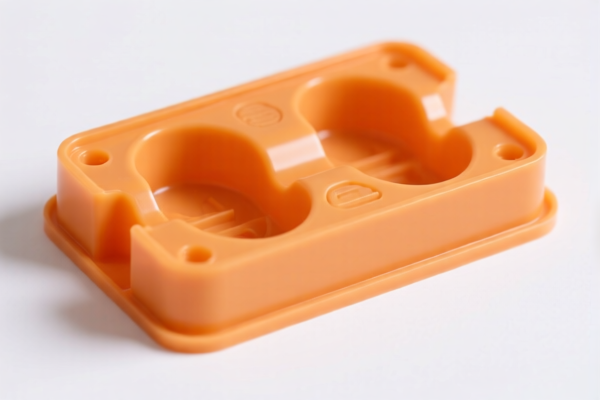

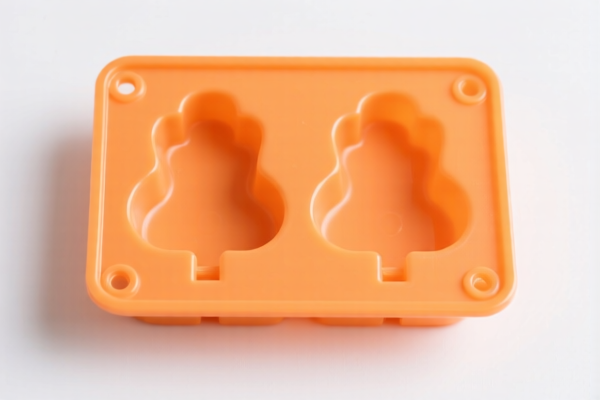

AI Analysis
🛠️ Dripping Plastic Mold (Resin Casting Mold)
🌐 HS Code Reference & Customs Clearance Guide | 2026 Latest Tariff Analysis | Professional Strategy for US Imports
📌 I. Product Definition: What Exactly is a "Dripping Plastic Mold"?
A "Dripping Plastic Mold" (commonly known in the industry as Resin Casting Mold or Silicone Mold) is a specialized tool used in crafting, jewelry making, and industrial prototyping. It consists of two main components: 1. The Mold Material: Typically Silicone (liquid silicone rubber) or rigid Plastic/Resin. 2. The Function: To create negative impressions for casting liquid resin, epoxy, concrete, or wax.
⚠️ Critical Classification Distinction:
- If made primarily of Silicone → It is treated as a Plastic Article (Chapter 39).
- If made of Metal/Rigid Material specifically for industrial injection/compression molding → It is treated as a Mold (Chapter 84).
- Note: Most "dripping molds" for hobby/small batch use are Silicone-based, falling under Chapter 39.
📦 II. HS Code Classification Matrix (2026 Latest Tariff Data)
Based on the provided data, here are the 5 possible HS Codes, their rationale, and tax implications.
| HS Code | Product Description | Rationale for Classification | Total Tax Rate |
|---|---|---|---|
| 3926.90.99.10 | Other plastic articles | The mold is inferred to be made of Silicone (a type of plastic polymer). It fits the "catch-all" category for other plastic products. | 22.8% |
| 8480.71.80.45 | Molds for injection or compression | Classified strictly as an Industrial Mold. Assumes the material and usage fit injection/compression molding standards. | 38.1% |
| 8480.79.90.90 | Other molds and dies | Based on common sense, inferred material is Resin/Plastic. Fits the "catch-all" category for other molds not specified elsewhere. | 38.1% |
| 3917.29.00.90 | Other plastic tubing, hoses, pipes | Inferred material is Plastic. Classified as a Mold Accessory or component within the plastic tube/pipe accessories category. | 38.1% |
| 3926.90.99.89 | Other plastic articles (Alt.) | Made of Silicone. Fits the material attribute of "Other Plastic Articles." Very similar to .10 but a different sub-code. | 22.8% |
🔍 Key Insight:
- Cheapest Route: Codes starting with 39 (Plastic Articles) have a total tax of 22.8%.
- Expensive Route: Codes starting with 84 (Machinery/Tools) or 3917 (Plastic Tubing) have a total tax of 38.1%.
- Why the Difference? Chapter 84 (Machinery) attracts higher base tariffs + heavier Section 301/122 Add-on tariffs. Chapter 39 (Articles) has lower base rates.
💰 III. Detailed Tariff Breakdown (US Imports from China)
✅ Applicable Country: USA (US)
✅ Origin: China (CN)
✅ Effective Date: Current trade war policies (Section 301 & IEEPA)
🎯 1. The "Plastic Article" Route (HS 3926.90.99.10 / 3926.90.99.89)
Best for Silicone/Resin Molds
| Item | Detail |
|---|---|
| Base Duty | 5.3% |
| Section 301 Add-on | +7.5% (Specific to these subheadings) |
| Section 122/IEEPA Add-on | +10% (China-specific emergency tariff) |
| Total Effective Rate | 22.8% |
| De Minimis Exemption? | ❌ NO (Deny de_minimis) |
| Legal Basis Path | USITC:3926.90.99 → FOOTNOTE:301 → IEEPA:9903 |
📌 Explanation:
- Although the base duty is low (5.3%), the Section 301 and IEEPA tariffs are unavoidable for Chinese goods.
- Total 22.8% is significantly cheaper than the 38.1% rate.
- Why is it cheaper? Customs often view silicone molds as "finished plastic products" rather than "machinery tools" if they are used for small-scale casting, not high-volume industrial injection molding.
🎯 2. The "Industrial Mold" Route (HS 8480.71.80.45 / 8480.79.90.90)
For Rigid/Industrial Molds
| Item | Detail |
|---|---|
| Base Duty | 3.1% |
| Section 301 Add-on | +25.0% (High-tier Section 301 rate) |
| Section 122/IEEPA Add-on | +10% |
| Total Effective Rate | 38.1% |
| De Minimis Exemption? | ❌ NO (Deny de_minimis) |
| Legal Basis Path | USITC:8480.79 → FOOTNOTE:301.84 → IEEPA:9903 |
📌 Explanation:
- Even though the base duty (3.1%) is lower, the Section 301 tariff jumps to 25%.
- This classifies the item as Capital Equipment/Tooling, which is heavily targeted by US trade policy.
- Total 38.1% is nearly 67% higher than the plastic article classification.
🎯 3. The "Plastic Accessory" Route (HS 3917.29.00.90)
| Item | Detail |
|---|---|
| Base Duty | 3.1% |
| Section 301 Add-on | +25.0% |
| Section 122/IEEPA Add-on | +10% |
| Total Effective Rate | 38.1% |
| De Minimis Exemption? | ❌ NO |
📌 Explanation:
- This code is risky. While it starts with Chapter 39, the specific subheading attracts the 25% Section 301 rate.
- Only use this if the product is explicitly defined as a "tube/pipe accessory" for machinery, which is rare for dipping molds.
🛠️ IV. Customs Clearance Practical Advice (Pitfall Avoidance Guide)
✅ 1. Documentation Checklist (Non-Negotiable)
| Document | Requirement | Why? |
|---|---|---|
| Product Specification Sheet | ✔️ Must state Material (e.g., "Platinum Silicone," "Liquid Silicone Rubber") and Hardness (Shore A). | Proves it is a "Plastic Article" (Ch. 39) vs. a "Metal Mold" (Ch. 84). |
| Product Photos | ✔️ Clear images of the mold, interior texture, and any packaging. | Customs officers will inspect to verify it is not a steel/aluminum industrial mold. |
| Commercial Invoice | ✔️ Description: "Silicone Resin Casting Mold, Not for Industrial Injection Molding." | Avoids triggering Chapter 84 automatically. |
| HTS Code Declaration | ✔️ Explicitly declare 3926.90.99.10 or .89. | Prevents reclassification to 8480, which saves 15.3% in taxes. |
✅ 2. Naming & Description Strategy (Crucial!)
🔥 Golden Rule: "Describe Material, Not Just Function!"
| Scenario | Recommended Description | Risk |
|---|---|---|
| Best | "Silicone Dipping Mold for Epoxy Resin Crafts, 2-Part Liquid Silicone Rubber" | ✅ Low Risk. Clearly Ch. 39. |
| Risky | "Plastic Mold for Plastic Parts" | ⚠️ High Risk. Sounds like Ch. 84 (Industrial Tool). |
| Dangerous | "Industrial Injection Mold" | ❌ High Risk. Triggers 38.1% tariff. |
| Dangerous | "Mold Accessory for Machine 3000" | ❌ High Risk. Triggers Ch. 3917 + 25% tariff. |
✅ 3. Special Handling Tips
| Situation | Strategy |
|---|---|
| Bulk Imports | Ensure the supplier declares the HS Code correctly on the commercial invoice. Discrepancies cause delays. |
| Mixed Containers | If mixed with other goods, keep molds in separate boxes with clear labels. |
| Small Samples | Still subject to the 22.8% or 38.1% rate. No De Minimis exemption for China-origin goods. |
| Origin Marking | Must mark "Made in China" on product/packaging. |
🌍 V. Global Market Comparison (2026 Context)
| Country/Region | Recommended HS Code | Total Tax (China Origin) | Key Requirement |
|---|---|---|---|
| 🇺🇸 USA | 3926.90.99.10 |
22.8% | Detailed material specs |
| 🇪🇺 EU | 3926.90.97 |
~2.7% | CE/RoHS (if applicable) |
| 🇨🇳 China | 3926.90.90 |
5.3% | Standard Import |
| 🇨🇦 Canada | 3926.90.90 |
5.3% | CUSMA if applicable |
📌 Conclusion:
- The US is the hardest market for these goods due to Section 301 and IEEPA tariffs.
- EU and Canada are far more favorable for Chinese-origin plastic molds.
- Strategy: If selling to the US, must use the 3926 codes to minimize the 22.8% rate, avoiding the 38.1% industrial mold rate.
📌 VI. Common Errors & Lessons Learned (Blood & Tears)
❌ Error 1: Declaring as "Mold" (Chapter 84) without specifying it's silicone.
👉 Consequence: Customs reclassifies to 8480.79.90.90 → 38.1% tax. You pay 15.3% more.
❌ Error 2: Using vague terms like "Plastic Tool."
👉 Consequence: Customs assumes industrial use → 38.1% tax + Delay for examination.
❌ Error 3: Ignoring the "Section 122" (IEEPA) 10% tariff.
👉 Consequence: Underpayment → Penalties, interest, and potential seizure.
❌ Error 4: Assuming De Minimis ($800) applies.
👉 Consequence: It does NOT apply to Chinese goods in Ch. 39/84. You must pay taxes on every shipment.
✅ Correct Approach:
"Silicone Resin Dipping Mold, 50mm, Liquid Silicone Rubber (LSR), for Craft Use Only"
🎯 VII. Conclusion: Smart Classification Saves Money!
🎯 Remember This Mantra:
🔹 "Silicone = Plastic Article (22.8%)
🔹 Industrial Steel = Mold (38.1%)
🔹 Don't guess the HS Code, or you lose 15%!"
🔹 "Section 301 is real, IEEPA is here, prepare for 22.8% or 38.1%."
📌 Pro Tip:
If your mold is 100% Silicone and used for crafts/resin, insist on 3926.90.99.10.
If it's hard plastic/rigid for mass production, you may face 8480 codes.
Always provide Material Safety Data Sheets (MSDS) to prove it's Silicone/Plastic, not Metal.
📣 Immediate Action Required:
📞 Verify the exact material composition with your supplier.
📄 Ensure the Commercial Invoice matches HS Code 3926.90.99.10.
💸 Budget for 22.8% total duty, not just the base rate.
🚀 Clear your goods quickly, avoid penalties, and protect your margin!
✨ Professional Customs Clearance Starts with Precision!
💼 Your Profit Margin Depends on This 15% Difference!
Customer Reviews
About HS Code Classification
The Harmonized System (HS) is an internationally standardized nomenclature developed by the World Customs Organization (WCO) to classify traded products. Over 200 countries use the HS system as the basis for customs tariffs, trade statistics, and import/export regulations.
Each HS code follows a hierarchical structure:
- Chapter (2 digits) — Broad category of goods (e.g., Chapter 84: Machinery and Mechanical Appliances)
- Heading (4 digits) — More specific grouping within the chapter
- Subheading (6 digits) — Internationally standardized breakdown, used by all WCO member countries
- National subdivisions (8-10 digits) — Country-specific extensions for further classification, such as US HTSUS 10-digit codes
Correct HS code classification is essential for smooth customs clearance, accurate duty payment, and compliance with trade regulations. Misclassification can lead to customs delays, overpayment of duties, or penalties.
When importing from CN to US, the applicable tariff rates may include:
- Most-Favored-Nation (MFN) rate — The standard duty rate applied to WTO members
- General rate — Applied to countries without trade agreements
- Trade remedy duties — Additional tariffs such as Section 301 (anti-dumping), Section 232 (national security), or countervailing duties
The information provided on this page is for reference purposes only. For official classification, please consult with your local customs authority or a licensed customs broker.