Dual lamp Flashlight Set
CN → US| HS Code | Tariff Rate | Origin | Destination | Doc |
|---|---|---|---|---|
| 8513102000 | 22.5% | CN | US | Official Doc |
| 8513104000 | 13.5% | CN | US | Official Doc |
Product Images
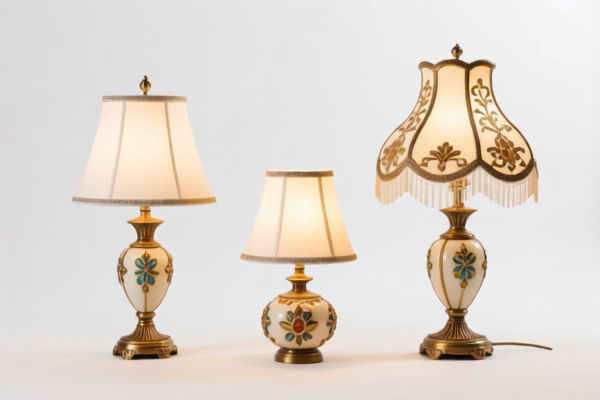

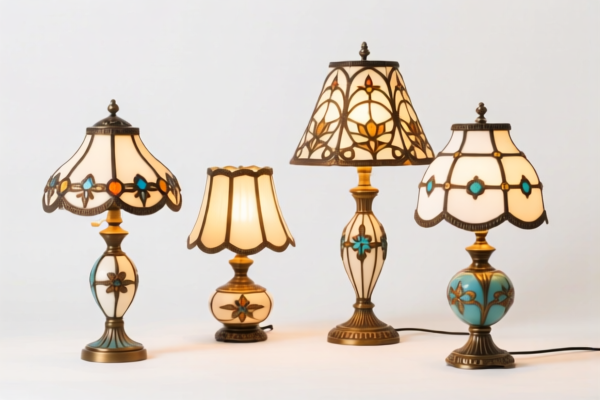
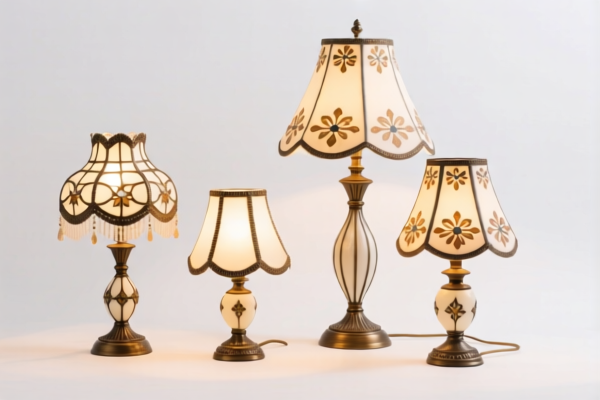
AI Analysis
🔦 Dual-Lamp Flashlight Set (Portable Electric Lamps)
🌐 HS Code Reference & Clearance Guide | 2026 Latest Tariff Analysis | Professional Clearance Strategy
📌 I. Product Definition & Classification: Do You Really Understand "Flashlights"?
A Dual-Lamp Flashlight Set is a portable lighting device designed to function using its own independent energy source (such as dry batteries or storage batteries). In international trade, the key distinction lies in whether it is a standardized "Flashlight" (typically cylindrical, hand-held) or a general "Other Portable Lamp."
Key Distinction for Dual-Lamp Sets: - Standard Flashlight Form Factor: If the dual-lamp unit is designed in a conventional handheld shape (like a traditional torch with two bulbs/lenses) → HS 8513.10.20.00. - Non-Standard/Other Portable Lamp: If the design is unconventional (e.g., a clip-on dual-head work light, a headlamp style, or a specialized industrial fixture) that does not fit the common definition of a "flashlight" → HS 8513.10.40.00.
⚠️ Critical Classification Point:
- "Flashlight" (8513.10.20): Generally refers to self-contained portable lamps of a form commonly known as flashlights.
- "Other" (8513.10.40): Covers portable lamps not classified as flashlights, including complex dual-lamp configurations that may be marketed as work lights or specialized task lights.
📦 II. HS Code Classification Details (2026 Latest Tariff Authoritative Comparison)
| HS Code | Product Description | Application Scenario | Form Factor |
|---|---|---|---|
8513.10.20.00 |
Lamps: Flashlights | Standard handheld dual-bulb torches, consumer-grade camping lights | ✅ Traditional Flashlight Shape |
8513.10.40.00 |
Lamps: Other | Clip-on dual heads, industrial work lights, complex multi-beam portable lamps | ❌ Non-Standard/Other Shape |
🔍 Key Reminder:
- Both categories fall under Heading 8513: "Portable electric lamps designed to function by their own source of energy... other than lighting equipment of heading 8512." - Parts: Accessories like spare batteries, charging cables, or carrying cases are typically classified separately (often under 8513.90 or 8517.13/8517.19 depending on specific nature), but the main unit dictates the primary HS Code. - Dual-Lamp Specifics: The number of lamps (dual vs. single) does not automatically change the heading. The form factor and common commercial understanding determine if it is a "Flashlight" or "Other."
💰 III. 2026 Latest Tariff Rate Detail (Including Additional Duties)
✅ Applicable Country: United States (US)
✅ Country of Origin: China (CN)
✅ Effective Time: Post-2025 Policy Implementation (Based on provided data)
🎯 1. 8513.10.20.00 —— Lamps: Flashlights
| Item | Detail |
|---|---|
| Basic Tariff Rate | 12.5% |
| Additional Tariff (Section 301) | 0.0% |
| Total Tax Rate | 12.5% |
| Tax Calculation | CIF Value × 12.5% |
| De Minimis Eligibility | ⚠️ Check Specific Policy: Generally, items over $800 are subject to full duty. For smaller shipments, verify if de minimis (Section 321) applies. Note: Recent policy changes may restrict de minimis for certain Chinese origins. |
| Legal Basis | HTSUS:8513.10.20.00 |
📌 Explanation:
- "Flashlights" are subject to a 12.5% basic tariff. - According to the provided data, there is no additional Section 301 tariff (0.0%) applied to this specific subheading in this dataset. Note: Always verify with current USTR lists as Section 301 coverage can change. - This rate is moderate compared to high-tech electronics.
🎯 2. 8513.10.40.00 —— Lamps: Other
| Item | Detail |
|---|---|
| Basic Tariff Rate | 3.5% |
| Additional Tariff (Section 301) | 0.0% |
| Total Tax Rate | 3.5% |
| Tax Calculation | CIF Value × 3.5% |
| De Minimis Eligibility | ⚠️ Check Specific Policy: Same as above. |
| Legal Basis | HTSUS:8513.10.40.00 |
📌 Explanation:
- "Other" portable lamps have a significantly lower basic tariff of 3.5%. - No additional tariffs are listed in the provided data. - Cost Saving Opportunity: If the dual-lamp set does not strictly fit the "Flashlight" definition, classifying it under 8513.10.40.00 can save 9% in tariffs.
🛠️ IV. Clearance Practical Advice (Real-World Pitfall Guide)
✅ 1. Documentation Checklist (All Required)
| Document | Mandatory | Description |
|---|---|---|
| ✅ Product Specification Sheet | ✔️ | Must detail: Number of lamps (2), power source (battery type, voltage), material (plastic/metal), and waterproof rating (IP rating). |
| ✅ Product Photos | ✔️ | Clear images showing the dual-lamp configuration and overall shape to prove it is either a "Flashlight" or "Other" portable lamp. |
| ✅ Commercial Invoice | ✔️ | Must clearly state: "Dual-Lamp Flashlight Set" or "Portable Electric Lamp, Dual Light," including HS Code and Unit Price. |
| ✅ Packing List | ✔️ | Itemize if batteries are included. Note: Lithium batteries may require UN38.3 test reports and MSDS for air freight. |
| ✅ Battery Test Reports | ✔️ | If batteries are included: UN38.3, MSDS, and DGM Transport Condition Report are critical for customs and carrier compliance. |
✅ 2. Classification Strategy (Key Tips)
🔥 "Shape Defines Code, Batteries Need Docs!"
| Scenario | Recommended HS Code | Why? |
|---|---|---|
| Cylindrical Handheld Dual-Lamp | 8513.10.20.00 |
Fits the common understanding of a "Flashlight." |
| Rectangular/Clip-on Dual-Head Work Light | 8513.10.40.00 |
Does not look like a traditional flashlight; safer to classify as "Other" to reduce tariff (3.5%). |
| Set with Multiple Batteries | 8513.10.20.00 or 40.00 |
The lamp itself determines the code. Batteries are auxiliary. Ensure they are declared separately if required. |
📌 Warning:
- Do not misclassify a "Work Light" as a "Flashlight" to save money if the shape is distinctly industrial. Customs may inspect and reclassify, leading to penalties. - Conversely, do not over-classify a simple torch as "Other" if it looks exactly like a standard flashlight, as auditors may question the discrepancy.
✅ 3. Special Considerations for Dual-Lamp Sets
| Situation | Handling Advice |
|---|---|
| Lithium Battery Included | Mandatory: Provide UN38.3 and MSDS. If batteries are non-removable, the product is considered "With Battery." If removable, declare separately if possible to simplify customs entry for the lamp only. |
| Rechargeable via USB | Still classified under 8513 as it functions by its own source (battery). The charging case or cable is declared separately. |
| Customs Examination Trigger | Dual-lamp sets may be flagged if the description is vague. Use precise terms: "Dual-LED Portable Torch" or "Dual-Head Safety Lamp." |
🌍 V. Global Market Comparison (2026 Overview)
| Country/Region | Recommended HS Code | Tariff Rate | Certification Requirements | Notes |
|---|---|---|---|---|
| 🇺🇸 USA | 8513.10.20.00 / .40 |
3.5% - 12.5% | FCC (if radio/USB charging), UL (if rechargeable) | Verify Section 301 status annually. |
| 🇨🇳 China | 8513.10.20.00 / .40 |
~10-13% | CCC (if applicable) | Import duties vary. |
| 🇪🇺 EU | 8513.10.20 / .40 |
0-3% | CE, RoHS, WEEE | Low tariffs, high compliance focus. |
| 🇬🇧 UK | 8513.10.20 / .40 |
0-5% | UKCA, UK Battery Regs | Post-Brexit rules apply. |
📌 Conclusion:
- The US tariff difference (12.5% vs 3.5%) is significant.
- EU and UK generally have lower base tariffs but stricter safety/environmental certifications (CE/UKCA).
📌 VI. Common Errors & Pitfall Guide (Lessons Learned)
❌ Error 1: Classifying all portable lamps as "Flashlights" (8513.10.20)
👉 Consequence: Overpaying 9% tariff if the product is actually an "Other" portable lamp (8513.10.40).
Fix: Analyze the product shape. If it's a clip-on or specialized work light, use .40.
❌ Error 2: Ignoring Battery Documentation
👉 Consequence: Cargo detained at customs or rejected by carrier. Fines for missing UN38.3/MSDS.
Fix: Always include battery test reports in the clearance package.
❌ Error 3: Vague Description "Electric Light"
👉 Consequence: Customs delay for classification review.
Fix: Use precise descriptions: "Dual-LED Portable Flashlight, Battery Operated, Model XYZ."
✅ Correct Approach:
"Dual-Lamp Portable Electric Flashlight, Li-ion Battery Powered, with USB Charging Port, IP65 Waterproof, Model DL-200"
🎯 VII. Conclusion: Precise Classification, Maximized Profit!
🎯 Remember the Key Takeaways:
🔹 "Flashlight Shape = 12.5% Tax"
🔹 "Other Portable Lamp Shape = 3.5% Tax"
🔹 "Batteries Need Docs (UN38.3/MSDS)"
🔹 "Dual-Lamp Does Not Change Heading, Only Description"
📌 Pro Tip:
If your Dual-Lamp Set has a unique design (e.g., magnetic clip, multi-directional heads), argue for classification under 8513.10.40.00 ("Other") to benefit from the lower 3.5% tariff. However, ensure the product photo clearly distinguishes it from a standard cylindrical flashlight.
📣 Immediate Action:
📞 Consult a customs broker for a Pre-Ruling if the product form factor is ambiguous.
🚀 Ensure FCC/CE and Battery Certifications are ready before shipment to avoid clearance delays.
✨ Professional Clearance Starts with Accurate Classification!
💼 **Save 9% on Tariffs by Correctly Identifying "Flashlight" vs. "Other"! **
Customer Reviews
About HS Code Classification
The Harmonized System (HS) is an internationally standardized nomenclature developed by the World Customs Organization (WCO) to classify traded products. Over 200 countries use the HS system as the basis for customs tariffs, trade statistics, and import/export regulations.
Each HS code follows a hierarchical structure:
- Chapter (2 digits) — Broad category of goods (e.g., Chapter 84: Machinery and Mechanical Appliances)
- Heading (4 digits) — More specific grouping within the chapter
- Subheading (6 digits) — Internationally standardized breakdown, used by all WCO member countries
- National subdivisions (8-10 digits) — Country-specific extensions for further classification, such as US HTSUS 10-digit codes
Correct HS code classification is essential for smooth customs clearance, accurate duty payment, and compliance with trade regulations. Misclassification can lead to customs delays, overpayment of duties, or penalties.
When importing from CN to US, the applicable tariff rates may include:
- Most-Favored-Nation (MFN) rate — The standard duty rate applied to WTO members
- General rate — Applied to countries without trade agreements
- Trade remedy duties — Additional tariffs such as Section 301 (anti-dumping), Section 232 (national security), or countervailing duties
The information provided on this page is for reference purposes only. For official classification, please consult with your local customs authority or a licensed customs broker.